

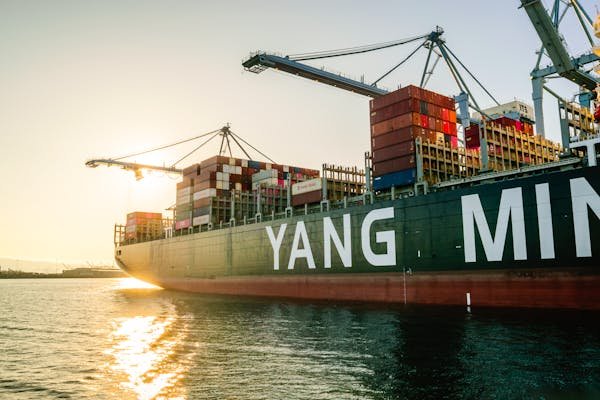
Shipping reactive chemicals is a high-stakes game. A small mistake can cause a fire or explosion, and you need to get it right. Understanding Class 5 is your first defense.
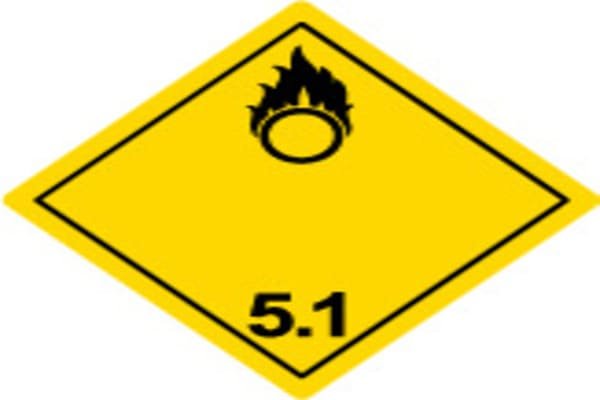
Class 5 dangerous goods are substances that can yield oxygen, which increases the fire risk of other materials. This class is split into Division 5.1 (Oxidizing Substances) and Division 5.2 (Organic Peroxides).1 Proper classification and handling are absolutely critical to prevent dangerous reactions.
I've been in the logistics business for over two decades, and if there's one thing I've learned, it's that you don't take chances with dangerous goods. Especially not with Class 5. These materials have a unique and powerful ability to create their own hazardous situations, often with very little warning. They demand respect and deep expertise. To handle them safely, we need to break down exactly what they are and the specific rules that govern their transport. Let’s dive into the details that keep your cargo and everyone in the supply chain safe.
What Are Class 5 Dangerous Goods?
You see "Class 5" on a label but are not sure what it means. This lack of knowledge is a serious risk in the supply chain. Let's define it simply.
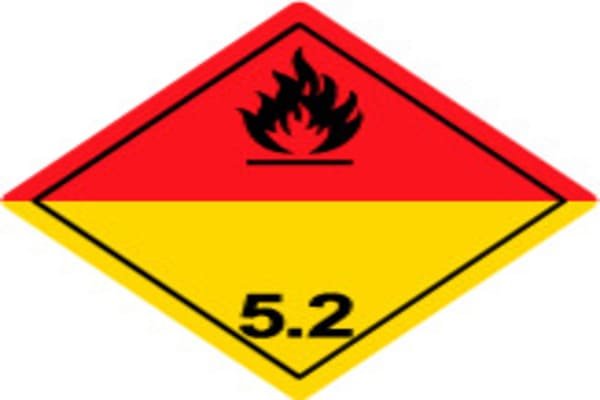
Class 5 goods are split into two main groups. Division 5.1 are oxidizing substances that can cause or help other materials to burn.2 Division 5.2 are organic peroxides, which are unstable and can be explosive, burn fast, or react dangerously with other substances.3
To really understand Class 5, it helps to think of them in two distinct roles. Division 5.1 substances are like a fire's biggest supporter. They don't usually start a fire on their own, but they provide the oxygen that makes a small fire become a huge, uncontrollable blaze. Think of chemicals like ammonium nitrate or calcium hypochlorite.
Division 5.2, organic peroxides, are a different kind of beast. They are inherently unstable. You can think of them as having both the fuel and the oxygen packed into one molecule. They are sensitive to heat, friction, or contamination, which can cause them to decompose rapidly and violently. This decomposition can release flammable gases, start a fire, or even cause an explosion.4 They are like a ticking clock, and our job is to make sure that clock never runs out.
Here is a simple table to show the main differences:
| Feature | Division 5.1 (Oxidizing Substances) | Division 5.2 (Organic Peroxides) |
|---|---|---|
| Primary Hazard | Intensifies fires by providing oxygen | Inherently unstable; can ignite or explode |
| Key Risk Factor | Proximity to combustible materials | Temperature, friction, and contamination |
| Common Example | Hydrogen Peroxide, Potassium Permanganate | Dibenzoyl Peroxide, Acetone Peroxide |
| Analogy | Fire's "supporter" | A "ticking time bomb" |
How Are Division 5.1 Oxidizing Substances Further Classified?
Not all oxidizers are equally dangerous. Treating them all the same is inefficient and can be very risky. Let's look at their packing groups to understand the difference.
Division 5.1 substances are sorted into three Packing Groups (PG) based on how dangerous they are.5 PG I means high danger, PG II means medium danger, and PG III means low danger. This classification decides how they must be handled, packaged, and transported.
When we at Deeplinker get a shipping request for a Division 5.1 substance, the very first thing we look at is its Packing Group. This single piece of information tells us so much about how to manage the shipment safely. The Packing Groups are determined by specific tests that measure how intensely a substance reacts with combustible material, like sawdust.
Packing Group I (High Danger)
These are the most potent oxidizers. When mixed with a combustible material, they can either ignite spontaneously or cause a very rapid and powerful reaction. The rules for these substances are the strictest, requiring highly durable packaging and extreme segregation from anything that could burn.
Packing Group II (Medium Danger)
Substances in this group don't ignite on their own when mixed with combustibles, but they will cause a fire to burn much more fiercely than it would otherwise. A lot of common industrial chemicals fall into this category. While not as volatile as PG I, they still require very careful handling and separation.
Packing Group III (Low Danger)
This is the least dangerous category, but "least dangerous" is a relative term. These substances will still increase the burning rate of other materials, just not as dramatically as those in PG I or II. Many fertilizers containing ammonium nitrate are in this group.
Here’s a breakdown to make it clearer:
| Packing Group | Danger Level | Test Criteria (Simplified) | Example |
|---|---|---|---|
| PG I | High Danger | Ignites spontaneously or reacts violently | Potassium bromate |
| PG II | Medium Danger | Causes a strong increase in burning rate | Calcium hypochlorite |
| PG III | Low Danger | Causes a moderate increase in burning rate | Ammonium nitrate fertilizer |
How Are Division 5.2 Organic Peroxides Further Classified?
Organic peroxides are extremely unstable. Just a little heat or friction can cause a violent explosion. Let's understand their seven types to manage them safely.
Organic peroxides (Division 5.2) are classified into seven types, from Type A to Type G.6 Type A is forbidden for transport.7 Types B through F have decreasing levels of danger, requiring specific controls. Type G is exempt from Class 5.2 rules.
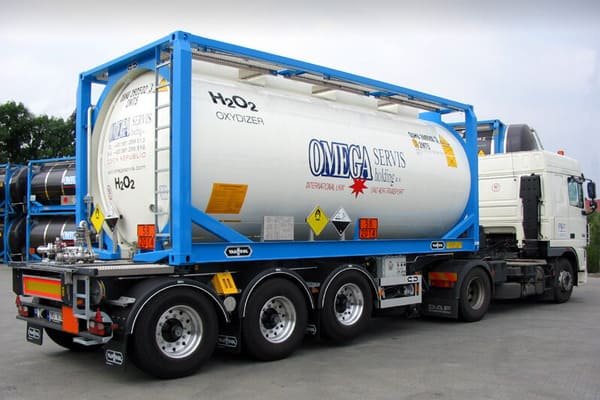
Unlike oxidizers, organic peroxides don't use Packing Groups. Instead, they are categorized into "Types" from A to G. This system is based on the level of danger they pose during transport. The main concern with these substances is their Self-Accelerating Decomposition Temperature (SADT). This is the lowest temperature at which the substance can start to decompose on its own8, a reaction that can quickly run out of control.
I've seen what happens when the temperature control on a container of organic peroxides fails. The pressure buildup can be enough to rupture the container. That's why we monitor the SADT and control the temperature with extreme care.
Here is a look at the different types:
- Type A: These are so dangerous they are forbidden from being transported in the packaging in which they are tested. They are simply too unstable.
- Type B: These are highly dangerous and can undergo a thermal explosion. They almost always require strict temperature control during transport.
- Type C: These can also explode but not as violently as Type B. They still pose a significant hazard and often need temperature control.
- Type D: These show a medium to low explosive force when heated in a confined space.
- Type E: These show no or low explosive force.
- Type F: These are the most stable of the regulated peroxides, but they can still be dangerous if not handled correctly.
- Type G: These are stable enough that they are exempt from the Division 5.2 regulations, though they might be hazardous under another class.
What Are the Key Transport Considerations for Class 5 Dangerous Goods?
You know the classifications now. But how do you actually ship these materials safely and follow the rules? Let's cover the essential transport rules you must follow.
Key transport considerations include strict segregation from flammable materials, using correct UN-approved packaging, precise temperature control for organic peroxides, accurate documentation like the DGD, and ensuring all personnel are properly trained on the specific risks involved.
Successfully transporting Class 5 goods is all about attention to detail. There is no room for error. Based on my experience, safe transport comes down to mastering four key areas. If you work in this field, I strongly recommend you study the detailed requirements in regulations like the IMDG Code for sea transport or JT/T 617 for road transport in China.
1. Packaging and Labeling
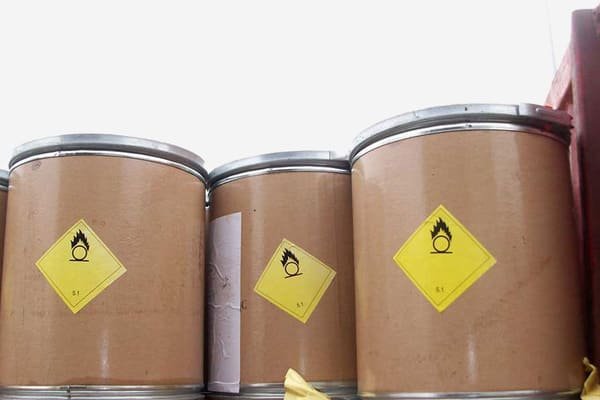
Every shipment must be in UN-approved packaging that is specifically designed for the substance and its Packing Group or Type. The packaging must be strong enough to withstand the journey without leaking. It also needs the correct labels: the Class 5.1 (oxidizer) or 5.2 (organic peroxide) diamond-shaped hazard label, along with any other required handling marks.
2. Segregation
This is the most critical rule. Class 5.1 substances must be kept far away from flammable liquids (Class 3), flammable solids (Class 4), corrosives (Class 8), and any combustible material. The IMDG Code has detailed segregation tables that tell us exactly how far apart different classes must be. For example, "separated from" might mean keeping them in different compartments or at least 3 meters apart in the same hold.
3. Temperature Control
For most Type B and C organic peroxides, this is non-negotiable. We use refrigerated "reefer" containers that maintain a precise temperature, well below the substance's SADT. For these shipments, we don’t just set the temperature and forget it. At Deeplinker, we have 24/7 monitoring systems and backup plans in case a cooling unit fails. It's an active management process from start to finish.
4. Documentation and Training
Every dangerous goods shipment must have a Dangerous Goods Declaration (DGD). This document provides all the critical information: the proper shipping name, UN number, class, and packing group. It must be 100% accurate. Furthermore, everyone involved—from the person who packs the container to the truck driver and ship's crew—must have training specific to the hazards they are handling.
Conclusion
Handling Class 5 goods demands expertise. Understanding classification, segregation, and temperature control isn't just about following rules; it's about preventing disaster and ensuring safety for everyone in the supply chain.
"HAZMAT Class 5 Oxidizing agents and organic peroxides - Wikipedia", https://en.wikipedia.org/wiki/HAZMAT_Class_5_Oxidizing_agents_and_organic_peroxides. The UN dangerous goods classification system divides Class 5 into Division 5.1 for oxidizing substances and Division 5.2 for organic peroxides. Evidence role: definition; source type: institution. Supports: Class 5 is divided into Division 5.1 oxidizing substances and Division 5.2 organic peroxides.. ↩
"49 CFR 173.127 -- Class 5, Division 5.1—Definition and ... - eCFR", https://www.ecfr.gov/current/title-49/subtitle-B/chapter-I/subchapter-C/part-173/subpart-D/section-173.127. Transport regulations describe Division 5.1 substances as materials that, while not necessarily combustible themselves, may cause or contribute to the combustion of other material by yielding oxygen. Evidence role: definition; source type: institution. Supports: Division 5.1 substances can cause or contribute to the combustion of other materials.. Scope note: The statement is a general definition; actual assignment to Division 5.1 depends on regulatory test results and substance listings. ↩
"49 CFR § 173.128 - Definitions and types. - Cornell Law School", https://www.law.cornell.edu/cfr/text/49/173.128. Regulatory and safety references describe organic peroxides as thermally unstable substances that may undergo exothermic decomposition and can burn rapidly, be sensitive to impact or friction, or react dangerously with other substances. Evidence role: definition; source type: institution. Supports: Division 5.2 organic peroxides are unstable and may present explosive, rapid-burning, or dangerous reactivity hazards.. Scope note: The hazards vary by peroxide type and formulation, so the source supports the class-level hazard description rather than every organic peroxide equally. ↩
"[PDF] Organic Peroxides Chemical Hazards & Risk Minimization (8/24)", https://ehs.unl.edu/sites/unl.edu.business-and-finance.university-operations.ehs/files/media/file/s-organic_peroxides_chem_haz_risk_min.pdf. Safety references explain that organic peroxide decomposition is exothermic and can produce heat and gaseous products, creating risks of fire, pressure buildup, and explosion. Evidence role: mechanism; source type: government. Supports: Organic peroxide decomposition can release gases and lead to fire or explosion hazards.. Scope note: The specific decomposition products and severity depend on the peroxide, concentration, packaging, and temperature conditions. ↩
"49 CFR 173.127 -- Class 5, Division 5.1—Definition and ... - eCFR", https://www.ecfr.gov/current/title-49/subtitle-B/chapter-I/subchapter-C/part-173/subpart-D/section-173.127. The UN Model Regulations assign Division 5.1 oxidizing substances to Packing Groups I, II, or III according to the degree of danger demonstrated by prescribed oxidizing-substance tests. Evidence role: definition; source type: institution. Supports: Division 5.1 substances are assigned to Packing Groups I, II, and III based on degree of danger.. Scope note: Some named entries and special provisions can affect assignment, so test-based grouping is the general rule rather than a substitute for the dangerous goods list. ↩
"49 CFR 173.128 -- Class 5, Division 5.2—Definitions and types.", https://www.ecfr.gov/current/title-49/subtitle-B/chapter-I/subchapter-C/part-173/subpart-D/section-173.128. The UN Model Regulations classify organic peroxides for transport into Types A through G according to their hazard characteristics and test results. Evidence role: definition; source type: institution. Supports: Division 5.2 organic peroxides are classified into seven transport types, A through G.. Scope note: The type classification applies to transport classification and packaging conditions, not necessarily to all workplace storage or process-safety classifications. ↩
"49 CFR 173.225 -- Packaging requirements and other ...", https://www.ecfr.gov/current/title-49/subtitle-B/chapter-I/subchapter-C/part-173/subpart-E/section-173.225. UN transport provisions state that Type A organic peroxides are not accepted for transport in the packaging in which they are tested because of their high hazard under test conditions. Evidence role: definition; source type: institution. Supports: Type A organic peroxides are forbidden for transport in the packaging in which they are tested.. Scope note: This concerns transport in the tested packaging configuration; regulatory treatment may differ for specially authorized arrangements or non-transport contexts. ↩
"Development of Prediction Models for the Self-Accelerating ... - PMC", https://pmc.ncbi.nlm.nih.gov/articles/PMC8771957/. The UN Manual of Tests and Criteria defines self-accelerating decomposition temperature as the lowest temperature at which self-accelerating decomposition may occur for a substance in its packaging, and it is used to determine temperature-control requirements for organic peroxides and self-reactive substances. Evidence role: definition; source type: institution. Supports: SADT is the lowest temperature at which self-accelerating decomposition may occur and is relevant to organic peroxide transport controls.. Scope note: The formal definition is packaging- and test-condition-specific, so SADT is not a single intrinsic value independent of container size and configuration. ↩