

Worried about lithium battery fires at sea? A thermal runaway incident can destroy your cargo. We can show you how to prevent it and ensure total safety.
Preventing thermal runaway1 in sea freight requires strict adherence to safety protocols. This includes correct classification, UN-certified packaging, proper container stuffing2 with adequate bracing and ventilation, and partnering with an experienced dangerous goods logistics provider to manage the entire process from start to finish.
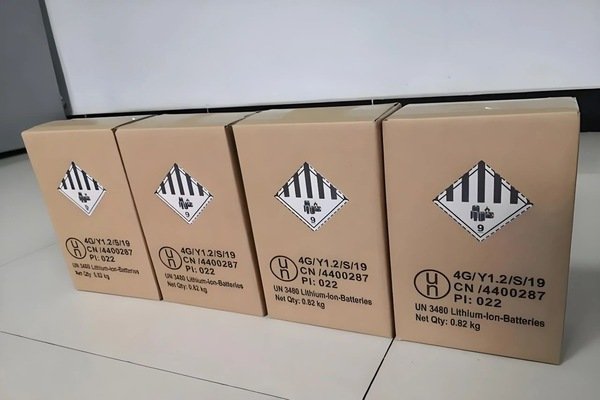
I've been in this business for over 20 years, and I’ve seen firsthand how a small mistake with dangerous goods can lead to a huge disaster. The rules for shipping lithium batteries aren't just red tape; they are critical safety measures designed to prevent catastrophic events on the open sea. For anyone shipping these products, understanding the risk of thermal runaway isn't just important—it's essential for protecting your investment and your business. Let's dive into what this risk really means and how you can manage it effectively.
What Is Thermal Runaway in Lithium Batteries?
Heard the term "thermal runaway" but not sure what it means? It’s a chain reaction that can turn a small battery issue into a major fire. Let's clarify.
Thermal runaway is a rapid, uncontrollable chain reaction where a lithium battery's temperature rises extremely fast. This process releases flammable gases and can lead to intense fires or explosions, posing a significant danger to cargo, vessels, and crew during transport.
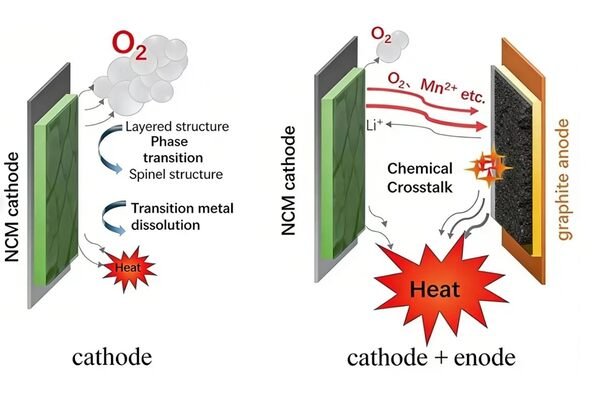
In my experience, many people underestimate how quickly a battery issue can escalate. It's not like a slow burn; it's an explosive event. To really grasp the danger, you need to understand the science behind it.
The Chain Reaction Explained
A single battery cell failing is the start. This can happen due to a short circuit, physical damage, or overheating. Once that first cell fails, it releases a huge amount of energy as heat. This heat is then transferred to the neighboring cells in the battery pack or to other battery boxes stacked nearby. Those cells then also overheat and fail, releasing even more heat. It creates a domino effect that is almost impossible to stop once it begins.
| Stage | Description | Outcome |
|---|---|---|
| Stage 1: Initiation | A single cell is damaged, short-circuits, or overheats. | The cell's internal temperature begins to rise rapidly. |
| Stage 2: Gas Release | The cell vents, releasing hot, flammable, and toxic gases. | The risk of fire or explosion increases dramatically. |
| Stage 3: Propagation | Heat spreads to adjacent cells, causing them to fail. | A chain reaction begins, leading to an uncontrollable fire. |
Why It Is So Dangerous
The real danger lies in the gases released. They can ignite instantly, creating a fire that burns at incredibly high temperatures. A standard fire extinguisher is often useless. Even worse, the chemical reaction produces its own oxygen, meaning it can burn even in an enclosed, oxygen-deprived space like a sealed container. This is why prevention is the only real solution.
Why Are Containers High-Risk Environments for Lithium Batteries?
You might think a steel container is a safe box. But for lithium batteries, it can become an oven, amplifying risks and turning a small problem into a catastrophe.
Shipping containers are high-risk because they are enclosed, unmonitored spaces. They can experience extreme temperature swings, physical shocks from vessel movement, and high humidity. These conditions can trigger or accelerate thermal runaway, and containment makes firefighting nearly impossible once an event starts.

I always tell my clients to think of a container not as a vault, but as a sealed environment with its own set of challenges. When you're at sea for weeks, those challenges become serious risks.
Environmental Stressors in a Container
A container sitting on the deck of a ship is exposed to direct sunlight. The internal temperature can easily soar above 60°C (140°F). This level of heat can degrade battery components and significantly increase the risk of a thermal event. On the flip side, voyages through cold climates can also affect battery performance and integrity. Add in the humidity and potential for condensation inside the container, and you have an environment that is hostile to sensitive electronics. There is no ventilation, so any heat or gas buildup is trapped inside, creating a pressure-cooker effect.
Physical Stressors at Sea
A cargo ship is always moving. It rolls, pitches, and heaves, creating constant vibrations and occasional severe shocks during rough seas. If your battery cargo is not properly braced and secured, it can shift, fall, or be crushed. This physical impact is a primary trigger for internal short circuits.
Here is a simple comparison:
| Factor | Ideal Storage Condition | Typical Container Environment |
|---|---|---|
| Temperature | Stable, cool, climate-controlled | Extreme fluctuations (hot & cold) |
| Humidity | Controlled | High, with risk of condensation |
| Movement | None | Constant vibration and shocks |
| Ventilation | Good airflow | None, sealed environment |
This table clearly shows why a container is far from an ideal place for lithium batteries. It requires specialized knowledge to mitigate these inherent risks.
What Are the Key Causes of Thermal Runaway During Ocean Transport?
A battery fire doesn't just happen. It's triggered by specific failures. Ignoring these root causes is like gambling with your entire shipment. Let's identify the main culprits.
The main causes are physical damage from improper packing or shifting cargo, short circuits from poor insulation or contact with conductive materials, and overcharging if shipped with active charging systems. Manufacturing defects and exposure to extreme external heat also play a critical role in triggering incidents.
Over the years, our team at Deeplinker has investigated several incidents, and they almost always trace back to a handful of preventable mistakes. Understanding these triggers is the first step in building a safe shipping strategy.
The "Big Three" Triggers
Most incidents can be linked back to one of three types of abuse: physical, electrical, or thermal.
-
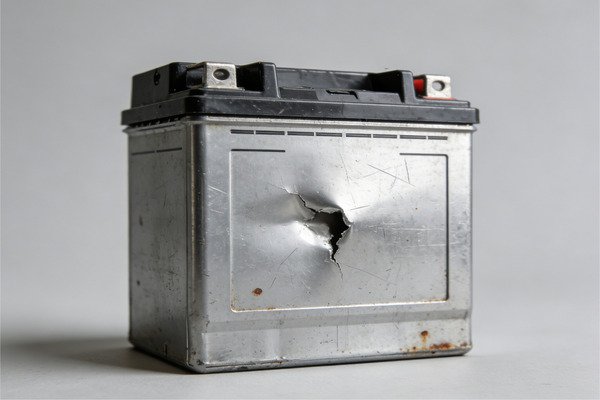
Physical Damage: This is the most common cause I see. A forklift bumps a pallet too hard. A box is dropped during loading. Cargo isn't braced properly and shifts during a storm, crushing the battery packs. This damage can compromise the delicate separators between the anode and cathode inside the battery, causing an internal short circuit that leads directly to thermal runaway.
-
Electrical Failure (Short Circuit): This often happens because of poor packaging. For instance, if batteries are not individually protected, their terminals can touch each other or a conductive surface like a metal strap or a foil-lined box. I once saw a shipment rejected because the shipper used metal banding directly over the cartons. This simple error could have caused a massive short circuit across dozens of batteries, with devastating consequences.
-
Thermal Abuse: This relates back to the container environment. Storing batteries in a container that gets too hot is a major risk. It's also critical to consider where the container is stowed on the vessel. Placing it next to a heat source, like the ship's engine room or a reefer (refrigerated container) unit's exhaust, is a recipe for disaster.
What Are the Best Practices to Prevent Lithium Battery Risks in Containers?
Feeling overwhelmed by the risks? Don't be. A clear, step-by-step safety process can protect your cargo. Following these best practices is your best defense against disaster.
Best practices include using UN-certified packaging, correctly labeling all packages with DG marks, and ensuring a valid MSDS. Proper container stuffing is crucial: segregate batteries3 from other cargo, use non-conductive dunnage, ensure good ventilation, and never load damaged packages. Partnering with a DG expert is key.
Safety isn't about one single action; it's about a chain of correct decisions. At Deeplinker, we treat this as a non-negotiable process. Here is the checklist we follow for every lithium battery shipment.
Your Pre-Shipment Safety Checklist
Before your cargo even gets near a container, these steps must be complete.
- Classification & Documentation: You must have the correct UN number (e.g., UN3480, UN3481) for your batteries. A valid and accurate Material Safety Data Sheet4 (MSDS) and UN38.3 test report are mandatory. All this information goes into the Dangerous Goods Declaration5 (DGD), a legal document you are responsible for.
- Packaging: Your batteries must be in UN-certified packaging that has passed rigorous drop and pressure tests. Each battery or device must be protected against short circuits, often by placing it in an individual plastic bag or separate compartment within the box.
- Labeling: Every box needs the correct Class 9 DG label, along with any other required handling marks. This is how dockworkers and the ship's crew know what's inside and how to handle it.
Expert Container Loading Techniques
How you load the container is just as important as the packaging.
- Inspect the Container: We always inspect the container for any damage, holes, or sharp objects before loading.
- Segregate Cargo: Lithium batteries should not be loaded with flammable materials, explosives, or certain other chemicals. We check the IMDG code for specific segregation rules.
- Brace and Secure: We use wood or plastic dunnage (never metal) to brace the cargo tightly, preventing any movement during the voyage.
- No Damaged Packages: Any package that looks crushed, dented, or wet is immediately rejected. Loading a damaged battery is the biggest risk of all.
What If Thermal Runaway Happens Anyway?
Even with perfect prep, accidents can happen. Knowing the response plan is critical. When smoke appears, what happens next at sea? It’s a serious situation with limited options.
If thermal runaway occurs at sea, the crew's options are limited and dangerous. They may attempt to use specialized fire extinguishers6 or flood the container with water, but this is often ineffective. The primary goal becomes containing the fire and protecting the vessel and other cargo.
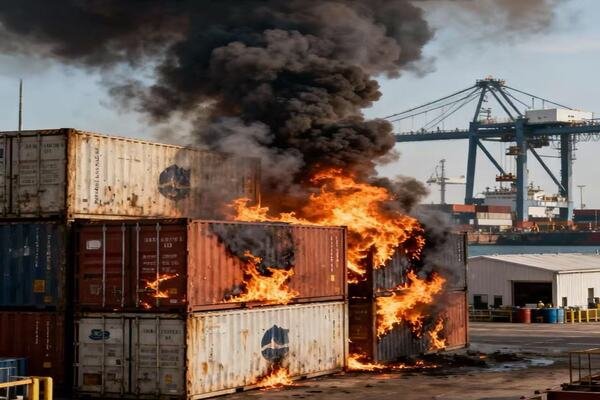
This is the scenario we all work so hard to prevent, because once it starts, the options for stopping it are grim. It’s crucial for shippers to understand that there is no magic solution once a battery fire starts inside a container at sea.
Onboard Emergency Response
When a container starts smoking, the crew's first action is to sound the alarm and notify the captain. The situation is immediately life-threatening. The crew may try to fight the fire, but this is incredibly dangerous. The gases are toxic, and the risk of explosion is high. Some modern ships have systems to flood a specific container with water, but this is not always effective, as the chain reaction can continue even when submerged. In many cases, the best they can do is use fire hoses to cool adjacent containers to prevent the fire from spreading, sacrificing the burning container and its entire contents.
The Aftermath: Your Financial and Legal Risks
If your cargo causes a fire, the consequences are severe.
- Total Cargo Loss: Your goods will be completely destroyed. Insurance may not cover the loss if you are found to be non-compliant with DG regulations.
- General Average7: You could be held liable for damage to the vessel and the cargo of other shippers. This is a maritime law principle called "General Average," and the costs can run into the millions.
- Fines and Penalties: Regulators will impose massive fines for mis-declaring dangerous goods or failing to follow safety protocols.
- Brand Damage: Being responsible for a major shipping disaster can permanently damage your company's reputation.
This is why we say that investing in professional DG handling isn't a cost—it's an insurance policy against catastrophic failure.
Conclusion
Preventing thermal runaway is about diligent risk management. From packaging to loading, every detail matters. Partner with experts to protect your cargo, your business, and your supply chain.
Understanding thermal runaway is crucial for anyone involved in shipping lithium batteries to prevent catastrophic incidents. ↩
Proper container stuffing is vital for safety; find out how to do it correctly. ↩
Segregating batteries from other cargo is vital for preventing dangerous incidents. ↩
An MSDS is crucial for safe handling; learn what it includes and why it's important. ↩
Understanding the DGD is essential for compliance when shipping dangerous goods. ↩
Learn about the right fire extinguishers to use in case of lithium battery fires. ↩
Learn about General Average and its implications for liability in shipping incidents. ↩