
Are your delivery services falling short? This can frustrate customers and damage your brand. The key is to truly understand and improve customer satisfaction within your logistics operations1.
Customer satisfaction in logistics is the measure of how happy your customers are with the entire shipping journey2. It covers everything from placing the order and tracking the package to the final delivery and the condition of the goods. It is the overall feeling they have about your service.

Getting logistics right is more than just moving boxes from one place to another. It's about creating an experience that makes customers feel valued and confident in your service. When you nail this, you don't just deliver a package; you deliver peace of mind. But how do we break down this big idea into something we can actually work on? Let's explore what satisfaction really means in this industry and how you can achieve it.
What does customer satisfaction truly mean in the logistics sector?
You hear the term "customer satisfaction" all the time. But it feels vague and hard to measure. This makes it difficult to know if you are actually improving it.
In logistics, customer satisfaction means consistently meeting or exceeding customer expectations3. This includes reliability, delivery speed, clear communication, and the condition of the package upon arrival. It is the complete measure of the customer's perception of your service from start to finish.
To really get it, we need to look deeper. Customer satisfaction in logistics has two main parts. There is the functional part4 and the emotional part5. Both are very important.
The Functional Side
The functional side is about performance. It answers the basic questions: Did the package get there? Was it on time? Was it damaged? These are the technical parts of the job. I remember ordering a critical part for a project. It arrived a day late. That delay cost me time and money. The company failed on a functional level, and it directly impacted my business. Functional success is the absolute baseline. If you can't deliver on time and in good condition, nothing else matters.
The Emotional Side
The emotional side is about how the customer feels during the process. Was the tracking easy to use? Did they feel informed? If they had to call customer service, was the person helpful and friendly? This is where you build loyalty. I once had a package get delayed by a storm. The logistics company sent me a proactive email explaining the situation and giving me a new delivery date. I wasn't mad at all. I felt cared for. Their communication turned a potential problem into a positive emotional experience6.
| Aspect | Customer Expectation | Impact of Failure |
|---|---|---|
| Functional | The package arrives on the promised date. | Frustration, loss of trust. |
| Functional | The item inside is not broken or damaged. | Anger, costs of replacement. |
| Emotional | I can easily track my package's location. | Anxiety, feeling of being ignored. |
| Emotional | If there's a problem, I can get help easily. | Helplessness, brand resentment. |
What factors influence customer satisfaction in the logistics industry?
You think fast delivery is the only thing that matters. But customers are still unhappy, and you are not sure why. Focusing on just one area leaves you blind to other problems.
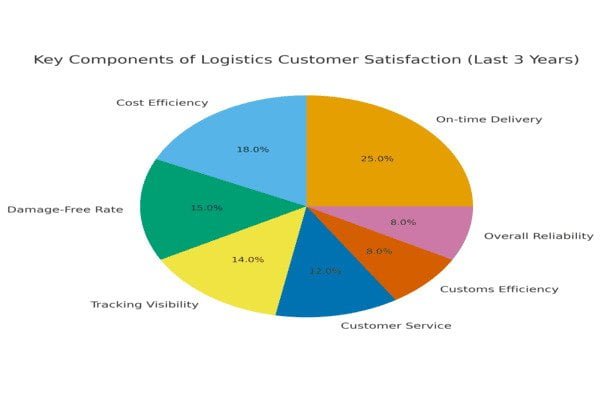
Many factors shape customer satisfaction in logistics7. The most important ones are delivery speed and reliability8, shipping cost, package condition9, tracking accuracy and clarity10, communication quality11, and how easy your returns process12 is. All these things work together to create the overall experience.
Let's break down the key factors that customers really care about. Ignoring any of these can lead to a bad experience, even if you get the others right. It's like a chain; it is only as strong as its weakest link. From my experience, a customer's final opinion is an average of all these touchpoints, not just the best one.
1. Delivery Speed and Reliability
This is the most obvious factor. Customers have a date in their mind, and you must meet it. "On-time delivery" is not a bonus; it's the basic promise of your service. Reliability is just as important. A service that is consistently on time is more valuable than one that is sometimes very fast but sometimes very late. Businesses depend on this predictability to manage their own operations.
2. Cost and Transparency
The price must feel fair for the service delivered. But it's not just about being the cheapest. Customers hate hidden fees13. A shipping cost that suddenly increases at checkout creates instant distrust. I always prefer a company that shows me the full cost upfront, even if it's a little higher. It shows respect for the customer.
3. Communication and Tracking
In today's world, customers expect to know where their package is at all times. Vague tracking information like "In Transit" is not helpful. Good tracking provides clear, step-by-step updates. Proactive communication is even better. Sending an SMS or email when a package is out for delivery is a simple touch that makes a huge difference.
4. Condition of Goods on Arrival
The package must arrive in perfect condition. This seems simple, but it reflects on your entire operation. A crushed box, even if the item inside is okay, sends a message that you don't care. Proper packaging and careful handling are non-negotiable parts of the service that protect both the product and your reputation.
Why is customer satisfaction so important for logistics companies?
Focusing only on trucks and warehouses seems efficient. But you are losing customers to competitors, and you do not understand why. You are missing the most important part of the business.
Customer satisfaction is crucial because happy customers become loyal, repeat customers. They also leave positive reviews and recommend your service to others. This builds a strong brand reputation14, which is essential for long-term survival and growth in a competitive market.

In the logistics industry, it's easy to get lost in the details of routes, vehicles, and sorting centers. We can forget that at the end of every delivery, there is a person. Making that person happy is not just a nice idea; it is a core business strategy. The success of my own business is built on this principle. Here’s why it is so critical.
It Creates Customer Loyalty
It costs much more to find a new customer than to keep an existing one. A satisfied customer will use your service again and again. They won't even look at your competitors. I have used the same shipping company for years, not because they are the cheapest, but because they have never let me down. That kind of loyalty is priceless and provides a stable source of revenue.
It Builds a Positive Reputation
Word-of-mouth is the most powerful marketing tool. Happy customers tell their friends and colleagues. They post positive reviews online. This builds a strong brand reputation14 that attracts new customers without you having to spend a dollar on advertising. On the other hand, a few angry reviews can scare away hundreds of potential clients. In the digital age, your reputation is everything.
It Gives You a Competitive Edge
The logistics market is crowded. Many companies offer similar services at similar prices. So how do you stand out? You compete on customer experience. A company that is known for its amazing service, helpful support, and reliable deliveries has a huge advantage. It becomes the reason customers choose you over someone else. This is a competitive advantage that is very difficult for others to copy.
What specific aspects of logistics warrant your close attention?
You want to improve customer satisfaction, but you don't know where to start. You might waste time and money fixing things that customers do not care about. Let's focus on what matters.
You must pay close attention to the "last mile" of delivery, the clarity of your tracking information, the professionalism of your delivery staff, and the simplicity of your returns process12. These are the most critical touchpoints that define the customer's final opinion.

Improving the customer experience doesn't mean you have to overhaul your entire operation at once. You can make a huge impact by focusing your efforts on a few key moments that matter most to the customer. These are the moments they will remember long after the delivery is complete.
The "Last Mile" Experience
This is the final step of the journey, from the local distribution center to the customer's front door. It is also the only time a customer might interact with a person from your company. The professionalism and friendliness of the delivery driver are incredibly important. A simple smile and a "have a great day" can transform the entire experience. I once had a driver call me to ask for a safe place to leave my package because it was starting to rain. That small act of care made me a customer for life.
The Returns Process
No one likes having to return an item, but a difficult returns process12 makes a bad situation much worse. This is also called "reverse logistics." You need to make it as painless as possible. A simple online process, a printable shipping label, and multiple drop-off options can turn a negative experience into a neutral or even positive one. A customer who has an easy return is far more likely to shop with that retailer again, which means more business for you.
Proactive Problem Solving
Things will sometimes go wrong. Packages get delayed, lost, or damaged. The difference between a good company and a bad one is how they handle these problems. Don't wait for the customer to call you in anger. Be proactive. If you know a shipment will be late, notify the customer immediately, explain why, and give them a new estimated arrival time. Taking ownership of the problem shows respect and builds trust, even when you make a mistake.
Conclusion
Ultimately, customer satisfaction is the engine of a successful logistics business. By focusing on reliability, clear communication, and excellent service, you create loyal customers who will support your long-term growth.
Understanding these components can help streamline processes and enhance customer satisfaction. ↩
Explore the various stages of the shipping journey to identify areas for improvement in customer satisfaction. ↩
Understanding these expectations is key to meeting and exceeding them effectively. ↩
Understanding the functional aspects helps in meeting basic customer expectations effectively. ↩
Explore how emotional connections can lead to customer loyalty and positive experiences. ↩
Explore strategies to enhance emotional connections with customers during the delivery process. ↩
Understanding this concept is crucial for improving your logistics operations and enhancing customer experience. ↩
Learn how these factors are critical in meeting customer expectations and building loyalty. ↩
Learn how to ensure packages arrive in perfect condition to maintain customer trust. ↩
Accurate tracking information is vital for customer trust; find out how to improve it. ↩
Effective communication can significantly enhance customer experience; discover best practices. ↩
A smooth returns process can enhance customer satisfaction; explore strategies to streamline it. ↩
Transparency in pricing builds trust; learn how to avoid hidden fees in your logistics. ↩
A strong brand reputation attracts new customers; find out how satisfaction plays a role. ↩