

Updated: November 10, 2026
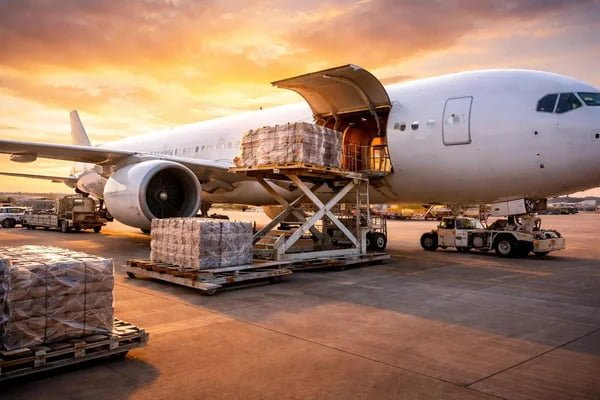
Chinese New Year falls on February 6, 2027 — 11 days earlier than in 2026. For overseas importers sourcing products from China, that earlier date makes production planning and air freight coordination particularly important.
Many businesses rely on air freight when they need to replenish inventory, deliver urgent components, or meet deadlines that ocean freight cannot accommodate.
However, booking air freight does not automatically guarantee that cargo will reach its destination on time.
A shipment can still miss its planned departure because the supplier finishes production late, the required documents are incomplete, the cargo misses an airline acceptance cutoff, or the destination customs process takes longer than expected.
With year-end cargo demand and Chinese New Year preparations approaching, importers should review their shipment plans before the final weeks of January.
This guide explains how to prepare for the air freight peak season from China, identify potential delays, compare shipping options, and coordinate suppliers and logistics providers more effectively.
1. Why the 2026–2027 Air Freight Peak Season Matters
Air freight demand across Asia has been supported by technology-related shipments, retail replenishment, and industrial supply chains.
According to the International Air Transport Association's September 2026 cargo report, global air cargo demand increased by 7.7% year on year in September, while Asia-Pacific airlines recorded 8.6% growth.
Demand growth was stronger than available capacity growth at the global level during that month.
These figures do not mean that every airport or trade lane is experiencing a shortage. However, they underline why importers should monitor capacity and pricing on their specific routes.
Several Shipping Periods Overlap
From November through early February, businesses may face overlapping logistics requirements:
- November retail promotions and replenishment.
- Black Friday and Cyber Monday shipping activity.
- December year-end inventory deliveries.
- Christmas and New Year operating schedules.
- January production and export planning.
- Chinese New Year factory closures in February.
Maersk's November 2026 Asia-Pacific Market Update highlights this planning period and recommends early coordination of cargo forecasts, bookings, and supplier production schedules.
For importers, the challenge is not simply finding an available flight.
It is ensuring that the goods are ready, accepted by the airline, transported, cleared through customs, and delivered before the required deadline.
2. Chinese New Year 2027: What Dates Should Importers Watch?
Chinese New Year begins on February 6, 2027.
However, the official holiday date should not be treated as the day when all factories stop production or the day when every logistics operation closes.
Individual manufacturers may begin reducing production earlier, while some employees may leave before the official holiday period.
Factories may also resume operations gradually after the holiday.
Importers should therefore confirm the actual operating schedule of each supplier rather than relying on one nationwide factory shutdown date.
Suggested Planning Timeline
| Period | What importers should focus on |
|---|---|
| November 2026 | Review Q4 inventory and forecast early-2027 air freight requirements |
| December 2026 | Confirm production schedules, delivery deadlines, and priority shipments |
| Early January 2027 | Reconfirm cargo-ready dates and request route-specific capacity and rate options |
| Mid–late January 2027 | Prioritize completed cargo and verify airline acceptance cutoffs |
| Early February 2027 | Monitor supplier closures and remaining pre-holiday shipment arrangements |
| Mid–late February 2027 | Confirm factory reopening, cargo availability, and post-holiday capacity |
This is a recommended planning framework, not an official airline cutoff calendar.
Actual booking deadlines depend on the origin airport, airline, cargo type, service, and destination.
Why Planning Only One Week Before the Holiday Is Risky
An importer may find an available air freight quotation only to discover that the factory cannot finish the goods before its closure.
Alternatively, the cargo may be ready but miss the required airport delivery or airline acceptance deadline.
The earlier the importer confirms production dates and transportation requirements, the more options may remain available.
3. Cargo Ready Date vs. Flight Departure Date
One of the most common sources of shipping delays is confusing the cargo-ready date with the planned flight departure date.
These dates refer to different stages of the shipment.
Cargo Ready Date (CRD): The date when the supplier expects the goods to be fully produced, packed, and available for collection.
Estimated Time of Departure (ETD): The estimated departure time of the booked aircraft or relevant transportation service.
Between these two points, several activities may still need to be completed.
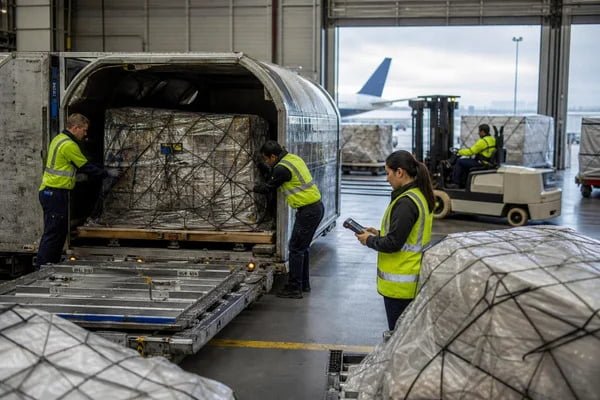
A Typical Export Air Freight Process
- The factory completes production and packaging.
- The shipment details and export documents are confirmed.
- Cargo is collected from the factory.
- Goods are transported to the airport or designated cargo facility.
- Export customs formalities and security procedures are completed.
- The cargo is tendered for airline acceptance.
- The shipment is loaded onto the planned aircraft.
The exact order of some handling and customs processes varies by location and service arrangement.
Example: Why a Two-Day Factory Delay Matters
Imagine an importer booking an air shipment from Shenzhen to Europe.
The supplier originally promises to complete production on January 20.
The planned flight is scheduled for January 23.
However, the supplier later changes the cargo-ready date to January 22.
Although the delay appears small, it may leave insufficient time for factory pickup, warehouse processing, export formalities, and airline acceptance.
The shipment could miss its intended flight.
This is an illustrative scenario, not an actual airline schedule.
Practical recommendation: Ask the supplier to provide a realistic packed-and-ready date, not simply the expected production completion date.
4. Air Cargo Cutoffs Importers Should Understand
Booking a flight is only one part of arranging air freight.
Different parties may impose separate deadlines.
Factory Pickup Cutoff
The trucking provider must collect the cargo early enough for it to reach the designated export facility.
Traffic, factory loading arrangements, and distance from the airport may affect the collection schedule.
Warehouse Receiving Cutoff
Consolidation warehouses and cargo handling facilities may set deadlines for receiving shipments.
Missing a warehouse cutoff can delay cargo processing.
Documentation Cutoff
The freight forwarder or airline may need shipment information and supporting documents before a specified time.
These commonly include commercial invoices, packing lists, shipper details, and other cargo-specific documents.
Airline Cargo Acceptance Cutoff
The airline or ground handling agent must accept cargo according to its operational requirements.
The cutoff varies by airline, airport, flight, cargo type, and service.
Importers should not assume that delivering goods to an airport on the scheduled flight date will be sufficient.
Destination Clearance and Delivery
Even after the flight arrives, cargo may require terminal processing, customs clearance, and inland transportation.
A shipment's ETA at the destination airport is not the same as the expected warehouse delivery time.
5. How Early Should Importers Book Air Freight from China?
There is no universal booking deadline that guarantees space during peak season.
Available capacity can change depending on the trade lane, airline network, cargo dimensions, demand, and operating conditions.
A shipment from Shanghai to Frankfurt may face different conditions from a shipment from Guangzhou to Los Angeles or Chengdu to Sydney.
The best approach is to discuss expected shipments with the forwarder before the cargo-ready date.
For Regular Importers
Provide a rolling forecast that includes:
- Expected cargo-ready dates.
- Planned destinations.
- Product categories.
- Estimated gross weights.
- Package dimensions.
- Expected shipping frequency.
- Required delivery dates.
Forecasting helps logistics providers identify possible options, but it does not automatically reserve airline capacity.
For Urgent or One-Time Shipments
Request route-specific quotations and availability as soon as the cargo details and expected readiness are sufficiently clear.
When a delivery deadline is critical, ask which booking conditions apply and whether the proposed service has confirmed space.
Avoid Booking Before Confirming Production Feasibility
Making an early booking can be useful, but repeatedly changing shipment details or cargo-ready dates may lead to rebooking costs, missed flights, or additional handling.
The booking plan should reflect what the supplier can realistically deliver.
6. What Information Is Needed for an Accurate Air Freight Quote?
Air freight quotations are sensitive to shipment dimensions, weight, handling requirements, and the available route.
A quote based on incomplete cargo information may change when the final shipment is measured or accepted.
Before requesting a quotation, prepare:
| Information | Why it matters |
|---|---|
| Origin city and pickup address | Determines collection and first-mile logistics |
| Destination airport and delivery address | Determines routing and final delivery requirements |
| Cargo-ready date | Supports pickup and flight planning |
| Commodity description | Helps determine airline acceptance requirements |
| Number of packages | Supports handling and booking |
| Gross weight | Used in transportation planning and rating |
| Package dimensions | Needed to calculate volume and chargeable weight |
| Cargo value | Relevant to insurance and customs arrangements |
| Required delivery date | Helps assess suitable services |
Gross Weight vs. Chargeable Weight
Air freight pricing often uses the greater of actual gross weight and applicable volumetric weight.
For example, many standard air cargo quotations use a volumetric divisor of 6,000 when dimensions are expressed in centimeters:
Volumetric weight (kg) = Length × Width × Height (cm) ÷ 6,000
However, the applicable calculation method and rating rules must be confirmed with the carrier or forwarder.
For bulky but relatively light goods, volumetric weight may exceed actual gross weight.
Importers should confirm final packaging dimensions before comparing rates.
7. Which Cargo Needs Extra Attention During Peak Season?
Not all goods can be accepted and handled under the same air freight conditions.
Electronics and Battery-Powered Products
Some electronics contain lithium batteries or other regulated components.
The acceptance requirements depend on battery type, configuration, classification, packaging, documentation, and applicable air transport rules.
Goods that can travel by ocean freight are not automatically acceptable for air transportation under the same packaging arrangements.
Ask the manufacturer and logistics provider to confirm the applicable requirements before booking.
Industrial Components
Machinery parts and industrial equipment may require special handling because of weight, dimensions, or cargo characteristics.
Some equipment may contain batteries, residual fuel, pressurized systems, or other items requiring additional review.
Fragile or High-Value Products
Sensitive products may need reinforced packaging, cushioning, suitable handling procedures, and cargo insurance.
Faster transportation does not eliminate handling or damage risks.
Oversized Cargo
Large machinery or unusually shaped shipments may not fit the available aircraft cargo compartments or loading systems.
Aircraft acceptance must be confirmed before relying on a particular flight schedule.
The key consideration is cargo suitability, not simply shipment urgency.
8. Should Importers Ship Everything by Air Before Chinese New Year?
Not necessarily.
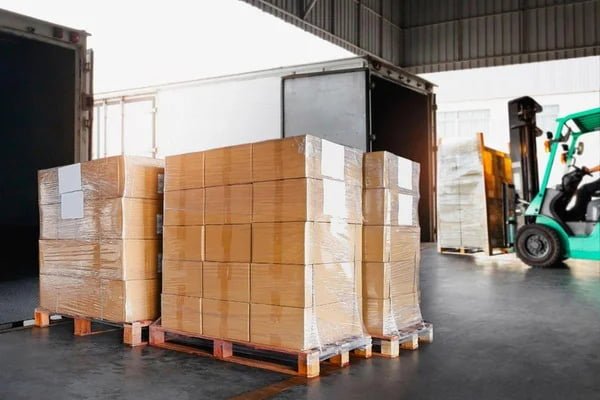
Air freight can help protect urgent delivery requirements, but shipping an entire order by air may significantly increase logistics costs.
For some businesses, a split-shipment strategy is more appropriate.
Option 1: Ship the Entire Order by Air
This may be suitable when the whole shipment has a critical delivery deadline and the cargo is acceptable for air transportation.
The decision should account for the complete transportation cost and expected delivery schedule.
Option 2: Send Urgent Inventory by Air
A business may use air freight for the quantity needed to prevent immediate stockouts while allowing the remaining goods to follow a more economical transport plan.
Option 3: Combine Air and Ocean Freight
An importer may divide the order between the two transport modes.
The choice depends on available ocean schedules, inventory requirements, additional handling costs, and the customer's delivery timeline.
Example: Replenishing Inventory Before a Sales Deadline
A distributor has ordered 800 cartons of products from China.
Only 150 cartons are urgently needed to maintain sufficient inventory until the next scheduled replenishment.
Instead of automatically moving all 800 cartons by air, the importer could evaluate shipping 150 cartons by air and the remaining 650 cartons by ocean.
The optimal arrangement depends on actual freight quotations, inventory forecasts, and the required delivery dates.
The objective should be to protect business continuity without paying unnecessary premium freight costs.
9. How to Reduce Air Freight Delays Before Chinese New Year
Here are seven actions overseas importers can take.
1. Confirm Factory Closure Dates Individually
Ask each supplier for its final production date, last available pickup date, and expected reopening schedule.
Do not assume all factories follow identical holiday arrangements.
2. Reconfirm Cargo-Ready Dates
A production completion estimate should be reviewed as the shipment approaches readiness.
Ask whether goods will be packed, labeled, and available for collection by the promised date.
3. Share Shipment Forecasts Early
Send expected cargo volumes and shipping dates to the logistics provider to support planning.
4. Review Alternative Airports and Routings
Where commercially and operationally suitable, alternative gateways may provide additional options.
However, indirect routes can introduce extra transfers or longer transit times.
5. Prepare Export Documents Before Pickup
Verify the accuracy of commercial invoices, packing lists, commodity descriptions, consignee information, and any required special-cargo documents.
6. Build Time Into the Delivery Schedule
Allow for collection, export processing, possible flight changes, customs clearance, and destination distribution.
A flight arrival time should not be treated as a guaranteed final delivery date.
7. Prioritize Cargo by Business Impact
Identify which products are needed immediately and which can be transported later.
This helps avoid paying air freight rates for inventory that has no urgent delivery requirement.
These practices are consistent with established pre-holiday planning guidance, including Flexport's Chinese New Year preparation recommendations.

10. Pre-Chinese New Year Air Freight Checklist
Before confirming your next shipment from China, review the following:
Supplier readiness
- Confirm the factory's holiday and reopening dates.
- Verify the final packed cargo-ready date.
- Check whether goods require special packaging.
- Obtain accurate shipment weights and dimensions.
Freight planning
- Confirm available routes and estimated transit times.
- Review airline capacity and booking conditions.
- Check cargo receiving and documentation deadlines.
- Discuss alternative routings where practical.
Customs and delivery
- Prepare required export documents.
- Confirm import clearance arrangements.
- Allow time for destination handling and delivery.
- Verify that the expected arrival date meets the business deadline.
Cost control
- Compare complete freight quotations.
- Check applicable fuel and seasonal surcharges.
- Calculate the cost of alternative routes.
- Evaluate whether the shipment should be split.
Frequently Asked Questions
1. When should I book air freight from China before Chinese New Year 2027?
Start coordinating as soon as the expected cargo-ready date, shipment details, and delivery requirements are known. There is no single booking deadline for every route. Confirm available capacity and cutoffs with your forwarder, particularly for shipments planned in January.
2. Will air freight from China stop during Chinese New Year?
Not necessarily. Airlines and cargo facilities may continue operating, but schedules and service availability can vary. Factory closures, reduced cargo readiness, trucking availability, and local holiday arrangements may affect shipments. Confirm the relevant services individually.
3. Is air freight always the fastest way to receive goods from China?
Air freight generally provides a shorter international transportation time than ocean freight, but the final delivery schedule also depends on cargo readiness, booking, customs clearance, and inland delivery. A delayed factory shipment may miss its intended flight despite choosing air transportation.
4. Should I move all my orders by air before the holiday?
Not always. Evaluate inventory needs and deadlines first. Shipping only urgent quantities by air while arranging the balance by another mode may reduce overall transportation costs.
Conclusion: Plan the Shipment Before the Factory Closes
Chinese New Year 2027 falls on February 6, creating an earlier pre-holiday planning period than in 2026.
For overseas importers, the most important preparation is not simply finding an air freight rate.
It is coordinating supplier production, cargo-ready dates, booking availability, export documentation, customs clearance, and final delivery requirements.
Businesses that identify priority shipments early and maintain realistic schedules will be better positioned to manage capacity changes and avoid preventable delays.
Need to Arrange Air Freight from China?
Whether you are shipping electronics, industrial components, or urgent inventory, Deeplinker can help you review international freight options based on your cargo and delivery requirements.
Share your cargo details, Chinese pickup location, destination, and required delivery date with our team to discuss a suitable transportation plan.
References
- Maersk — Asia Pacific Market Update, November 2026
- IATA — Air Cargo Demand Accelerates in September 2026
- IATA — September 2026 Air Cargo Market Analysis
- Flexport — Preparing for Chinese New Year
Editorial note: Freight rates, airline schedules, capacity, and operating cutoffs vary by route and service provider. Confirm current arrangements before booking.