
Updated: 22 October 2026. Incident reports and carrier announcements below retain their original dates. Booking availability, insurance terms and charges require shipment-specific confirmation.
For businesses importing from China into the UAE, Saudi Arabia, Qatar, Kuwait, Bahrain and Iraq, Strait of Hormuz shipping risks can affect more than the ocean journey. A change in routing may also change the discharge port, insurance requirements, customs arrangements and final delivery cost.
However, not every China–Middle East shipment passes through the Strait of Hormuz, and disruption does not mean every service is suspended. Exposure depends on the actual port rotation, any feeder connection and the inland delivery route.
Before approving a shipment, establish three things: whether any sea leg crosses Hormuz, which services accept your cargo, and what the quotation covers if the route changes.
Which China–Middle East Routes Pass Through the Strait of Hormuz?
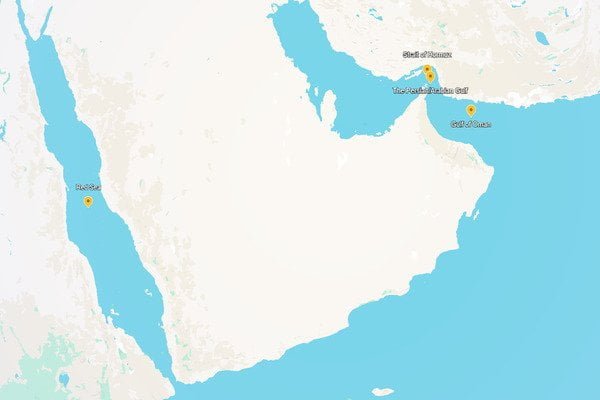
The Strait of Hormuz is the narrow passage connecting the Persian Gulf, also known as the Arabian Gulf, with the Gulf of Oman. These are distinct waterways.
An ocean shipment arriving from China at a port inside the Gulf normally crosses Hormuz. A shipment discharged on the UAE’s east coast can reach land without entering the strait, provided its preceding route does not include a Gulf port.
The destination country alone is therefore insufficient to assess exposure.
| Import market | Typical port or routing | Relationship to Hormuz |
|---|---|---|
| UAE | Jebel Ali or Khalifa Port, Abu Dhabi | An inbound all-sea route from outside the Gulf crosses Hormuz. |
| UAE | Khor Fakkan or Fujairah, followed by road delivery | These ports are outside Hormuz. A suitably routed ocean service can avoid the crossing. |
| Saudi Arabia | King Abdulaziz Port, Dammam, or Jubail | An inbound all-sea route from outside the Gulf crosses Hormuz. |
| Saudi Arabia | Jeddah Islamic Port or King Abdullah Port | These are Red Sea ports. Arrival does not inherently require Hormuz transit, although Red Sea and Bab el-Mandeb risks need separate assessment. |
| Qatar | Hamad Port | An inbound all-sea route from outside the Gulf crosses Hormuz. |
| Kuwait | Shuwaikh or Shuaiba | An inbound all-sea route from outside the Gulf crosses Hormuz. |
| Bahrain | Khalifa Bin Salman Port | An inbound all-sea route from outside the Gulf crosses Hormuz. |
| Iraq | Umm Qasr | An inbound all-sea route from outside the Gulf crosses Hormuz. An alternative gateway with overland delivery requires separate feasibility checks. |
This table explains geography, not current booking acceptance.
Verify the complete transport chain
A booking described as “China to Dubai” might involve discharge at Jebel Ali, or discharge at Khor Fakkan followed by road transport. Those arrangements have different handling, documentation and cost implications.
Similarly, transshipment outside Hormuz does not necessarily remove exposure. An onward feeder sailing into the Gulf may still cross the strait. Ask for the complete transport chain, including the final sea leg.
What Recent UKMTO Notices Actually Confirm
Two official notices illustrate why importers should distinguish the strait from surrounding waters:
-
Incident on 13 October 2026, reported in Warning 172-26:
UKMTO recorded a delayed report that an inbound container ship was struck by an unidentified projectile within the Strait of Hormuz. The notice described minor damage, no casualties and continued passage. Authorities were investigating. These details appear in UKMTO Warning 172-26.
- Incident on 18 October 2026: A southbound tug northeast of Khor Fakkan reported being hit by two unidentified projectiles. UKMTO recorded damage, continued movement and one minor casualty in Warning 177-26.
These are documented UKMTO reports, not independent findings by Deeplinker. Neither notice establishes that a particular China-origin shipment was affected or that every regional shipping service stopped.
The second notice also shows why avoiding Hormuz should not be equated with eliminating regional security exposure: Khor Fakkan is on the UAE’s Gulf of Oman coast.
Potential implications include voyage reassessment, altered schedules and additional operational costs. Whether those consequences apply to your shipment must be established through its carrier and booking details.
Carrier Advisories: Available Services and Additional Charges
Official carrier announcements provide a more useful booking picture than a blanket claim that “Middle East shipping is suspended.”
On 13 October 2026, Maersk announced the relaunch of its Gemini FM1 service with Hapag-Lloyd, connecting Qingdao, Ningbo, Tanjung Pelepas, Khor Fakkan and Singapore. Its FM1 service advisory listed an initial scheduled Qingdao departure on 17 October and Khor Fakkan arrival on 16 November. These were announced schedule dates, not confirmation here of actual departure or arrival. Cargo acceptance restrictions remained applicable.
Maersk’s Middle East Operational Update 51, dated 8 October 2026, illustrates the distinction between restrictions and alternatives. Its dry-cargo guidance accepted certain bookings, including Khor Fakkan imports and Jebel Ali via landbridge, while restricting others, including Iraq and Saudi Arabia’s Dammam and Jubail.
For affected existing bookings and cargo in transit, the same update listed:
| Charge category | Published amount |
|---|---|
| Emergency Freight rate: 20-foot dry container | USD 1,800 per container |
| Emergency Freight rate: 40-foot dry container | USD 3,000 per container |
| Emergency Freight rate: reefer, special or dangerous-goods container | USD 3,800 per container |
| Additional fee for vessels transiting Hormuz | USD 1,000 per container |
The advisory placed the transit fee above the Emergency Freight rate and said it replaced separately charged landbridge costs for shipments using that sea routing. It also reported congestion affecting Khor Fakkan clearance.
These are dated Maersk examples, not an all-in China–Gulf quotation or charges applicable to every carrier. Confirm applicability, current amounts and possible overlap before approving a booking.
How Hormuz Disruption Can Affect Your Total Freight Cost
An importer’s exposure extends beyond the headline ocean rate.
In its 10 March 2026 assessment, UN Trade and Development explained how Hormuz disruption increased tanker freight rates, war-risk premiums and marine fuel costs. That assessment provides background on how costs spread through supply chains; it is not a current container-rate quotation.
For China-origin container cargo, request a quotation that separates:
- Ocean freight: Origin, destination, container size, service and validity period.
- Carrier surcharges: Emergency, security, war-risk, fuel or other charges, with their applicable units and conditions.
- Alternative routing costs: Additional handling, feeder transport, road haulage or border movements.
- Cargo insurance: Premiums and any additional war-risk cover for your goods.
- Destination expenses: Clearance, terminal handling, storage and final delivery.
- Container-related costs: Free time, demurrage, detention and the approved empty-return location.
Ask whether each charge is included, additional or payable only if a contingency occurs. Also confirm who will receive the invoice.
A lower ocean rate can produce a higher delivered cost if the shipment requires an expensive transfer or extended storage. Compare quotations using the same final delivery address and cargo details.
For budgeting, request two versions: the planned route and a feasible contingency route. Keep uncertain costs visible instead of treating them as included in a fixed total.
War Risk Insurance: What Importers Need to Check
“War-risk insurance” can describe different interests. A vessel owner’s protection and an importer’s cargo cover are not interchangeable.
Separate vessel insurance, carrier charges and cargo protection
Hull war insurance concerns the vessel. Cargo insurance concerns the goods, subject to its wording and endorsements. A carrier’s security or war-risk surcharge is a transport charge; paying it does not establish that your cargo has insurance against war-related loss.
In its 23 September 2026 discussion, WTW distinguished hull and cargo war-risk markets and described volatile, individually assessed pricing. Consequently, a reported percentage of vessel value should not be applied to your commercial invoice as though it were a cargo-insurance quote.
Obtain terms for the actual goods, insured value, sailing and route.
Check the whole journey, including road transport and storage
Do not assume an “all risks” description guarantees war protection. Request written confirmation of the relevant war clauses, territorial exclusions and any cancellation notice.
For a revised route, ask the insurer or broker:
- Is war-risk cover available and bound for this shipment?
- Which ports, waters and inland territories are covered?
- Does protection continue during transshipment, temporary storage and trucking?
- What notification is required if the carrier changes the route or destination?
- What deductibles, limits and exclusions apply?
These questions become especially important when an ocean booking changes into a sea-and-road movement.
Do not assume insurance pays for late delivery
The Dutch Association of Insurers’ guidance on Red Sea and Hormuz insurance explains that delay-related losses are usually uninsured, while individual policies may provide specific exceptions.
A delayed container arriving undamaged may therefore leave the importer with stock shortages, missed sales or contractual penalties that its cargo policy does not reimburse. Ask explicitly about any required delay protection.

Planning for Shipping Delays Without Guessing a Universal Transit Time
There is no reliable single number to add to every China–Middle East shipment.
A direct sailing, a feeder connection and an ocean-plus-road movement involve different handovers. Potential delays can arise before departure, while waiting for a connection, at an alternative discharge port or during inland clearance.
For purchasing and inventory planning, ask for separate milestones:
- Confirmed booking and cargo cutoff.
- Expected loading and departure.
- Arrival at each transshipment or discharge port.
- Cargo availability for collection.
- Customs release and onward transport.
- Expected delivery to your warehouse.
Port arrival is not the same as warehouse delivery. A vessel’s estimated arrival date should not automatically become your customer’s delivery commitment.
For time-sensitive orders, ask for an expected delivery window and a disruption scenario. Consider whether a smaller urgent shipment could travel separately, subject to available air or other transport capacity.
If cargo is already moving, obtain its latest confirmed location and the deadline for deciding on any route or destination change. Request the cost and documentation implications before accepting the change.
A Practical Booking Checklist for Gulf Importers
Before releasing goods from a Chinese supplier, confirm the following in writing:
- Exact destination: Identify the discharge port and final delivery location, rather than relying on a country or city name.
- Complete route: Check the main vessel, transshipment ports, feeder legs and any road sections.
- Cargo acceptance: Confirm the rules for dry cargo, batteries, dangerous goods, refrigerated products or oversized equipment.
- Shipment responsibilities: Review the sales terms and transport arrangements to establish who arranges insurance and pays additional charges.
- Alternative-gateway feasibility: Have the destination broker confirm consignee eligibility, clearance requirements, permits and any bonded movement.
- Price conditions: Record quotation validity, surcharge triggers, free time and empty-return instructions.
- Insurance confirmation: Obtain the policy or certificate and relevant endorsements before departure.
- Contingency authority: Agree who can approve rerouting, extra storage or urgent onward transport.
For UAE imports, distinguish delivery through an east-coast gateway from an all-sea arrival at Jebel Ali or Khalifa Port. Compare Saudi Arabia’s Gulf-coast and Red Sea gateways based on the actual delivery city.
For Qatar, Kuwait, Bahrain and Iraq, confirm the final connection into the destination market. An available sailing to a nearby country does not, by itself, establish an available or approved onward route.
FAQs About Strait of Hormuz Shipping Risks
1. Does all cargo shipped from China to the Middle East pass through Hormuz?
No. All-sea arrivals at ports inside the Persian/Arabian Gulf generally cross Hormuz. Cargo discharged at Khor Fakkan or Fujairah, or shipped to Saudi Red Sea ports, may avoid it. Check the complete itinerary: a feeder connection or earlier port call can change the answer.
2. Does paying a war-risk surcharge insure my goods?
No. A carrier surcharge is part of the transport price. Your cargo protection depends on the insurance policy, applicable war-risk terms and any exclusions. Request separate written confirmation that the goods are covered for the planned journey.
3. Is shipping through an alternative port always faster or cheaper?
No. Avoiding a Hormuz crossing may introduce additional handling, trucking, customs procedures or congestion. Compare the total delivered cost and warehouse delivery window, and confirm that the alternative accepts your cargo and consignee arrangements.
Conclusion: Plan Around Your Shipment’s Actual Route
Strait of Hormuz shipping risks require careful planning, but the impact is not uniform across China–Middle East trade.
The practical priorities are to identify every transport leg, verify cargo acceptance, compare complete delivery costs and confirm insurance for the journey actually being arranged. Treat dated advisories as evidence to inform a booking—not as a substitute for shipment-specific confirmation.
Planning your next shipment from China? Contact Deeplinker with your pickup location, cargo description, volume or container requirements, destination and required delivery date. Ask for a route review and an itemized quotation so you can assess the available options before committing your cargo.
Source note: Public sources were reviewed on 22 October 2026. Links above include original UKMTO warnings, official carrier announcements and insurance-industry guidance. Earlier publications are explicitly dated and used for background; potential shipment impacts are identified separately from reported events.