
Updated: November 12, 2026
China and Indonesia are strengthening their shipping connections in 2026. Several shipping lines have introduced new services between major Chinese ports and Indonesian destinations.
These include new services from MSC, PIL, RCL, and OOCL. They connect ports such as Qingdao, Shanghai, Ningbo, Shekou, and Nansha with Jakarta, Surabaya, and Semarang.
For businesses importing goods from China, these new routes offer more shipping options.
However, choosing the right service requires more than comparing port names. Importers should also check vessel schedules, cargo availability, port locations, and final delivery arrangements.
This guide explains the latest China–Indonesia shipping services and shows importers what to consider before booking.
1. Why Are China–Indonesia Shipping Routes Important?
China is an important trading partner for Indonesia. Many Indonesian businesses import machinery, electronics, construction materials, and consumer goods from Chinese suppliers.
As a result, reliable shipping connections are important for both markets.
For importers, the choice of shipping route can affect several parts of the supply chain:
- Factory pickup and inland transportation.
- Chinese port selection.
- Vessel schedules and booking availability.
- Transshipment arrangements.
- Indonesian customs clearance.
- Final delivery to the warehouse.
New shipping services can provide more choices. However, not every service covers every port pair.
Therefore, importers should compare the complete route before making a booking decision.
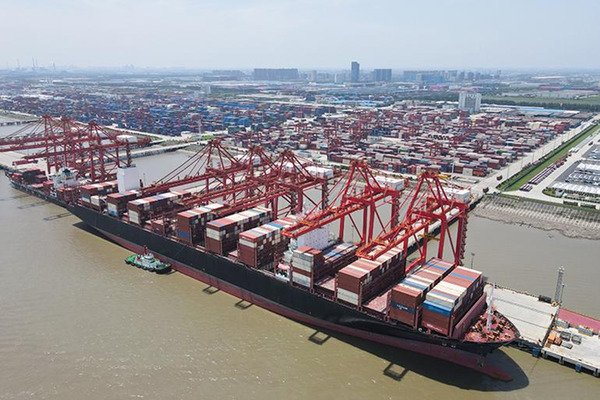
2. MSC Launches the Jasmine Shipping Service
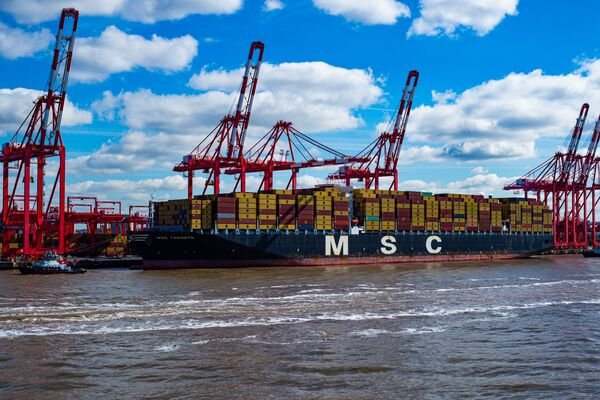
On October 21, 2026, Mediterranean Shipping Company (MSC) announced its new Jasmine service.
The service connects China, Singapore, and Indonesia. Its first vessel, MSC WIND II (voyage HF645A), was scheduled to arrive in Shanghai on November 4, 2026.
Jasmine Port Rotation
The announced route is:
Shanghai → Ningbo → Shekou → Singapore → Surabaya → Semarang → Singapore → Shanghai
The service covers three important Chinese ports.
- Shanghai: A major export port in East China.
- Ningbo: An important gateway for manufacturers in Zhejiang.
- Shekou: A useful shipping gateway for Shenzhen and the Pearl River Delta.
In Indonesia, the service calls at two major ports:
- Surabaya: An important commercial port in East Java.
- Semarang: A key port serving Central Java.
For South China exporters, the Shekou connection is particularly relevant. It provides another shipping option for businesses in Shenzhen and nearby manufacturing areas.
However, importers should confirm the latest vessel schedule before booking.
Official source: MSC – Jasmine Service Announcement
3. PIL Expands Its China–Indonesia Shipping Network
Pacific International Lines (PIL) announced an expansion of its Intra-Asia shipping network on September 22, 2026.
One important development is its North China Indonesia (NCI) service. The service commenced from Qingdao on November 8, 2026.
NCI Port Rotation
Qingdao → Shanghai → Nansha → Jakarta → Surabaya → Singapore → Qingdao
This service connects three major Chinese ports with two Indonesian destinations.
Its main coverage includes:
- Qingdao: North China.
- Shanghai: East China.
- Nansha: South China.
- Jakarta: Indonesia's main commercial center.
- Surabaya: A major gateway in East Java.
For manufacturers in Guangdong, the Nansha connection provides another option for shipping goods to Indonesia.
In addition, PIL has introduced a separate China–Singapore–Malaysia (CSM) service. Although it is not a China–Indonesia direct service, its Singapore connection may provide additional regional shipping options.
Official source: PIL – New Intra-Asia Shipping Services
4. RCL Introduces the RCI05 China–Indonesia Service
Regional Container Lines (RCL) and its partners introduced the RCI05 service on September 22, 2026.
Its maiden voyage was scheduled to depart Qingdao on November 8, 2026.
RCI05 Port Rotation
Qingdao → Shanghai → Nansha → Jakarta → Surabaya → Singapore
The service connects three Chinese ports with two important Indonesian destinations.
RCL also published the following port-call schedule:
| Port | Scheduled arrival | Scheduled departure |
|---|---|---|
| Qingdao | Sunday | Monday |
| Shanghai | Wednesday | Thursday |
| Nansha | Sunday | Sunday |
| Jakarta | Friday | Sunday |
| Surabaya | Tuesday | Wednesday |
| Singapore | Friday | Saturday |
This schedule shows the planned port-call pattern. However, it does not guarantee a specific door-to-door delivery time.
RCL also indicates that the full service rotation takes approximately 28 days.
How Is RCL RCI05 Different from PIL NCI?
Interestingly, both services have very similar port rotations.
They cover:
Qingdao → Shanghai → Nansha → Jakarta → Surabaya → Singapore
However, they are separate services operated by different carriers and partners.
Their vessel arrangements, booking conditions, and available space may differ.
Therefore, importers should compare the actual sailing schedules rather than assuming that both services offer identical performance.
Official source: RCL – RCI05 China–Indonesia Service
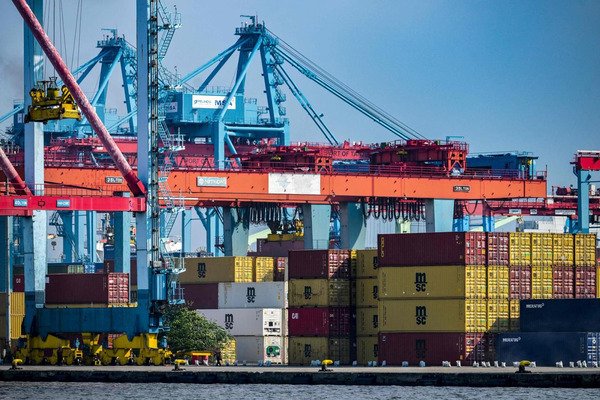
5. OOCL Announces Its New CIS4 Service
OOCL announced its new China Indonesia Service (CIS4) on October 29, 2026.
The service is scheduled to launch on November 22, 2026.
CIS4 Port Rotation
Qingdao → Shanghai → Nansha → Jakarta → Surabaya → Singapore → Qingdao
The service aims to strengthen shipping connections between China and Indonesia.
For importers, the main advantages to investigate include:
- Qingdao coverage for North China.
- Shanghai connections for East China.
- Nansha coverage for South China.
- Jakarta and Surabaya port calls.
- Additional regional connections through Singapore.
As of November 12, 2026, CIS4 remains an announced upcoming service.
Therefore, businesses planning shipments in late November should confirm its actual launch status and booking availability with OOCL.
Official source: OOCL – New China Indonesia Service CIS4
6. Comparing the Four New Shipping Services
The four services offer different port combinations. As a result, the best option depends on the cargo's origin and destination.
| Service | Chinese ports | Indonesian ports | Status |
|---|---|---|---|
| MSC Jasmine | Shanghai, Ningbo, Shekou | Surabaya, Semarang | First Shanghai call scheduled Nov 4 |
| PIL NCI | Qingdao, Shanghai, Nansha | Jakarta, Surabaya | Commenced Nov 8 |
| RCL RCI05 | Qingdao, Shanghai, Nansha | Jakarta, Surabaya | Maiden voyage scheduled Nov 8 |
| OOCL CIS4 | Qingdao, Shanghai, Nansha | Jakarta, Surabaya | Scheduled for Nov 22 |
Which Service Should Importers Consider?
The answer depends on the factory location and final delivery address.
For shipments from Shanghai or Ningbo to Semarang:
MSC Jasmine is worth checking because its announced rotation includes Semarang.
For shipments from Shenzhen and nearby manufacturing areas:
Importers can compare the Shekou connection under MSC Jasmine with the Nansha connections offered by PIL, RCL, and OOCL.
The factory's distance from each port should also be considered.
For shipments from Qingdao to Indonesia:
PIL NCI, RCL RCI05, and OOCL CIS4 provide additional services to compare.
For shipments to Jakarta and Surabaya:
PIL, RCL, and OOCL have announced services covering both destinations. MSC Jasmine also includes Surabaya.
However, port coverage alone does not determine the best service. Importers should check actual vessel schedules, booking availability, and destination delivery costs.
7. What Should Importers Check Before Booking?
More shipping services mean more choices. However, importers still need to check several important details.
1. Confirm the Chinese Loading Port
The nearest port to the factory is not always the cheapest option.
For example, a manufacturer in Guangdong may compare trucking to Shekou and Nansha.
The final decision should consider pickup costs, cargo readiness, and port cutoffs.
2. Confirm the Indonesian Destination
Jakarta, Surabaya, and Semarang serve different regions.
For example, a shipment arriving in Surabaya may still need additional trucking to reach a warehouse in another city.
Therefore, importers should consider the full delivery route.
3. Check the Latest Vessel Schedule
Shipping schedules can change because of port operations and other operational factors.
Before booking, confirm:
- Vessel name and voyage number.
- Estimated departure and arrival dates.
- Port cutoff times.
- Cargo booking availability.
- Transshipment requirements.
- Possible schedule changes.
4. Compare Total Shipping Costs
A lower ocean freight rate does not always mean a lower final cost.
Importers should compare:
- Factory pickup.
- Export handling.
- Origin terminal charges.
- Ocean freight.
- Destination handling.
- Customs clearance.
- Import duties and taxes.
- Final delivery.
In this way, businesses can make a more informed decision.
5. Check Cargo Acceptance Requirements
Different cargo types may have different transportation requirements.
For example, batteries, dangerous goods, oversized machinery, and refrigerated products may require special approval or documentation.
Confirm these requirements before booking.
6. Prepare Indonesian Customs Documents
Before shipment, check the consignee's import arrangements and the relevant product requirements.
Also, confirm whether any permits or additional documents are needed.
A shipping line's acceptance of cargo does not automatically guarantee customs clearance.
8. Which Products Can Use These Shipping Connections?
The new services may provide additional options for several types of China–Indonesia trade.
Industrial Machinery and Equipment
Machinery and construction equipment may be shipped to Jakarta or Surabaya.
However, heavy cargo requires careful planning. Importers should check container suitability, loading arrangements, and destination handling.
Electronics and Electrical Products
Electronics are another important product category.
Importers should confirm packaging requirements and check whether products containing batteries need special transportation arrangements.
Construction Materials
Construction materials and industrial supplies may move in larger quantities.
For these shipments, container selection, cargo weight, and destination delivery arrangements are important.
Consumer Goods and Retail Products
Retailers and distributors may use the additional services to plan inventory replenishment.
However, the right route still depends on the supplier's location, cargo-ready date, and required arrival time.
9. China–Indonesia Shipping Checklist
Before requesting a quotation, prepare the following information.
Cargo details
- Product name and description.
- Number of packages.
- Gross weight and total volume.
- Cargo dimensions and packaging.
- Special handling requirements.
Origin information
- Factory location.
- Preferred Chinese loading port.
- Cargo-ready date.
- Pickup arrangements.
Destination information
- Jakarta, Surabaya, Semarang, or another destination.
- Final delivery address.
- Importer and consignee details.
- Customs clearance requirements.
Shipping requirements
- Preferred sailing date.
- Required delivery date.
- FCL or LCL requirement.
- Budget and delivery priorities.
- Special documentation requirements.
Providing these details helps freight forwarders compare suitable services for your actual shipment.
Frequently Asked Questions
1. Which Chinese ports have new shipping connections to Indonesia in November 2026?
The announced services cover Qingdao, Shanghai, Ningbo, Shekou, and Nansha. However, the available port combinations depend on the shipping line.
2. Which Indonesian ports are covered?
The main destinations include Jakarta, Surabaya, and Semarang. MSC Jasmine includes Surabaya and Semarang, while PIL NCI, RCL RCI05, and OOCL CIS4 list Jakarta and Surabaya.
3. Are all the new services direct shipping routes?
The carriers have announced scheduled port connections within their service rotations. However, importers should verify the actual origin-to-destination booking and confirm whether additional transshipment is required.
4. Do new shipping services guarantee shorter transit times?
No. Additional services may provide more scheduling options. However, actual transit time depends on vessel schedules, port operations, cargo cutoffs, and final delivery arrangements.
5. Can these services handle LCL shipments?
LCL availability depends on the carrier's arrangements and the freight forwarder's consolidation network. Importers should confirm availability for their specific port pair before booking.
Conclusion: More Shipping Options for China–Indonesia Trade
The introduction and expansion of MSC Jasmine, PIL NCI, RCL RCI05, and OOCL CIS4 bring additional scheduled connections between China and Indonesia in late 2026.
For importers, these services provide more options across Qingdao, Shanghai, Ningbo, Shekou, and Nansha, with connections to Jakarta, Surabaya, and Semarang.
However, selecting the right route requires more than comparing port names.
Businesses should consider factory location, cargo readiness, vessel schedules, customs requirements, and final delivery arrangements.
A well-planned shipping route can help businesses coordinate purchasing and inventory more effectively.
Shipping from China to Indonesia?
Deeplinker helps international businesses evaluate freight options based on cargo details, origin, destination, and delivery requirements.
Whether you are shipping industrial equipment, electronics, construction materials, or general commercial cargo, our team can help review suitable transportation arrangements.
Contact Deeplinker to discuss your China–Indonesia shipment.
References
- MSC – Launch of Jasmine Service
- PIL – Expansion of Intra-Asia Services Connecting China, Indonesia and Malaysia
- RCL – Introduction of RCI05 China–Indonesia Service
- OOCL – Announcement of CIS4 China–Indonesia Service
Editorial note: Service rotations and launch dates are based on carrier announcements available as of November 12, 2026. Vessel schedules, booking availability, transit times, and port operations may change. Confirm current details with the carrier or freight forwarder before shipment.