

Worried about your valuable electronics getting damaged or lost on the way to Vietnam? Road freight can feel risky, but it offers a surprisingly secure and flexible shipping solution.
Yes, shipping electronics to Vietnam by road is safe, provided you work with an experienced logistics partner. Success depends on understanding the specific risks, using professional packaging techniques, and choosing a carrier with a proven track record for secure cross-border transport and customs clearance.
Shipping high-value goods like electronics always comes with questions. You want to be sure your products will arrive in perfect condition, on time, and without any surprise costs. While air freight is fast and sea freight is cheap, road freight often hits the perfect middle ground, especially for shipments from neighboring countries. But to use it effectively, you need to know what you're getting into. Let's break down the real risks and how to manage them so you can ship with confidence.
What Are the Electronics Shipping Risks to Vietnam by Road?
Thinking about trucks on long roads makes you picture bumps, delays, and security issues. These are valid concerns, but they are all manageable with the right preparation and partner.
The primary risks include physical damage from road vibrations and handling1, security threats like theft2, and regulatory hurdles causing delays at border crossings3. A professional forwarder anticipates these issues and implements strategies like advanced packaging, secure transport protocols, and expert customs brokerage to mitigate them.
When we ship electronics for our clients, we don't just put boxes on a truck and hope for the best. We plan for the entire journey. Road conditions can vary, border procedures can be complex, and cargo is always a target. Understanding these risks is the first step to overcoming them. It’s not about avoiding road freight; it’s about mastering it. We treat every shipment as a unique project, identifying potential weak points and reinforcing them before the truck even leaves the warehouse.
Breaking Down the Road Freight Risks
To make this clearer, let's look at the main risk categories and how we tackle them. Each one requires a specific solution.
| Risk Type | Description | How We Mitigate It |
|---|---|---|
| Physical Damage | Electronics are sensitive to shocks and vibrations from bumpy roads and rough handling during loading or unloading. | We insist on multi-layer packaging with shock-absorbent materials like custom foam inserts. We also use air-ride suspension trucks4 for extremely sensitive cargo. |
| Security Threats | High-value electronics can be a target for theft, especially during stops or at border crossings. | We work with vetted carriers who use GPS tracking, secure locks5, and sometimes even team drivers so the truck is never left unattended. For very high-value loads, we can arrange security escorts. |
| Regulatory Delays | Incorrect or incomplete customs paperwork is the number one cause of delays at the Vietnam border.6 This can leave your cargo sitting for days. | Our team are experts in Vietnam customs regulations. We prepare and pre-clear all documentation to ensure a smooth, fast crossing. We handle duties and taxes upfront. |
I remember a client shipping a batch of specialized industrial computers. They were worried about both road vibration and customs. We created a plan that involved custom-built crates with foam cushioning and had our local Vietnam team coordinate directly with customs officials before the truck arrived. The shipment sailed through the border without a single hour of delay.
When to Use Road Freight to Vietnam & Key Benefits?
Choosing between air, sea, and road freight feels complicated. Air is too expensive for bulk orders, and sea is too slow for urgent needs. Road freight is the flexible alternative.
Road freight is best for shipments from neighboring countries like China, offering a balance of speed and cost.7 Key benefits include direct door-to-door service, faster transit times than sea freight8, and greater flexibility for scheduling and last-mile delivery, avoiding port congestion9.
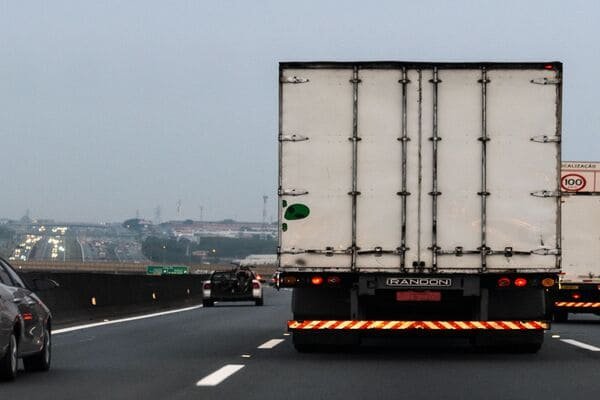
The real power of road freight is its adaptability. Unlike a ship or a plane that operates on a fixed schedule between major hubs, a truck can go almost anywhere, anytime10. This is a huge advantage for businesses that need to respond quickly to market demand or manage just-in-time inventory. If your factory is in Southern China and your distribution center is in Hanoi, road freight is often the fastest and most logical choice. It cuts out the extra handling and delays that come with using ports or airports, giving you more control over your supply chain.
The Strategic Advantages of Road Transport
Let's compare road freight to other modes for shipping electronics from a nearby country like China to Vietnam. The choice often comes down to your specific priorities: speed, cost, or flexibility.
| Factor | Road Freight | Air Freight | Sea Freight |
|---|---|---|---|
| Speed | Medium (2-5 days) | High (1-2 days) | Low (7-14 days) |
| Cost | Medium | High | Low |
| Flexibility | High (flexible routing/scheduling) | Low (fixed schedules) | Medium (port-to-port) |
| Door-to-Door | Excellent | Good (requires ground transport) | Fair (requires ground transport) |
Road freight occupies a strategic "sweet spot." It's significantly faster than sea freight, which is crucial for electronics where product cycles are short. At the same time, it's much more cost-effective than air freight, allowing you to ship larger volumes without destroying your profit margins. For a brand owner needing to restock their Amazon FBA inventory in Vietnam or a distributor who just received a large order, road freight provides a reliable, door-to-door solution that gets the product on the shelf quickly and efficiently. It's the workhorse of regional logistics.
How to Pack Electronics for Safe Road Transport?
Your electronics are packed and ready to go, but are they packed for the road? Standard packaging might not survive the journey, leading to costly damages and unhappy customers.
Use a multi-layer packing system. Start with anti-static bags11, then cushion the item with custom-fit foam12 inside a sturdy product box. Place this box inside a larger, double-walled shipping carton with at least two inches of cushioning on all sides. Seal securely and label clearly.
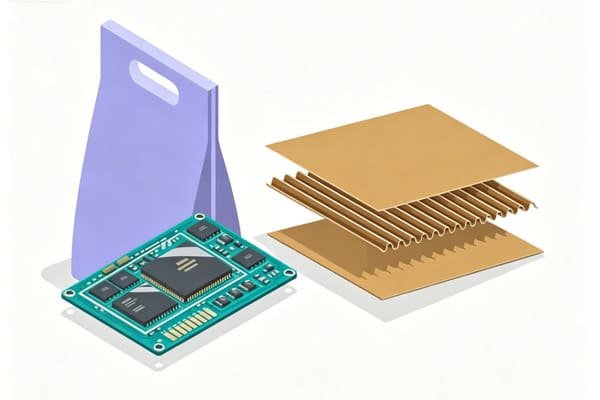
We’ve seen it all, from cracked screens to dislodged components, and almost every case of damage can be traced back to poor packaging. A truck journey involves constant, low-level vibration and the occasional major jolt. Your packaging is the only thing protecting your product from these forces. Investing a little extra time and money in proper packing is the best insurance you can buy. It ensures your customer receives the product in the perfect condition you sent it in, protecting your brand reputation and your bottom line.
A Step-by-Step Guide to Bulletproof Packaging
Follow these steps to give your electronics the protection they need for any road journey. This method, often called the "box-in-box" technique, is the industry standard for fragile goods.
-
Inner Protection: First, protect the electronics from static and moisture. Place the device and any sensitive components in sealed anti-static bags. If there are accessories, wrap them individually in small bubble wrap to prevent them from scratching the main unit.
-
Primary Cushioning: The device should fit snugly into its original product box or a custom-fit inner box. Use die-cut foam inserts that match the shape of your product. This prevents any movement inside the box, which is the primary cause of vibration damage.
-
The Double-Box Method: Place the inner box inside a larger, stronger shipping carton. The outer carton should be at least two inches larger than the inner box on all six sides. Fill this gap completely with cushioning material like packing peanuts, air pillows, or more foam to create a shock-absorbing buffer.
-
Sealing and Labeling: Seal the outer carton using the H-taping method. This means applying strong packing tape across all seams—top and bottom—to reinforce the box. Finally, apply clear labels: "FRAGILE," "HANDLE WITH CARE," and arrows indicating "THIS WAY UP." This communicates the nature of your contents to every handler along the way.
Conclusion
Shipping electronics to Vietnam by road is a safe and smart choice when done right. By managing risks with an expert partner and using proper packaging, you can get your products there efficiently.
"Simulation of Vibration Damage in Produce Transportation", https://www.academia.edu/88104268/Simulation_of_Vibration_Damage_in_Produce_Transportation. Distribution-packaging standards and transport-vibration studies identify shock, vibration, and handling events as common hazards that can damage packaged goods during truck transport. Evidence role: mechanism; source type: paper. Supports: Electronics shipped by road face physical-damage risks from vibration and handling.. Scope note: This supports the general damage mechanism for road freight, not a Vietnam-specific damage rate. ↩
"IUMI and TAPA EMEA warn of escalating cargo theft and ...", https://tapaemea.org/news/iumi-and-tapa-emea-warn-of-escalating-cargo-theft-and-freight-fraud/. Cargo-security reports from international transport or law-enforcement bodies document theft as a recurring risk for high-value goods moved by road. Evidence role: general_support; source type: institution. Supports: High-value electronics transported by road can be exposed to theft risk.. Scope note: Such sources usually report regional or global cargo-theft patterns and may not isolate electronics shipments to Vietnam. ↩
"The New WTO Trade Facilitation Agreement", https://ustr.gov/about-us/policy-offices/press-office/fact-sheets/2013/December/WTO-Trade-Facilitation-Agreement. Trade-facilitation guidance from customs and international trade institutions explains that border procedures, document checks, and regulatory compliance requirements can cause delays in cross-border freight movements. Evidence role: general_support; source type: institution. Supports: Regulatory requirements at border crossings can delay road freight shipments to Vietnam.. Scope note: This supports the general relationship between border regulation and delays, not the frequency of delays on a particular Vietnam route. ↩
"Measurement and analysis of US truck vibration for leaf spring and air ride ...", https://www.academia.edu/7665403/Measurement_and_analysis_of_US_truck_vibration_for_leaf_spring_and_air_ride_suspensions_and_development_of_tests_to_simulate_these_conditions. Transport-engineering studies compare truck suspension systems and show that air-ride suspension can reduce transmitted vibration or shock relative to conventional suspension under some road conditions. Evidence role: mechanism; source type: paper. Supports: Air-ride suspension trucks can help protect sensitive cargo from road vibration and shock.. Scope note: The degree of protection depends on vehicle design, load securing, road conditions, and packaging; it is not a substitute for product-level protective packaging. ↩
"2026 guide to GPS truck locks for fleet security and cargo protection", https://www.facebook.com/ikinglobal/posts/cargo-doesnt-get-stolen-sitting-in-a-warehouse-it-gets-stolen-on-the-roaddiverte/1084379971220292/. Cargo-security guidance commonly lists vehicle tracking, seal control, and locking systems as measures used to monitor freight and reduce opportunities for unauthorized access. Evidence role: expert_consensus; source type: institution. Supports: GPS tracking and secure locks are recognized cargo-security measures for road freight.. Scope note: These measures reduce exposure and improve detection but do not guarantee prevention of theft. ↩
"[PDF] Improving Vietnam's Sustainability - World Bank Documents and Reports", https://documents.worldbank.org/curated/en/838951468322143289/pdf/847100WP0Box382122B00PUBLIC0.pdf. Customs-clearance guidance and trade-facilitation studies identify incomplete or inaccurate documentation as a common cause of customs holds and clearance delays. Evidence role: general_support; source type: government. Supports: Incorrect or incomplete customs paperwork can delay Vietnam border clearance.. Scope note: Neutral sources may support documentation as a common cause of delay but may not verify the article’s stronger claim that it is the single leading cause at the Vietnam border. ↩
"Publication: Estimating Road Freight Transport Costs in ...", https://openknowledge.worldbank.org/entities/publication/079b75b3-b485-45db-b390-58c0d8c310e6. Regional transport analyses for mainland Southeast Asia describe road freight as important for short- and medium-distance cross-border trade because it can combine faster inland movement with lower costs than air for many shipments. Evidence role: general_support; source type: institution. Supports: Road freight can offer a practical speed-cost balance for China-to-Vietnam or neighboring-country shipments.. Scope note: The optimal mode depends on shipment size, origin and destination, border conditions, and service provider; the source may not prove road freight is always “best.” ↩
"[PDF] REGIONAL SHIPPING AND PORT DEVELOPMENT STUDY - ESCAP", https://www.unescap.org/sites/default/files/ESCAP_Global&Regional%20issues%20Port%20Development.pdf. Freight-mode descriptions from transport institutions distinguish road freight’s door-to-door capability from maritime transport’s port-based structure and note that trucking is generally faster than sea for many regional overland movements. Evidence role: definition; source type: institution. Supports: Road freight can provide door-to-door service and can be faster than sea freight for regional shipments.. Scope note: Transit-time comparisons vary by lane, customs clearance, consolidation, and sailing schedules. ↩
"Vietnam Port Congestion / Delay Status Data - GoComet", https://www.gocomet.com/real-time-port-congestion/vietnam. Port-performance and maritime-logistics research documents that port congestion can add waiting time to sea freight, while overland transport may bypass seaport handling when origin and destination are connected by road. Evidence role: general_support; source type: research. Supports: Road freight can avoid delays associated with congested seaports.. Scope note: This supports the mechanism of avoiding seaports, not that a specific Vietnam shipment will experience port congestion. ↩
"A comprehensive guide to freight types: road, air, sea, or rail. - Euro24", https://euro24.com/en/a-comprehensive-guide-to-freight-types-road-air-sea-or-rail/. Transport-geography and logistics sources describe road transport as more flexible in routing and scheduling than rail, sea, or air because trucks use extensive road networks and can serve dispersed origins and destinations. Evidence role: general_support; source type: education. Supports: Road freight offers greater routing and scheduling flexibility than some other transport modes.. Scope note: The phrase is broader than the evidence; trucks remain constrained by road access, border hours, permits, driver rules, and security conditions. ↩
"Do Not Reuse Anti-Static Bags - NASA Lessons Learned database", https://llis.nasa.gov/lesson/4176. Electrostatic-discharge control standards explain that static-sensitive electronic components should be protected with ESD-safe packaging, such as shielding or anti-static bags, during handling and transport. Evidence role: mechanism; source type: institution. Supports: Anti-static bags help protect electronics from electrostatic discharge during shipping.. Scope note: The correct bag type depends on the component sensitivity and the ESD-control program; not all anti-static bags provide the same level of shielding. ↩
"Package cushioning - Wikipedia", https://en.wikipedia.org/wiki/Package_cushioning. Protective-packaging research and standards describe cushioning materials as a way to limit product movement and attenuate shock during distribution. Evidence role: mechanism; source type: paper. Supports: Custom-fit foam can reduce movement and shock exposure for electronics in transit.. Scope note: Foam performance depends on density, thickness, product weight, drop height, and package design; custom fit alone does not guarantee adequate protection. ↩