

Shipping from China to Vietnam feels complicated. Delays and high costs can sink your budget. But a fast, affordable ground route offers a powerful alternative for your business.
Road freight is the top choice because it perfectly balances speed, cost, and flexibility for the high-volume trade between China and Vietnam[^1]. It avoids port delays, making it ideal for time-sensitive goods like electronics and machinery, offering a practical and efficient solution.

This gives you a quick overview. But to truly understand if it's right for you, we need to look closer. To make the best decision for your business, it's important to understand the details. Let's break down what road freight really is, why it's so efficient, and when you should use it.
What Is Road Freight from China to Vietnam?
New to cross-border shipping? The terminology can be confusing. If you pick the wrong method, you might face unexpected costs. Let's clarify exactly what road freight involves.
Road freight from China to Vietnam is the process of transporting goods by truck over land. Cargo is loaded in China and driven across major border crossings like Pingxiang or Hekou[^2], then directly into Vietnam for its final destination.
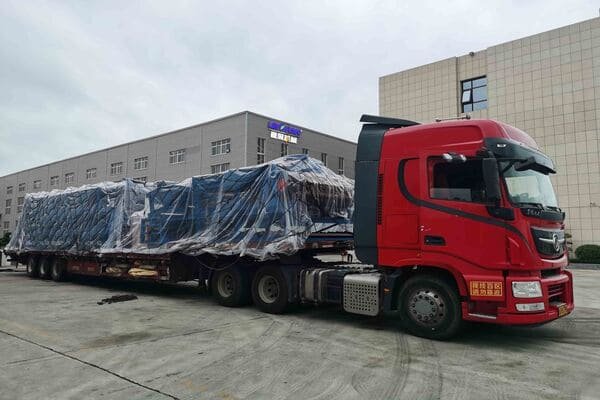
When we talk about road freight, we are talking about a very direct process. Imagine your goods are manufactured in Shenzhen. A truck arrives at the factory, your cargo is loaded, and the truck begins its journey. Instead of heading to a seaport, it drives south to a land border crossing, such as the Hữu Nghị Border Gate (linked to Pingxiang in China)[^3]. Here, the cargo goes through customs clearance for both export from China and import into Vietnam. Once cleared, the same truck, or a new one, continues its journey to the final destination, maybe a warehouse in Hanoi or a factory in Bac Ninh. This single mode of transport eliminates the multiple handling steps common in sea freight, where goods are moved from truck to port, loaded onto a vessel, unloaded at another port, and then loaded onto another truck.
The Road Freight Process Step-by-Step
The journey is more straightforward than other methods. Here is a simple breakdown:
| Step | Description |
|---|---|
| 1. Cargo Pickup | A truck picks up your goods directly from the factory or warehouse in China. |
| 2. Transit to Border | The truck drives to a designated land border crossing, like Pingxiang or Hekou. |
| 3. Customs Clearance | The shipment undergoes export declaration in China and import declaration in Vietnam. |
| 4. Border Crossing | After clearance, the truck physically crosses the border into Vietnam. |
| 5. Final Delivery | The truck travels from the border to the final delivery address in Vietnam. |
Why Is Road Freight Fast and Cost Effective to Vietnam?
Choosing between speed and cost is a constant struggle. Air is fast but pricey, while sea is cheap but slow. For this route, there's a middle ground that wins.
Road freight is fast because it offers a direct, non-stop route, cutting transit time to just a few days. It's cost-effective by avoiding expensive air freight charges and the multiple handling fees associated with sea ports, providing a great balance for your budget.
I remember a client who needed to ship a batch of new electronic devices from Dongguan to a distributor in Hanoi for a product launch. Sea freight would take over a week and risk missing the launch date. Air freight was an option, but it would have erased their profit margin. We suggested road freight. The truck was loaded on a Monday and arrived in Hanoi on Wednesday afternoon, perfectly on schedule and well within budget. This is a perfect example of its value. Speed is a huge advantage. A truck can travel from Southern China to Northern Vietnam in just 2-5 days. In contrast, sea freight can take 7-14 days when you include waiting times at ports. This speed allows for better inventory management and quicker response to market demand. From a cost perspective, it is much cheaper than air freight and very competitive with sea freight, especially when you factor in the reduced handling fees and storage costs.
Comparing Shipping Methods: China to Vietnam
To make it clearer, here is how the different methods stack up against each other.
| Shipping Method | Typical Transit Time | Cost Level | Best For |
|---|---|---|---|
| Road Freight | 2-5 Days | Medium | A balance of speed and cost |
| Sea Freight | 7-14 Days | Low | Large, non-urgent shipments |
| Air Freight | 1-2 Days | High | Small, extremely urgent shipments |
When to Use Road Freight from China to Vietnam?
Every shipment is different. Using the wrong logistics can lead to missed deadlines or wasted money. So how do you decide if trucking is your best bet?
You should use road freight for time-critical cargo like electronics, automotive parts, and seasonal goods. It is also perfect for shipments that require flexible inland delivery and when you need a solution that is faster than sea but cheaper than air freight.
The decision to use road freight often comes down to three factors: the type of cargo, its urgency, and your budget. This method is especially popular for businesses in the electronics, automotive, and fast-fashion industries. These sectors deal with high-value or time-sensitive products where speed to market is critical. For example, a new smartphone model needs to reach stores quickly before its value drops. Road freight is also highly efficient for shipments originating from southern Chinese manufacturing hubs like Guangdong and destined for industrial zones in northern Vietnam like Hanoi and Haiphong[^4]. The geographical proximity makes trucking an obvious choice. It provides the flexibility to choose between Full Truckload (FTL), where you book an entire truck for your goods, or Less-than-Truckload (LTL), where you share truck space and costs with other shippers. This makes it a scalable solution for businesses of all sizes.
Matching Your Needs to the Right Method
Consider your specific situation to see which method fits best.
| Your Situation | Recommended Method | Why? |
|---|---|---|
| Urgent restock of smartphones | Road Freight | It's much faster than sea freight and significantly cheaper than air freight. |
| Bulk shipment of furniture | Sea Freight | Cost is the main factor, and the goods are not time-sensitive. |
| A small box of critical repair parts | Air Freight | Speed is the absolute priority, and the cost is justified by the urgency. |
| Regular apparel shipments | Road Freight | It provides a reliable and consistent schedule that is faster than sea. |
Conclusion
Road freight is a top choice for China-Vietnam shipping due to its excellent balance of speed, cost, and flexibility. It remains the most practical choice for many time-sensitive shipments.