

Worried about shipping solar panels with batteries via LCL? A small mistake in declaration can cause major delays. But with the right rules, your shipment can sail through smoothly.
Yes, you can ship solar panels with lithium batteries via LCL1. They must meet simplified declaration rules under UN34812. This includes watt-hour limits3, correct packaging, and valid test reports.

This might sound straightforward, but the details are where many shippers get into trouble. A simple oversight can lead to your cargo being stopped at the port, creating costly delays and disrupting your entire supply chain. Let's break down exactly what you need to know to make your LCL shipment a success, starting with the basic rules.
LCL Shipping Rules for Solar Panels with Lithium Batteries?
Confused by the rules for LCL battery shipments? It feels like one wrong move means customs rejection. Let's clarify the exact steps to follow for a compliant shipment.
The key rule is compliance. Your batteries must be packed with the equipment, meet watt-hour limits, and have a UN38.3 report. The outer packaging must also be correctly labeled. Many shipping lines have their own extra rules for LCL.
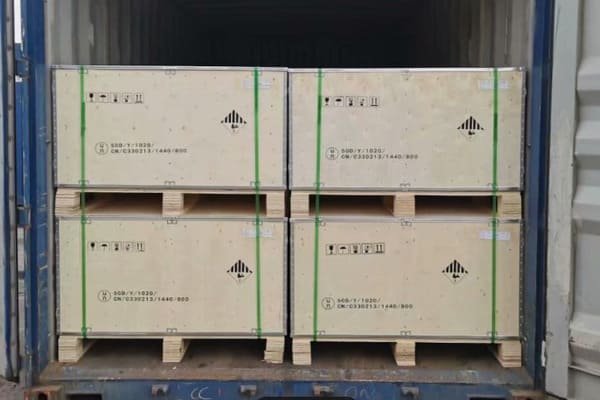
LCL shipping means your cargo shares a container with goods from many other customers. Because of this, shipping lines are extremely cautious about anything classified as dangerous, including lithium batteries. I remember a client from Germany who was shipping new solar-powered outdoor lights. He thought because the batteries were small, it would be simple. But the carrier rejected his cargo at the port because the outer box wasn't labeled with the correct lithium battery mark. We had to get the cargo re-labeled, which delayed his shipment by a week.
The first step is always to confirm the battery's status. For solar panels that come with a separate battery in the same box, the classification is usually UN3481 (Lithium-ion batteries packed with equipment4). This is different from UN3480 (Lithium-ion batteries)5 or UN3091 (Lithium-metal batteries packed with equipment)6. You must provide the correct UN number along with essential documents like the Material Safety Data Sheet (MSDS) and a valid UN38.3 test7 report before booking. This pre-check is critical because many carriers have strict internal policies for LCL battery shipments, and some won't accept them at all.
When Can Lithium Batteries Qualify for Simplified Declaration (UN3481)?
Dealing with full dangerous goods paperwork is a headache. It's expensive, complex, and slow. But what if your batteries could qualify for a much simpler, faster declaration process?
Your batteries can qualify for simplified declaration (under packing instruction PI966 Section II) if they are packed with equipment, have a watt-hour rating under 100Wh8, and pass the UN38.3 test. Proper packaging and labeling are also required.
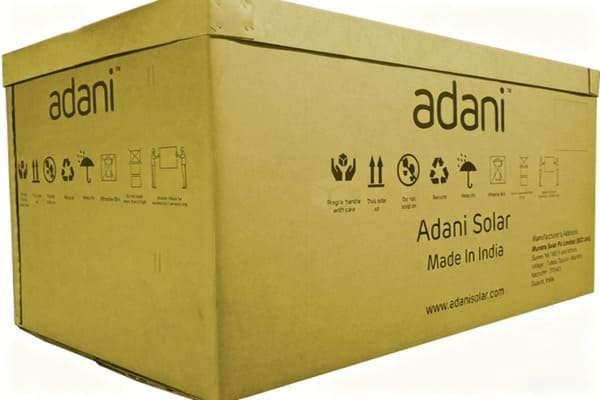
This "simplified declaration" is what most e-commerce sellers and brand owners hope for. It allows the cargo to be handled similarly to general cargo, avoiding the high costs and strict requirements of a full Dangerous Goods (DG) shipment. But "simplified" does not mean "no rules." It means there are specific, non-negotiable conditions your product must meet. I once had a client in the U.S. trying to ship new electronic prototypes. They didn't have a UN38.3 test report yet. We had to explain that without this report, no carrier would accept the cargo, even if the batteries were small. The UN38.3 test is proof that your battery is safe for transport.
Here are the core requirements for the simplified procedure:
| Requirement | Specification | Why It Matters |
|---|---|---|
| Battery Type | UN3481, packed with equipment | The battery is not inside the device, but in the same box. |
| Watt-Hour (Wh) Rating | Each battery must be ≤ 100Wh. | This is the international safety threshold for lower-risk batteries. |
| Cell Watt-Hour Rating | Each cell within the battery must be ≤ 20Wh. | Ensures the individual components are also within safety limits. |
| Safety Test Report | A valid and complete UN38.3 test report is mandatory. | Proves the battery can withstand vibrations, pressure, and shocks during transit. |
| Packaging | Batteries must be protected from short circuits. Strong outer packaging is required.9 | Prevents accidental activation or damage during handling. |
Meeting all these conditions is the only way to access the simpler shipping process.
Why Your Battery LCL Shipment Gets Rejected (And How to Avoid It)?
Has your LCL shipment been rejected at the last minute? It's frustrating, costly, and can ruin your delivery schedule. Let's look at the common reasons why this happens and how to prevent it.
Shipments are often rejected for three main reasons: incorrect or missing documents (MSDS, UN38.3), improper packaging and labeling, or booking with a carrier that doesn't accept batteries in LCL. Pre-booking checks with your forwarder are the best way to avoid this.

I can't count the number of times new clients have come to us after their shipment was rejected. The most common cause is a simple, avoidable error. A few years ago, a sports brand owner tried to ship a small LCL order of smart helmets to Australia. His previous forwarder just booked it as general cargo. When the carrier did a random inspection, they found the undeclared lithium batteries and immediately offloaded the entire container. The fines and delays were significant.
Here are the top three rejection reasons and how to fix them:
- Documentation Errors: This is number one. The MSDS might be outdated, the UN38.3 report is for a different model, or the company name on the report doesn't match the shipper's. Every detail must align perfectly. We always ask for these documents upfront to vet them before even contacting a carrier.
- Improper Packaging & Labeling: The rules are clear. Batteries must be protected from short-circuiting, and the outer box must have the correct lithium battery mark. If customs or the warehouse staff inspects the cargo and finds a missing label, they will stop it.
- Carrier Restrictions: This is a huge issue for LCL. Not all shipping lines will accept batteries in their consolidated containers, period. Some have a complete ban. A freight forwarder who doesn't specialize in batteries might get you a cheap quote, only for you to find out later that the carrier won't load your cargo. We maintain a database of which carriers accept batteries on which routes, saving our clients from this exact problem.
The solution is always preparation. By working with an experienced partner like us, you ensure every document is checked, the packaging is compliant, and the booking is made with a suitable carrier from the start.
Conclusion
Shipping solar panels with batteries via LCL is possible with careful planning. Follow the rules, prepare your documents, and partner with an expert to ensure a smooth journey.
"[PDF] Lithium Battery Guide for Shippers - PHMSA", https://www.phmsa.dot.gov/sites/phmsa.dot.gov/files/2024-11/Lithium-Battery-Guide-2024.pdf. International dangerous-goods transport rules permit lithium batteries to be transported when they are correctly classified, packaged, marked, and documented, supporting the general feasibility of shipping solar products with batteries in consolidated freight. Evidence role: general_support; source type: institution. Supports: Solar panels with lithium batteries can be shipped via LCL if regulatory conditions are met.. Scope note: The source would support the regulatory possibility of transport, not guarantee acceptance by every LCL consolidator or carrier. ↩
"[PDF] Lithium Battery Guide for Shippers - PHMSA", https://www.phmsa.dot.gov/sites/phmsa.dot.gov/files/2024-11/Lithium-Battery-Guide-2024.pdf. Dangerous-goods classification references identify UN 3481 as lithium ion batteries packed with equipment or contained in equipment, supporting the article’s classification of batteries shipped with solar equipment. Evidence role: definition; source type: institution. Supports: Solar panels shipped with separate lithium-ion batteries in the same package are usually classified under UN3481.. ↩
"[PDF] Lithium Battery Guide for Shippers - PHMSA", https://www.phmsa.dot.gov/sites/phmsa.dot.gov/files/2024-11/Lithium-Battery-Guide-2024.pdf. Lithium-battery transport guidance sets watt-hour thresholds for lithium-ion cells and batteries used in reduced-requirement shipping provisions, supporting the article’s statement that watt-hour limits affect declaration requirements. Evidence role: definition; source type: government. Supports: Lithium batteries shipped under simplified provisions must comply with watt-hour limits.. Scope note: The applicable thresholds vary by transport mode and packing instruction, so the citation should be matched to the relevant ocean or air rule being discussed. ↩
"[PDF] Lithium Battery Guide for Shippers - PHMSA", https://www.phmsa.dot.gov/sites/phmsa.dot.gov/files/2024-11/Lithium-Battery-Guide-2024.pdf. UN dangerous-goods listings distinguish lithium-ion batteries packed with equipment from standalone lithium-ion batteries, supporting the article’s description of the UN3481 category. Evidence role: definition; source type: institution. Supports: UN3481 covers lithium-ion batteries packed with equipment.. ↩
"[PDF] Lithium Battery Guide for Shippers - PHMSA", https://www.phmsa.dot.gov/sites/phmsa.dot.gov/files/2024-11/Lithium-Battery-Guide-2024.pdf. Dangerous-goods classification tables identify UN 3480 as lithium-ion batteries shipped by themselves, supporting the article’s distinction between standalone batteries and batteries packed with equipment. Evidence role: definition; source type: institution. Supports: UN3480 applies to standalone lithium-ion batteries.. ↩
"Transporting Lithium Batteries - PHMSA", https://www.phmsa.dot.gov/lithiumbatteries. Dangerous-goods classification references identify UN 3091 as lithium metal batteries packed with or contained in equipment, supporting the article’s distinction from lithium-ion UN3481 shipments. Evidence role: definition; source type: institution. Supports: UN3091 applies to lithium-metal batteries packed with equipment or contained in equipment.. ↩
"Lithium Battery Test Summaries (TS) - PHMSA", https://www.phmsa.dot.gov/training/hazmat/new-un-requirement-test-summaries. The UN Manual of Tests and Criteria subsection 38.3 specifies transport safety tests for lithium batteries, including altitude simulation, thermal, vibration, shock, external short circuit, impact/crush, overcharge, and forced discharge tests, supporting the article’s description of UN38.3 as transport-safety testing. Evidence role: mechanism; source type: institution. Supports: UN38.3 testing is used to demonstrate that lithium batteries can withstand transport-related hazards.. Scope note: The source explains the test regime; it does not prove that any particular battery model has passed unless paired with that model’s test summary or report. ↩
"[PDF] Lithium Battery Guide for Shippers - PHMSA", https://www.phmsa.dot.gov/sites/phmsa.dot.gov/files/2024-11/Lithium-Battery-Guide-2024.pdf. Lithium-battery shipping provisions use a 100 Wh threshold for certain lithium-ion batteries and a 20 Wh threshold for cells in reduced-regulation categories, supporting the article’s stated capacity limits. Evidence role: definition; source type: institution. Supports: Simplified lithium-ion battery provisions commonly require batteries not to exceed 100 Wh.. Scope note: The cited rule must correspond to the transport mode and packing instruction; air-specific IATA provisions do not by themselves establish ocean LCL requirements. ↩
"Safe Travel with Lithium Batteries - IATA", https://www.iata.org/en/youandiata/travelers/batteries/. Lithium-battery transport guidance requires measures to prevent short circuits and damage, including suitable inner protection and strong outer packaging, supporting the article’s packaging requirements. Evidence role: mechanism; source type: government. Supports: Lithium batteries must be packaged to prevent short circuits and must use strong outer packaging.. Scope note: Specific packaging details can differ by transport mode, battery type, and quantity, so the citation should align with the shipment’s applicable rule set. ↩