
Your temperature-sensitive shipment arrived damaged, and you're left wondering why. You used a reefer container, so what could have possibly gone wrong? The answer might surprise you.
A reefer container's job is to maintain a set temperature, not to cool down your cargo. Loading warm products, a mistake known as "hot loading," is a primary cause of cargo damage1, even when the equipment's temperature display looks perfect. It's a hidden but costly risk.
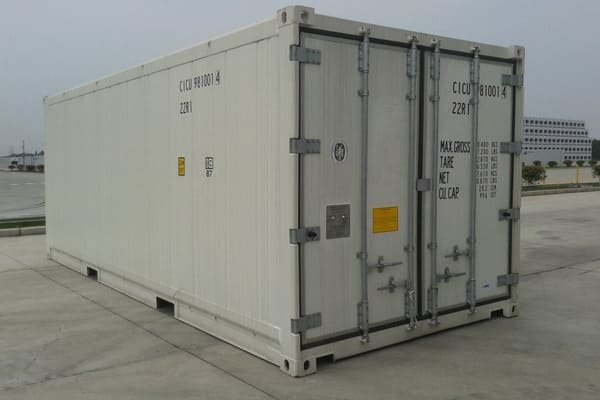
This misunderstanding is one of the most common and expensive mistakes2 I see in cold chain logistics. People see a giant refrigerated box and assume it works like their freezer at home—that you can put something warm inside and it will quickly get cold. But that’s not how they are designed. A reefer container is a precision instrument for maintaining a stable environment, and using it as a blast chiller is a recipe for disaster. The technology is there to protect your cargo, but only if you use it correctly. Understanding the real function of a reefer is the first step to ensuring your valuable goods arrive in perfect condition, every single time. Let's break down why this happens and what you can do about it.
Can Reefer Containers Cool Down Hot Cargo?
Many shippers ask: can reefer containers cool down hot cargo after loading? The answer is no. Let's clarify its real function to protect your shipment.
Reefer containers refrigeration units are designed to circulate cool air and maintain a specific temperature, not to remove large amounts of heat3 from a warm load. This is a critical distinction that protects your investment.
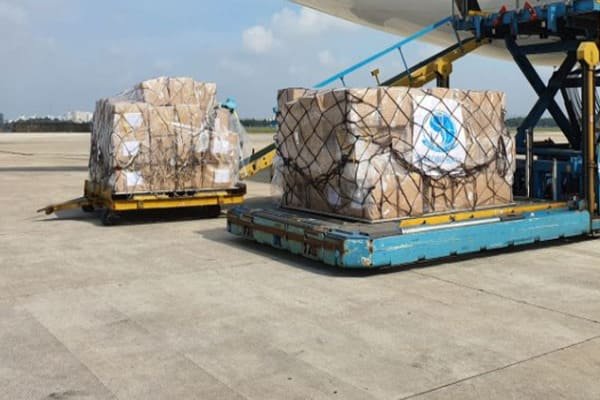
A reefer container works by circulating chilled air throughout the cargo space. The system is designed for temperature maintenance, not for heavy-duty cooling. The unit pulls air from the container (return air), cools it to the setpoint, and then pushes it back in (supply air). The key thing to understand is that the sensors measure the temperature of the air, not the temperature at the core of your product4.
When you load warm cargo, a dangerous situation develops. The reefer's unit will run constantly, trying to cool the air to the set temperature. While the air temperature might look correct on the data logger, the core of your pallets can remain warm for days5. This process is called "hot loading," and it's a silent cargo killer. I once saw a shipment of fruit completely ruined because the shipper loaded it straight from the field on a hot day, thinking the reefer would cool it down in transit. It didn't. The outside of the pallets was cool, but the inside was a hot, spoiled mess.
Reefer Container vs. Blast Freezer
| Feature | Reefer Container | Blast Freezer |
|---|---|---|
| Primary Function | Maintain Temperature | Rapidly Decrease Temperature |
| Power | Designed for efficiency over long trips | High-powered for intense, short-term cooling |
| Airflow | Gentle, consistent circulation | High-velocity, powerful blasts of air |
| Best Use Case | Transporting pre-cooled goods | Bringing warm goods to a safe temperature |
Why Pre-Cooling Is Critical for Reefer Shipping?
Your cold chain was broken, and your cargo spoiled. You followed the temperature settings, so what went wrong? The problem likely started before the container was even loaded.
Reefer cargo pre-cooling requirements are essential6 for maintaining proper temperature during cold chain shipping. Because it brings your cargo to the target temperature before it enters the reefer. This ensures the container's system only has to maintain the temperature, not fight to lower it. This step is the foundation of a successful cold chain shipment.
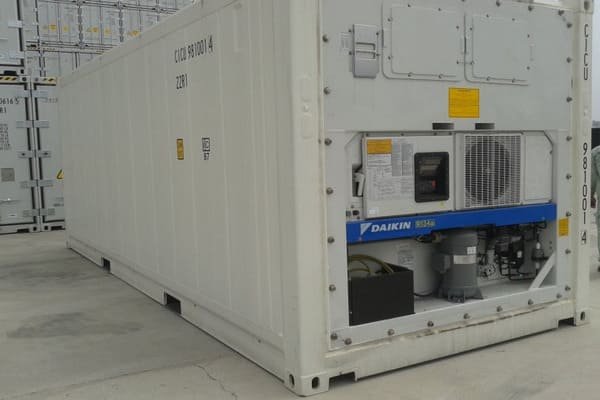
Pre-cooling is the most important step you can take to guarantee the integrity of your temperature-sensitive cargo. It's about removing the "field heat" from your product and getting its internal temperature—often called the "pulp temperature7"—down to the required shipping level. Trying to do this inside the reefer container itself puts immense strain on the unit and, as we've discussed, rarely works. The container is simply not a blast freezer. A successful cold chain is a chain of controlled environments. If you load properly pre-cooled cargo from a chilled loading dock into a pre-cooled reefer container, you have created a seamless cold chain. But if any one of those links is broken—for example, by loading across a hot, sunny dock—you introduce heat that the reefer will struggle to remove.
The Steps to Proper Pre-Cooling
- Cool the Cargo First: Use a proper facility, like a blast freezer or cold storage room, to bring the entire shipment to its target temperature. You must verify the core temperature, not just the surface.
- Pre-Cool the Container: Before loading, run the empty reefer until it reaches the set temperature. This removes any residual heat from the container walls and floor.
- Control the Loading Environment: Load the cargo as quickly as possible in a controlled, preferably chilled, environment. Avoid loading on a hot day with the container doors wide open for hours.
- Ensure Proper Stacking: Stack your cargo to allow for proper airflow8. Don't block the vents at the front and back of the container. Air needs to circulate around and through the load to maintain temperature.
I remember a client shipping high-value pharmaceuticals. They invested in state-of-the-art pre-cooling chambers and a sealed, refrigerated docking system. It seemed expensive upfront, but it paid off. Their product always arrived perfectly, while competitors who cut corners frequently faced huge losses from spoiled shipments.
Who Pays for Cargo Damage in Reefer Shipping?
Your cargo was damaged due to temperature issues. Now you're facing a financial loss and a dispute over who is to blame. Understanding responsibility is key to preventing this situation.
In most cases of cargo damage from improper temperature management, the shipper is held responsible9. If the damage resulted from "hot loading" or failure to pre-cool, the liability typically falls on the shipper, not the carrier, as the reefer performed its intended function.
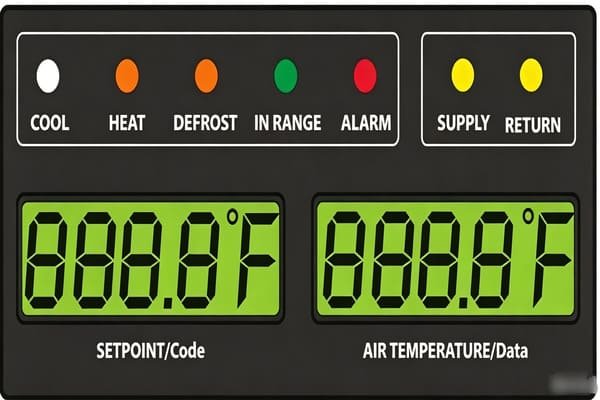
When a refrigerated shipment goes wrong, the first question is always, "Who is at fault?" The answer almost always lies in the data. Reefer containers have sophisticated data loggers10 that record temperature, humidity, and vent settings for the entire journey. This data log is the ultimate source of truth. If the log shows that the carrier maintained the temperature you requested, but the cargo still arrived damaged, the investigation will turn to the shipper's actions. Did you provide the cargo at the correct temperature? Was it loaded correctly to allow for airflow? Was the temperature setting you provided the right one for that specific product?
The carrier's main responsibility11 is to provide a clean, fully functional reefer container and to ensure it maintains the temperature set by the shipper. The shipper's responsibility is to provide the cargo in a condition that is ready for transport. This clear division of duties is crucial.
Shipper vs. Carrier Responsibilities
| Party | Responsibilities |
|---|---|
| Shipper | - Properly pre-cooling the cargo to its core. - Using correct packaging for cold chain transit. - Correctly loading and stowing the cargo for proper airflow. - Providing the carrier with the exact, correct temperature setting. |
| Carrier | - Providing a clean container that has been pre-tripped and is mechanically sound. - Maintaining the shipper's requested temperature setpoint during transit. - Providing the data logger records upon request in case of an issue. |
We have helped many clients navigate these situations. The best defense is a good offense. By establishing a clear, documented process for pre-cooling and loading, and by working with a logistics partner who understands these details, you can prevent most disputes before they even begin. Documentation is everything.
Conclusion
Reefer containers maintain, not cool. Proper pre-cooling and expert handling are essential for success. Get these steps right to protect your cargo, your reputation, and your bottom line.
"Reefer Cargo Damage: From Reactive Fixes to Proactive ...", https://www.identecsolutions.com/news/reefer-cargo-damage-from-reactive-fixes-to-proactive-prevention. A source could provide statistics or analysis from the transport and logistics insurance industry, indicating that temperature-related issues, often stemming from incorrect cargo preparation like hot loading, are a leading cause of claims for reefer shipments. Evidence role: statistic; source type: research. Supports: The claim that improper temperature management, including failure to pre-cool cargo (hot loading), is a major source of financial loss and claims in refrigerated transport.. ↩
"The True Cost of Cold Chain Failures: $35B Lost Every Year", https://ardem.com/bpo/cost-of-cold-chain-failures/. A source could be a report from a logistics or insurance institution that analyzes the frequency and financial impact of different types of errors in cold chain management, supporting the idea that pre-cooling failures are a significant issue. Evidence role: statistic; source type: research. Supports: The claim that procedural errors, particularly those related to temperature management before loading, are a frequent and costly problem in the cold chain industry.. Scope note: The source may not use the exact phrase 'most common and expensive' but can provide data showing these errors are a leading category of costly incidents. ↩
"What is a reefer container? Facts & dimensions", https://www.kuehne-nagel.com/us/how-to/sea-freight/what-is-a-reefer-container. A source such as a technical guide from a container industry association or a major reefer manufacturer can explain that the refrigeration systems are sized to manage heat ingress from ambient conditions and respiration, not to perform the function of a blast freezer by removing significant field heat from cargo. Evidence role: mechanism; source type: institution. Supports: The claim that reefer units are engineered for temperature maintenance and have limited capacity to cool down cargo with a high thermal load.. ↩
"Temperature Monitoring For Shipping Containers", https://wlius.com/applications/temperature-monitors-for-shipping-containers/. A source could be a research paper on cold chain technology or a manufacturer's manual, which would describe the standard placement of sensors to monitor the return and supply air temperatures, thereby confirming that they do not directly measure the cargo's core (or 'pulp') temperature. Evidence role: mechanism; source type: paper. Supports: The claim that standard reefer container sensors measure the temperature of the circulating air, not the internal temperature of the cargo itself.. ↩
"Analysis of the Temperature Distribution in a Refrigerated ...", https://pmc.ncbi.nlm.nih.gov/articles/PMC8625125/. A source could be a scientific study or a documented case that uses temperature probes placed within a cargo load to demonstrate the slow rate of cooling at the core of pallets compared to the rapid cooling of the surrounding air within the container. Evidence role: case_reference; source type: paper. Supports: The claim that the core temperature of improperly pre-cooled cargo can stay elevated for an extended period, such as several days, during transit.. Scope note: The exact time will vary based on the product, its packaging, and stowage, but the source can support the general principle of a significant time lag. ↩
"FSIS Safety and Security Guidelines and Distribution of", https://www.ams.usda.gov/sites/default/files/media/FSIS%20Safety%20and%20Security%20Guidelines%20for%20the%20Transportation%20and%20Distribution%20of%20Meat%2C%20Poultry%2C%20and%20Egg%20Products.pdf. A source such as a handbook from a government agricultural department or a food safety agency can be cited to show that pre-cooling is stipulated as a required step to ensure the quality and safety of perishable commodities during transport. Evidence role: general_support; source type: government. Supports: The claim that pre-cooling is a critical and often mandatory step for shipping temperature-sensitive goods.. ↩
"Mail Order Food Safety", http://www.fsis.usda.gov/food-safety/safe-food-handling-and-preparation/food-safety-basics/mail-order-food-safety. A source from a horticultural or post-harvest technology resource could define 'pulp temperature' as the temperature at the center of the product, which is the standard metric for ensuring that produce has been adequately pre-cooled before shipment. Evidence role: definition; source type: encyclopedia. Supports: The definition of 'pulp temperature' as the internal temperature of a fruit or vegetable.. ↩
"Enhanced airflow in a refrigerated container by improving ...", https://www.sciencedirect.com/science/article/abs/pii/S0140700720303509. A source such as a cargo stowage guide from a major ocean carrier or an industry association can provide diagrams and instructions illustrating how to load cargo to avoid blocking air channels, ensuring that chilled air can circulate around and through the load to maintain a uniform temperature. Evidence role: general_support; source type: institution. Supports: The claim that specific stacking patterns are necessary in reefer containers to facilitate proper air circulation.. ↩
"10.14 Bill of Lading Requirements - CSA", https://csa.fmcsa.dot.gov/SafetyPlanner/MyFiles/Sections.aspx?ch=29&sec=125. A source from a maritime law firm, a freight forwarders' association, or a marine insurance provider could explain that under typical carriage contracts, the carrier's duty is to maintain the set temperature, while the shipper is responsible for providing the cargo at the correct temperature. If the data logger proves the carrier fulfilled its duty, liability shifts to the shipper. Evidence role: expert_consensus; source type: other. Supports: The claim that liability for damage resulting from hot loading typically falls on the shipper.. Scope note: Liability can be complex and depend on the specific contract (Bill of Lading) and jurisdiction, but the source can confirm this as the general principle. ↩
"Reefer Container + Temperature Data Logger - ProSense", https://www.prosense.com.au/post/reefer-container-temperature-data-logger-the-smart-cold-chain-duo?srsltid=AfmBOorSxmITWXLqtXXNLZlypcL-IF5YhmRRGq4-dsTFq72F0nxkwyyX. A source such as a technical specification sheet from a leading reefer manufacturer or a review of cold chain technology can confirm that electronic data loggers integrated into reefer units record a range of parameters, which may include supply and return air temperature, ambient temperature, humidity levels, and fresh air exchange vent settings. Evidence role: definition; source type: research. Supports: The claim that modern reefer data loggers record multiple environmental variables beyond just temperature.. ↩
"Carrier's Responsibility for Refrigerated Containers", https://rates.tropical.com/tsrates/rules/STB%20WEB%20TTRU%20708/Rule-2.43-Carrier-Responsibility-Refrigerated-Ctr-Original.htm. A source discussing international carriage of goods conventions or standard carrier terms and conditions can confirm that the carrier is obligated to exercise due diligence to provide a seaworthy and properly functioning container (including a pre-trip inspection) and to maintain the temperature setpoint provided by the shipper throughout the voyage. Evidence role: general_support; source type: government. Supports: The claim outlining the carrier's primary responsibilities in the transport of refrigerated goods. ↩