
Shipping expensive cabinets is risky. They can get damaged from vibration, collision, or moisture. Proper pallet loading is your first and most important line of defense against these issues.
The best way to load energy storage cabinets1 is to use a qualified, heat-treated wood pallet. Then, install rigid corner guards on all four corners, and tightly wrap the entire unit with multiple layers of stretch film. This method protects against vibration, impact, and moisture damage during shipping.
Getting your valuable energy storage systems (ESS) to your customers safely is our top priority. We are going to walk through the exact steps we take to ensure every cabinet arrives in perfect condition, from choosing the right pallet to stacking it correctly in the container. Let's make sure your products are protected.
How Do You Select the Right Export Wood Pallet and Check its Bearing Capacity?
Using the wrong pallet is a disaster waiting to happen. A weak pallet could collapse under the weight, damaging your expensive cabinets and creating a huge safety hazard for everyone.
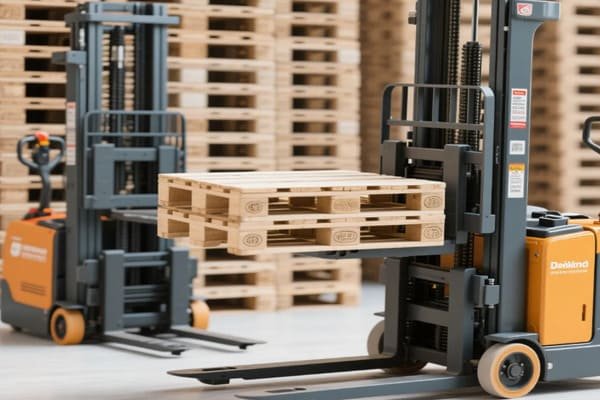
To select the right pallet, choose one that is heat-treated (HT) and stamped according to ISPM 15 standards2 for international export. Most importantly, confirm the pallet's dynamic load capacity3 is significantly higher than the weight of your energy storage cabinet to prevent failure during transit.

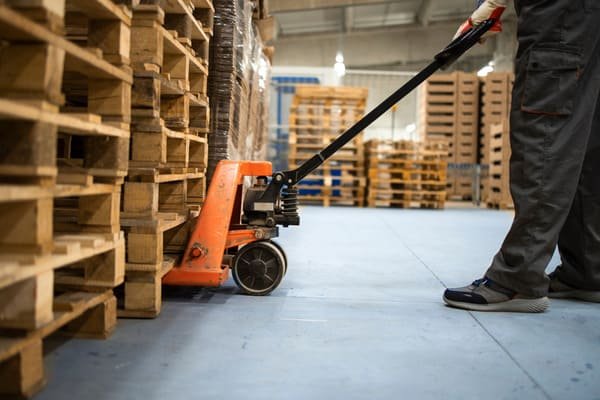
The pallet is the foundation of your entire shipment. If the foundation fails, everything on top of it fails too. That’s why selecting the right one is a critical first step. For international shipping, all wood packaging material must comply with the ISPM 15 standard to prevent the spread of pests. This means the wood must be heat-treated (HT) or fumigated, and you must see the official ISPM 15 stamp on the pallet. Without this stamp, your shipment can be stopped, quarantined, or even destroyed by customs. Beyond compliance, the pallet’s strength is crucial. You must check the dynamic load capacity, which is the maximum weight a pallet can hold while being moved by a forklift or on a truck. It is different from the static capacity (weight while stationary). For a heavy item like an ESS cabinet, the dynamic capacity must be well above the cabinet's weight to provide a safe margin.
| Pallet Feature | Standard Requirement | Why It's Important for ESS Cabinets? |
|---|---|---|
| Wood Treatment | ISPM 15 Stamped (HT) | Prevents customs rejection or delays in countries like the US, UK, and EU. |
| Dynamic Capacity | Must exceed cabinet weight | Supports the load during rough handling and transport movement. |
| Pallet Type | 4-way entry, block pallet | Allows for easier and more stable handling by forklifts from any side. |
| Pallet Size | Match or slightly exceed cabinet base | Prevents overhang, which leads to instability and damage. |
What is the Standard for Installing L-Type Corner Guards to Prevent Collision Damage?
The corners of your cabinets are very vulnerable during shipping. A small bump can cause a big dent or scratch, which makes your product look bad and can even affect its function.
Use thick, rigid L-type corner guards that cover the full vertical height of the cabinet on all four corners. You must secure them tightly under the stretch wrap to create a protective frame that absorbs and distributes impact forces away from the cabinet itself4.

Think of corner guards as an exoskeleton for your product. They are not just for show; they provide critical structural protection. During loading, unloading, and transit, pallets can get bumped by forklifts or shift against other cargo. Without corner guards, these impacts go directly into the corners of your cabinet. A good quality, thick cardboard or plastic corner guard takes that hit instead. The force is distributed along the length of the guard, preventing focused damage.
The installation process is simple but must be done correctly. First, place the cabinet in the center of the pallet. Then, position one corner guard on each of the four vertical edges, making sure they run from the pallet base to the top of the cabinet. Before you start the main wrapping, use the first few layers of stretch wrap or strapping to hold the guards firmly in place so they don't shift. This simple, low-cost step is one of the most effective ways we prevent cosmetic and structural damage during the entire shipping journey.
How Do You Properly Stretch Wrap a Pallet for Vibration and Moisture Resistance?
A loosely wrapped pallet is a big problem. The load can shift, and moisture can get in. This leads to vibration damage to internal components and potential water damage to sensitive electronics.
To wrap correctly, first anchor the stretch wrap to the pallet base. Then, wrap upwards, overlapping each layer by at least 50%. Finally, wrap the bottom and top sections multiple times to securely lock the load to the pallet and provide maximum stability against movement.
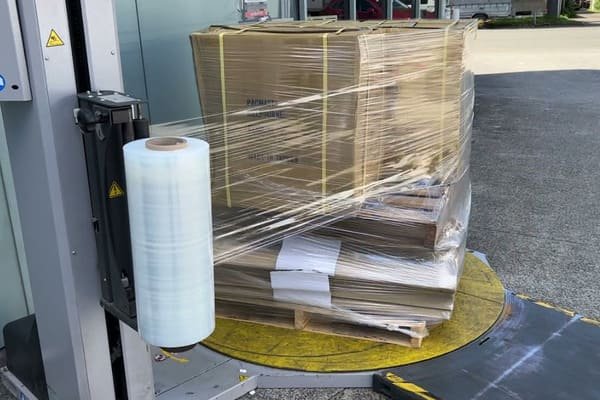
Proper stretch wrapping does two things: it unifies the cabinet and pallet into a single, solid block, and it creates a barrier against moisture and dust. The key to effective wrapping is tension. The film must be stretched as it is applied. Here is the professional process we follow every time:
- Anchor the Load: We start by tying the film to a leg of the pallet or by tucking it under a corner. Then, we wrap the base of the pallet and the bottom of the cabinet 3 to 5 times. This step is the most critical because it physically locks the cabinet to the pallet.
- Wrap Upwards with Overlap: We continue wrapping up the cabinet, making sure each new layer overlaps the previous one by about 50%. This creates a strong, continuous sheet of film with no gaps. We keep the film roll under tension the whole time.
- Wrap Downwards: Once we reach the top, we wrap back down to the bottom, again with a 50% overlap. This double layer adds significant strength.
- Reinforce with Roping: For heavy items like ESS cabinets, we finish by creating a "rope." We twist the film into a thick cord and wrap it around the top and bottom of the pallet a few times. This banding technique provides incredible strength5 and stops any chance of the load shifting.
What are the Scientific Rules for Stacking ESS Pallets in a Container?
Stacking pallets incorrectly can crush the units at the bottom. This can mean a total loss of multiple cabinets, leading to huge financial losses and unhappy customers for you.
You should never stack energy storage cabinets unless they are in specially designed, sturdy crates. If stacking is absolutely necessary and approved, use an interlocking "brick" pattern6 and place thick plywood sheets between layers to distribute weight evenly7.
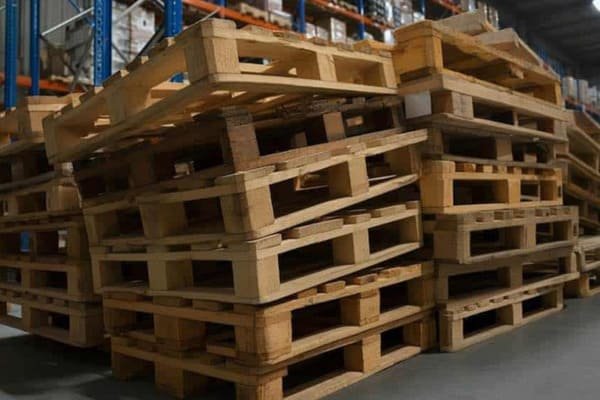
The number one rule for shipping heavy, high-value items like energy storage cabinets is this: do not stack them. These units are heavy, often with a high center of gravity, and are not designed to bear weight on top. A single palletized cabinet should be loaded on the container floor and securely braced. However, sometimes smaller units are packed in reinforced crates that are specifically designed for stacking. In these rare cases, you must follow strict rules to do it safely.
First, the heaviest crates always go on the bottom. Second, the crates should be stacked in an interlocking or "brick-lay" pattern, so the corners of the top crate do not align directly with the corners of the crate below it. This distributes the load more broadly. Most importantly, you must place a thick sheet of plywood or other dunnage material between each layer. This acts as a new floor for the crate above, spreading the weight across the entire surface of the crate below it, instead of concentrating the pressure on its four corners. Finally, the entire stack must be securely strapped and braced against the container walls to prevent any movement during the rough seas.
What Common Pallet Loading Mistakes Should You Avoid to Prevent Damage?
Many shipments are damaged because of simple, avoidable mistakes. These small errors can cost you a lot of money, waste your time, and damage your reputation with your customers.
The most common mistakes are using weak pallets, letting the product hang over the pallet's edge, wrapping the load too loosely, and skipping corner protectors.8 These errors directly cause instability, impact damage, and load shifting, which are the main reasons for shipping damage.

In my 20 years in logistics, I've seen the same mistakes repeated over and over. They are all easy to avoid if you know what to look for. Paying attention to these details is what separates a professional packing job from a risky one. A pallet that leaves your warehouse looking good might fall apart during transit if these basic rules aren't followed. The vibration on a truck, the lifting and dropping by a forklift, and the constant motion of a ship at sea will expose any weakness in your pallet loading process. Here are the most frequent mistakes we see and how to fix them before they become a costly problem for your business.
| Mistake | Consequence | The Professional Solution |
|---|---|---|
| Pallet Overhang | The cabinet hangs over the pallet edges, creating instability and exposing it to punctures. | Use a pallet that is the same size or slightly larger than the cabinet's base. |
| Weak or Damaged Pallet | The pallet cannot support the cabinet's weight during movement, leading to a collapse. | Always check the dynamic load rating and use a sturdy, new, or like-new pallet. |
| Loose Stretch Wrap | The film is not tight, allowing the cabinet to shift on or even separate from the pallet. | Apply the film with constant tension. Use a machine for consistency if possible. |
| No Corner Guards | The cabinet's corners and edges are unprotected and can be easily dented or crushed. | Always install rigid, full-height corner guards on all four corners before wrapping. |
| Improper Stacking | Stacking non-stackable items or using a pyramid stack creates a high risk of toppling. | Do not stack heavy single units. Brace them securely on the container floor. |
How Can a Professional Freight Forwarder Optimize Your Pallet Loading?
You are an expert in your product, not necessarily in global logistics. Trying to manage this complex process yourself can lead to costly mistakes, delays, and damaged goods, which can frustrate you.
A professional partner like us provides a complete, end-to-end solution. We handle pallet selection, professional packing, load planning, container reinforcement, and all the required Dangerous Goods (DG) documentation. We ensure your cargo is secure and compliant.
When you partner with a specialized freight forwarder, you are buying peace of mind. We take the guesswork and risk out of shipping your high-value energy storage cabinets. Our team has been doing this since 2011, and we have developed a standardized process built on years of experience. We don't just pack a box; we engineer a shipping solution. This starts with understanding your product's specific needs. We then plan the entire process, from sourcing the correct ISPM 15 pallets to planning the optimal load configuration inside the container to maximize safety and efficiency.
Many energy storage systems are classified as Dangerous Goods (e.g., UN3480 for lithium-ion batteries9). Handling the paperwork and compliance for DG shipments is complex and unforgiving. We are experts in this area. We manage all DG declarations and ensure every shipment meets the strict regulations for countries like the USA, Canada, UK, and across the EU. I recall a client who came to us after losing an entire shipment due to poor loading10 by their previous provider. We implemented our standardized palletizing and bracing procedure, and they have not had a single case of damage since. That is the difference we make.
Conclusion
Standard pallet loading is the first safety barrier for energy storage cabinet export. Qualified wood pallet bearing, complete corner protection, tight stretch wrapping and scientific layered stacking can effectively avoid vibration damage, collision deformation and moisture problems during long sea transportation. As a new energy dangerous goods logistics provider, we provide standardized ESS pallet packaging, loading reinforcement, DG declaration and global shipping services to ensure safe and intact delivery of your storage cabinet cargo.
"ISTA Package Testing Standards", https://keystonepackage.com/standards/ista-standards/. Sources such as the International Safe Transit Association (ISTA) provide testing protocols and guidelines that validate the effectiveness of using robust pallets, corner protection, and proper wrapping techniques to protect goods from the typical shocks, vibrations, and compression forces encountered during shipping. Evidence role: general_support; source type: institution. Supports: The claim that a combination of proper palletization, edge protection, and stretch wrapping is a standard method for ensuring load stability and preventing damage.. ↩
"Wood Packaging Materials", https://www.cbp.gov/border-security/protecting-agriculture/wpm. The International Plant Protection Convention (IPPC), a part of the Food and Agriculture Organization of the UN, publishes the International Standards for Phytosanitary Measures (ISPMs). ISPM 15 specifically outlines the globally accepted treatments, such as heat treatment (HT), for wood materials used in international trade. Evidence role: definition; source type: institution. Supports: The claim that ISPM 15 is the international standard for treating wood packaging material to prevent the spread of pests.. ↩
"How Much Load Can My Pallet Carry?", https://unitload.vt.edu/education/white-papers/5-wp-load-carrying-capacity-of-pallets.html. Material handling and logistics resources, such as university extension programs or industry handbooks, define dynamic load capacity as the maximum evenly distributed weight a pallet can withstand while being lifted or moved by equipment like a forklift or pallet jack. Evidence role: definition; source type: education. Supports: The definition of dynamic load capacity as the maximum weight a pallet can support while in motion.. ↩
"Simplified Modelling of the Edge Crush Resistance of Multi ...", https://pmc.ncbi.nlm.nih.gov/articles/PMC9821909/. Research in packaging engineering demonstrates that rigid edge and corner protectors function by spreading a point of impact force along the length of the protector, thereby reducing the peak stress on the product's vulnerable corners and preventing localized damage like dents or crushing. Evidence role: mechanism; source type: research. Supports: The claim that corner guards work by distributing concentrated impact forces over a larger area.. ↩
"Maximizing Efficiency & Protection with Stretch Film Roping", https://www.rocketindustrial.com/blog/post/maximizing-efficiency-and-protection-with-stretch-film-roping?srsltid=AfmBOoqUSRZV5iyUO9LtQKcogYd78kELpsPFGh2s5fJ_uAgc_yvfbHau. Stretch film application guides describe the technique of 'roping,' where the film is rolled or twisted into a narrow, cable-like band. This method concentrates the film's tensile strength, creating a strong banding effect that is particularly effective at locking the bottom of a load to the pallet and preventing shifting during transit. Evidence role: mechanism; source type: other. Supports: The claim that 'roping' stretch film adds significant strength to a palletized load.. ↩
"1917.14 - Stacking of cargo and pallets.", http://www.osha.gov/laws-regs/regulations/standardnumber/1917/1917.14. Warehouse safety guidelines from bodies like the Occupational Safety and Health Administration (OSHA) describe various stacking methods. The interlocking or 'brick' pattern is often recommended as it ties the stack together, making it more stable and resistant to toppling than simple column stacking. Evidence role: general_support; source type: government. Supports: The claim that an interlocking stacking pattern improves stability.. ↩
"Stacking on pallets : r/firewood", https://www.reddit.com/r/firewood/comments/1ij540n/stacking_on_pallets/. Freight carrier loading manuals and logistics best practice guides specify the use of dunnage, such as plywood sheets, between stacked pallets. This practice creates a flat, stable surface that distributes the weight of the upper load across the entire surface of the lower load, preventing pressure points and crush damage. Evidence role: general_support; source type: institution. Supports: The claim that using plywood as dunnage between stacked layers distributes weight and prevents damage.. ↩
"Freight Damage Rates: Statistics & Prevention Guide 2025", https://www.fleetworks.ai/resources/freight-damage-rates. Reports from freight carriers and marine insurance groups frequently identify improper palletization as a leading cause of preventable cargo damage. These reports consistently highlight issues such as pallet overhang, inadequate load securing (wrapping), and failure to protect against contact damage as key contributors to in-transit losses. Evidence role: expert_consensus; source type: research. Supports: The claim that issues like pallet overhang, poor wrapping, and lack of protection are major causes of shipping damage.. ↩
"LITHIUM BATTERY GUIDE FOR SHIPPERS", https://www.phmsa.dot.gov/sites/phmsa.dot.gov/files/2024-11/Lithium-Battery-Guide-2024.pdf. The UN Model Regulations on the Transport of Dangerous Goods, adopted by regulatory bodies like the International Air Transport Association (IATA) and the U.S. Department of Transportation's PHMSA, classify 'Lithium ion batteries' under UN 3480. This classification comes with specific packaging, labeling, and documentation requirements. Evidence role: definition; source type: government. Supports: The claim that UN3480 is the classification for lithium-ion batteries under dangerous goods regulations.. ↩
"Freight Transportation Safety | BTS Data Inventory", https://data.bts.gov/stories/s/Freight-Transportation-Safety/vu39-vtqh/. Analysis from transport and logistics insurers, such as the TT Club, indicates that a substantial percentage of cargo-related incidents and financial losses are attributable to poor practices in packing and securing cargo within containers. These incidents can range from minor damage to the total loss of a shipment. Evidence role: statistic; source type: research. Supports: The claim that poor loading and securing of cargo is a significant cause of major financial losses in shipping.. Scope note: This source provides general industry statistics on the financial impact of poor loading, not direct evidence for the specific client anecdote mentioned. ↩