
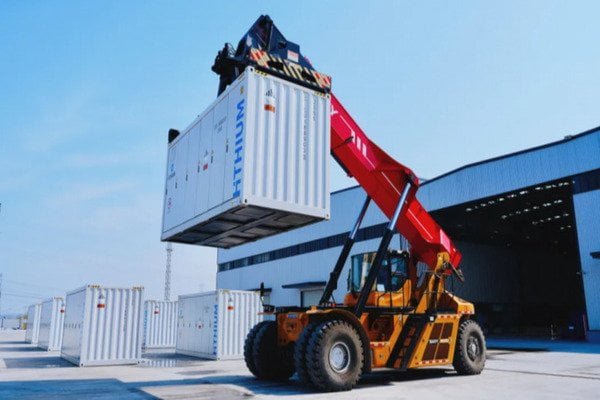
Worried about your energy storage systems getting damaged during shipping? Poor packaging can lead to rust and impact damage. This guide shows you how to choose the right materials.
To protect your Energy Storage System (ESS), use an ISPM-15 certified wooden case for the outer shell. Inside, you need a moisture-proof liner like an aluminum foil bag, shock-absorbent foam like EPE or EVA, and anti-collision reinforcements like steel strapping to prevent damage.
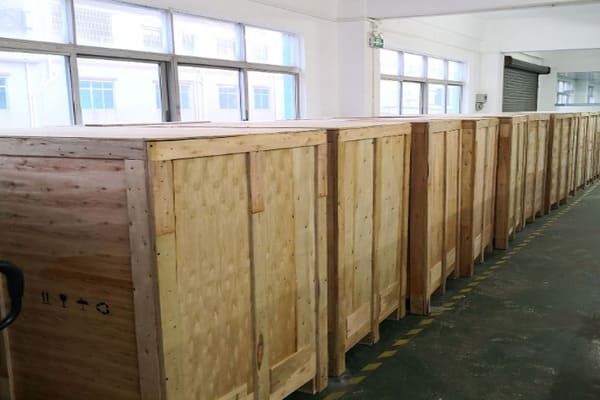
Protecting your high-value energy storage systems starts with the outer case. But it's not just any wooden box. The right materials and certifications are critical. Let's break down exactly what you need, starting with the foundation: the wooden frame itself. This is the first line of defense for your valuable cargo, and getting it right prevents major problems before they even start.
What is the Basic ISPM‑15 Wooden‑Box Frame Standard for the Outer‑Shell Requirement?
Your ESS shipment could be stopped by customs. Using non-compliant wood causes expensive delays and rejections. Ensure your wooden case meets the mandatory ISPM-15 standard to guarantee smooth clearance.
ISPM-15 is an international standard for treating wood packaging material1. It requires the wood to be heat-treated (HT) or fumigated to kill pests. The case must display the official IPPC stamp for customs verification, preventing shipment rejection.
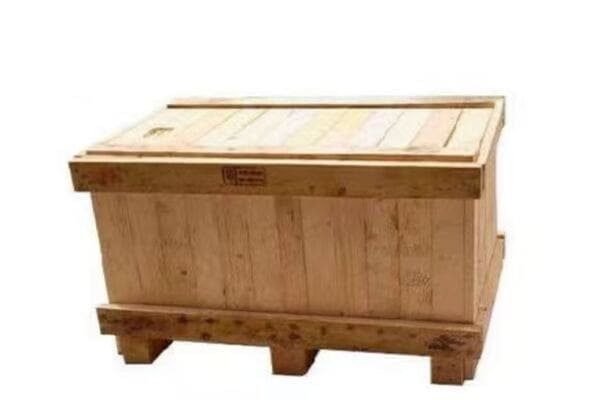
The International Standards for Phytosanitary Measures No. 15 (ISPM-15) is a critical global regulation. Its main purpose is to prevent the international transport of diseases and insects that could negatively affect plants or ecosystems. For any international shipment using solid wood packaging material, this is not optional; it's a requirement.
Understanding the Treatment and Stamp
There are two primary methods for treating the wood to meet ISPM-15 standards.
- Heat Treatment (HT): The wood is heated to a minimum core temperature of 56°C (132.8°F) for at least 30 minutes2. This is the most common and environmentally friendly method.
- Methyl Bromide (MB) Fumigation: The wood is fumigated with this chemical. However, due to environmental concerns, many countries have restricted the use of MB3, making HT the preferred method.
After treatment, the packaging must be marked with the official IPPC stamp. This stamp includes the IPPC symbol, the two-letter country code, a unique number assigned to the packaging producer, and the treatment code (HT or MB). In my 20 years of handling logistics, I have seen shipments held for weeks because of a missing or incorrect ISPM-15 stamp. For high-value, time-sensitive cargo like UN3536 energy storage systems4, any delay is a huge problem. We always audit the factory's wooden cases to verify the stamp and the case's structural integrity before loading. This simple check prevents major headaches at the destination port.
Which Moisture‑Proof Material Options Prevent Humidity Damage to the Inner‑Layer?
Sea travel means high humidity and condensation. This moisture corrodes electronics and battery terminals in your ESS units. Using the right moisture-proof materials is essential to keep your cargo dry.
The best options are a vacuum-sealed aluminum foil bag or a heavy-duty PE (polyethylene) liner. These create a waterproof barrier around the ESS cabinet. Always add desiccant packs inside the barrier to absorb any trapped moisture.
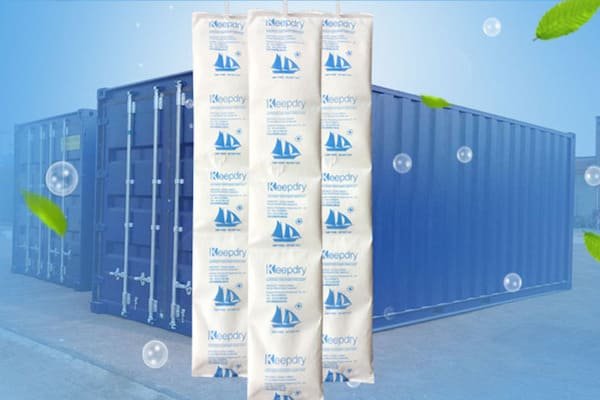
Ocean transit can last for weeks, exposing your cargo to a constantly humid environment. The temperature changes between day and night cause condensation, known as "container rain,"5 to form inside the container. If this moisture gets into your wooden case, it can cause devastating damage to the sensitive electronics and battery components of an ESS.
Choosing Your Moisture Barrier
Your choice of moisture barrier depends on the sensitivity of your equipment and your budget.
- Aluminum Foil Bags: This is the premium choice for total protection. When an ESS unit is placed inside a custom-fit aluminum foil bag and vacuum-sealed, it creates a hermetic seal. This barrier protects not only against moisture but also against oxygen, salts, and other corrosive elements6 in the air. It's the best way to ensure your product arrives in factory condition.
- PE Liners: A heavy-duty polyethylene (PE) liner is a more cost-effective but still effective solution. It acts as a waterproof "bag" around the unit inside the crate. While it doesn't provide the same complete vapor seal as a vacuumed foil bag, it does an excellent job of deflecting direct moisture.
- The Role of Desiccants: Regardless of which liner you choose, you must include desiccants (like silica gel or clay packs) inside the sealed barrier. Desiccants absorb any humidity that was trapped inside7 during packaging. I once handled a shipment where the factory only threw in a few small desiccant bags without a proper liner. The ESS cabinet arrived with visible water marks and surface rust. Since then, we insist on either vacuum-sealed foil or a full PE liner for all UN3536 shipments. It’s a non-negotiable part of our process.
What are the Best Shock‑Absorbent Materials For Anti‑Vibration Transit Protection?
Your cargo faces constant vibration on ships and trucks. This can loosen internal connections and damage delicate ESS components. Proper shock-absorbent materials are key to protecting against this hidden danger.
EPE (Expanded Polyethylene) foam and EVA (Ethylene-Vinyl Acetate) foam are excellent choices. They are custom-cut to fit snugly around the ESS cabinet, absorbing vibrations and preventing any movement inside the wooden case during transit.
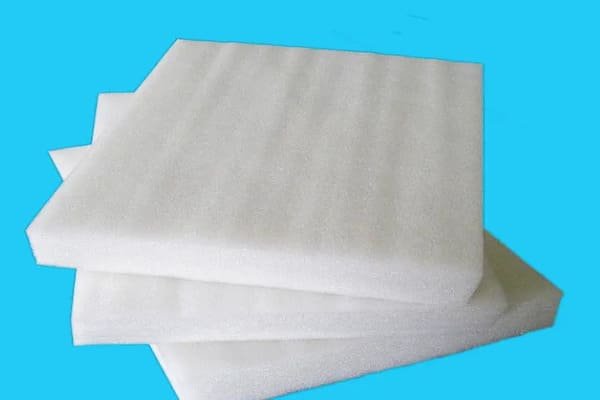
During its journey, an ESS shipment is subjected to a wide range of vibrations and minor shocks. Whether it's the hum of the ship's engine, movement on a train, or bumps on the road, these continuous oscillations can be very destructive. They can cause screws to loosen, solder joints to crack, and sensitive components to misalign8. The goal of shock-absorbent material is to dampen these vibrations and cushion the unit from minor impacts, ensuring everything stays securely in place.
Comparing Cushioning Foams
The key is to select a foam that matches the weight and fragility of your ESS.
- EPE (Expanded Polyethylene) Foam: EPE is a resilient, closed-cell foam that is lightweight and flexible. It's excellent for cushioning against repeated shocks because it returns to its original shape quickly9. It's a cost-effective solution for general-purpose cushioning and filling voids within the crate to prevent movement.
- EVA (Ethylene-Vinyl Acetate) Foam: EVA is a denser and firmer foam compared to EPE. This gives it superior shock absorption capabilities10, making it the ideal choice for heavier and more fragile energy storage units. Its rubber-like softness and toughness provide a very secure and protective fit.
Regardless of the material, the most important thing is achieving a snug fit. We often see factories use loose blocks of foam, which is not enough. The foam bracing should be engineered and custom-cut to the exact dimensions of the cabinet. There should be no empty space for the unit to shift. Our team ensures the foam bracing is designed to hold the unit completely still, creating a protective cocoon.
What Anti‑Collision Reinforcement Materials Are Needed For Forklift Handling & Container Stacking?
Your ESS crate will be moved by forklifts and stacked under other containers. One wrong move or too much weight can crush the case. You need extra reinforcement to handle these physical forces.
Use internal wooden braces to strengthen the frame against stacking pressure. Externally, add steel strapping to hold the case together and protect against impacts. A strong pallet base for forklifts and clear handling labels are also crucial.
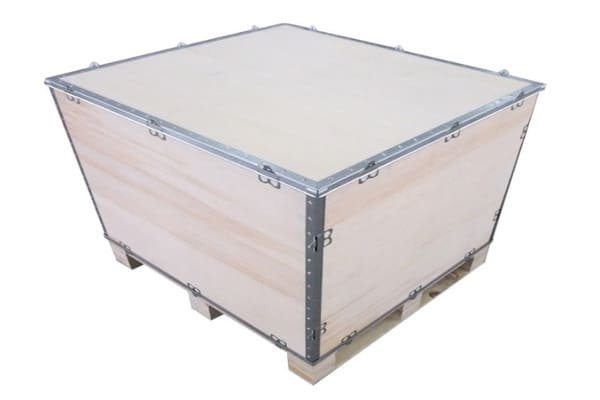
Once your ESS is packed, it enters the most physically demanding part of its journey: handling at ports and warehouses. Forklifts can accidentally puncture crates11, and the immense pressure from containers being stacked on top of yours can cause a weak case to collapse. Your packaging must be tough enough to withstand these real-world forces. This is about building a shell that is not just a box, but a piece of armor for your valuable cargo.
Types of Reinforcement
We use a combination of internal and external methods to bulletproof our clients' crates.
- Internal Reinforcements: We add extra wooden beams or corner posts inside the case. This creates a stronger internal skeleton that helps distribute the weight from cargo stacked on top, preventing the lid and sides from caving in.
- External Reinforcements:
- Steel Strapping: This is one of the most effective and low-cost reinforcement methods. We wrap high-tensile steel bands around the entire case. These straps hold the panels tightly together, preventing them from bursting outward if hit and adding significant overall structural integrity12.
- Strong Pallet Base: The wooden case must be built on a robust base with proper entry points for forklift tines. This prevents the forklift from missing the entry point and puncturing the bottom of the case, which can instantly damage the unit inside.
As a freight forwarder specializing in project cargo, we know that port handling is rough. We often add secondary steel strapping and double-check the pallet base integrity at our warehouse. It is a small additional cost that prevents a catastrophic failure and is a standard part of our packaging optimization service.
How Can a Comparison Table & Freight‑Forwarder Tips Help Optimize Packaging?
Feeling overwhelmed by all the packaging material choices? Picking the wrong one means wasting money or risking damage to your ESS. This simple comparison and our expert tips will help you choose correctly.
Use a comparison table to balance cost and protection for each material. A freight forwarder can help by auditing your packaging, suggesting improvements like adding steel straps, and ensuring everything is compliant for your specific destination.
Making the right packaging decisions is a balancing act between cost, protection level, and compliance. There isn't a single "one-size-fits-all" solution. It depends on the value of your ESS, its weight, its fragility, and the shipping route. This is where our expertise as a specialized freight forwarder becomes a valuable asset for you. We help you navigate these choices to create the most secure and cost-effective packaging plan.
Packaging Material Comparison
This table helps simplify the decision-making process.
| Layer | Material Option | Primary Function | Cost Level | Our Recommendation |
|---|---|---|---|---|
| Outer Shell | ISPM-15 Plywood Case | Structural Protection & Compliance | Medium | Mandatory. Non-negotiable for export. |
| Moisture Layer | Vacuum Aluminum Bag | Moisture & Oxygen Barrier | High | Best for maximum protection. |
| Moisture Layer | PE Liner + Desiccant | Moisture Barrier | Low-Medium | Good, cost-effective alternative. |
| Shock Layer | EVA Foam | High-Impact Shock Absorption | High | Ideal for heavy, high-value ESS units. |
| Shock Layer | EPE Foam | Vibration & General Cushioning | Medium | Great for lighter units and gap filling. |
| Reinforcement | Steel Strapping | Anti-Collision & Case Integrity | Low | Highly recommended. A cheap insurance policy. |
| Reinforcement | Internal Bracing | Stacking Strength | Low-Medium | Essential for heavy loads or long-term storage. |
Freight-Forwarder Optimization Tips
- Packaging Audit: We can review your supplier's packaging photos and specifications before the cargo leaves the factory. This allows us to spot potential issues early.
- Secondary Reinforcement: For a small fee, our team can add steel straps, extra desiccants, or internal bracing at our warehouse before container loading. Many of our clients use this service for complete peace of mind.
- Load Planning: How the case is loaded, positioned, and secured inside the container is just as important as the case itself. We expertly plan the load to minimize movement and pressure from other cargo.
Conclusion
Choosing the right outer‑wooden‑case structure plus inner moisture‑proof, shock‑absorbent and anti‑collision materials determines whether energy‑storage cabinets can arrive intact overseas. Non‑compliant wooden crates without ISPM‑15 certification or weak inner‑buffering materials easily result in damp‑damaged batteries and deformed cabinets during sea‑freight transit. As a freight‑forwarder specializing in UN3536 energy‑storage‑cargo logistics, we audit factory‑made wooden‑case quality, offer secondary‑reinforcement packaging, complete DG‑declaration, container loading and sea‑rail multimodal door‑to‑door delivery, to avoid packaging‑related risks for your ESS export shipments.
"Import ISPM 15-Compliant Wood Packaging Material into ...", https://www.aphis.usda.gov/plant-imports/wood-packaging-material/import. A publication from the International Plant Protection Convention (IPPC) or a national plant protection organization (NPPO) can define ISPM 15 as the global standard for phytosanitary measures to reduce the risk of introducing and spreading pests associated with wood packaging material. Evidence role: definition; source type: institution. Supports: The source should define ISPM-15 and its primary goal of preventing the spread of pests through wood packaging used in international trade.. ↩
"Annex 1 to ISPM 15:2009 Approved treatments associated ...", https://assets.ippc.int/static/media/files/publication/en/2016/10/Annex_1_ISPM15_2011-06-.pdf. The official text of the ISPM 15 standard, published by the IPPC, specifies that heat treatment requires heating the wood until its core reaches a minimum temperature of 56°C for a minimum duration of 30 continuous minutes. Evidence role: general_support; source type: institution. Supports: The source should confirm the exact temperature and duration requirements for heat treatment (HT) as specified in the ISPM-15 standard.. ↩
"Methyl Bromide - Department of Pesticide Regulation - CA.gov", https://www.cdpr.ca.gov/active-ingredient/methyl-bromide/. Information from the United Nations Environment Programme or the U.S. Environmental Protection Agency confirms that methyl bromide is an ozone-depleting substance, and its production and use have been phased out or significantly restricted under the Montreal Protocol, with some critical use exemptions. Evidence role: general_support; source type: government. Supports: The source should explain the international phase-out or restriction of methyl bromide due to its ozone-depleting properties.. ↩
"LITHIUM BATTERY GUIDE FOR SHIPPERS", https://www.phmsa.dot.gov/sites/phmsa.dot.gov/files/2024-11/Lithium-Battery-Guide-2024.pdf. The UN Recommendations on the Transport of Dangerous Goods, or regulations from bodies like the IMO or IATA, define UN 3536 as 'LITHIUM BATTERIES INSTALLED IN CARGO TRANSPORT UNIT,' which applies to large battery energy storage systems shipped within a container or similar unit. Evidence role: definition; source type: government. Supports: The source should define the UN3536 classification for the transport of dangerous goods.. ↩
"How to Prevent Moisture in Sea Containers", https://unitload.vt.edu/education/white-papers/3-wp-moisture-in-sea-containers.html. Research in transport logistics and packaging science defines 'container rain' as condensation that forms on the interior surfaces of a shipping container when the container's skin cools below the dew point of the air inside, causing water to drip onto the cargo. Evidence role: definition; source type: research. Supports: The source should define 'container rain' (or 'container sweat') and explain how temperature fluctuations during transit lead to condensation on the container's ceiling and walls, which can drip onto cargo.. ↩
"Moisture vapor transmission rate", https://en.wikipedia.org/wiki/Moisture_vapor_transmission_rate. Studies in packaging engineering show that multi-layer films containing aluminum foil have extremely low transmission rates for water vapor (WVTR) and oxygen (OTR), providing a hermetic barrier that protects sensitive contents from moisture, oxygen, and other atmospheric contaminants. Evidence role: mechanism; source type: paper. Supports: The source should provide data on the barrier performance of multi-layer packaging films that include an aluminum layer.. ↩
"Silica gel", https://en.wikipedia.org/wiki/Silica_gel. Educational resources on chemistry or material science explain that desiccants like silica gel are hygroscopic materials with a porous structure that allows them to adsorb water vapor from the surrounding air, thereby reducing the relative humidity within a sealed enclosure. Evidence role: mechanism; source type: education. Supports: The source should explain the hygroscopic nature of desiccants and how they adsorb water molecules from the air.. ↩
"Vibration Fatigue of Leaded Solder Joint ... - Clemson OPEN", https://open.clemson.edu/cgi/viewcontent.cgi?article. Research in electronics reliability and transport testing demonstrates that prolonged exposure to vibration can induce mechanical stress, leading to failures such as solder joint fatigue, connector fretting, and the loosening of fasteners and components. Evidence role: mechanism; source type: research. Supports: The source should describe how mechanical vibration and shock during transport can lead to fatigue failures in electronic systems.. ↩
"Analysis of the Dynamic Cushioning Property of Expanded ...", https://pmc.ncbi.nlm.nih.gov/articles/PMC10489951/. Material science handbooks or technical articles describe Expanded Polyethylene (EPE) as a low-density, semi-rigid, closed-cell foam known for its excellent resilience and ability to withstand multiple impacts with little loss of cushioning performance, making it suitable for protective packaging. Evidence role: general_support; source type: encyclopedia. Supports: The source should describe the physical characteristics of EPE foam, including its resilience and suitability for multi-impact applications.. ↩
"Ethylene-vinyl acetate", https://en.wikipedia.org/wiki/Ethylene-vinyl_acetate. Technical data sheets and material science comparisons show that Ethylene-Vinyl Acetate (EVA) foam typically has a higher density and greater firmness than EPE, allowing it to absorb more energy from impacts, which is advantageous for cushioning heavy and high-value items. Evidence role: general_support; source type: research. Supports: The source should provide technical data showing the shock absorption performance of EVA foam, particularly its ability to cushion heavier objects.. ↩
"Warehousing - Hazards and Solutions", http://www.osha.gov/warehousing/hazards-solutions. Reports from freight industry associations and transport insurance companies frequently cite handling errors, such as forklift tine punctures and improper stacking, as leading causes of damage to crated cargo during transit and storage. Evidence role: case_reference; source type: institution. Supports: The source should identify common types of damage that occur during freight handling in ports and warehouses.. ↩
"Principles of Box and Crate Construction", https://ageconsearch.umn.edu/bitstream/158883/2/tb171.pdf. Packaging engineering principles and standards, such as those from ASTM International, explain that strapping applies tension to a load, increasing its rigidity, reinforcing joints, and improving its ability to resist handling forces and impacts, thereby enhancing overall structural integrity. Evidence role: mechanism; source type: paper. Supports: The source should explain the mechanical function of strapping on shipping containers.. ↩