
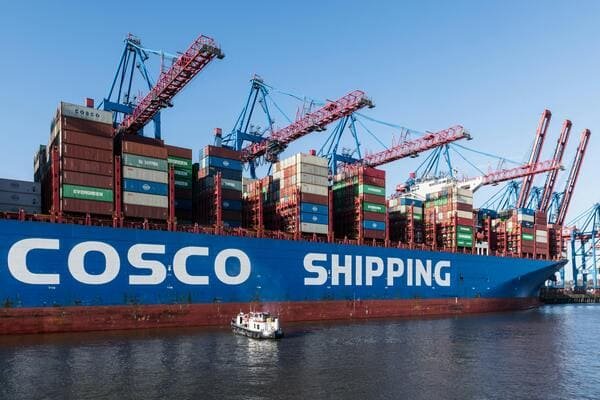
Confused by shipping terms like DDP, DDU, FOB, and CIF? Choosing the wrong one can lead to surprise costs and major delays.1 Let's break them down simply for you.
The best term depends on your control needs and risk tolerance. FOB gives buyers control, while CIF and DDP put sellers in charge. Your logistics partner can help you analyze which option saves you the most money and avoids hidden risks for your specific shipment.
You have the basics now, but the real money is saved or lost in the details. Knowing exactly who pays for what and when the risk transfers from seller to buyer is critical. Let's explore these points further to help you make the best choice every time.
Who pays freight? Who buys insurance? Who handles customs? Full breakdown of costs and responsibilities for all four terms?
Are you tired of unexpected bills for freight, insurance, or customs clearance? These hidden costs can ruin your profit margins. Let's clearly map out the responsibilities for each term.
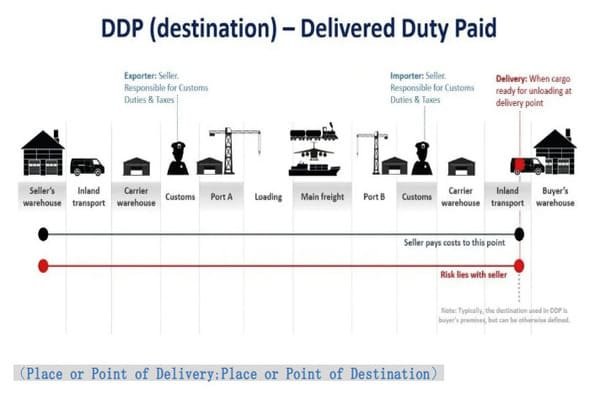
With FOB, the buyer controls the main journey, paying for sea freight, insurance, and import customs.2 For CIF, the seller covers freight and insurance to your port. With DDP, the seller handles almost everything, including duties. DDU (now DAP)3 is similar, but you pay the final duties.
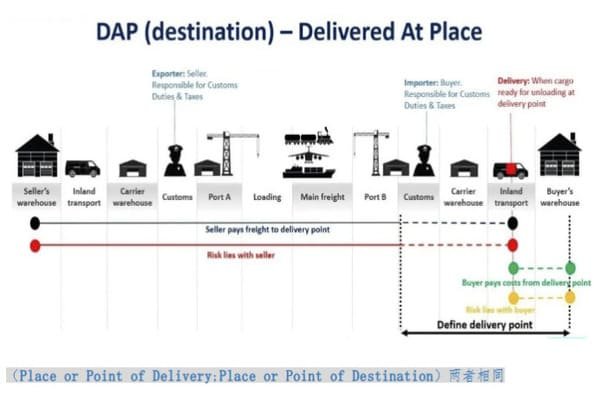
Understanding the division of costs is the first step to mastering Incoterms. It’s not just about the big items like ocean freight; it’s about every charge from the factory to your warehouse. With FOB (Free On Board), the seller's job is done once the goods are loaded on the ship.4 From that point, you, the buyer, take over. You choose the shipping line, pay the freight, arrange your own insurance, and handle customs clearance at your end. This gives you maximum control over the schedule and your costs.
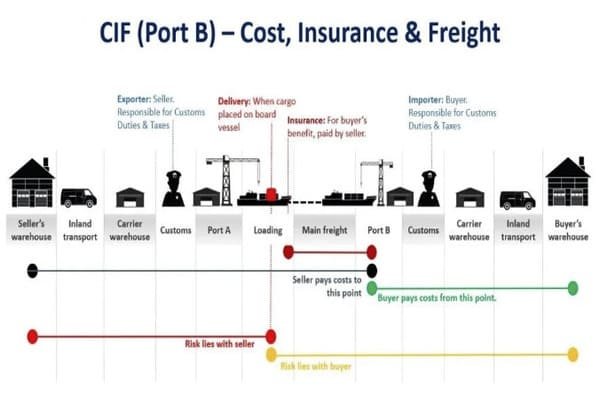
With CIF (Cost, Insurance, and Freight), the seller arranges and pays for everything to get the goods to your country's port. However, you are still responsible for customs clearance, unloading charges at the destination port, and any costs to get the goods to your warehouse.5
For DDP (Delivered Duty Paid), the seller handles the entire journey, including paying import duties. It's the most hands-off option for a buyer, but often the most expensive as sellers price in the risk and effort. DAP (Delivered at Place), which replaced DDU, is similar, but you, the buyer, are responsible for paying the import duties and taxes upon arrival.
Here’s a simple table to visualize it:
| Incoterm | Who Pays Main Freight? | Who Buys Insurance? | Who Handles Export Customs? | Who Handles Import Customs & Duties? |
|---|---|---|---|---|
| FOB | Buyer | Buyer | Seller | Buyer |
| CIF | Seller | Seller (min. cover) | Seller | Buyer |
| DAP/DDU | Seller | Seller | Seller | Buyer (pays duties only) |
| DDP | Seller | Seller | Seller | Seller |
Choosing FOB often gives you, the buyer, more control over your supply chain and costs, as you get to work with your preferred logistics partner like us. This way, you avoid any surprise markups on freight from the seller.
When exactly does cargo risk transfer? Risk point comparison between FOB/CIF vs DDP/DDU, plus a key alert under the new Maritime Code?
You assume your cargo is safe until it arrives. But if it's damaged at sea, you might discover the risk was yours all along. Let's clarify the exact transfer point.
For FOB and CIF, the risk transfers to you, the buyer, as soon as the goods are loaded onto the ship at the origin port. For DDP and DDU (now DAP), the seller holds the risk until the goods arrive at the agreed-upon destination, just before unloading.6
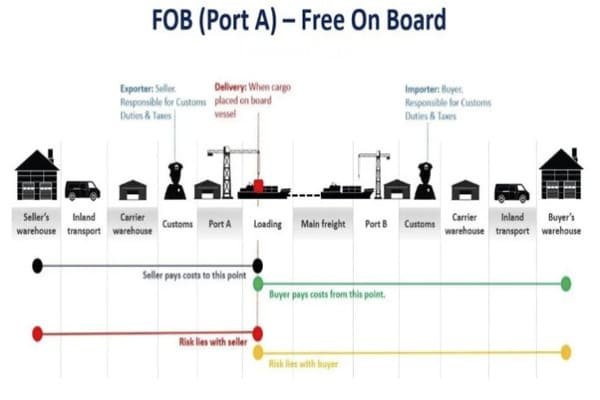
The moment of risk transfer is the most misunderstood part of Incoterms, yet it's the most important for insurance and liability. For both FOB and CIF, this critical point happens when the goods are loaded "on board" the vessel at the port of origin. Even with CIF, where the seller buys insurance, the risk is already yours during the main sea voyage. If damage occurs, you are the one filing the claim. In contrast, with DDP and DAP, the seller bears the risk for almost the entire journey. The risk only transfers to you when the truck arrives at your warehouse or the specified destination. This is a much safer option for buyers, but it comes at a price.
Here's a crucial alert for exporters using FOB terms, especially under recent maritime code updates. If your buyer arranges shipping under FOB but then abandons the cargo at the destination port—due to bankruptcy, customs issues, etc.—the port authorities or carrier can legally come after you, the exporter listed as the shipper on the bill of lading.7 They will hold you responsible for the massive costs of storage, disposal, or return shipping. I remember a case where an exporter in Shenzhen sold goods FOB to a new buyer in the US. The buyer went silent, and the container sat at the Port of Long Beach, racking up thousands in daily fees. The carrier threatened the exporter with a bill for over $20,000. As their logistics partner, we stepped in to negotiate a solution, but it highlights a risk many sellers don't even know they have. For a deeper dive into this change, I have a dedicated blog post explaining the risks and countermeasures for FOB exporters under the new Maritime Code — feel free to check it out.
Do you always use the same shipping term out of habit? This simple choice could be costing you a fortune in hidden fees and leaving your business exposed to serious risks.
We help you choose strategically. If you have buying power, we often recommend FOB for maximum cost control and transparency. If your supplier offers a great all-in price, CIF might be better. We analyze the total cost and risk, not just the freight rate, to protect your bottom line.
Choosing the right Incoterm is a strategic business decision, not just a logistical one. This is where we, as your logistics partner, add immense value. We help you analyze your position. Are you a large buyer, like one of my clients who owns a retail chain in Germany? If so, you have negotiation power. We can leverage our global network to get you better freight rates than your supplier can. In this case, negotiating for FOB terms is a clear winner, giving you full control and cost transparency.
On the other hand, if you're a startup testing a new product, the simplicity of a DDP price might be appealing. However, we'll advise you on the risks. The seller's DDP price often includes padded charges for destination handling and customs clearance. We’ve seen cases where buyers paid 30% more than they should have on local fees. Our job is to look at the whole picture. For example, the insurance included in a CIF term is usually the bare minimum (like Institute Cargo Clauses "C"), which only covers major disasters like the ship sinking.8 It might not cover theft, water damage, or other common issues. We help you see these hidden risks and arrange proper all-risk insurance. We don't just give you a price; we give you a strategy. By understanding your business, we can recommend the term that best balances cost, control, and peace of mind.
Conclusion
Choosing the right term saves money and reduces risk. Let us be your expert partner, ensuring every shipment is smooth, secure, and cost-effective from start to finish.
Know Your Incoterms — official overview of Incoterms rules and how the wrong term causes unexpected costs and delays — *U.S. International Trade Administration (trade.gov)*: https://www.trade.gov/know-your-incoterms ↩
Know Your Incoterms — breakdown of buyer/seller responsibilities under FOB and other trade terms — *U.S. International Trade Administration (trade.gov)*: https://www.trade.gov/know-your-incoterms ↩
Incoterms — the ICC-published international commercial terms, including how DDU was replaced by DAP — *Wikipedia*: https://en.wikipedia.org/wiki/Incoterms ↩
FOB (shipping) — Free On Board term where the seller's responsibility ends once goods are loaded on the vessel — *Wikipedia*: https://en.wikipedia.org/wiki/FOB_(shipping) ↩
Cost, Insurance and Freight (CIF) — official explanation of seller and buyer responsibilities under CIF terms — *U.S. International Trade Administration (trade.gov)*: https://beta.trade.gov/article?id=Cost-Insurance-and-Freight-CIF ↩
Incoterms 2020: DAP or DDP — ICC guidance on risk transfer and delivery obligations under DAP and DDP — *ICC Academy*: https://academy.iccwbo.org/incoterms/article/incoterms-2020-dap-or-ddp/ ↩
Bill of lading — the shipping document that names the shipper and governs carrier liability and cargo claims — *Wikipedia*: https://en.wikipedia.org/wiki/Bill_of_lading ↩
Institute Cargo Clauses — standard marine cargo insurance clauses (A, B, C) defining coverage scope and limits — *Wikipedia*: https://en.wikipedia.org/wiki/Institute_cargo_clauses ↩