
Are you ready for the 2026 packaging earthquake? New rules from China and the EU are coming, and non-compliance will get your shipments blocked and your business fined.
To comply with the 2026 green packaging rules in China and the EU, you must make five key changes. These include right-sizing boxes, banning toxic materials like PFAS, using 100% recyclable materials, registering for EPR, and adopting reusable packaging to avoid costly penalties.
These changes are not just suggestions. They are mandatory requirements that will be enforced at the border. For years, I've seen regulations come and go, but this is different. This is a fundamental shift in how we must think about packaging for international trade. Ignoring this is not an option if you want your business to thrive. Let's break down what you need to do, step by step.
Cut Overpacking: “Right-Size” Boxes & Layers
Do your products swim in oversized boxes filled with plastic peanuts? That common practice wastes money on materials and shipping, and soon, it will get your shipments rejected.
"Right-sizing" means using the smallest and lightest box that safely protects your product. Both China and the EU will enforce strict limits on empty space and unnecessary layers1 to reduce waste, lower freight costs, and ensure compliance.
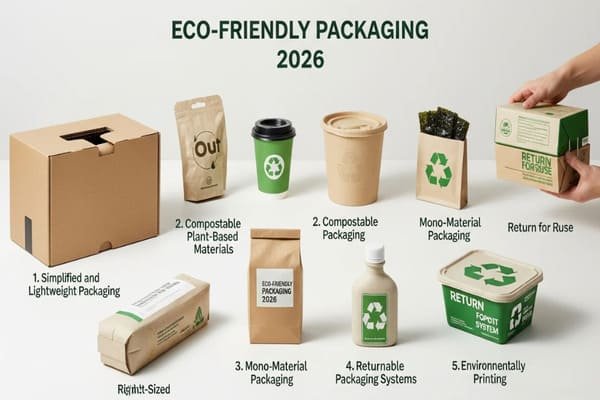
This is one of the easiest wins you can get. For too long, we've all been guilty of the "one-size-fits-all" approach to boxes. But regulators are now looking closely at the "void ratio2"—the amount of empty space in a package. The new rules, like the EU's Packaging and Packaging Waste Regulation (PPWR)3, mandate minimizing this space. This means no more Russian doll-style packaging with boxes inside of boxes.
How to "Right-Size" Your Packaging
| Old Method (Non-Compliant) | New Method (Compliant) |
|---|---|
| Large, standard-sized box for all products. | Custom or varied box sizes to fit products snugly. |
| Excessive plastic bubble wrap or air pillows. | Minimal, recycled paper-based void fill. |
| Multiple layers of wrapping and inserts. | A single, protective, form-fitting insert. |
I recently worked with a client shipping premium headphones. Their original box was huge and designed for retail shelves, not e-commerce. By helping them design a smaller, snugger, and equally protective box, we cut their dimensional weight in half. This saved them nearly 30% on air freight costs alone, long before the new rules even take effect.
Ban Toxic Materials: Heavy Metals & PFAS Limits?
Your packaging might look clean, but it could be hiding toxic secrets. Common materials contain chemicals that are now being banned, and regulators will not accept ignorance as an excuse.
Both the EU and China are banning or severely restricting harmful substances in all packaging.4 This includes heavy metals like lead and mercury and "forever chemicals" like PFAS. You must have proof your materials are compliant.
This is a major point of focus for customs officials. They are specifically targeting substances that harm human health and the environment. The two biggest culprits you need to eliminate from your supply chain are PFAS and heavy metals. PFAS (Per- and polyfluoroalkyl substances) are often used to make paper and cardboard resistant to grease and water.5 Think pizza boxes or some fast-food wrappers. The EU's PPWR is phasing them out completely.6 Heavy metals like lead, cadmium, and mercury can be found in certain inks and colorants used on packaging. The new rules set the combined concentration limit for these metals7 to an extremely low level.
How to Ensure Your Materials are Clean
To protect your business, you must demand transparency from your packaging suppliers. Don't just take their word for it. Ask for a formal Certificate of Compliance or a Material Safety Data Sheet (MSDS) for every component, from the box itself to the ink and tape. As your logistics partner, we can help you audit your current suppliers and connect you with pre-vetted sources for compliant, pre-approved green materials. This isn't just about ticking a box; it's about de-risking your entire supply chain.
100% Recyclable Packaging
Your packaging has a life after it reaches the customer, but it often ends in a landfill. By 2026, if your packaging isn't designed to be easily recycled, it won't be compliant.
The new rules in both China and the EU require all packaging to be "designed for recycling8." This means using single materials (mono-materials) and avoiding complex composites that contaminate the recycling stream and cannot be processed.
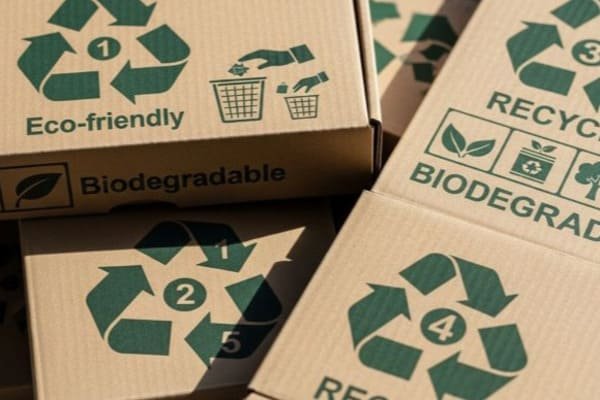
The key phrase here is "designed for recycling." It's not enough for a material to be technically recyclable. The entire package must be structured so that an average consumer can easily separate it and a standard recycling facility can process it. This is where many businesses will get tripped up. For example, a paper mailer with a plastic bubble lining fused to the inside9 is a nightmare for recyclers. It’s considered a composite material and will likely be deemed non-compliant. The same goes for plastic-coated paper boxes or bottles with shrink-wrapped labels made from a different type of plastic that are difficult to remove.
Simple Switches for Better Recyclability
- From: Plastic-coated cardboard To: Uncoated cardboard with a separate, recyclable protective insert.
- From: Laminated paper pouches To: Mono-material plastic (e.g., PE) or paper-only pouches.
- From: Mixed-material closures (metal spring in a plastic pump) To: All-plastic or all-metal closures.
I worked with a skincare brand that used beautiful, frosted glass jars with mixed-material pumps. They were elegant but completely unrecyclable. We helped them switch to clear, 100% PET plastic jars with simple PET lids. Not only did this make them compliant, but their customers praised the change, and their shipping breakage rates dropped to zero.
EPR Registration & Labeling
You are now financially and legally responsible for your packaging's entire life, even after your customer throws it away. Ignoring this new responsibility will lead to huge fines and market exclusion.
Extended Producer Responsibility (EPR) makes you, the producer, pay for the collection and recycling of your packaging in the country of sale. You must register with a national EPR scheme and apply specific recycling labels to your packages.

EPR is the administrative core of these new green regulations. It's the "polluter pays" principle applied to packaging. If you sell goods into the EU, for example, you can't just ship your product and be done with it. You have a legal obligation to contribute to the cost of managing that packaging waste. This involves a few non-negotiable steps. First, you must register with a Producer Responsibility Organisation (PRO) in each country you sell to10. Second, you must declare the volume and type of packaging material you place on their market. Third, you pay fees based on those declarations.
Navigating the Labeling Maze
Finally, you must use the correct on-pack labels. This is not just about a generic recycling symbol. Countries have specific requirements, like the 'Triman' logo in France, which must be accompanied by sorting instructions11. Germany, Spain, and Italy all have their own unique labeling rules. Getting this wrong is an easy way to get your products flagged. I know this sounds like a bureaucratic nightmare, because it is. This is exactly where a partner like us becomes essential. We handle the multi-country registrations and ensure your labeling is correct for each specific market, so you can focus on your business, not on filling out paperwork in six different languages.
Reusable & Low-Carbon Packaging
The era of single-use, disposable packaging is ending. New regulations are not just encouraging, but actively mandating, a shift towards reuse and a lower carbon footprint.
The future of packaging is circular. The EU's PPWR sets binding targets for reusable packaging in sectors like e-commerce and pushes for minimum recycled content in new plastic packaging to reduce the overall carbon footprint.

This is the most forward-looking part of the new regulations, and it shows where the industry is heading. While full recyclability is the immediate requirement, reusability is the long-term goal. The PPWR, for instance, will require a certain percentage of packaging for large appliances and e-commerce transport to be reusable within a few years. This could mean using durable shipping boxes that customers are incentivized to return, or using a service that provides a pool of reusable containers. While this may not be feasible for every business model today, it's critical to start thinking about it.
Practical Steps Toward a Lower Carbon Footprint
Even if a full-scale reusable system isn't right for you yet, you can take immediate steps to lower your packaging's carbon impact and stay ahead of the curve. The most impactful action is to demand recycled content in your new packaging. The regulations will soon mandate minimum percentages of post-consumer recycled (PCR) content in new plastic packaging. By starting this now, you not only reduce your reliance on virgin fossil fuels but also signal to regulators that you are a proactive and responsible partner. As your freight forwarder, we can help you audit these options, weighing the costs against the benefits of sustainability and compliance to find the right fit for your shipments.
Conclusion
These 2026 rules are a major shift, not a minor test. Prepare now by right-sizing, removing toxins, ensuring recyclability, handling EPR, and exploring reuse to keep your goods moving.
"[PDF] Report Name:National Food Safety Standard Restricting Excessive ...", https://apps.fas.usda.gov/newgainapi/api/Report/DownloadReportByFileName?fileName=National%20Food%20Safety%20Standard%20Restricting%20Excessive%20Packaging%20for%20Foods%20and%20Cosmetics_Beijing_China%20-%20People%27s%20Republic%20of_CH2023-0073. The PPWR contains packaging-minimisation rules and empty-space limits for certain grouped, transport, and e-commerce packaging, while Chinese standards restrict excessive packaging in selected sectors such as food and cosmetics. Evidence role: general_support; source type: government. Supports: EU and Chinese packaging rules restrict excessive packaging, including unnecessary empty space or layers in specified contexts.. Scope note: The support is contextual because EU and Chinese rules differ by product category, implementation date, and enforcement mechanism. ↩
"[PDF] Report Name:National Food Safety Standard Restricting Excessive ...", https://apps.fas.usda.gov/newgainapi/api/Report/DownloadReportByFileName?fileName=National%20Food%20Safety%20Standard%20Restricting%20Excessive%20Packaging%20for%20Foods%20and%20Cosmetics_Beijing_China%20-%20People%27s%20Republic%20of_CH2023-0073. Packaging standards and regulatory guidance use measures such as empty-space ratio or packaging void ratio to assess whether packaging is excessive relative to the product it contains. Evidence role: definition; source type: institution. Supports: Void ratio refers to the proportion of empty space in a package and is relevant to excessive-packaging rules.. Scope note: Terminology and calculation methods vary across jurisdictions and product categories. ↩
"Regulation - EU - 2025/40 - EN - PPWR - EUR-Lex", https://eur-lex.europa.eu/eli/reg/2025/40/oj/eng. Regulation (EU) 2025/40 on packaging and packaging waste establishes the EU PPWR framework, including requirements on packaging minimisation, recyclability, reuse, recycled content, substances of concern, and producer responsibility. Evidence role: historical_context; source type: government. Supports: The EU has adopted a Packaging and Packaging Waste Regulation that changes packaging compliance obligations.. Scope note: This supports the EU legal framework only; it does not substantiate parallel Chinese requirements. ↩
"Toxics in Packaging - Department of Toxic Substances Control - CA.gov", https://dtsc.ca.gov/toxics-in-products/toxics-in-packaging/. EU packaging law restricts specified hazardous substances in packaging, including heavy metals and PFAS in defined circumstances, and Chinese packaging standards include limits on hazardous substances in packaging materials. Evidence role: general_support; source type: government. Supports: EU and Chinese rules restrict certain hazardous substances in packaging.. Scope note: The phrase “all packaging” is broader than many source rules, which usually apply by material, substance, product use, or sector. ↩
"Authorized Uses of PFAS in Food Contact Applications - FDA", https://www.fda.gov/food/process-contaminants-food/authorized-uses-pfas-food-contact-applications. Environmental and public-health agencies describe PFAS as chemicals used in some food-contact papers and packaging to provide grease, oil, and water resistance. Evidence role: mechanism; source type: government. Supports: PFAS can be used in paper and cardboard packaging to provide grease and water resistance.. Scope note: This supports the material-function relationship generally; it does not show that every paper or cardboard package contains PFAS. ↩
"Packaging Waste Regulation - EU Environment", https://environment.ec.europa.eu/topics/waste-and-recycling/packaging-waste/packaging-packaging-waste-regulation_en. The PPWR sets PFAS concentration limits for food-contact packaging, effectively prohibiting packaging above specified PFAS thresholds from being placed on the EU market after the applicable date. Evidence role: general_support; source type: government. Supports: The PPWR restricts PFAS in relevant packaging categories and phases out non-compliant packaging above defined thresholds.. Scope note: This is not a blanket immediate ban on all PFAS in every type of packaging; it is tied to defined thresholds, packaging uses, and application dates. ↩
"Frequently Asked Questions - Toxics in Packaging Clearinghouse", https://toxicsinpackaging.org/faqs/. EU packaging legislation has long limited the combined concentration of lead, cadmium, mercury, and hexavalent chromium in packaging or packaging components to 100 ppm by weight, with exemptions in limited cases. Evidence role: statistic; source type: government. Supports: Packaging regulations set a combined concentration limit for certain heavy metals in packaging.. Scope note: This supports the EU limit; Chinese limits may be set through separate national or sectoral standards. ↩
"PPWR Recyclability Grades A to E Guide - RegSurance", https://regsurance.com/ppwr-recyclability-grades-explained-a-to-e-packaging-compliance-deadlines-business-action-plan/. The PPWR requires packaging placed on the EU market to be recyclable and establishes design-for-recycling criteria and recyclability performance grades that are phased in over time. Evidence role: definition; source type: government. Supports: Packaging compliance increasingly includes design-for-recycling requirements, especially under the EU PPWR.. Scope note: This directly supports the EU requirement; it does not by itself prove an equivalent blanket Chinese design-for-recycling obligation for all packaging. ↩
"Paper versus Plastic (and Bioplastic)", https://www.ecoenclose.com/paper-versus-plastic-and-bioplastic/?srsltid=AfmBOorVtl6jVsY3N6X-M8Cc0Ws_rpmq6jwFRuzjc3WWs0Mh9LhT14AG. Recycling guidance and materials-recovery research commonly identify fused paper-plastic composites as difficult to recycle because the materials cannot be readily separated in standard paper or plastic recycling streams. Evidence role: mechanism; source type: research. Supports: Fused paper-plastic mailers can create recycling difficulties because they combine materials that are hard to separate.. Scope note: Actual recyclability depends on local recycling infrastructure and the specific construction of the mailer. ↩
"New EU Packaging and Packaging Waste Regulation", https://sellercentral-europe.amazon.com/help/hub/reference/external/G22AA5MS5P7TLNYM. EU packaging-waste rules require producers to meet extended producer responsibility obligations in Member States where packaging is placed on the market, often through registration and reporting systems or producer responsibility organisations. Evidence role: general_support; source type: government. Supports: Companies selling packaged goods in EU countries may need country-specific EPR registration, reporting, and producer responsibility arrangements.. Scope note: The exact requirement to join a PRO rather than register directly depends on national implementation in each Member State. ↩
"The Triman Logo: Obligations for e-commerce in France", https://www.ecosistant.eu/en/triman-logo/. French environmental-labeling rules require the Triman symbol and sorting information for many products and packaging subject to French extended producer responsibility schemes. Evidence role: case_reference; source type: government. Supports: France has specific on-pack sorting-label requirements involving the Triman logo and sorting instructions.. Scope note: Applicability depends on the product category, packaging type, and current French implementing guidance. ↩