

Struggling to classify your energy storage cabinets for shipping? Misclassification leads to customs rejection and huge fines, disrupting your entire supply chain. Let's clarify the official rules now.
The classification of an energy storage cabinet depends entirely on whether lithium battery modules are installed inside. If it contains batteries, it is a Class 9 Dangerous Good (UN3481/UN3536).1 If it is just an empty cabinet frame, it ships as simple general cargo2.

Getting this distinction right is the single most important step for a smooth shipment. I've seen firsthand how a simple mistake here can cause weeks of delays and thousands of dollars in penalties. But once you understand the core principle, the process becomes much clearer. Let's walk through the exact standards so you can ship your products with confidence, knowing they are fully compliant and safe.
What's the Core Difference Between a General Cargo and a Class 9 DG Energy Storage Cabinet?
Many shippers confuse an empty cabinet with a complete system. This simple error can bring your entire shipment to a halt. Let's break down the definitions to avoid this costly mistake.
A general cargo storage cabinet is merely an empty metal shell without any batteries. In contrast, a Class 9 DG energy storage cabinet is a complete system with lithium battery modules installed, classifying it as a regulated hazardous material for transport.
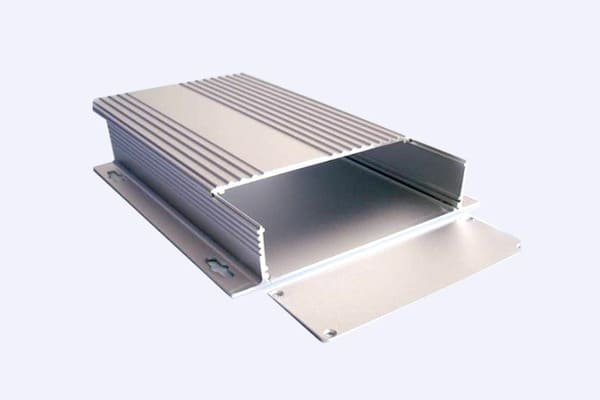
Let's dive deeper into this fundamental difference. Think of the general cargo version as just metalwork. It's an empty, inanimate object like a filing cabinet or a locker. It has no stored energy, no electronic components, and poses no inherent risk during transport. We ship these all the time with standard, low-cost procedures. There's no special paperwork, no surcharges, and no hassle.
On the other hand, the moment you install lithium battery modules, the entire unit transforms into what the industry calls an Energy Storage System (ESS). It is now a Class 9 Dangerous Good. This classification is not optional; it's mandated by international law because lithium batteries contain a large amount of stored energy and can pose a fire risk if mishandled. I remember a client who insisted his shipment was just "cabinets," but a pre-shipment check revealed they were fully integrated systems. We had to switch gears immediately to a full DG process. It's a completely different logistical challenge.
Here is a simple table to show the difference:
| Feature | General Cargo Cabinet | Class 9 DG Cabinet (ESS) |
|---|---|---|
| Contents | Empty shell, no batteries | Integrated lithium battery modules |
| Classification | Ordinary General Cargo | Class 9 Dangerous Goods |
| UN Number | Not Applicable | UN3481 or UN3536 |
| Shipping Rules | Standard, simple procedures | Strict IMDG Code rules |
| Cost | Lower | Higher (due to compliance) |
What Are the Official IMDG Standards for Confirming a Class 9 DG ESS?
Relying on guesswork for dangerous goods classification is extremely risky. Port authorities and carriers don't accept excuses; they only accept official documentation. Here are the IMDG standards to follow.
The key factor is the presence of lithium batteries. If the cabinet contains lithium-ion batteries, it's regulated under UN3481. If the system is installed in a cargo transport unit, it becomes UN3536. A valid Material Safety Data Sheet (MSDS)3 is mandatory proof.
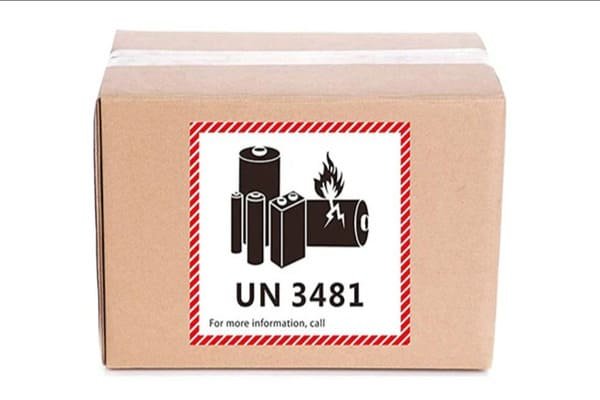
When we talk about official standards for sea freight, we are talking about the International Maritime Dangerous Goods (IMDG) Code4. This is the global rulebook for shipping hazardous materials. For energy storage systems, two primary classifications apply:
- UN3481: LITHIUM ION BATTERIES CONTAINED IN EQUIPMENT. This is the most common classification. It applies when the energy storage cabinet is shipped as a piece of equipment that contains lithium batteries. The batteries are integral to the device's function.
- UN3536: LITHIUM BATTERIES INSTALLED IN CARGO TRANSPORT UNIT.5 This classification is for very large, grid-scale systems. In this case, the entire shipping container is the energy storage unit, filled with battery racks and control systems.
To prove your cargo's classification, you can't just tell the shipping line what it is. You must provide specific documents. The first thing we ask any client shipping an ESS is for the Material Safety Data Sheet (MSDS). This document is the source of truth; it details the battery chemistry and confirms its UN classification. Without a valid MSDS, we cannot even start the booking process. We also need the UN38.3 Test Report6, which proves the batteries have passed rigorous safety tests. Finally, we use this information to prepare the Shipper's Declaration for Dangerous Goods.
Which Energy Storage Cabinets Are Always Classified as Class 9 Dangerous Goods?
The variety of energy storage products on the market can be confusing. Assuming your specific model is an exception to the rule is a gamble that rarely pays off. Let's clarify this.
Any storage cabinet with lithium battery modules installed is a Class 9 Dangerous Good. This includes residential, commercial, and grid-scale systems. The size, brand, or application does not change the classification; the presence of the battery is the only deciding factor.7
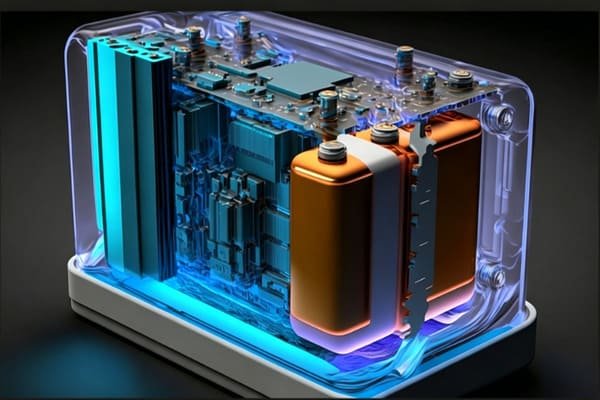
It does not matter if the system is designed for a home or a power plant. If it has lithium batteries inside, it must be shipped as Class 9 DG. We handle a wide range of these systems for clients exporting to the USA, Germany, Australia, and beyond. They all require the same strict compliance process.
Here's a breakdown of common ESS types that are always considered dangerous goods:
- Residential Energy Storage: These are the battery backup systems you see paired with home solar panels. They might be smaller, but they are still powerful and regulated.
- Commercial & Industrial (C&I) Systems: These are larger cabinets used by factories, office buildings, and data centers to reduce electricity costs or provide backup power. They are a core part of our business.
- Grid-Scale BESS (Battery Energy Storage Systems): These are the giants of the industry, often housed in 20-foot or 40-foot containers. They are used by utility companies to stabilize the power grid and are classified as UN3536.
- Portable Power Stations: While many think of smaller, handheld units, larger "portable" systems built into wheeled cabinets also fall under these rules for freight purposes.
The end-use of the cabinet is irrelevant for shipping classification. Whether its purpose is backup power, peak shaving, or grid stabilization, the logistics rules are the same. If it's a complete system with batteries, it's DG.
Is There Only One Type of Storage Cabinet That Can Ship as General Cargo?
Shippers are constantly looking for ways to simplify logistics and reduce costs. But trying to find loopholes in dangerous goods regulations can lead you straight into non-compliance and severe penalties.
Yes, there is only one situation where a storage cabinet can ship as general cargo: when it is a completely empty frame. This means no batteries, no wiring, and no other electronic components are installed—just the metal shell itself. This is considered general, non-hazardous cargo.
This is the only true exception, and it must be 100% empty. I want to be very clear on this point. "Empty" doesn't mean the batteries are just disconnected. It means they are not inside the cabinet at all. The cabinet should be nothing more than a painted metal box.
When a cabinet meets this strict definition, the benefits are significant.
- Lower Freight Costs: You avoid the Dangerous Goods surcharge that carriers apply to cover the costs of special handling and stowage.
- Simpler Booking Process: You don't need to provide an MSDS, a UN38.3 test report, or a DG declaration. The booking is as simple as shipping furniture.
- Wider Carrier Acceptance: Almost any shipping line will accept general cargo, giving you more options and flexibility.
This is a common strategy for companies that have assembly facilities in different countries. For example, a client of ours manufactures the high-quality cabinet frames in China and ships them as general cargo to their plant in Mexico. They then source the batteries locally and complete the assembly there. This is a smart and fully compliant way to manage their global supply chain. But it requires absolute certainty that the cabinets being shipped are nothing but empty shells.
What Are Common Misdeclaration Mistakes and How Can Freight Forwarders Ensure Compliance?
Misdeclaring dangerous goods, even by accident, can have severe consequences. Fines from authorities, blacklisting by carriers, and even catastrophic vessel fires can result from a single error.
The most common mistake is declaring a fully integrated ESS as an "empty cabinet." As your freight forwarder, we prevent this by demanding the MSDS upfront, performing inspections when necessary, and educating you on the rules. We then manage all DG documentation to ensure full compliance.

In our 20 years of experience, we've seen it all. The pressure to ship quickly and cheaply can lead to dangerous shortcuts. But the risk is never worth the reward. The consequences of getting caught are far more expensive than the cost of compliance.
Here are some of the most frequent and costly mistakes we help our clients avoid:
| Mistake | Potential Consequence |
|---|---|
| Declaring ESS as "General Cargo" | Huge customs fines, cargo seizure, blacklisting by shipping lines. |
| Using an Incorrect UN Number | Shipment is stopped at the port, requiring costly re-declaration and causing long delays. |
| Providing an Invalid or Missing MSDS | Booking is immediately rejected by the carrier; the cargo cannot be shipped. |
| Improper DG Labeling or Packing | Cargo is rejected by the terminal, creating a safety risk and requiring re-packing. |
Our role as a specialized forwarder is to be your first line of defense against these risks. We don't just move boxes; we manage compliance. We start by verifying the cargo's classification with the correct documents. For every ESS shipment, we handle the DG declaration, ensure it has shockproof packaging and reinforced lashing inside the container, and book it with carriers that have the expertise to handle Class 9 goods. This one-stop approach protects you from liability and ensures your high-value cargo arrives safely and on schedule.
Conclusion
Correctly classifying your energy storage cabinets as general cargo (empty) or Class 9 DG (with batteries) is critical. Partnering with a specialist ensures safety, compliance, and smooth global delivery.
"[PDF] Lithium Battery Guide for Shippers - PHMSA", https://www.phmsa.dot.gov/sites/phmsa.dot.gov/files/2024-11/Lithium-Battery-Guide-2024.pdf. The UN dangerous goods framework lists lithium ion batteries and lithium batteries installed in cargo transport units under Class 9 entries such as UN3481 and UN3536, supporting the classification of battery-containing equipment as miscellaneous dangerous goods for transport. Evidence role: definition; source type: institution. Supports: Energy storage cabinets containing lithium batteries are regulated as Class 9 dangerous goods under UN3481 or UN3536.. Scope note: The exact UN number depends on the product configuration and the applicable modal regulations. ↩
"How to Comply with Federal Hazardous Materials Regulations", https://www.fmcsa.dot.gov/regulations/hazardous-materials/how-comply-federal-hazardous-materials-regulations. Dangerous goods transport rules apply to substances and articles assigned to dangerous goods classes; an empty metal cabinet without batteries or hazardous components would not be assigned to lithium-battery UN entries, which contextually supports treatment as non-dangerous general cargo. Evidence role: general_support; source type: institution. Supports: An empty cabinet frame without lithium batteries is not classified under lithium-battery dangerous goods entries and can generally move as non-dangerous cargo.. Scope note: The source would support the regulatory logic, but actual carrier acceptance may still depend on inspection, documentation, and whether any other hazardous components are present. ↩
"[PDF] Hazard Communication Standard: Safety Data Sheets - OSHA", https://www.osha.gov/Publications/OSHA3514.html. Hazard communication standards and the Globally Harmonized System specify that safety data sheets include composition, hazard, and transport information, supporting their use as a source for identifying battery chemistry and transport classification. Evidence role: definition; source type: government. Supports: An MSDS or SDS provides information relevant to battery chemistry and transport classification.. Scope note: An SDS/MSDS helps document classification but does not by itself replace all transport documents required by the IMDG Code or a carrier. ↩
"International Maritime Organization - PHMSA", https://www.phmsa.dot.gov/international-program/international-maritime-organization. The International Maritime Organization identifies the IMDG Code as the international code governing the maritime transport of dangerous goods, supporting its use as the principal rulebook for sea freight classification and handling. Evidence role: definition; source type: institution. Supports: The IMDG Code is the governing international framework for dangerous goods transported by sea.. ↩
"[PDF] Lithium Battery Guide for Shippers - PHMSA", https://www.phmsa.dot.gov/sites/phmsa.dot.gov/files/2024-11/Lithium-Battery-Guide-2024.pdf. The UN dangerous goods list includes UN3536 for lithium batteries installed in a cargo transport unit, supporting the classification of certain containerized battery systems under this entry. Evidence role: definition; source type: institution. Supports: UN3536 is the UN entry for lithium batteries installed in cargo transport units.. Scope note: Applicability depends on whether the batteries are installed in a cargo transport unit as defined by the regulations, not merely on the physical size of the battery system. ↩
"Lithium Battery Test Summaries (TS) - PHMSA", https://www.phmsa.dot.gov/training/hazmat/new-un-requirement-test-summaries. The UN Manual of Tests and Criteria, Part III, subsection 38.3, sets out tests for lithium cells and batteries before transport, supporting the role of a UN38.3 report in demonstrating transport safety testing. Evidence role: definition; source type: institution. Supports: A UN38.3 test report demonstrates that lithium batteries have been tested under the UN transport test regime.. Scope note: The report demonstrates completion of specified transport tests; it does not guarantee safety under all transport conditions or replace packaging and documentation requirements. ↩
"[PDF] Lithium Battery Guide for Shippers - PHMSA", https://www.phmsa.dot.gov/sites/phmsa.dot.gov/files/2024-11/Lithium-Battery-Guide-2024.pdf. Dangerous goods classification systems assign lithium battery entries according to the hazardous article and its transport configuration, not the commercial brand or end use, supporting the article’s distinction between product application and transport classification. Evidence role: expert_consensus; source type: institution. Supports: For lithium-battery energy storage equipment, transport classification is driven by the presence and configuration of lithium batteries rather than the product’s brand or market application.. Scope note: Battery chemistry, watt-hour rating, packaging, installation configuration, and regulatory exceptions can affect detailed shipping requirements even when brand and application do not. ↩