
New tariffs are creating confusion and high costs for your business. This uncertainty can eat into your profits and disrupt your entire supply chain. Understanding the changes is the first step.
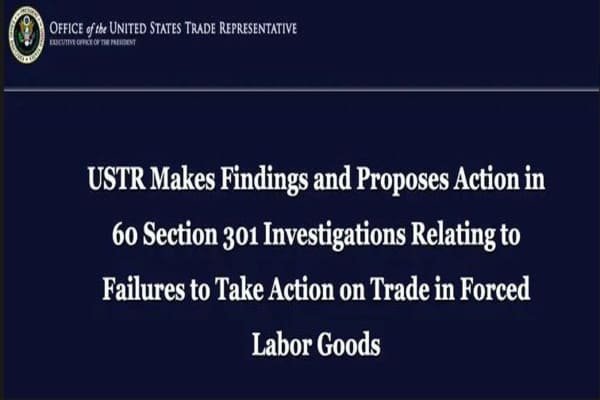
The new US Section 301 tiered tariff, set to begin in July 2026, will apply duties of 10% or 12.5% to goods from a total of 60 economies worldwide.1 Exporters must verify HTS codes, prepare precise documentation, and plan shipments early to navigate potential exemptions and avoid unexpected costs.2
I've been in the logistics business for over 20 years, and I've seen these kinds of policy shifts cause major headaches for exporters like you. It often feels like the rules change overnight, leaving you to deal with the consequences. But getting ahead of these changes is possible. When you break down the new rules into smaller pieces, they become much easier to manage. Let's look at the reasons behind this new tariff first. This will help us understand the whole picture.
Why Did the USTR Release the Latest 301 Additional Tariff?
Sudden policy changes create a lot of business uncertainty. You are left wondering why your costs just went up, making it hard to plan for the future. Knowing the policy background helps you anticipate moves.
USTR rolled out this tiered 301 tariff mainly due to inconsistent national enforcement of forced-labour import bans globally3, alongside goals to fix trade imbalance and safeguard core domestic US industries. It moves from targeting a single country to a broader, tiered system affecting multiple economies for a more balanced global trade environment.

This new tariff is a big change from what we've seen before. For years, exporters have been dealing with tariffs focused on specific countries. I remember helping clients navigate those rules, which was complicated enough. Now, the approach is different. The US government wants to create what it calls a more "level playing field." This means they are looking at trade practices across the globe, not just in one or two places. The goal is to encourage manufacturing back in the US and protect industries that are important for economic growth and national security. This includes sectors like high-tech electronics, renewable energy products, and certain medical supplies. By understanding this shift in strategy, you can better prepare your business for what's to come. It’s not just about paying a new tax; it’s about a new way of thinking about global trade.
A Shift from Unilateral to Multilateral Pressure
The previous Section 301 tariffs were known for their focus on a single major economy.4 This new regulation marks a significant change. Instead of a unilateral approach, the USTR is now applying pressure on a wider group of a total of 60 economies worldwide.5 This strategy aims to prevent trade diversion, where companies simply move production to another country to avoid tariffs.6 We saw this happen a lot in the past. A client of mine in the electronics business moved their assembly from one country to another, only to face new regulations there a year later. This new, broader tariff makes that strategy much harder. It forces all exporters to look closely at their compliance, no matter where they produce their goods.
The Rationale Behind the Tiered System
The introduction of a tiered system with 10% and 12.5% rates is a deliberate choice. It allows the USTR to apply different levels of pressure based on the product type and the country of origin's trade policies. This is more nuanced than the old flat-rate system.
| Aspect | Old Tariff System | New Tiered System (2026) |
|---|---|---|
| Target | Primarily one country | ~60 economies worldwide |
| Rates | Often a single high rate (e.g., 25%) | Tiered rates (10% & 12.5%) |
| Goal | Address specific trade disputes | Broadly rebalance trade, protect industries |
| Impact | Concentrated on specific supply chains | Widespread across global supply chains |
This table shows the clear difference. The new system is designed to be more flexible and have a wider impact, encouraging a broad shift in global supply chains rather than just isolated changes.
What Does the 12.5% & 10% Tiered Duty Breakdown Mean for Target Countries and Exemption Requirements?
The new 12.5% and 10% tariff rates are confusing. A simple mistake in your paperwork or product classification could cost your business thousands of dollars in unexpected duties. Understanding the details is critical.
Duty tiers hinge on your product’s HTS classification and country of origin.7 You may apply for tariff exclusions via the formal USTR-administered program; approvals require evidence that your item cannot be sourced domestically in the US nor from feasible alternative overseas suppliers. CBP only enforces approved exemptions upon customs entry.8
I've seen firsthand how a small detail can lead to big problems at the port. A few years ago, a customer shipping outdoor equipment had a shipment held for weeks because of a tiny error in their HTS code classification. The delay and fines were a huge blow. With this new tiered system, the risk of such mistakes is even higher. The difference between a 10% and a 12.5% tariff might not sound like much on a single item, but it adds up to a huge amount across a full container load. That's why it's so important to get everything right from the start. We need to look at exactly which products are affected and how you can apply for an exemption if your goods qualify. This preparation is the best way to protect your profit margins.
Understanding the Tiered Rate Structure
The applicable extra duty rate (10% or 12.5%) is determined mainly by the exporting country’s regulatory compliance level on forced-labour import rules. Whether products fall under additional tariffs depends on matching covered HTS codes; strategic products including advanced electronics, machinery and green energy parts are widely listed on the taxable HTS schedules across both tariff tiers.9
Identifying Covered Goods and Economies
This tariff is global. While it includes major manufacturing hubs like China, Vietnam, and Mexico, it also covers dozens of other countries in Asia, Europe, and the Americas. The official list of affected economies and the specific HTS codes for each tier has been released by the USTR. Your first step should be to get this list and cross-reference it with your entire product catalog and supplier locations. I always tell my clients to create a simple spreadsheet. List your products, their current HTS codes, and their country of origin. Then, compare it against the new tariff schedule. This simple exercise gives you a clear picture of your potential new costs.
Navigating CBP Exemption Procedures
Formal tariff exclusion applications are reviewed and approved solely by the USTR, while CBP only carries out approved exemption rulings during customs clearance.10 To qualify for exclusion, applicants must prove insufficient domestic US output plus no viable third-country alternative supply to satisfy market demand. The application involves massive paperwork with uncertain approval results, so early preparation is essential.
What Are Practical Export Solutions to Cut Extra Costs Under the US New 301 Tariff Regulation?
Higher tariffs directly translate to lower profit margins. You feel like you are losing control over your costs, and it puts your business at risk. There are practical strategies you can use to mitigate this impact.
To cut costs, you should re-evaluate your supply chain, optimize HTS codes with a specialist, and consolidate shipments. Planning shipments before July 2026 and using a freight forwarder's expertise can secure better rates and avoid delays.

The announcement of a new tariff doesn't have to mean your business will lose money. It just means we need to be smarter and more proactive. I always think of it as a puzzle. The government creates the rules, and our job is to find the most efficient and cost-effective way to work within them. This isn't about finding loopholes; it's about using legitimate strategies to keep your business healthy. Over the years, I've helped hundreds of clients adjust to new regulations. The ones who succeed are always the ones who plan ahead. Let's look at some concrete steps you can take right now to protect your bottom line from these new tariffs.
Proactive Shipment Planning
The effective date is July 2026. This gives you a window of opportunity. For any non-perishable goods, you should explore advancing your shipment schedules. Shipping earlier might mean higher inventory costs, but this could be much less than the 10% or 12.5% tariff you would pay later. I had a client, who sells furniture. When a previous tariff was announced, we worked together to ship three months of inventory before the deadline. He had to rent extra warehouse space, but he saved over $100,000 in duties. You should also consider consolidating smaller shipments (LCL) into a full container (FCL).11 This not only lowers your per-unit shipping cost but also simplifies customs clearance, reducing the risk of tariff-related delays for one small part of your shipment.
Documentation and Compliance is Key
Under this new regulation, your paperwork is your most important asset. Every detail on your Commercial Invoice, Packing List, and Certificate of Origin will be under scrutiny.12 A simple mistake, like a wrong valuation or an inaccurate product description, can trigger a customs inspection. This leads to delays, inspection fees, and potential fines, all on top of the tariff itself. We review every line to ensure it matches the booking information and complies with both origin and destination regulations. This simple, proactive step prevents the vast majority of customs problems before they can even start.
Partnering with a Logistics Expert
Trying to navigate this complex environment alone is a huge risk. A professional freight forwarder who specializes in the US market is no longer a luxury; it's a necessity.13 We are on the front lines of this every day. We talk to customs brokers, shipping lines constantly.14 This gives us real-time insights that you just can't find on a website. As your partner, we can help you design the most efficient shipping strategy. Our goal is to handle the complexity of logistics so you can focus on what you do best: growing your business. The new tariffs are a challenge, but with the right partner, they are completely manageable.
Conclusion
The 2026 tariff is a major shift in global trade. However, with early planning, perfect documentation, and an expert partner, you can navigate these changes and protect your business effectively.
USTR Makes Findings and Proposes Action in 60 Section 301 Investigations — *Office of the United States Trade Representative (USTR)*: https://ustr.gov/about/policy-offices/press-office/press-releases/2026/june/ustr-makes-findings-and-proposes-action-60-section-301-investigations-relating-failures-take-action ↩
Harmonized Tariff Schedule of the United States (HTS) — the primary system for classifying imported goods and determining duty rates — *Wikipedia*: https://en.wikipedia.org/wiki/Harmonized_Tariff_Schedule_of_the_United_States ↩
Section 301 Forced Labor Import Ban Actionability and Proposed Action (Federal Register Notice) — *Office of the United States Trade Representative (USTR)*: https://ustr.gov/sites/default/files/files/Press/Releases/2026/FRN%20-%20Section%20301%20Forced%20Labor%20Import%20Ban%20Actionabilty%20and%20Proposed%20Action%206-2-26%20FINAL.pdf ↩
Section 301 of the Trade Act of 1974 — In Focus report — *Congressional Research Service (CRS), U.S. Congress*: https://www.congress.gov/crs-product/IF12990 ↩
Unilateralism — a policy approach in which one state acts independently in international affairs — *Wikipedia*: https://en.wikipedia.org/wiki/Unilateralism ↩
Trade diversion — the shifting of trade from a more efficient producer to a less efficient one due to tariff or policy changes — *Wikipedia*: https://en.wikipedia.org/wiki/Trade_diversion ↩
Country of origin — the country where a product was manufactured, produced, or grown; a key factor in tariff determination — *Wikipedia*: https://en.wikipedia.org/wiki/Country_of_origin ↩
U.S. Customs and Border Protection (CBP) — the federal agency responsible for enforcing customs, trade, and tariff rules at U.S. ports of entry — *Wikipedia*: https://en.wikipedia.org/wiki/U.S._Customs_and_Border_Protection ↩
Section 301 Modifications Determination (Federal Register Notice, Sept 12, 2024) — covered HTS product schedules — *Office of the United States Trade Representative (USTR)*: https://ustr.gov/sites/default/files/Section%20301%20Modifications%20Determination%20FRN%20(Sept%2012%202024)%20(FINAL).pdf ↩
Four-Year Review of China Technology Transfer Section 301 Actions — exclusion procedures explained — *Office of the United States Trade Representative (USTR)*: https://ustr.gov/sites/default/files/USTR%20Report%20Four%20Year%20Review%20of%20China%20Tech%20Transfer%20Section%20301.pdf ↩
Containerization — the logistics system of shipping cargo in standardized containers; the basis of FCL and LCL shipping models — *Wikipedia*: https://en.wikipedia.org/wiki/Containerization ↩
Certificate of origin — a document declaring the country in which goods were manufactured, required for customs and tariff purposes — *Wikipedia*: https://en.wikipedia.org/wiki/Certificate_of_origin ↩
Freight forwarder — an agent that organizes shipments and manages customs compliance on behalf of shippers — *Wikipedia*: https://en.wikipedia.org/wiki/Freight_forwarder ↩
Customs broker — a licensed professional who assists importers and exporters in clearing goods through customs — *Wikipedia*: https://en.wikipedia.org/wiki/Customs_broker ↩