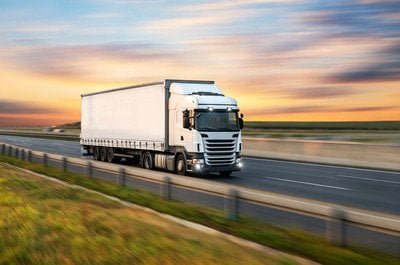


Shipping from China to Vietnam feels complicated. Delays and high costs can sink your budget. But a fast, affordable ground route offers a powerful alternative for your business.
Road freight is the top choice1 because it perfectly balances speed, cost, and flexibility for the high-volume trade between China and Vietnam2. It avoids port delays3, making it ideal for time-sensitive goods like electronics and machinery, offering a practical and efficient solution.

This gives you a quick overview. But to truly understand if it's right for you, we need to look closer. To make the best decision for your business, it's important to understand the details. Let's break down what road freight really is, why it's so efficient, and when you should use it.
What Is Road Freight from China to Vietnam?
New to cross-border shipping? The terminology can be confusing. If you pick the wrong method, you might face unexpected costs. Let's clarify exactly what road freight involves.
Road freight from China to Vietnam is the process of transporting goods by truck over land. Cargo is loaded in China and driven across major border crossings like Pingxiang or Hekou4, then directly into Vietnam for its final destination.
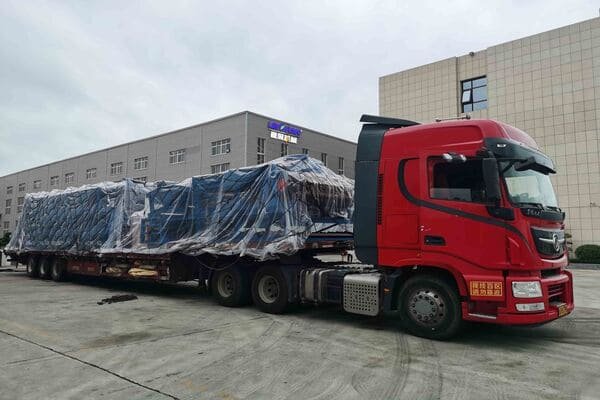
When we talk about road freight, we are talking about a very direct process. Imagine your goods are manufactured in Shenzhen. A truck arrives at the factory, your cargo is loaded, and the truck begins its journey. Instead of heading to a seaport, it drives south to a land border crossing, such as the Hữu Nghị Border Gate (linked to Pingxiang in China). Here, the cargo goes through customs clearance for both export from China and import into Vietnam. Once cleared, the same truck, or a new one, continues its journey to the final destination, maybe a warehouse in Hanoi or a factory in Bac Ninh. This single mode of transport eliminates the multiple handling steps common in sea freight5, where goods are moved from truck to port, loaded onto a vessel, unloaded at another port, and then loaded onto another truck.
The Road Freight Process Step-by-Step
The journey is more straightforward than other methods. Here is a simple breakdown:
| Step | Description |
|---|---|
| 1. Cargo Pickup | A truck picks up your goods directly from the factory or warehouse in China. |
| 2. Transit to Border | The truck drives to a designated land border crossing, like Pingxiang or Hekou. |
| 3. Customs Clearance | The shipment undergoes export declaration in China and import declaration in Vietnam. |
| 4. Border Crossing | After clearance, the truck physically crosses the border into Vietnam. |
| 5. Final Delivery | The truck travels from the border to the final delivery address in Vietnam. |
Why Is Road Freight Fast and Cost Effective to Vietnam?
Choosing between speed and cost is a constant struggle. Air is fast but pricey, while sea is cheap but slow. For this route, there's a middle ground that wins.
Road freight is fast because it offers a direct, non-stop route, cutting transit time to just a few days6. It's cost-effective by avoiding expensive air freight charges and the multiple handling fees associated with sea ports, providing a great balance for your budget.
I remember a client who needed to ship a batch of new electronic devices from Dongguan to a distributor in Hanoi for a product launch. Sea freight would take over a week and risk missing the launch date. Air freight was an option, but it would have erased their profit margin. We suggested road freight. The truck was loaded on a Monday and arrived in Hanoi on Wednesday afternoon, perfectly on schedule and well within budget. This is a perfect example of its value. Speed is a huge advantage. A truck can travel from Southern China to Northern Vietnam in just 2-5 days. In contrast, sea freight can take 7-14 days when you include waiting times at ports. This speed allows for better inventory management and quicker response to market demand. From a cost perspective, it is much cheaper than air freight and very competitive with sea freight, especially when you factor in the reduced handling fees and storage costs.
Comparing Shipping Methods: China to Vietnam
To make it clearer, here is how the different methods stack up against each other.
| Shipping Method | Typical Transit Time | Cost Level | Best For |
|---|---|---|---|
| Road Freight | 2-5 Days7 | Medium | A balance of speed and cost |
| Sea Freight | 7-14 Days8 | Low | Large, non-urgent shipments |
| Air Freight | 1-2 Days9 | High | Small, extremely urgent shipments |
When to Use Road Freight from China to Vietnam?
Every shipment is different. Using the wrong logistics can lead to missed deadlines or wasted money. So how do you decide if trucking is your best bet?
You should use road freight for time-critical cargo like electronics, automotive parts, and seasonal goods. It is also perfect for shipments that require flexible inland delivery and when you need a solution that is faster than sea but cheaper than air freight.
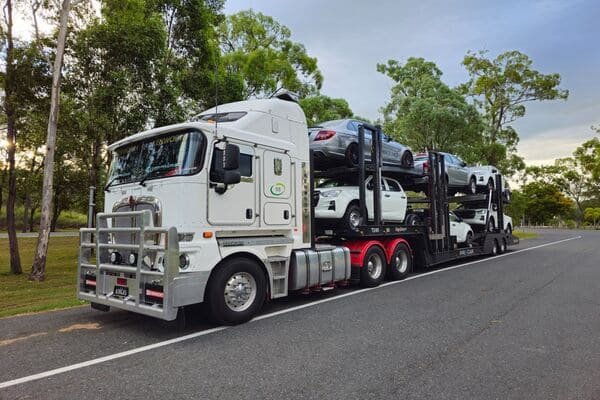
The decision to use road freight often comes down to three factors: the type of cargo, its urgency, and your budget. This method is especially popular for businesses in the electronics, automotive, and fast-fashion industries10. These sectors deal with high-value or time-sensitive products where speed to market is critical. For example, a new smartphone model needs to reach stores quickly before its value drops. Road freight is also highly efficient for shipments originating from southern Chinese manufacturing hubs like Guangdong and destined for industrial zones in northern Vietnam like Hanoi and Haiphong11. The geographical proximity makes trucking an obvious choice. It provides the flexibility to choose between Full Truckload (FTL), where you book an entire truck for your goods, or Less-than-Truckload (LTL), where you share truck space and costs with other shippers12. This makes it a scalable solution for businesses of all sizes.
Matching Your Needs to the Right Method
Consider your specific situation to see which method fits best.
| Your Situation | Recommended Method | Why? |
|---|---|---|
| Urgent restock of smartphones | Road Freight | It's much faster than sea freight and significantly cheaper than air freight. |
| Bulk shipment of furniture | Sea Freight | Cost is the main factor, and the goods are not time-sensitive. |
| A small box of critical repair parts | Air Freight | Speed is the absolute priority, and the cost is justified by the urgency. |
| Regular apparel shipments | Road Freight | It provides a reliable and consistent schedule that is faster than sea. |
Conclusion
Road freight is a top choice for China-Vietnam shipping due to its excellent balance of speed, cost, and flexibility. It remains the most practical choice for many time-sensitive shipments.
"U.S. Freight Transportation with Canada, Mexico, and China", https://www.bts.gov/data-spotlight/modal-profiles-us-freight-transportation-canada-mexico-and-china. Trade and logistics reports can provide statistics on the modal split for freight between China and Vietnam, contextualizing road freight's share of the total volume and its importance for specific commodity types. Evidence role: statistic; source type: research. Supports: The volume and value of goods transported between China and Vietnam by different modes (road, sea, air).. Scope note: The source may show road freight is dominant for certain goods or routes (e.g., Southern China to Northern Vietnam) rather than being the overall "top" mode by all metrics. ↩
"Vietnam | United States Trade Representative", https://ustr.gov/countries-regions/southeast-asia-pacific/vietnam. Official data from sources like Vietnam's General Department of Customs or the World Bank quantifies the bilateral trade, which exceeded $200 billion USD in recent years, confirming its status as a high-volume trade relationship. Evidence role: statistic; source type: government. Supports: The total annual trade value between China and Vietnam.. ↩
"What More Competitive Freight Logistics Can Do in Vietnam", https://www.worldbank.org/content/dam/Worldbank/document/EAP/Vietnam/Logistics_Policy_Note_EN.pdf. Studies on ASEAN logistics corridors show that while road freight avoids seaport-related delays, it faces significant bottlenecks at land border crossings, with wait times that can fluctuate based on policy, infrastructure, and seasonal demand. Evidence role: mechanism; source type: research. Supports: The nature of delays in cross-border road freight compared to sea freight.. Scope note: The source would provide a more balanced view, explaining the trade-offs between different types of delays rather than simply confirming the claim. ↩
"Trade Volume Picking Up at China-Vietnam Border Crossing", https://www.producereport.com/article/trade-volume-picking-china-vietnam-border-crossing. Reports from development banks or trade organizations often identify the primary land border crossings by trade volume, confirming the strategic importance of the Pingxiang-Hữu Nghị and Hekou-Lào Cai corridors for China-Vietnam commerce. Evidence role: general_support; source type: institution. Supports: The status of Pingxiang and Hekou as key hubs for bilateral road trade.. ↩
"Logistics Costs and U.S. Gross Domestic Product", https://ops.fhwa.dot.gov/Freight/freight_analysis/econ_methods/lcdp_rep/index.htm. Supply chain management principles explain that unimodal transport, such as direct trucking, reduces the number of transloading events (e.g., from truck to port storage to vessel) inherent in intermodal transport, thereby lowering risks of damage, loss, and delay. Evidence role: mechanism; source type: education. Supports: The reduction in handling and transloading steps in direct road freight compared to the typical sea freight process.. ↩
"Hanoi to Shenzhen By Air freight, Container ship or Road", https://www.fluentcargo.com/routes/hanoi-vn/shenzhen-cn. Logistics industry reports on the Greater Mekong Subregion economic corridors corroborate that typical door-to-door transit times for road freight from Guangdong province to the Hanoi area range from 2 to 5 days, inclusive of border clearance procedures. Evidence role: statistic; source type: research. Supports: The typical transit time for road freight between major manufacturing hubs in Southern China and industrial zones in Northern Vietnam.. Scope note: Actual times can vary significantly based on border congestion, customs efficiency, and specific origin/destination points. ↩
"Vietnam Road Freight Transport Market Size & Growth to ...", https://www.mordorintelligence.com/industry-reports/vietnam-road-freight-transport-market. Industry analyses and reports from logistics providers confirm that the standard transit time for road freight from Southern China's manufacturing hubs to Northern Vietnam's industrial zones is typically between 2 and 5 days, including time for customs clearance. Evidence role: statistic; source type: research. Supports: The typical transit time for road freight on the China-Vietnam route.. ↩
"Transit Time Calculator for Sea, Air & Port To Port Shipping", https://www.freightos.com/freight-resources/transit-time-calculator/. Analysis of shipping schedules and logistics data indicates that the total transit time for sea freight from ports like Shenzhen or Guangzhou to Haiphong, including terminal handling, customs, and potential waiting periods, typically ranges from one to two weeks. Evidence role: statistic; source type: research. Supports: The typical total transit time for sea freight between Southern China and Northern Vietnam, including port handling.. Scope note: This timeframe is an average and can be affected by port congestion, vessel schedules, and weather conditions. ↩
"Shipping from China to Vietnam - [Updated August 2026]", https://www.sino-shipping.com/country-guides/freight-from-china-to-vietnam/. Air cargo industry data shows that while flight time is only a few hours, the total door-to-door transit time for air freight, including pickup, customs clearance, and final delivery, is typically 1 to 2 days for major routes between China and Vietnam. Evidence role: statistic; source type: research. Supports: The typical door-to-door transit time for air freight between China and Vietnam.. ↩
"What More Competitive Freight Logistics Can Do in Vietnam", https://www.worldbank.org/content/dam/Worldbank/document/EAP/Vietnam/Logistics_Policy_Note_EN.pdf. Market research and supply chain analyses frequently highlight that industries with time-sensitive products and just-in-time production models, such as electronics assembly, automotive parts, and fast fashion, are primary users of cross-border road freight services between China and Vietnam. Evidence role: case_reference; source type: research. Supports: The significant use of road freight by the electronics, automotive, and textile/apparel industries in the China-Vietnam supply chain.. ↩
"China–Pakistan Economic Corridor", https://en.wikipedia.org/wiki/China%E2%80%93Pakistan_Economic_Corridor. Reports from institutions like the Asian Development Bank on the Greater Mekong Subregion (GMS) economic corridors detail the strong industrial and logistical links between manufacturing centers in China's Pearl River Delta (including Guangdong) and the industrial zones in and around Vietnam's capital region of Hanoi and the port city of Haiphong. Evidence role: general_support; source type: institution. Supports: The geographical concentration of manufacturing and logistics activity between Southern China and Northern Vietnam.. ↩
"Freight Glossary and Acronyms - FHWA Office of Operations", https://ops.fhwa.dot.gov/freight/fpd/glossary/index.htm. Standard logistics and supply chain management glossaries define FTL as a shipment that utilizes the entire capacity of a truck and is reserved for a single shipper, while LTL involves consolidating smaller shipments from multiple shippers into a single truck. Evidence role: definition; source type: education. Supports: The standard industry definitions of Full Truckload (FTL) and Less-than-Truckload (LTL).. ↩