
Selecting the wrong truck for your freight can lead to unexpected costs, delays, and serious compliance issues. You might find yourself overpaying for unused space or, even worse, facing fines and re-loading fees because your cargo doesn't fit or exceeds legal weight limits1. A systematic approach to choosing a truck model is the solution that ensures your cargo is transported efficiently, safely, and cost-effectively from the start.
The best way to choose a truck model is to precisely match the vehicle's specifications—including its length, width, height, weight capacity, and type (e.g., flatbed, box truck, tanker)—with your cargo's exact dimensions, total weight, and specific nature (such as general vs. hazardous goods). This selection must also strictly adhere to all national and regional transportation compliance standards for a legal and safe transit.

Now that you understand the core principle, let's break down the specific factors that guide this critical decision. A deeper look at these details is the key to optimizing your supply chain and protecting your budget from unforeseen expenses.
What to Check When Choosing a Truck Mode
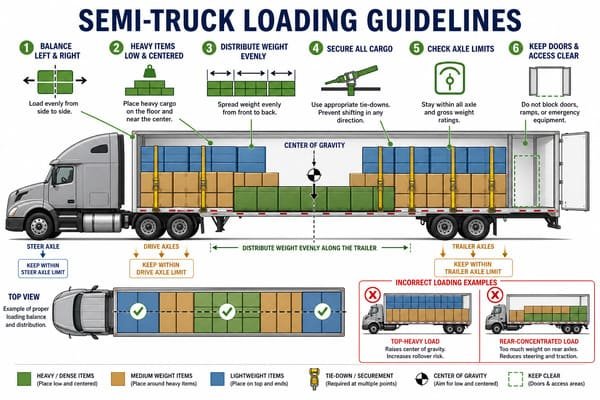
It’s tempting to just estimate the truck size you need for your shipment, especially when you're in a hurry. However, a wrong guess can lead to rejected loads at the depot or, more dangerously, damaged goods if the weight isn't distributed properly across the vehicle. Following core loading guidelines is what removes the guesswork, ensuring a safe, compliant, and stable journey for your shipment.
The core loading guidelines for choosing a truck model demand a detailed analysis of your cargo's total weight, volume in cubic meters (CBM), and precise dimensions (length, width, height). Beyond these basic figures, you must consider proper weight distribution across the truck's axles and verify that the fully loaded vehicle complies with all legal road weight limits.
Dive Deeper: The Data-Driven Foundation of Truck Selection
At its heart, logistics is a science of measurement. Every decision we make, especially when selecting a vehicle, is based on hard data. As a company, we hold a core principle: all vehicle adjustments are based on the actual dimensions, volume, and weight of the cargo, as well as national transportation compliance standards2. There are no arbitrary price increases or hidden fees—just data-driven efficiency.
Calculating Volume vs. Weight
Two primary metrics determine the space your cargo occupies: volumetric weight and actual weight. The carrier will charge based on whichever is greater, known as the "chargeable weight3."
- Actual Weight: The weight of the cargo when placed on a scale, measured in kilograms (kg) or pounds (lbs).
- Volumetric Weight: A measure of a shipment's density. It's calculated by multiplying the dimensions (Length x Width x Height, in meters) to get the volume in cubic meters (CBM), which is then multiplied by a specific dimensional weight factor4 (e.g., 167 kg/m³ for air freight, variable for road freight).
For example, a large shipment of styrofoam might have a low actual weight but a high volumetric weight. Conversely, a small crate of metal parts will have a high actual weight relative to its volume. A professional logistics provider analyzes both to ensure you aren't overpaying for light, bulky items or selecting a truck that can't handle the physical weight of dense cargo.
The Critical Importance of Axle Weight Distribution
A truck’s total carrying capacity is only part of the story. National and regional laws impose strict limits on the amount of weight that can be placed on each axle5 or axle group. Simply loading all the heaviest items at the back of a trailer can overload the rear axles while leaving the front ones underutilized.
This can lead to:
- Heavy Fines: Overweight axle violations are a common and costly citation6.
- Safety Hazards: Poor weight distribution affects braking, steering, and overall vehicle stability7, increasing the risk of accidents.
- Vehicle Damage: Consistently overloading axles leads to premature wear and tear on tires, suspension, and the vehicle frame.
Proper loading involves strategically placing cargo to evenly distribute its mass across the steer axle, drive axles, and trailer axles, staying within the legal limits for each.
Verifying Cargo Dimensions with No Room for Error
"About 2 meters long" is not a precise measurement. When choosing a truck model, we need exact dimensions, including all packaging, crating, or pallets. A few centimeters can be the difference between fitting into a standard enclosed trailer and needing a more expensive open-top or flatbed model. We always insist on confirming the final, packed dimensions before booking a vehicle. This diligence prevents last-minute surprises, like a crate being too tall to clear the trailer door. It's this commitment to precision that allows us to find the most cost-effective vehicle without compromising on safety or compliance.
How Do You Go About Choosing a Truck Model for General Cargo?
Your goods aren't hazardous or temperature-sensitive, so you might assume that any standard truck will suffice. But using a specialized vehicle when a simple box truck is enough wastes money, while using a truck that’s too small can lead to multiple trips or damaged goods. Understanding the common types of general cargo vehicles is essential for making an informed, practical, and economical choice.
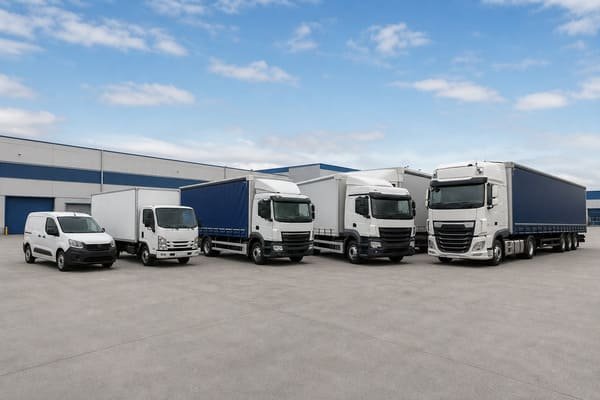
For general cargo, the process of choosing a truck model is a direct exercise in matching your shipment's size and weight to standard vehicle types. This typically includes cargo vans for small B2B deliveries, box trucks for palletized goods, and various semi-trailer trucks (like dry vans or curtain-siders) for larger freight volumes.
Dive Deeper: Matching the Truck to the Task
The term "general cargo" covers a vast range of goods, from palletized consumer products and electronics to crated machinery and raw materials. The key is selecting the most efficient vehicle from a diverse fleet. I once worked with a client shipping several large crates of custom-built furniture. They assumed they needed an expensive, oversized flatbed truck. After we requested the precise crate dimensions and weights, our calculations showed it would fit perfectly into a standard 13-meter curtain-side trailer. This simple check saved them nearly 20% on their domestic transport costs. This is our philosophy in action: we always verify the data to find the most economical solution permitted by the cargo's characteristics.
Common General Cargo Vehicle Types
To make the right choice, it helps to know your options. Here is a breakdown of common truck types we use for general cargo transport:
| Truck Type | Typical Max Payload8 | Typical Max Volume | Common Use Cases |
|---|---|---|---|
| Cargo Van | 1,000 - 1,800 kg | 10 - 15 CBM | Last-mile delivery, small parcels, document transport. |
| Light-Duty Box Truck (4.2m) | ~1,500 - 2,000 kg | ~16 - 20 CBM | Small pallet loads, local B2B distribution, retail inventory. |
| Medium-Duty Truck (6.8m - 7.6m) | ~5,000 - 8,000 kg | ~35 - 45 CBM | Multiple pallet shipments, furniture, regional deliveries. |
| Heavy-Duty Semi-Trailer (13m) | ~25,000 kg | ~85 CBM | Full truckload (FTL) shipments, long-haul transport. |
| High-Capacity Trailer (17.5m) | ~25,000 kg | ~120 CBM | High-volume, relatively light goods like empty packaging. |
Key Differences in Trailer Types
For larger loads, the type of trailer is as important as its size.
- Dry Van / Box Trailer: This is the most common type. It's a fully enclosed box that provides excellent security and protection from the weather. It's ideal for most palletized goods, electronics, and other cargo that needs to stay clean and dry. Loading and unloading occur through the rear doors.
- Curtain-Sider: This trailer has rigid front and rear walls but uses heavy-duty PVC curtains for its sides. Its main advantage is loading flexibility—forklifts can access the cargo from the side, which is much faster for certain types of freight.
- Flatbed Trailer: A trailer with no sides or roof. It's the go-to choice for cargo that is oversized, bulky, or needs to be loaded by a crane, such as construction materials, heavy machinery, or large pipes. All cargo on a flatbed must be expertly secured with straps or chains and often covered with tarps.
- Open-Top Trailer: A hybrid that features solid walls like a dry van but has a removable tarp roof. It's used for cargo that is too tall to fit through the door of an enclosed trailer but still requires the protection of side walls. Loading is typically done via an overhead crane.
What Makes Choosing a Truck Model for Dangerous Goods Different?
Transporting chemicals, flammable liquids, or other hazardous materials is already a complex and high-stakes process. Using the wrong vehicle type isn't just a minor mistake—it can lead to severe legal penalties, devastating environmental incidents, and catastrophic safety failures that endanger the public. The selection process for dangerous goods (DG) vehicles is therefore one of the most strictly regulated aspects of logistics.
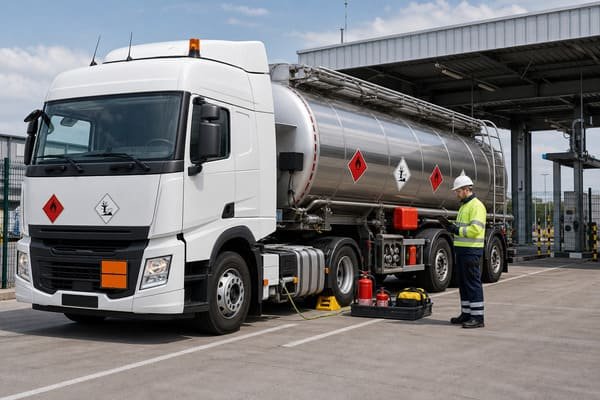
Choosing a truck model for dangerous goods goes far beyond simple size and weight calculations. It requires selecting a vehicle specifically certified and equipped to handle the cargo's UN Dangerous Goods Class, operated by a specially licensed driver, and fully compliant with all international and local transport regulations, such as the ADR agreement in Europe9.
Dive Deeper: A Zero-Compromise Approach to Safety
When it comes to dangerous goods, there is no room for error. The entire process is governed by stringent international and national laws designed to mitigate risk at every step. As specialists in complex and high-risk cargo, our team's deep operational experience is critical. We ensure that every DG shipment, whether it’s chemicals in an ISO Tank or flammable materials in drums, is handled with the highest level of scrutiny.
The Role of UN Dangerous Goods Classes
The foundation of DG transport is the classification system. The United Nations categorizes hazardous materials into nine distinct classes10 based on the primary danger they present:
- Class 1: Explosives
- Class 2: Gases
- Class 3: Flammable Liquids
- Class 4: Flammable Solids
- Class 5: Oxidizing Substances and Organic Peroxides
- Class 6: Toxic and Infectious Substances
- Class 7: Radioactive Material
- Class 8: Corrosive Substances
- Class 9: Miscellaneous Dangerous Goods
The vehicle chosen must be appropriate for the specific class. For example, you cannot transport Class 3 flammable liquids in just any container; it may require a specialized tanker truck with specific safety features. The cargo's Material Safety Data Sheet (MSDS) is the definitive document that provides this classification and dictates handling requirements.
Mandatory Vehicle and Driver Certification
Both the vehicle and the driver must be certified for DG transport.
- Vehicle Requirements: A DG-certified truck is not a standard vehicle. It may be equipped with features like flame-retardant wiring, a battery cut-off switch, built-in fire extinguishers, and specialized ventilation11. It must also display the correct hazard placards (diamond-shaped signs) on all sides to inform emergency responders of the specific risks.
- Driver Requirements: The driver must hold a valid license or endorsement for transporting dangerous goods, which requires specialized training and regular re-certification12. They are trained in emergency procedures, proper handling techniques, and the regulations specific to the materials they carry. When we arrange DG transport, verifying the driver's credentials is a non-negotiable step.
Specialized Equipment for Bulk and Sensitive DG Cargo
For many of our clients in the chemical and manufacturing sectors, standard DG trucking is not enough. We leverage advanced equipment to provide safe and efficient solutions for bulk transport.
- ISO Tanks: These are our specialty. An ISO Tank is essentially a tank built within a standard 20-foot container frame. It is designed to carry hazardous and non-hazardous bulk liquids, chemicals, and gases. They are highly efficient, safe, and can be used across multiple transport modes (ship, rail, and truck) without the need to transfer the product. For road transport, the ISO Tank is loaded onto a compatible skeletal trailer (chassis).
- Refrigerated (RF) Containers: Certain chemicals or substances are not only hazardous but also temperature-sensitive. An RF container on a chassis with a generator set (genset) allows us to maintain a precise temperature throughout transit, ensuring the product's stability and safety.
Frequently Asked Questions
How do I calculate the volume of my cargo?
To calculate your cargo's volume, measure its three dimensions—length, width, and height—in meters. Then, multiply them together (L x W x H). The result is the volume in cubic meters (CBM). Always be sure to measure the outermost points of the cargo, including any pallets or packaging.
What is the difference between payload and gross vehicle weight?
Payload refers to the maximum weight of cargo that a truck is legally and technically rated to carry. Gross Vehicle Weight (GVW), on the other hand, is the total combined weight of the truck itself (the tractor and trailer) plus its payload. Exceeding the maximum legal GVW is a serious violation.
Do I need a special truck for oversized cargo (OOG)?
Yes, absolutely. Out-of-gauge (OOG) cargo is any item that exceeds the standard dimensions of a 40-foot container or standard trailer. This type of freight almost always requires a specialized truck, such as a flatbed, low-boy (for extra height clearance), or extendable trailer. OOG shipments also require special permits and, depending on their size and route, may need escort vehicles.
Who is responsible for ensuring the correct truck is used?
While you, the shipper, are responsible for providing accurate and complete information about your cargo, a professional logistics partner is ultimately responsible for selecting the appropriate and compliant vehicle. This critical task is a core part of our service and our commitment to our clients. We take on the responsibility of matching your cargo to the right truck, ensuring safety, compliance, and cost-effectiveness.
Conclusion
Ultimately, choosing a truck model is a critical and calculated process at the heart of efficient logistics. It’s a decision that directly impacts your shipping costs, transit times, and legal compliance. Whether you're shipping general merchandise that requires careful volume calculation or transporting dangerous goods governed by strict international laws, the principle remains the same: the decision must be driven by precise data. A reliable logistics partner never guesses; we analyze the cargo's specific characteristics—its dimensions, weight, and nature—to select the safest, most compliant, and most cost-effective vehicle every time.
If you are looking for a logistics partner with two decades of proven expertise in navigating these complex decisions for high-value and special cargo, our team is here to help. Contact us today to discuss how our transparent, data-driven approach can bring efficiency and peace of mind to your supply chain.
"Compilation of Existing State Truck Size and Weight Limit Laws", https://ops.fhwa.dot.gov/freight/policy/rpt_congress/truck_sw_laws/app_a.htm. Government transportation agencies, such as the U.S. Department of Transportation, establish and enforce regulations regarding commercial vehicle weight, with violations leading to fines and other penalties to ensure road safety and preserve infrastructure. Evidence role: general_support; source type: government. Supports: The claim that exceeding legal vehicle weight limits results in financial penalties.. ↩
"Compilation of Existing State Truck Size and Weight Limit Laws", https://ops.fhwa.dot.gov/freight/policy/rpt_congress/truck_sw_laws/index.htm. National bodies, like the U.S. Federal Highway Administration (FHWA), set compliance standards for commercial motor vehicles, regulating aspects such as vehicle length, width, and weight to ensure uniformity and safety on the national road network. Evidence role: definition; source type: government. Supports: The claim that national standards govern truck specifications for transport.. ↩
"Air cargo chargeable weight calculation explained", https://www.maersk.com/logistics-explained/transportation-and-freight/2025/03/10/air-cargo-chargeable-weight. Logistics and supply chain management resources define chargeable weight as the metric used by carriers to price shipments, calculated as the greater of the actual weight or the volumetric (dimensional) weight of the cargo. Evidence role: definition; source type: education. Supports: The claim that 'chargeable weight' is a standard freight billing concept based on the greater of actual or volumetric weight.. ↩
"Dimensional weight", https://en.wikipedia.org/wiki/Dimensional_weight. International air transport bodies, such as the International Air Transport Association (IATA), establish standard dimensional weight (DIM) factors used to calculate the chargeable weight for air cargo, though these factors can differ from those used in road or sea freight. Evidence role: general_support; source type: institution. Supports: The claim that a standard dimensional weight factor is used in air freight calculations.. ↩
"Compilation of Existing State Truck Size and Weight Limit Laws", https://ops.fhwa.dot.gov/freight/policy/rpt_congress/truck_sw_laws/index.htm. Federal and state transportation regulations, such as those enforced by the U.S. Federal Highway Administration, specify maximum weight limits for single axles, tandem axles, and gross vehicle weights to prevent damage to roads and bridges. Evidence role: general_support; source type: government. Supports: The claim that laws regulate the maximum weight allowed per vehicle axle.. ↩
"Avoiding the 5 Most Cited Roadside Violations | FMCSA", https://www.fmcsa.dot.gov/safety/avoiding-5-most-cited-roadside-violations. Data from transportation authorities and industry research indicates that overweight violations, including those for axle weight, are among the more frequent and costly citations issued to commercial vehicle operators during roadside inspections. Evidence role: statistic; source type: research. Supports: The claim that overweight violations are a frequent and expensive issue in commercial trucking.. Scope note: The exact frequency and cost can vary significantly by jurisdiction and year. ↩
"Highway Accident", https://www.ntsb.gov/tda/family/Pages/tda-highway.aspx. Research in vehicle dynamics demonstrates that improper cargo loading and poor weight distribution can raise a truck's center of gravity and create uneven axle loads, which adversely affects steering response, increases braking distances, and reduces stability, elevating the risk of rollovers and other accidents. Evidence role: mechanism; source type: research. Supports: The claim that improper weight distribution compromises key vehicle safety functions.. ↩
"Semi-trailer truck", https://en.wikipedia.org/wiki/Semi-trailer_truck. Fleet management guides and vehicle manufacturer specification sheets provide data on the typical payload and volume capacities for various classes of commercial trucks. These figures serve as a general reference, as exact capacities vary by specific model, configuration, and regional regulations. Evidence role: general_support; source type: other. Supports: The claim that the listed payload and volume figures are typical for their respective truck classes.. ↩
"ADR (treaty)", https://en.wikipedia.org/wiki/ADR_(treaty). The United Nations Economic Commission for Europe (UNECE) administers the 'European Agreement concerning the International Carriage of Dangerous Goods by Road' (ADR), which harmonizes regulations for the classification, packaging, labeling, and transport of hazardous materials across its signatory countries. Evidence role: definition; source type: institution. Supports: The claim that the ADR agreement is the regulatory framework for dangerous goods transport by road in Europe.. ↩
"Training Modules | PHMSA - Department of Transportation", https://www.phmsa.dot.gov/training/hazmat/training-modules. The UN Model Regulations on the Transport of Dangerous Goods establish a globally recognized system that classifies hazardous materials into nine classes based on their specific chemical and physical properties, such as flammability, toxicity, or corrosivity. Evidence role: expert_consensus; source type: government. Supports: The claim that hazardous materials are categorized into a nine-class system by the United Nations.. ↩
"49 CFR Chapter I Subchapter C", https://www.ecfr.gov/current/title-49/subtitle-B/chapter-I/subchapter-C. Regulatory frameworks like the European ADR agreement detail specific construction and equipment requirements for vehicles transporting dangerous goods, which can include features such as electrical cut-off switches, specified braking systems, and fire-fighting equipment, depending on the type of vehicle and cargo. Evidence role: general_support; source type: government. Supports: The claim that vehicles for dangerous goods require specialized safety equipment.. ↩
"HAZMAT Endorsement | Transportation Security Administration", https://www.tsa.gov/for-industry/hazmat-endorsement. Governmental bodies, such as the U.S. Transportation Security Administration and Federal Motor Carrier Safety Administration, mandate that drivers obtain and maintain a Hazardous Materials Endorsement (HME) through specialized training, a security threat assessment, and recurrent knowledge tests. Evidence role: general_support; source type: government. Supports: The claim that drivers of dangerous goods must undergo specialized training and regular re-certification.. ↩