

“Your goods are ready. Please arrange collection.”
For an importer buying from China, this sounds like the final step before shipping. But the factory may mean production is complete, while packing, measurements or collection arrangements are still unfinished.
Before sending a truck, confirm what “ready” actually means. These four checks help turn a production update into a workable pickup plan.
1. Is the Final Packaging Complete?
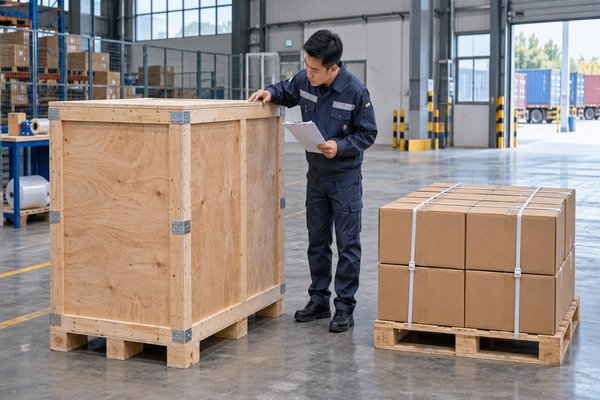
Ask whether the goods are packed in the condition in which they will travel.
Cartons waiting for pallets, machinery awaiting a protective crate, or products awaiting inspection are different from a shipment ready for collection.
Request recent photos showing the complete shipment, its outer packaging and package marks. For palletized goods, ask whether wrapping and securing are finished and whether anything projects beyond the pallet.
DHL’s cargo packaging guidance highlights stable pallet arrangements and suitable protection for handling and transport. Packaging should match the goods and the planned journey. [1]
If work remains, ask for the expected completion time rather than relying on the production finish date.
2. Are the Final Measurements Available?
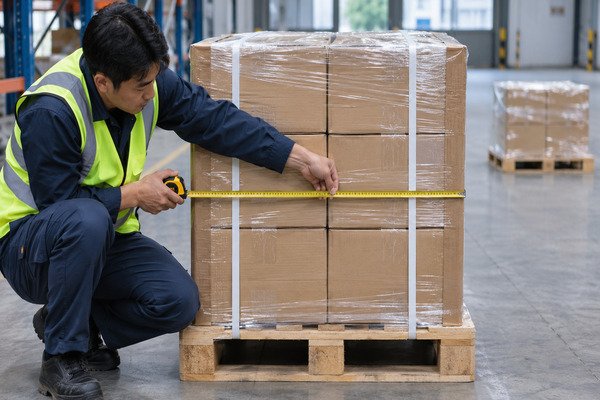
An early quotation may use estimated cargo details. Before pickup, replace those estimates with the final packed figures:
- Number and type of packages.
- External length, width and height of each package type.
- Gross weight, including packaging and pallets.
- Any oversized pieces or special handling restrictions.
Keep the units clear. “120 × 100 × 150” is incomplete without stating whether the measurements are in centimetres or another unit.
DHL explains that freight pricing depends on shipment details including dimensions, weight, route and service requirements. Accurate figures help the forwarder check whether the original quotation still fits the shipment. [2]
If the packing changes, send the revised details before the vehicle is arranged.
3. Can the Factory Load the Collection Vehicle?
Confirm the actual collection address and loading arrangements with someone at the pickup site.
Ask for the loading contact’s name and telephone number, available collection hours, vehicle access restrictions and any appointment requirements.
Also establish who will load the goods and what equipment is available. A truck arriving at the gate does not solve a missing forklift or an inaccessible loading area.
For example, imagine six pallets are ready on Friday morning, but the factory’s forklift is unavailable until the afternoon. An earlier collection slot creates avoidable waiting even though production and packing are complete.
Share these practical details with the forwarder when agreeing on the pickup time.

4. Is the Shipment Information Ready for Review?
Send the commercial invoice and packing list for review before collection where possible. Check that product descriptions, quantities, parties and package details are consistent with the actual shipment.
Maersk identifies both documents as important shipping records and notes that additional documentation depends on the cargo and route. [3]
Ask your forwarder which information is needed before pickup and which documents follow later. Do not assume every transport document must already have been issued.
Finally, have the forwarder confirm that the pickup plan fits the booking and applicable cargo and documentation deadlines. A cargo-ready date alone does not confirm a departure.
Conclusion
Before confirming collection, check four things: finished packaging, final measurements, loading arrangements and shipment information.
A useful supplier update should answer more than “Is production finished?” It should make clear when the shipment can actually be collected and what the forwarder needs to arrange it.
Planning a shipment from China? Send Deeplinker your packing list, cargo photos, pickup address and preferred shipping timeframe to discuss the next steps.