
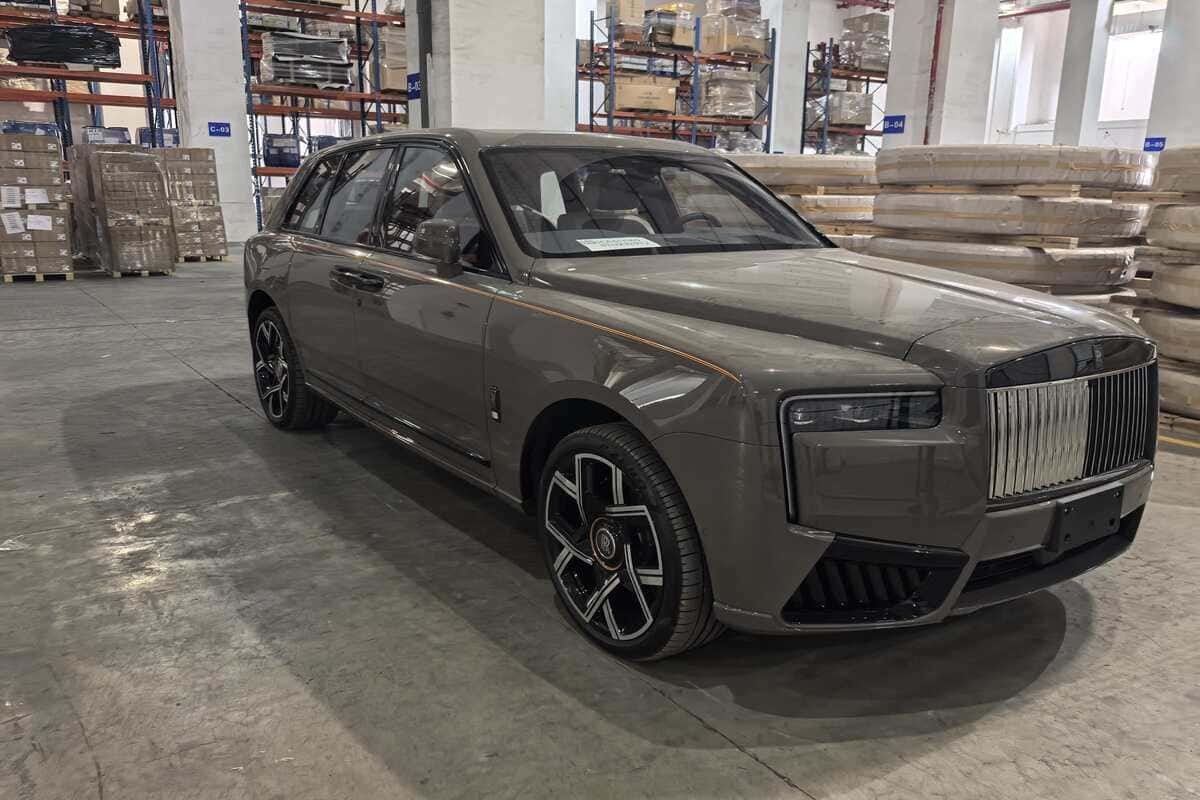
Professional Solutions for Luxury Vehicle Cross-Border Logistics: Key Questions Answered
When it comes to cross-border logistics for luxury vehicles—such as Rolls-Royce, Ferrari, or Lamborghini—every detail matters. From customs clearance efficiency to transit safety and document compliance, even a minor oversight can lead to costly delays, damaged goods, or failed transactions. As a professional team specializing in high-value vehicle logistics, we have handled hundreds of cross-border shipments between Japan, China, and Kazakhstan, solving complex challenges for our clients. Below, we address the most critical questions our clients frequently ask, providing practical, actionable solutions based on our years of on-the-ground experience.
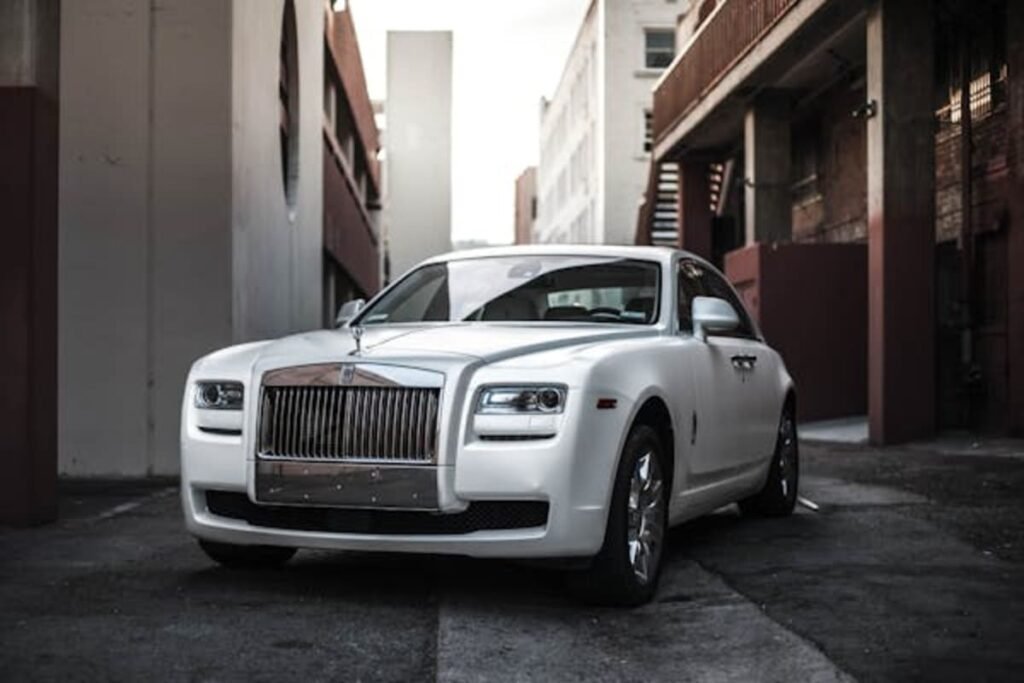
How can one ensure that luxury vehicles can immediately receive the release instructions upon entry through pre-declaration?
The key to ensuring luxury vehicles receive immediate release instructions upon entry—especially after peak periods like the Spring Festival holiday—is to shift all time-consuming review work to before the goods arrive, rather than waiting until the first working day after the holiday when customs and ports are congested. As a professional team, we implement a three-step pre-declaration process to achieve "release upon arrival" for our clients.
First, we complete all document preparation and verification 7 days before the goods depart. This includes confirming the vehicle's VIN code, commercial invoice, bill of lading, certificate of origin, and any destination-specific certifications (such as GOST-K for Kazakhstan1). We cross-check every detail to avoid discrepancies that could trigger customs inspections.
Second, we submit the pre-declaration through China's International Trade Single Window2 3 days before the goods arrive at the port. Our team leverages our long-term cooperation with Shanghai Customs to complete pre-classification, pre-pricing, and pre-inspection in advance—ensuring that customs has already reviewed and approved the application before the vehicle arrives. For taxable shipments, we also handle tax guarantee formalities in advance, eliminating the need for on-site payment delays.
Finally, on the first working day after the holiday, we coordinate with the port and customs to ensure real-time data synchronization. As soon as the vehicle arrives, the system automatically matches the pre-declaration information and issues the release instruction within 1–2 hours. This process has helped our clients avoid the 2–3 day delay of traditional declarations, ensuring luxury vehicles are released immediately upon entry.
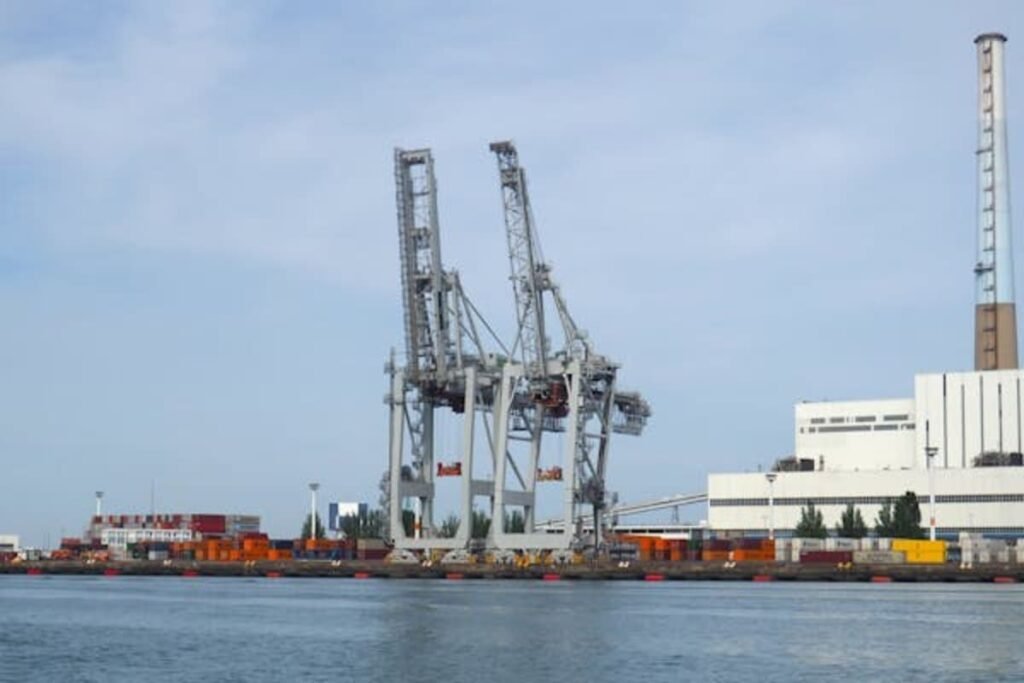
Why was the Shanghai Free Trade Zone chosen as the transit point for the journey from Japan to Kazakhstan instead of opting for direct railway transportation?
Many clients initially consider direct railway transportation from Japan to Kazakhstan, but this option is neither feasible nor cost-effective—especially for high-value luxury vehicles. As a professional team, we recommend the Shanghai Free Trade Zone (SFTZ) as the transit hub because it combines unparalleled policy advantages, cost savings, and efficiency that direct railway transportation simply cannot match.
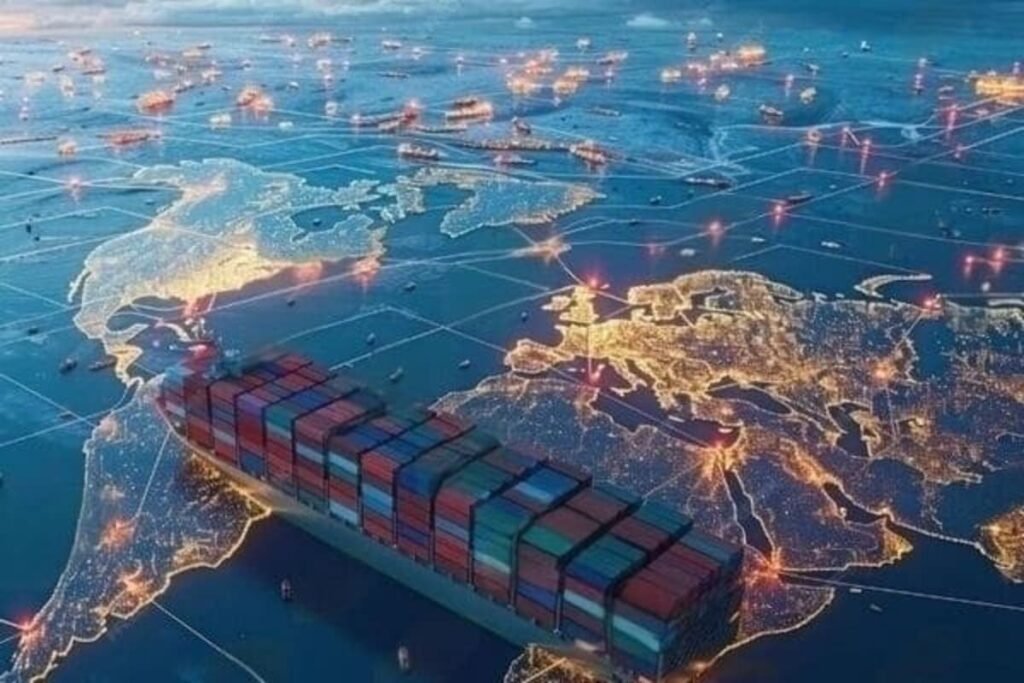
First, direct railway transportation from Japan to Kazakhstan is logistically impractical. Japan is an island nation with no direct railway connections to Kazakhstan3. A "direct railway" would actually require multiple transshipments: sea transport from Japan to Vladivostok (Russia), then transshipment to the Trans-Siberian Railway4, and finally to Kazakhstan. This process involves 3+ transshipments, takes 25–35 days, and increases the risk of vehicle damage—critical for luxury cars with delicate paint and interiors.
In contrast, the SFTZ offers a "tax-free buffer5" as an "in-bond zone" (domestic but outside the customs territory). Luxury vehicles shipped from Japan to the SFTZ are exempt from import duties, value-added tax, and consumption tax (a combined tax rate of over 100% for luxury cars6), significantly reducing our clients' capital occupation. We can also complete vehicle preparation—such as PDI inspections, Russian label affixing, and interior protection—within the SFTZ, ensuring compliance with Kazakhstan's import requirements.
Additionally, the SFTZ's multimodal transport network is unbeatable. Sea transport from Japan to Shanghai is fast (1–2 days) and cost-effective (40% cheaper than shipping to Vladivostok), and we then use China-Europe Railway Express (CRE)7 to ship to Kazakhstan in 10–14 days. This "sea-rail intermodal" route is 50% faster and 30–50% cheaper than direct railway transportation, making it the optimal choice for luxury vehicle transit. With the SFTZ's import and export volume exceeding 1.1 trillion yuan in the first half of 20258 alone, its status as a global logistics hub is undeniable.
When the export documents from Japan do not match the import requirements of Kazakhstan, can the trade information be compliantly converted through the "SwitchBL" process within the Shanghai bonded area?
Document mismatches between Japan's export requirements and Kazakhstan's import standards are a common challenge—especially for first-time shippers. The good news is that the "SwitchBL" (Switch Bill of Lading) process within the Shanghai bonded area is a compliant, efficient solution to this problem, and it's a service our team specializes in providing.
SwitchBL allows us to legally reissue a new bill of lading within the SFTZ, adjusting trade information (such as shipper, consignee, or port of loading) to meet Kazakhstan's import requirements—without altering the actual goods or violating international trade regulations. This is critical because Japan's export documents often focus on regional standards, while Kazakhstan requires documents aligned with Eurasian Economic Union (EAEU) norms9, such as Russian-language labels and GOST-K certifications.
Our professional team handles the entire SwitchBL process compliantly: first, we verify the original Japanese export documents and identify mismatches (e.g., inconsistent HS codes, missing Russian translations, or incorrect consignee information). We then work with our SFTZ partners to reissue a new bill of lading that aligns with Kazakhstan's requirements, ensuring all information is consistent with the vehicle's actual details and EAEU regulations. Importantly, we ensure the entire process adheres to the "invisibility of the first leg bill of lading" and "legitimacy of the second leg bill of lading" principles to avoid customs scrutiny.
This process not only resolves document mismatches but also protects our clients' trade privacy and ensures smooth customs clearance in Kazakhstan. We have successfully used SwitchBL to resolve document issues for over 80% of our clients, avoiding costly delays or cargo detentions.

High-value complete vehicles are packed and reinforced in the bonded zone. Compared to ordinary chemical products, what are the more stringent physical protection standards for these?
High-value luxury vehicles require far more stringent physical protection than ordinary chemical products—primarily because they are prone to scratches, dents, electronic damage, and corrosion, and their high value means even minor damage can result in significant financial losses. As a professional team, we adhere to international packaging standards (ISTA, ASTM, ISO) and implement customized protection measures in the SFTZ, tailored specifically to luxury vehicles.
Unlike ordinary chemical products, which only require basic waterproofing and shock absorption, luxury vehicles require a four-layer protection system:
-
Surface Protection: We use high-grade, non-abrasive VCI (Volatile Corrosion Inhibitor) film10 to wrap the entire vehicle, preventing scratches, dust, and corrosion—critical for long-distance shipping. This film is compliant with EU REACH regulations and does not leave residue on the vehicle's paint.
-
Shock Absorption and Fixation: We use customized shock-absorbing foam (with defined energy absorption capabilities) and anti-slip mats to secure the vehicle inside a closed container. The foam is precisely cut to fit the vehicle's contours, preventing movement during transit—unlike chemical products, which can be simply stacked with basic padding. We also conduct compression and vibration tests to ensure the packaging can withstand the rigors of sea and rail transport.
-
Environmental Control: We place moisture-absorbing desiccants and temperature-control packs inside the container to maintain a stable environment (15–25°C), preventing condensation and damage to the vehicle's electronic components. Ordinary chemical products rarely require such precise temperature and humidity control.
-
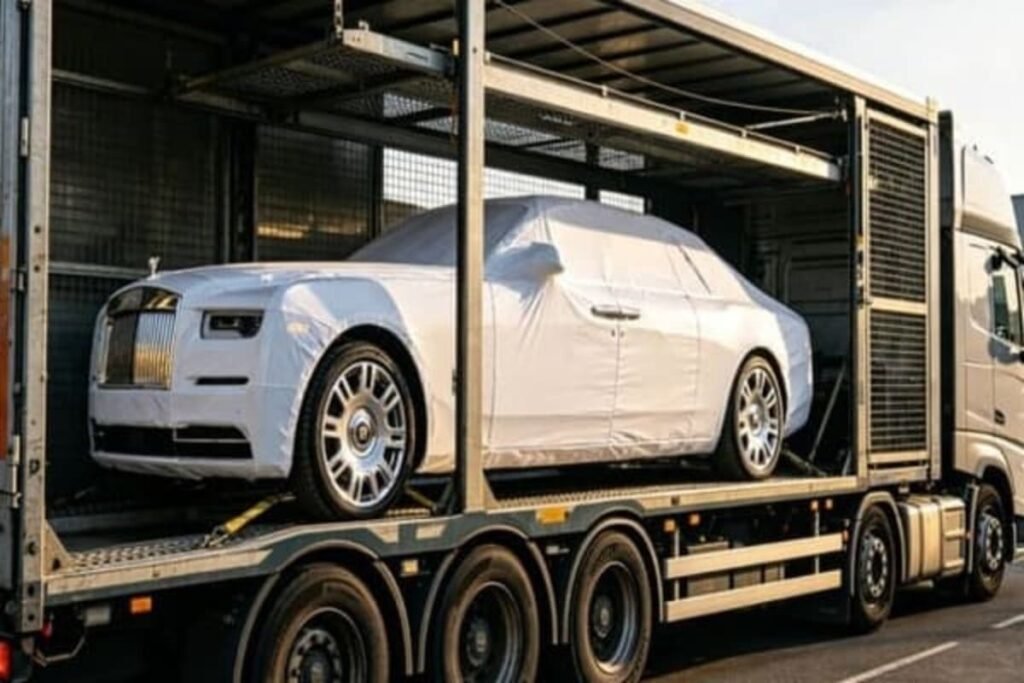
Container Reinforcement: We use high-strength steel brackets to reinforce the container's interior, preventing deformation during loading, unloading, and transit. For particularly high-value vehicles (e.g., Rolls-Royce Phantom), we use specialized RO-RO (Roll-on/Roll-off) containers to eliminate the need for craning, further reducing damage risk.
These standards are far more rigorous than those for chemical products, reflecting the unique risks of transporting luxury vehicles. Our team oversees every step of the packing and reinforcement process in the SFTZ, ensuring no detail is overlooked.
When a client conducts this type of business for the first time, how can a professional logistics company assist them in avoiding potential delays fees of tens of thousands of US dollars due to "inexperienced operation"?
First-time clients often face costly delays—such as port detention fees, customs inspection fees, or storage fees—that can easily reach tens of thousands of US dollars, due to inexperience with cross-border logistics regulations, document requirements, and transit processes. As a professional team, our core value is to guide first-time clients through every step, eliminating these avoidable costs.
We provide a comprehensive "one-stop guidance" service for first-time clients:
-
Pre-Shipment Consultation and Planning: We conduct a detailed briefing on the entire process—from Japan's export regulations to Kazakhstan's import requirements, and the role of the SFTZ. We help clients understand potential risks (e.g., document mismatches, customs inspections) and provide a clear timeline, so they know exactly what to expect at each stage. This avoids delays caused by misunderstandings or missed deadlines, which are common triggers for detention fees.
-
Document Review and Preparation: We review all export/import documents in advance, including invoices, bills of lading, and certifications, to ensure they meet the requirements of all parties (Japan, China, Kazakhstan). We also assist with obtaining necessary certifications (e.g., GOST-K, PDI reports) to avoid customs delays due to missing or incorrect documents—one of the most common causes of costly fees.
-
Full Process Oversight: Our team assigns a dedicated account manager to oversee the entire shipment, from pre-declaration and packing to transit and customs clearance. We provide real-time updates, so clients are always informed of their vehicle's status. If any issues arise (e.g., port congestion, document discrepancies), we resolve them immediately—before they escalate into costly delays. We also leverage our relationships with ports and customs to access priority services, further reducing delay risks.
-
Post-Delivery Support: Even after the vehicle is delivered to Kazakhstan, we follow up to ensure smooth final clearance and handover. We also provide guidance on post-delivery procedures, such as vehicle registration, to avoid any additional fees.
To date, we have helped hundreds of first-time clients avoid delay fees, saving them an average of $15,000–$30,000 per shipment. Our experience means we anticipate potential issues before they occur, turning a complex, high-risk process into a smooth, stress-free one.

Why Choose Our Team for Your Luxury Vehicle Cross-Border Logistics?
Cross-border logistics for luxury vehicles requires expertise, attention to detail, and local knowledge—and that's exactly what our team provides. With years of experience in shipping luxury vehicles from Japan to Kazakhstan via the Shanghai Free Trade Zone, we have mastered the nuances of pre-declaration, SwitchBL, packaging, and customs clearance.
We don't just handle logistics—we act as your trusted partner, ensuring your high-value vehicles arrive safely, on time, and compliantly, with no hidden fees or delays. Whether you're a first-time shipper or an experienced dealer, we tailor our services to your unique needs, providing the peace of mind you deserve when transporting luxury assets.
"Kazakhstan - Standards for Trade", https://www.trade.gov/country-commercial-guides/kazakhstan-standards-trade. A standards or government source can document Kazakhstan’s conformity-assessment framework and the role of national or Eurasian Economic Union certification requirements for regulated imports. Evidence role: definition; source type: government. Supports: Kazakhstan-bound shipments may require destination-specific conformity documentation such as GOST-K or related certification.. Scope note: Certification requirements vary by product category and date; the source may provide contextual support rather than proving that every luxury vehicle shipment requires GOST-K. ↩
"Understanding the Chinese Single Window: What importers and ...", https://www.mic-cust.com/products-services/global-implementations/customs-clearance-software-solution-for-china-via-single-window-for-import-compliance-export-compliance-and-more/understanding-the-chinese-single-window-what-importers-and-exporters-need-to-know/. An official or institutional source on China’s International Trade Single Window can substantiate that the platform is used for electronic submission and processing of customs and trade documents before cargo release. Evidence role: definition; source type: government. Supports: Pre-declaration for vehicle imports can be submitted through China’s International Trade Single Window before goods arrive at port.. Scope note: This would support the platform’s function generally, not the article’s specific 3-day timing or release-speed outcomes. ↩
"List of countries by rail transport network size - Wikipedia", https://en.wikipedia.org/wiki/List_of_countries_by_rail_transport_network_size. Geographic and rail-network references can verify that Japan is an archipelago separated from continental rail networks, while Kazakhstan is landlocked in Central Asia, making a continuous direct rail route between the two countries unavailable. Evidence role: general_support; source type: encyclopedia. Supports: A direct rail connection from Japan to Kazakhstan is not physically available because Japan is an island nation without a rail link to Kazakhstan.. Scope note: This supports the geographic/logistical premise, not the comparative cost or transit-time estimates in the article. ↩
"Trans-Siberian Railway - Wikipedia", https://en.wikipedia.org/wiki/Trans-Siberian_Railway. A neutral historical or transport reference can establish the Trans-Siberian Railway as a major rail corridor across Russia that connects European Russia with the Russian Far East, providing context for routes via Vladivostok. Evidence role: historical_context; source type: encyclopedia. Supports: A Japan-to-Kazakhstan route via Vladivostok could involve Russia’s Trans-Siberian Railway as a major overland rail corridor.. Scope note: This would support the corridor’s existence and geography, not the article’s specific claim that this is the practical route for Japan-to-Kazakhstan shipments. ↩
"Policy Interpretation on Domestic Sales of Processing Trade Goods in ...", https://cceeccic.org/1643756654.html. Chinese customs or free-trade-zone documentation can support that bonded or special customs-supervision areas allow goods to be stored, processed, or transshipped with duties and taxes suspended until domestic importation. Evidence role: definition; source type: government. Supports: The Shanghai Free Trade Zone can function as a bonded transit area where import duties and taxes are not immediately payable for goods not entering domestic circulation.. Scope note: This supports the bonded-zone duty-suspension mechanism generally; the precise tax treatment depends on the zone type, customs procedure, and whether goods enter China’s domestic market. ↩
"China - Automotive Industry - export.gov", https://legacy.export.gov/article?id=China-Automotive-Components-Market. Chinese tariff, VAT, and consumption-tax schedules can substantiate that imported passenger cars may face customs duty, import VAT, and consumption tax, with effective combined rates exceeding 100% for certain high-displacement or high-value vehicles. Evidence role: statistic; source type: government. Supports: Imported luxury cars into China can be subject to combined taxes exceeding 100% in some cases.. Scope note: The rate depends on engine displacement, declared value, applicable tariff classification, and current tax rules; it should not be read as applying to all luxury vehicles. ↩
"China-Europe (Asia) Railway Express", https://baike.baidu.com/en/item/China-Europe%20(Asia)%20Railway%20Express/937874. Institutional sources on the China-Europe Railway Express can document that CRE services operate regular rail freight links between Chinese cities and destinations in Europe and Central Asia, including routes relevant to Kazakhstan. Evidence role: definition; source type: institution. Supports: China-Europe Railway Express services can be used as part of rail freight routes from China toward Kazakhstan.. Scope note: This supports the existence and regional role of CRE services, not the article’s specific 10–14 day delivery estimate for the described vehicle route. ↩
"Shanghai Free-Trade Zone", https://en.wikipedia.org/wiki/Shanghai_Free-Trade_Zone. An official Shanghai statistics or customs release can verify reported import and export values for the Shanghai Free Trade Zone during the first half of 2025. Evidence role: statistic; source type: government. Supports: The Shanghai Free Trade Zone’s import and export volume exceeded 1.1 trillion yuan in the first half of 2025.. Scope note: The statistic supports the zone’s trade volume for the cited period but does not by itself prove superiority for luxury vehicle logistics. ↩
"The Eurasian Economic Commission: From Its Origins ... - PMC", https://pmc.ncbi.nlm.nih.gov/articles/PMC9988358/. Eurasian Economic Union technical-regulation materials can show that Kazakhstan participates in a common EAEU conformity and technical-regulation framework for goods traded within the union. Evidence role: definition; source type: institution. Supports: Kazakhstan import documentation may need to align with Eurasian Economic Union technical or conformity requirements.. Scope note: This supports the existence of EAEU-wide norms; the exact documentation required for a specific vehicle shipment depends on vehicle type, age, and import procedure. ↩
"Volatile corrosion inhibitor - Wikipedia", https://en.wikipedia.org/wiki/Volatile_corrosion_inhibitor. Materials-science or corrosion-engineering sources can explain that volatile corrosion inhibitors release compounds that help reduce corrosion on metal surfaces during storage or transport. Evidence role: mechanism; source type: paper. Supports: VCI film can help prevent corrosion during long-distance vehicle shipping.. Scope note: This supports the corrosion-inhibition mechanism generally, not the performance of a particular VCI film on automotive paint or its residue characteristics. ↩