

Your heavy cargo shipment is ready to go. But what if the container itself gets rejected at the port? You must check one critical number to avoid very costly delays.
A container's strength is measured by its stacking load, found on the CSC plate1. For a standard 40-foot container, carriers like Maersk require a minimum allowable stacking load of 192,000 kg (192 tons) at 1.8G2. Anything less will be rejected for safety reasons.
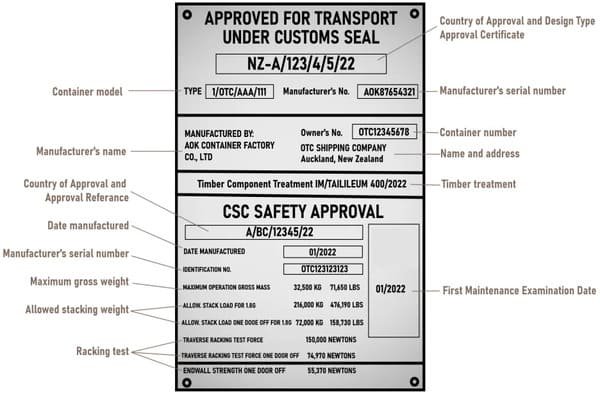
I remember a client shipping a heavy energy storage system. They focused entirely on the cargo weight but overlooked the container's own limits. The carrier refused to load it, and the project ground to a halt. This small detail on a metal plate, the CSC plate, holds immense power. Understanding what it means is not just technical jargon; it's the key to avoiding disaster and ensuring your cargo sails smoothly. Let's break down what these numbers really mean for your shipment.
What is "the allowable stacking load at 1.8g"?
You see "1.8g" on the container's CSC plate. Ignoring this technical term could lead to your container being deemed unsafe for sea travel. Let's decode this crucial safety standard.
The "allowable stacking load at 1.8g" is the maximum weight a container can support from other containers stacked on top of it3 under dynamic sea conditions. The "1.8g" accounts for the vertical forces (gravity plus vessel motion) experienced during a rough voyage4.
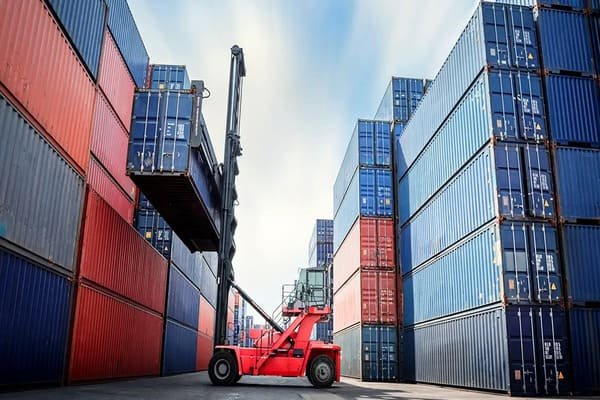
Let's get into the physics a bit, but I'll keep it simple. When a ship is at the port, the only force is gravity, which we call 1g. But out at sea, a ship pitches, rolls, and heaves in the waves. These movements create powerful extra vertical forces. The "1.8g" standard simulates these extreme conditions. It essentially adds an 80% safety margin on top of standard gravity to account for the ship's motion. So, the number on the CSC plate isn't just about static weight. It's about the container's ability to withstand the huge, dynamic pressures of a multi-container stack in rough weather. This is why carriers are so strict. They are responsible for the entire stack of containers. One weak container at the bottom can compromise everything above it, creating a dangerous situation.
What Exactly Is The Container 169.2 Tonne Stacking load?
You found a container with a 169.2-tonne stacking load. It seems close to the standard, but this small difference can cause a major rejection by the carrier. Here is why that number is a red flag.
A 169,200 kg (169.2 tonne) stacking load is a non-standard, lower rating5. While the container is structurally sound for some uses, it does not meet the minimum 192,000 kg requirement set by major ocean carriers6 for placement at the bottom of a tall stack on modern vessels.
I've seen this specific number cause a lot of confusion for shippers. A container rated for 169.2 tonnes is not necessarily a "bad" or "defective" container. It was likely manufactured to an older or different standard. It might have been intended for specific routes with smaller ships or for carrying lighter cargo. The problem starts when you try to use it for general, heavy-cargo ocean freight today. Modern container ships stack containers higher than ever before, sometimes nine high. The physics are simple: the container at the very bottom must support the total weight of the eight full containers above it. Carriers have done the math. They know that to safely support a full stack under 1.8g forces, the bottom container needs a certified strength of 192 tonnes. A 169.2-tonne container is about 12% weaker than the required standard, making it the weakest link.
What risks will there be when a container with a "non-compliant" stacking load is transported?
You're tempted to ship with a sub-standard container to save time. This decision could lead to cargo loss, vessel damage, and huge liability claims. You must understand the real-world dangers before you proceed.
The primary risk is carrier rejection at the terminal, causing costly delays. If it somehow slips through, the worst-case scenario is a container stack collapse at sea. This can lead to lost cargo, damage to the vessel, environmental pollution, and immense financial and legal liability for the shipper.
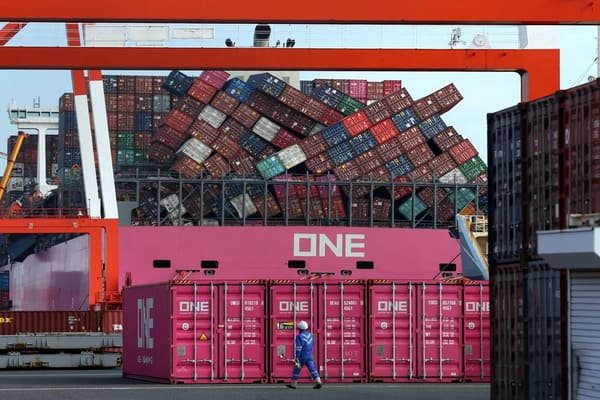
Let's paint a clear picture of what can go wrong. First, and most likely, is the Operational Risk. The terminal operator or the carrier will check the CSC plate before loading7. If it reads 169,200 kg instead of 192,000 kg, they will refuse to load it. Your shipment stops right there at the port. Now you're facing costs for storage, re-stuffing the cargo into a compliant container, and missing your shipping deadline. Second is the Safety Risk. Imagine your container is at the bottom of a tall stack in the middle of the ocean during a storm. The forces are immense. If the container's corner posts buckle under the pressure, the entire stack above it can come crashing down. This is a catastrophic failure. Finally, there's the Liability Risk. If your non-compliant container causes an accident, the legal and financial consequences are huge. You could be held liable for the loss of other shippers' cargo, damage to the vessel, and even the costs of environmental cleanup.
When encountering a container that fails to meet the standards, how should it be safely handled?
The terminal has just rejected your container for having a low stacking load. Panic sets in as your deadline looms and costs start to add up. Here is a clear, step-by-step plan to resolve the issue safely.
Do not try to argue or ship it anyway. The correct action is to immediately arrange for the cargo to be transloaded (moved) into a new, compliant container that has a certified stacking load of at least 192,000 kg on its CSC plate.
When your container is rejected, time is critical, but safety is the top priority. Here's the professional way to handle the situation:
- Acknowledge the Rejection: You must accept the carrier's decision. It is based on global safety standards, not a personal choice.
- Isolate the Container: The container should be moved to a safe area at the port or a nearby depot to await further action.
- Source a Compliant Container: Immediately contact your logistics partner or a container depot. You need to get a standard container with a CSC plate that clearly shows a 192,000 kg stacking load or higher.
- Arrange for Transloading: Schedule a professional crew to carefully move the cargo from the non-compliant container to the new one. This must be done properly to avoid damaging your goods.
- Update Documentation: Make sure all your paperwork, like the Bill of Lading, is updated with the new container number. This process is the only safe and compliant solution.
What is the standard stacking load for standard containers?
You need to ship heavy goods internationally on a regular basis. How do you ensure the container you use will be accepted by every major carrier, every single time? You need to know the industry-wide standard.
For standard 20-foot and 40-foot dry containers, the widely accepted industry minimum for the allowable stacking load at 1.8G is 192,000 kg (192 tonnes). This ensures the container can be safely loaded anywhere on a modern container vessel. Some specialized containers may differ.
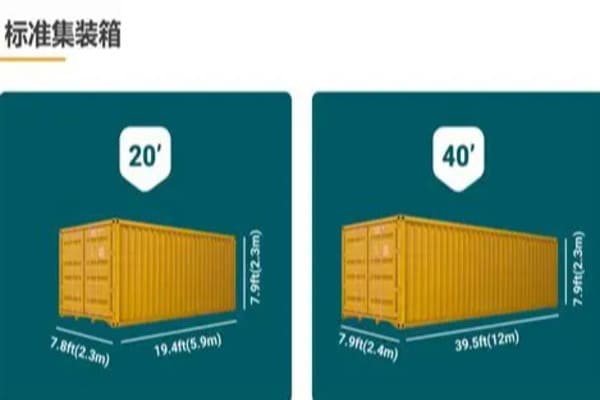
While 192,000 kg is the key number for standard dry containers, it's helpful to understand the context for different container types. The standard is driven by the need for interchangeability and safety across the global shipping fleet. A carrier needs to know that any standard box they receive can be placed at the bottom of a stack without creating a risk.
Here's a simple breakdown of what to look for on the CSC plate:
| Container Type | Common Size | Minimum Stacking Load (1.8G) |
|---|---|---|
| Standard Dry Van | 20' GP, 40' GP, 40' HC | 192,000 kg |
| Reefer Container | 20' RF, 40' RF | Often higher due to its own weight |
| Open Top / Flat Rack | 20' OT/FR, 40' OT/FR | Varies greatly, must check CSC plate |
My advice is to always default to checking the CSC plate yourself. For any general cargo going in a standard box, 192,000 kg is your golden number. If you are shipping specialized cargo in a Flat Rack or Open Top container, it is even more critical to verify the plate and communicate with the carrier beforehand.
Conclusion
Always check the CSC plate for a 192,000 kg stacking load before loading heavy cargo. This simple step prevents rejections, ensures safety at sea, and keeps your supply chain moving.
"49 CFR Part 451 -- Testing and Approval of Containers - eCFR", https://www.ecfr.gov/current/title-49/subtitle-B/chapter-IV/subchapter-B/part-451. The International Convention for Safe Containers specifies that approved freight containers carry a Safety Approval Plate with prescribed structural test information, including stacking-related values, supporting the statement that stacking load is read from the CSC plate. Evidence role: definition; source type: institution. Supports: A container's strength is measured by its stacking load, found on the CSC plate.. ↩
"[PDF] IB-0014 Cargo Containers Repurposed for Habitable Use", https://lus.sbcounty.gov/wp-content/uploads/sites/48/BandS/Handouts/IB-0014.pdf. ISO container specifications and carrier equipment guidance commonly identify 192,000 kg at 1.8g as the stacking-test or allowable stacking-load value for standard dry freight containers, supporting the stated numerical threshold. Evidence role: expert_consensus; source type: institution. Supports: For a standard 40-foot container, carriers like Maersk require a minimum allowable stacking load of 192,000 kg at 1.8G.. Scope note: This supports the common standard rating; individual carrier acceptance policies may include additional operational conditions. ↩
"1918.85 - Containerized cargo operations. - OSHA", http://www.osha.gov/laws-regs/regulations/standardnumber/1918/1918.85. Container standards describe stacking strength as the load that a container must withstand from superimposed containers during stacking tests, supporting this definition of allowable stacking load. Evidence role: definition; source type: institution. Supports: The allowable stacking load is the maximum load a container can support from containers stacked above it.. ↩
"[PDF] Code of Practice for Packing of Cargo Transport Units (CTUs) (CTU ...", https://www.ippc.int/sites/default/files/documents/1362665459_CTU_Code_Draft_CoP_2013_v1.pdf. Engineering and maritime-safety literature on container stowage describes ship motions as producing vertical accelerations that increase loads in container stacks, providing the mechanical basis for using an acceleration factor such as 1.8g. Evidence role: mechanism; source type: paper. Supports: The 1.8g factor accounts for vertical forces from gravity plus vessel motion during rough sea conditions.. Scope note: Such sources explain the load mechanism; they may not prove that every voyage reaches the specific 1.8g design condition. ↩
"Shipping Container Size & Dimensions | ONE", https://www.one-line.com/en/dry-containers. Current standard dry-container specifications commonly use a 192,000 kg stacking value at 1.8g; by comparison, a 169,200 kg rating is lower than that common standard value. Evidence role: general_support; source type: institution. Supports: A 169,200 kg stacking load is a lower rating than the commonly accepted 192,000 kg standard for standard dry containers.. Scope note: This supports the comparison with the common standard but does not by itself establish why a particular 169,200 kg container was manufactured or whether it is unacceptable on every route. ↩
"ISO 668 - Wikipedia", https://en.wikipedia.org/wiki/ISO_668. Carrier equipment or cargo-acceptance documentation can show that major ocean carriers use a 192,000 kg stacking rating as an acceptance threshold for standard containers, supporting the carrier-policy aspect of this statement. Evidence role: case_reference; source type: other. Supports: Major ocean carriers require a minimum 192,000 kg stacking load for certain standard container shipments or stowage positions.. Scope note: Carrier documents support the policy for the named or sampled carrier; they may not represent every ocean carrier worldwide. ↩
"49 CFR Part 451 -- Testing and Approval of Containers - eCFR", https://www.ecfr.gov/current/title-49/subtitle-B/chapter-IV/subchapter-B/part-451. Government and port-state-control guidance describes inspection of the CSC Safety Approval Plate as part of verifying container safety approval, supporting the statement that the plate may be checked before transport or loading. Evidence role: general_support; source type: government. Supports: Terminal operators or carriers may check the CSC plate before loading a container.. Scope note: Inspection frequency and responsibility can vary by terminal, carrier, and jurisdiction. ↩