

Shipping energy storage systems is complex, and improper packaging can lead to costly damage. Understanding the right packaging method is crucial for a safe and successful delivery of your high-value cargo.
The best packaging for an energy storage cabinet (ESS) depends on its size, the number of units, and the shipping distance. For most international exports, certified wooden cases are ideal for single units, while full pallet packs are best for batch orders. Both ensure safety and regulatory compliance.
Choosing the right packaging from the factory is one of the most important decisions you'll make when shipping an ESS. This choice directly impacts the safety of your cargo, your total shipping cost, and whether you'll face delays at customs. We see this every day in our work. Let's break down the common packaging types so you can see which one is the right fit for your shipment.
Is Bare Cabinet Packaging Safe for Shipping an ESS?
You might want to save on packaging costs by shipping a cabinet as-is. But this leaves your expensive equipment completely exposed, leading to a high risk of damage during transit.
Bare cabinet packaging offers no external protection and is only safe for very short, direct domestic truck transport. For any international or long-distance shipment, it is extremely risky, non-compliant with shipping regulations, and will likely result in damage to the unit.
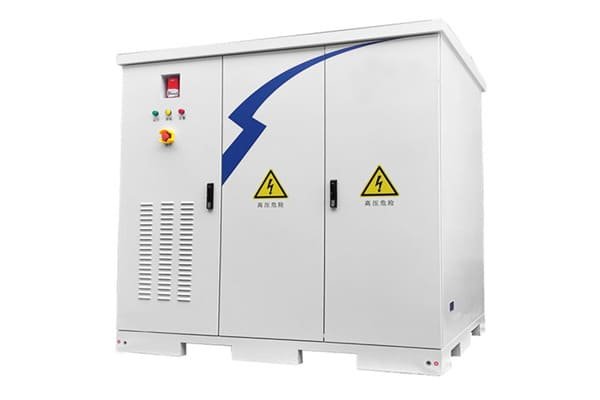
Bare cabinet shipping is exactly what it sounds like: the energy storage cabinet is moved with no box, crate, or protective wrapping. I once saw a client who tried this for a shipment that was only a few hundred miles by truck. The unit arrived with deep scratches, a dented door, and internal components that were shaken loose. The vibrations and minor impacts that are normal in any transit were enough to cause significant damage. This method is simply not built to withstand the multiple handling points, potential moisture, and constant movement of cross-border shipping. It also fails to meet the stringent packaging requirements for dangerous goods1, which most energy storage systems are classified as.
Bare Cabinet Shipping: Key Considerations
| Aspect | Details |
|---|---|
| Protection | None. The unit is exposed to all transit risks. |
| Best Use Case | Dedicated truck transport between two nearby facilities. |
| Compliance | Not compliant for international sea or air freight. |
| Risk Level | Extremely high for anything other than short-haul. |
Why is a Wooden Case the Standard for Small ESS Exports?
You need to ship one or two ESS units overseas. But customs officials and shipping carriers have very strict rules for handling and protecting such cargo, especially if it's classified as dangerous goods.
A sturdy, certified wooden case provides the necessary protection and compliance for shipping individual energy storage cabinets. It's the industry standard for ensuring your high-value cargo arrives safely and passes all inspections without any issues.
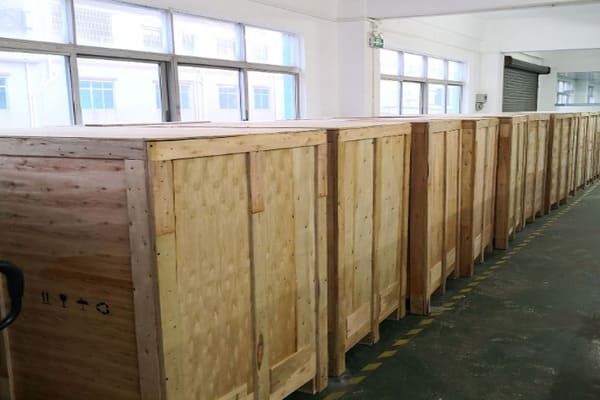
When we handle exports for small to medium-sized ESS units, we almost always recommend a fully enclosed wooden case. This isn't just any wooden box. For international shipping, the wood must be treated and stamped according to ISPM 15 standards2 to prevent the spread of pests. This is a non-negotiable requirement for entry into most countries, including the US, Canada, and all of Europe3. The case does more than just satisfy regulations. It provides a rigid shell that protects the cabinet from impacts from other cargo, forklift handling, and shifting inside the container4. This is especially critical for Less than Container Load (LCL) shipments, where your cabinet shares container space with other goods. We help our clients ensure their factory uses the right certified materials and that the cabinet is properly braced and cushioned inside the case.
Benefits of Wooden Case Packaging
- Superior Protection: Shields from impacts, punctures, and stacking pressure.
- Regulatory Compliance: Meets ISPM 15 international standards and dangerous goods (DG) packaging requirements.
- Security: Fully encloses the unit, deterring theft and preventing tampering.
- Handling Ease: Provides a stable structure for forklift and crane handling.
When Should You Use Full Pallet Packaging for Batch ESS Orders?
You have a large order of multiple ESS units to ship. Handling each one individually is inefficient, increases labor costs, and raises the risk of damage with every separate move.
Full pallet integrated packaging consolidates multiple cabinets onto a single, large pallet. This streamlines the entire logistics process, making it faster, safer, and more cost-effective for batch shipments, especially for Full Container Load (FCL) orders.
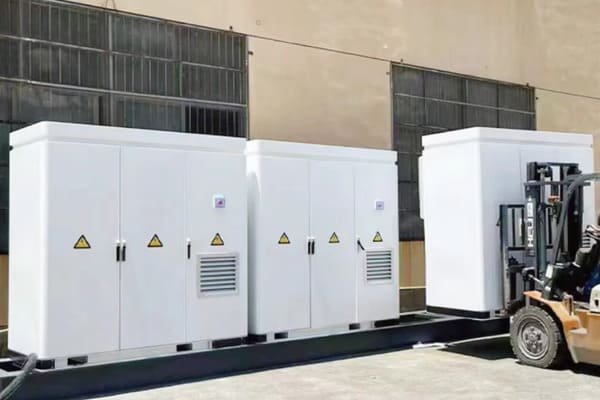
We often manage large-volume shipments for manufacturers and distributors, and palletizing is our go-to solution. The factory securely mounts several ESS cabinets onto a large, custom-built wooden pallet. These units are then strapped down and often wrapped in heavy-duty plastic to protect them from moisture and dust5. This creates one solid, stable block of cargo. The main advantage is efficiency. A forklift can move four or six cabinets at once, drastically reducing the time it takes to load or unload a container.6 This method is perfect for Full Container Load (FCL) shipments7, as these large pallets can be arranged tightly inside the container. We work with shippers to plan the container layout, ensuring the pallets are braced correctly to prevent any movement during the ocean voyage. This secure loading plan is a key part of our service to prevent in-transit damage.
Pallet Pack vs. Individual Cases
| Feature | Full Pallet Pack | Individual Wooden Cases |
|---|---|---|
| Best For | Batch orders (4+ units), FCL shipments | Single or few units, LCL shipments |
| Loading Speed | Fast (multiple units moved at once) | Slower (one unit at a time) |
| Space Efficiency | High (units are tightly packed) | Moderate |
| Cost | More cost-effective for large volumes | Higher cost per unit |
What is a Factory-Integrated Container ESS and How Do You Ship It?
You need a massive, ready-to-use energy storage solution for a large project. But shipping an entire system built inside a shipping container seems incredibly complex and intimidating.
This solution, where the container itself is the product, simplifies on-site deployment.8 However, shipping it requires a specialized logistics partner experienced in heavy, oversized cargo and dangerous goods regulations like UN35369.
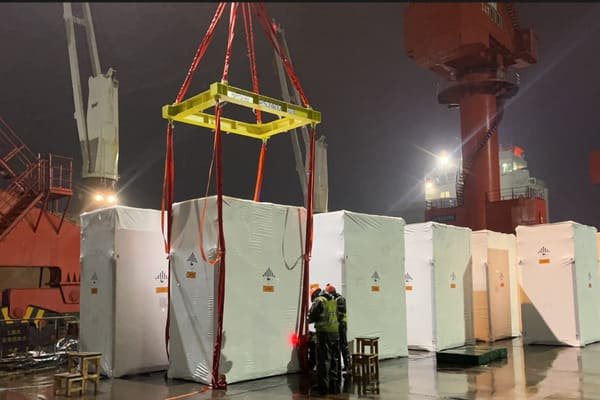
Shipping a factory-integrated container ESS is fundamentally different from standard container freight. Here, the container isn't just a box for cargo; it is the cargo. These units can weigh 30, 40, or even 50 tons and are classified as project cargo.10 They are too heavy for standard container terminal equipment. We handle these shipments by treating them as Out-of-Gauge (OOG) and heavy-lift cargo. The entire process requires meticulous planning. It starts with coordinating special heavy-haul trucks for transport from the factory to the port. At the port, we arrange for mobile shore cranes to lift the unit onto the vessel, as standard gantry cranes cannot handle the weight. Furthermore, these systems are almost always classified under UN3536, a specific dangerous goods category for large-format lithium battery systems. Our team manages all the complex DG documentation and port clearances, ensuring a smooth and compliant shipment from start to finish.
Which ESS Packaging Type Is Best for Your Export Shipment?
With four different packaging options available, choosing the wrong one can easily lead to wasted money, customs holds, and a damaged product. How do you quickly decide which is right for you?
For most international shipments, use a wooden case for single units (LCL) and pallet packs for multiple units (FCL). Bare cabinets are never for export. Integrated containers are a special case for large-scale projects requiring expert logistics.
To make the decision easier, we've put together a direct comparison of the four main packaging types. Think about your specific shipment—the number of units, your destination, and your budget—and use this table to find the best fit. As your logistics partner, we can help you verify your choice and ensure the packaging your factory provides is fully compliant and ready for shipment. My years of experience have shown that a small investment in the right packaging upfront saves a fortune in potential losses down the line.
Side-by-Side Packaging Comparison
| Feature | Bare Cabinet | Wooden Case | Pallet Pack | Integrated Container |
|---|---|---|---|---|
| Best For | Short, domestic moves | 1-3 units (LCL) | 4+ units (FCL) | Large-scale projects |
| Protection | None | High | Medium-High | N/A (Unit is the box) |
| Compliance | Non-compliant | Excellent (ISPM 15/DG) | Good (if secured well) | Complex (DG/Project Cargo) |
| Cost | Lowest | Moderate | Cost-effective in bulk | High (special handling) |
| Handling | Risky | Standard (Forklift) | Efficient (Forklift) | Specialized (Crane) |
Conclusion
Different factory packaging types directly determine the safety, compliance and cost of energy storage cabinet cross-border shipping. As a professional freight forwarder focusing on new energy storage logistics, we provide packaging evaluation, secondary reinforcement, DG document sorting, container loading, sea/rail multimodal transport and door-to-door delivery services for all types of energy storage cabinet packaging forms, ensuring safe and compliant global shipment.
"[PDF] Lithium Battery Guide for Shippers - PHMSA", https://www.phmsa.dot.gov/sites/phmsa.dot.gov/files/2024-11/Lithium-Battery-Guide-2024.pdf. International dangerous-goods rules require lithium batteries and related battery-powered equipment to meet specified classification, packaging, marking, and documentation requirements before transport. Evidence role: general_support; source type: institution. Supports: Energy storage systems that contain lithium batteries may be subject to dangerous-goods packaging requirements during transport.. Scope note: The exact requirements depend on the battery chemistry, configuration, state of charge, transport mode, and competent-authority approvals. ↩
"Regulation of wood packaging material in international trade", https://www.ippc.int/publications/regulation-wood-packaging-material-international-trade-0. ISPM 15, issued under the International Plant Protection Convention, specifies treatment and marking requirements for wood packaging material used in international trade to reduce pest transmission risks. Evidence role: definition; source type: institution. Supports: Wooden cases used for international shipping must comply with ISPM 15 treatment and marking standards.. ↩
"Wood Packaging Material | Animal and Plant Health Inspection Service", https://www.aphis.usda.gov/plant-imports/wood-packaging-material. National and regional plant-health authorities implement ISPM 15 for imported wood packaging material, including requirements in the United States, Canada, and the European Union. Evidence role: general_support; source type: government. Supports: ISPM 15 compliance is required for wood packaging entering many major import markets, including the US, Canada, and Europe.. Scope note: Implementation details, exemptions, and enforcement procedures vary by jurisdiction and commodity route. ↩
"Test Procedures - International Safe Transit Association", https://ista.org/test_procedures.php. Transport-packaging standards and distribution-testing guidance identify shock, compression, vibration, handling, and stacking loads as common hazards that protective packaging is designed to mitigate. Evidence role: mechanism; source type: research. Supports: A rigid wooden case can reduce exposure to impact, handling, and load-shift hazards during transport.. Scope note: Such standards support the protective rationale for rigid crates generally, but they do not prove that any particular wooden case design is sufficient for a specific ESS model. ↩
"Cargo Securing Methods for Packages in Transport ...", https://www.federalregister.gov/documents/2010/01/08/2010-106/cargo-securing-methods-for-packages-in-transport-vehicles-or-freight-containers. Cargo-packaging and container-packing guidance identifies moisture, condensation, dust, and load movement as transport risks that can be mitigated through wrapping, securing, and suitable protective materials. Evidence role: mechanism; source type: institution. Supports: Wrapping and securing palletized cargo can help protect against dust, some moisture exposure, and movement during transit.. Scope note: Plastic wrapping can reduce dust and splash exposure, but it may not control condensation or humidity unless combined with ventilation, desiccants, or barrier packaging. ↩
"Evaluation of the horizontal compression forces that pallets ...", https://unitload.vt.edu/about-us/media-center/cpuld-news/9-6-cpuld-news-spring-2021/rh-evaluation-of-the-horizontal-compression-forces-during-grab-handling.html. Materials-handling literature describes palletization and unit-load handling as methods that reduce the number of individual handling moves and improve loading and unloading efficiency. Evidence role: mechanism; source type: education. Supports: Palletizing multiple cabinets can reduce handling moves and improve loading and unloading efficiency.. Scope note: The cited literature would support the general efficiency of unit loads, not the specific number of cabinets or the magnitude of time savings for a given ESS shipment. ↩
"What is full container load (FCL)? - Project44", https://www.project44.com/resources/what-is-full-container-load-fcl/. Logistics references define full-container-load shipping as a shipment in which a container is used for one shipper’s cargo, in contrast to consolidated less-than-container-load service. Evidence role: definition; source type: institution. Supports: FCL refers to using a full container for one shipment rather than sharing container space through consolidation.. Scope note: Commercial practices may vary, and an FCL container may still be handled by multiple transport parties along the route. ↩
"The Four Phases of Storage Deployment: A Framework for ...", https://docs.nrel.gov/docs/fy21osti/77480.pdf. Technical literature on containerized battery energy storage systems describes factory-assembled battery, power-conversion, thermal-management, and control equipment housed in shipping-container-like enclosures for transport and installation at project sites. Evidence role: general_support; source type: research. Supports: Containerized ESS units are factory-integrated systems in which the container enclosure forms part of the deployable product.. Scope note: The source would support the general containerized ESS concept; actual deployment speed depends on site preparation, grid interconnection, permitting, and commissioning requirements. ↩
"[PDF] Lithium Battery Guide for Shippers - PHMSA", https://www.phmsa.dot.gov/sites/phmsa.dot.gov/files/2024-11/Lithium-Battery-Guide-2024.pdf. UN dangerous-goods listings identify UN 3536 as lithium batteries installed in cargo transport units, a classification relevant to large battery systems transported within or as cargo transport units. Evidence role: definition; source type: institution. Supports: UN3536 is a dangerous-goods classification relevant to large lithium battery systems installed in cargo transport units.. Scope note: UN 3536 applies only when the system meets the conditions of that entry; other lithium-battery entries may apply to different configurations. ↩
"Battery energy storage system - Wikipedia", https://en.wikipedia.org/wiki/Battery_energy_storage_system. Published technical descriptions of containerized battery energy storage systems and project-cargo guidance indicate that large containerized industrial units can reach multi-tonne masses and may require heavy-lift or project-cargo handling when weight, dimensions, or handling requirements exceed routine freight operations. Evidence role: general_support; source type: research. Supports: Large containerized ESS units can weigh tens of tonnes and may be handled as project cargo.. Scope note: A neutral source may support the weight range only contextually; actual ESS mass varies substantially by battery chemistry, container length, energy capacity, and auxiliary equipment. ↩