
Are you worried about shipping high-value semiconductors? It's a huge risk. A small delay or mistake can cost a fortune, causing major production headaches and financial losses for your business.
For time-sensitive and high-value semiconductors, Singapore offers unmatched reliability. Its world-class air cargo infrastructure, stable customs, and global connectivity make it the top choice for secure and efficient transit1, significantly reducing risks compared to other routes2.
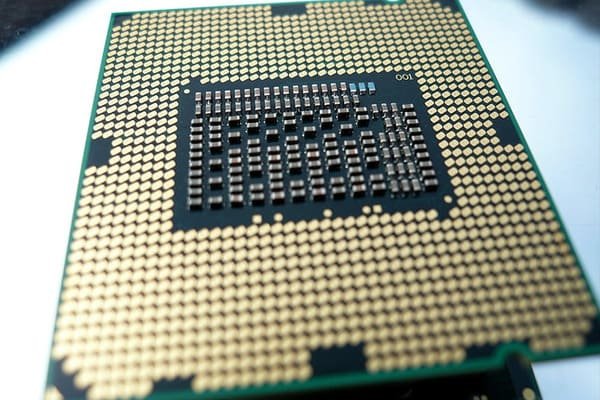
I've been in logistics for over two decades, and I've seen it all. Shipping delicate, high-value electronics like semiconductors is one of the most stressful parts of the job. These tiny components are the lifeblood of modern technology3, but they are incredibly fragile and expensive. One wrong move, one customs delay, or one security lapse, and the whole supply chain can grind to a halt. That's why the route you choose is so important. Over the years, my team and I have learned a critical lesson: when certainty is what you need, routing through Singapore is often the smartest decision. Let's explore exactly why this small island nation has become a giant in global logistics.
Why is Semiconductor Air Freight best via Singapore?
Shipping fragile semiconductors feels like a gamble. You worry about damage, theft, and delays. Each setback can mean massive financial losses and production stoppages, putting your entire operation at risk.
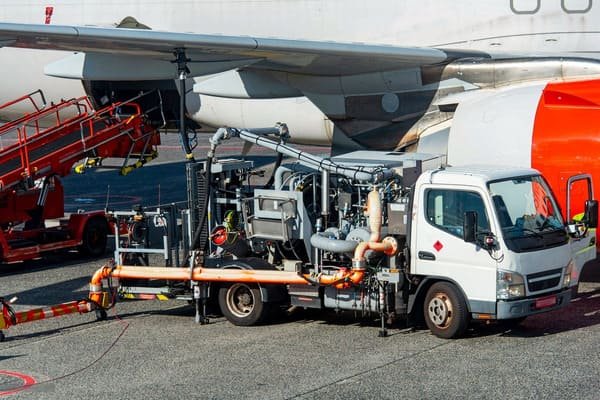
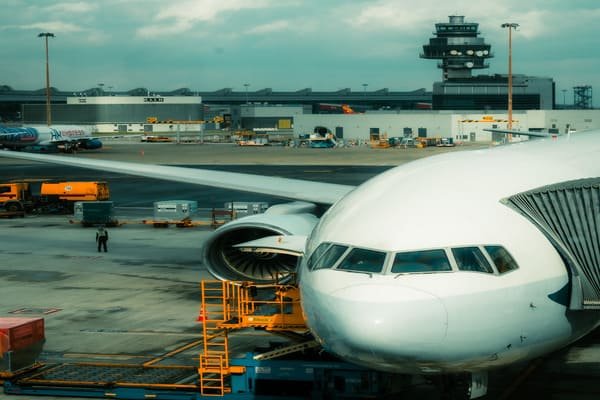
Singapore excels at semiconductor air freight because of its specialized infrastructure. Changi Airport's cargo terminals are designed for handling sensitive electronics4, with climate control, advanced security, and streamlined processes that minimize handling time and risk.
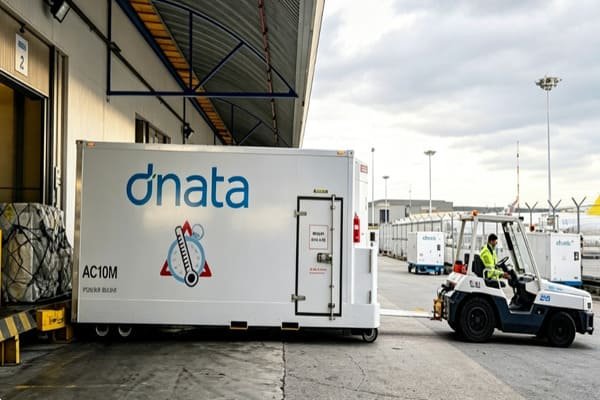
When we talk about shipping semiconductors, we are not just moving a box from one place to another. We are transporting the heart of the digital world. These components are extremely sensitive to static, temperature changes, and physical shock5. Singapore's logistics ecosystem is built to manage these challenges. I remember a shipment of custom chips we handled for a client in the automotive industry. The chips were worth millions and were needed urgently to prevent a factory shutdown6. Any other route presented too many variables. We chose to route them through Singapore. The entire process was seamless. The cargo was moved in temperature-controlled containers, monitored with real-time tracking, and passed through customs in just a few hours. This level of precision is not an accident; it is the result of decades of investment and planning.
Key Features of Singapore's Semiconductor Handling:
- Specialized Handling Zones: Terminals have dedicated areas with anti-static flooring and equipment.
- Climate Control: Advanced systems maintain optimal temperature and humidity to protect sensitive components.
- Security: Multi-layered security, including 24/7 surveillance and access control, prevents theft of high-value goods.
This specialized focus ensures that from the moment your cargo lands to the moment it departs, it is protected by world-class systems and personnel.
Why is Singapore a Global Air Cargo Hub?
Why Singapore is a global air cargo hub is mainly due to its strategic location, efficient customs clearance, and strong connectivity for international air freight.
Does your cargo get stuck in customs? Slow processing and unpredictable delays at major airports can destroy your delivery schedules, creating chaos for you and your customers who are waiting anxiously.
Singapore is a global air cargo hub due to its strategic location, pro-business government policies7, and unparalleled efficiency. Changi Airport's Free Trade Zone (FTZ) allows goods to be transshipped without complex customs procedures8, saving valuable time.
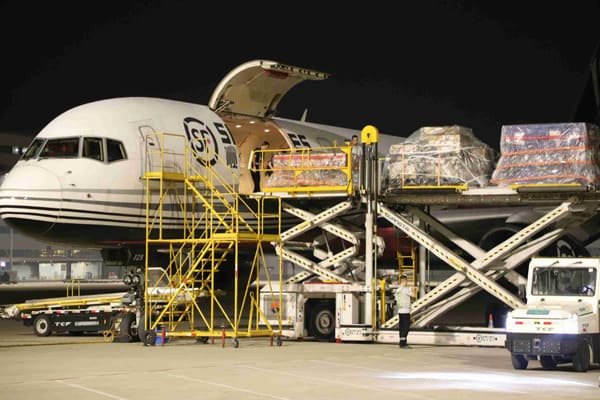
The secret to Singapore's success is not just its location at the crossroads of major trade lanes. It is about a deliberate, long-term strategy to be the best. The government works hand-in-hand with businesses to eliminate friction from the logistics process. In my experience, the efficiency of the Changi Airport Free Trade Zone is a game-changer. You can consolidate cargo, perform minor processing, and re-export goods without facing customs duties or bureaucratic hurdles. This is incredibly valuable for businesses that need flexibility in their supply chain. Compare this to other hubs where a simple transshipment can take days and involve mountains of paperwork. Singapore's focus on speed and simplicity makes it a clear winner.
Singapore's Changi Airport vs. Other Regional Hubs
| Feature | Singapore (Changi) | Other Regional Hubs |
|---|---|---|
| Customs Clearance | Highly efficient, often under 2 hours9 | Can be unpredictable, 6-24+ hours |
| Security | Top-tier, robust anti-theft measures10 | Variable, security levels differ |
| Connectivity | Connects to over 100 countries11 | Extensive, but may require more hops |
| Infrastructure | State-of-the-art, specialized facilities | Good, but may lack specialized handling |
This combination of location, policy, and performance creates a powerful advantage. For any business where time is money, Singapore provides a reliable and predictable environment that is hard to find anywhere else.
How can you protect high-value electronics in transit?
Even with the best route, are you sure your electronics are truly safe? Poor packaging or improper handling can lead to damage that is not discovered until it is too late, causing disputes and financial loss.
Protect high-value electronics by using multi-layer packaging, including anti-static bags and shock-absorbent materials. Also, work with a logistics partner who provides real-time tracking, comprehensive insurance, and has proven experience with sensitive cargo.

Protecting the cargo itself is the final, crucial piece of the puzzle. I've seen shipments worth hundreds of thousands of dollars ruined because someone tried to save a few bucks on packaging. It's just not worth the risk. A robust protection strategy involves more than just a sturdy box. It is a complete system. First, you need the right materials. This starts with an anti-static bag for the component itself, which prevents damage from electrical discharge. Then, this bag should be wrapped in shock-absorbent foam or bubble wrap. Finally, it all goes into a rigid, double-walled corrugated box with any empty space filled to prevent movement. For extremely sensitive items, we often use custom-molded foam inserts and even place that box inside a larger one—a technique called double-boxing.
Your High-Value Cargo Protection Checklist:
- Inner Packaging: Use certified anti-static bags for all semiconductors12 and sensitive components.
- Cushioning: Surround the item with at least two inches of shock-absorbent material like polyethylene foam.
- Outer Container: Use a new, high-strength corrugated box. Avoid re-using old boxes.
- Sealing: Seal the box securely with high-quality packing tape on all seams.
- Labeling: Clearly label the package with "Fragile," "Handle With Care," and "This Side Up" labels.
- Insurance and Tracking: Always opt for full-value insurance and use a service that provides real-time tracking from door to door.
Working with an experienced logistics partner like us ensures every step of this checklist is followed meticulously. We treat your cargo as if it were our own.
Conclusion
In short, routing semiconductors through Singapore and using proper protection methods minimizes risks. This strategic choice ensures your high-value cargo arrives safely and on time, protecting your supply chain.
"List of busiest airports by cargo traffic", https://en.wikipedia.org/wiki/List_of_busiest_airports_by_cargo_traffic. For example, a source could be an industry award or a high ranking in a global logistics performance index, which would substantiate Singapore's status as a leading air cargo hub. A limitation is that 'top choice' is subjective and depends on specific shipping needs, whereas rankings are based on general criteria. Evidence role: general_support; source type: institution. Supports: The claim that Singapore is a leading choice for air cargo.. Scope note: A high ranking or award provides strong support for Singapore's excellence but does not definitively prove it is the 'top choice' for every specific scenario. ↩
"Security of Air Cargo Shipments, Operations, and Facilities", https://www.congress.gov/crs-product/R45082. A source could be a report from an organization like the Transported Asset Protection Association (TAPA) that tracks cargo theft incidents, if data shows lower incident rates associated with Singapore's Changi Airport compared to other regional hubs. Evidence role: statistic; source type: research. Supports: The claim that routing through Singapore reduces risks like theft or damage.. Scope note: Data on cargo risk is often aggregated and may not directly compare specific routes in a controlled manner. ↩
"Economic Security in a Changing World", https://www.oecd.org/en/publications/2025/09/economic-security-in-a-changing-world_78f3b129/full-report/special-focus-semiconductor-value-chains_dc772986.html. A source could be a market analysis report from an industry association or research firm that provides statistics on the global semiconductor market value and its share of the components market for key industries like automotive, computing, and telecommunications. Evidence role: statistic; source type: research. Supports: The claim that semiconductors are critically important to the modern economy.. ↩
"Changi Airport", https://en.wikipedia.org/wiki/Changi_Airport. A source could be an official publication from the Changi Airport Group or a ground handling partner that details the specific features of its cargo terminals, such as climate-controlled zones, anti-static flooring, and advanced security systems for handling high-value electronics. Evidence role: general_support; source type: institution. Supports: The claim that Changi Airport has specialized infrastructure for sensitive cargo.. ↩
"The influence of temperature on integrated circuit failure ...", https://www.academia.edu/15386163/The_influence_of_temperature_on_integrated_circuit_failure_mechanisms. A source could be an engineering guide or an industry standard, such as those published by JEDEC, that explains the physics of electrostatic discharge (ESD) and the impact of thermal and mechanical stress on integrated circuits, outlining the need for protective measures. Evidence role: mechanism; source type: paper. Supports: The claim that semiconductors are vulnerable to damage from static, temperature, and shock.. ↩
"The U.S. Consumer Electronics Supply Chain", https://www.boisestate.edu/cobe/blog/2025/03/us-consumer-electronics-supply-chain-challenges-andtransformations/. A source could be an academic study or an industry report that analyzes the financial impact of supply chain disruptions, quantifying the high costs associated with production line stoppages in sectors like automotive or electronics manufacturing due to critical component shortages. Evidence role: case_reference; source type: research. Supports: The claim that semiconductor delays lead to costly production shutdowns.. Scope note: While a source can confirm the high cost of shutdowns, it does not prove the specific anecdote in the article. ↩
"National Trade Platform — WSIS Prizes 2017", https://www.itu.int/net4/wsis/stocktaking/Prizes/2026/Details/14864144780000000. A source could be a strategic plan or report from a government body like Singapore's Economic Development Board (EDB) or Ministry of Trade and Industry that outlines specific initiatives and investments aimed at enhancing the country's competitiveness as a global logistics and transshipment hub. Evidence role: general_support; source type: government. Supports: The claim that the Singaporean government actively supports the logistics industry.. ↩
"Singapore - Customs Regulations", https://www.trade.gov/country-commercial-guides/singapore-customs-regulations. A source could be an official guide or webpage from Singapore Customs that defines the regulations of its Free Trade Zones, explaining how goods can be stored, consolidated, and re-exported with minimal customs documentation and without incurring duties and taxes. Evidence role: definition; source type: government. Supports: The claim that Singapore's FTZ facilitates efficient transshipment.. ↩
"Average time to clear exports through customs (days)", https://data.worldbank.org/indicator/IC.CUS.DURS.EX. A source could be a performance report from Singapore Customs or a logistics industry study that measures and reports average cargo clearance times at Changi Airport, providing data to support the claim of high efficiency. Evidence role: statistic; source type: government. Supports: The claim that customs clearance at Changi is very fast.. Scope note: The 'under 2 hours' figure may represent an ideal or average time, with actual times varying based on cargo type and other factors. ↩
"Strong Momentum for 2026: TACSS Working Group ...", https://www.instagram.com/p/DVffsQOD3mL/. A source could be information from the Transported Asset Protection Association (TAPA) showing a high-level security certification for Changi Airport's cargo facilities, or an official airport document detailing its multi-layered security system, including surveillance, access control, and screening processes. Evidence role: general_support; source type: institution. Supports: The claim that Changi Airport has high security standards.. ↩
"Changi Airport", https://en.wikipedia.org/wiki/Changi_Airport. A source could be the official website, annual report, or a factsheet from the Changi Airport Group, which typically provides up-to-date statistics on its air network, including the number of countries and cities served by cargo flights. Evidence role: statistic; source type: institution. Supports: The claim about the extent of Changi Airport's cargo network.. Scope note: The exact number of countries can fluctuate based on airline schedules and global conditions. ↩
"JEDEC STANDARD", https://ptacts.uspto.gov/ptacts/public-informations/petitions/1517757/download-documents?artifactId=U1xV9vLPlqKvx4y3mCR5LVtYA4mUGvUR2RfXbMDMg-76AkIt4Qosb4s. A source could be an international standard, such as IEC 61340-5-1 or a JEDEC publication on handling electrostatic discharge (ESD) sensitive devices, which specifies the requirements for protective packaging, including the use of shielded or anti-static bags. Evidence role: expert_consensus; source type: paper. Supports: The claim that anti-static bags are a required part of semiconductor packaging.. ↩