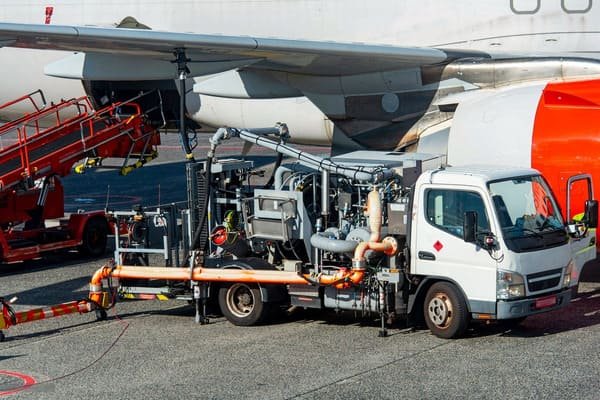


Shipping sensitive instruments by air feels fast, but the risk of damage from shock is high1. This can lead to costly repairs and delays, turning a quick shipment into a disaster.
The best way to protect precision instruments during air freight is to use a comprehensive strategy. This includes professionally engineered packaging with custom cushioning, clear handling protocols with shock indicators, and choosing a logistics partner who can minimize transit operations and actively manage the shipment.

After two decades in logistics, I've seen firsthand how easily a multi-million dollar piece of equipment can be damaged by a simple mistake. The journey is more than just a flight; it's a series of potential impact points. Protecting your asset isn't just about putting it in a box. It's about understanding the entire journey and managing the risks at every single step. Let's break down how we ensure your high-value instruments arrive in perfect condition, every time.
Where Do Shock and Vibration Risks Come from in Air Freight?
You assume your cargo is safe once it's on the plane. But the journey is full of hidden bumps, from the warehouse floor to the final destination's doorstep.
Shock and vibration risks in air freight come from every stage of transit. This includes impacts during ground handling by forklifts, constant low-frequency vibration during truck transport, sharp jolts during loading, and high-frequency vibrations from the aircraft engines and turbulence during the flight itself.
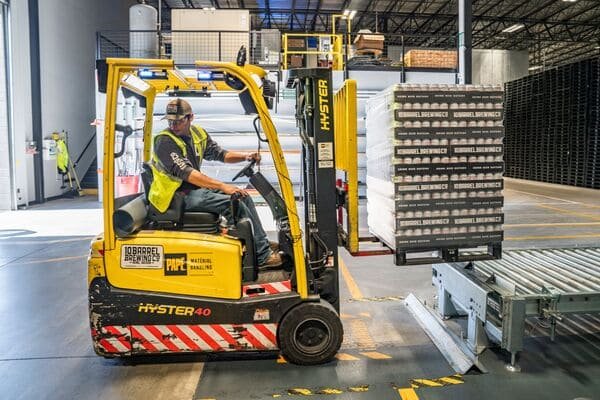
People often focus on in-flight turbulence as the main danger, but in my experience, most damage happens on the ground2. A shipment can be moved a dozen times before it even gets on the plane. Each movement is a risk. We have to think about the entire chain of custody to truly protect the cargo. Understanding these specific risks allows us to design a defense against them. It’s a science, not guesswork.
Ground Operations: The Hidden Danger Zone
The journey starts and ends on the ground, and this is where the most severe, sudden shocks often occur. Think about a typical warehouse environment. Forklifts can bump into crates or set them down too hard. Shipments move along conveyor systems that can have abrupt stops. When your crate is loaded onto an airport dolly or into a Unit Load Device (ULD), there is a risk of it being dropped, tilted, or impacted. These are low-speed but high-impact events that can easily damage delicate internal components or knock a precise calibration completely off.
In-Flight and Environmental Forces
Once in the air, the risks change. You have the obvious potential for turbulence, which can cause sudden jolts. But there's also the constant, high-frequency vibration from the aircraft's engines and airframe. For some instruments, this steady vibration can be just as damaging as a single large impact, causing screws to loosen or sensitive electronics to fail over time. Furthermore, the cargo hold is not always pressurized or temperature-controlled to the same degree as the passenger cabin3. These shifts in pressure and temperature can affect seals and sensitive materials.
A structured view of these risks looks like this:
| Transit Stage | Primary Risk | Description |
|---|---|---|
| Warehouse Handling | Impact & Drops | Forklift movements, manual handling, setting down too hard. |
| Ground Transport | Road Shock & Vibration | Potholes, sudden braking, constant low-frequency vibration. |
| Airport Loading | Impact & Tilting | Moving cargo onto dollies and into aircraft ULDs. |
| In-Flight | Sustained Vibration | High-frequency vibration from engines and airframe. |
| In-Flight | Turbulence | Sudden G-force spikes and unpredictable movements. |
| Environmental | Pressure & Temp | Changes in the cargo hold can affect sensitive components. |
What Is the Best Shockproof Packaging for Precision Equipment?
Using a standard box with some bubble wrap is a recipe for disaster with high-value instruments. Making the wrong packaging choice can mean your equipment is useless when it arrives.
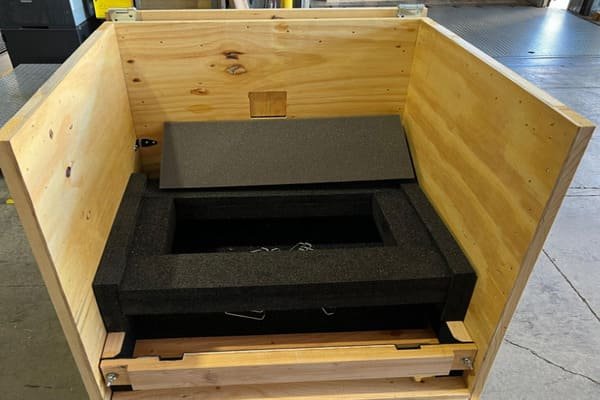
The best shockproof packaging is a custom-engineered, multi-layer system. It typically involves a rugged outer crate, an inner container, and specialized foam cushioning designed to absorb shock and vibration. This system isolates the instrument from external forces, ensuring its safety throughout transit.
Over the years, we've moved away from "one-size-fits-all" solutions. The best results come from treating each shipment like a unique engineering project. We analyze the specific instrument—its weight, dimensions, fragility, and center of gravity—to build a packaging solution that is perfectly matched to its needs. It’s about creating a protective cocoon that can withstand the known rigors of the air freight environment. We don't just pack your equipment; we design a survival system for it.
The Science of Cushioning and Suspension
The core of effective packaging is the cushioning material. Its job is to absorb shock energy and slowly release it, preventing that sudden jolt from reaching your instrument. This isn't just about stuffing foam around the item. We use a "box-in-box" or suspension-cushioning design. The instrument is secured in an inner box or frame, which is then suspended in the center of a larger, sturdy outer crate using precisely engineered foam. The amount and density of the foam are critical. We calculate this based on the item's weight, size, and its fragility, often expressed as a "G-factor."4 A rugged item might withstand 100 Gs, while a highly sensitive piece of medical equipment might only tolerate 20 Gs.5 The cushioning is designed to ensure that no matter what happens to the outside of the crate, the G-force experienced by the instrument inside never exceeds its limit.
Key Components of a Professional Packaging Solution
A complete solution involves more than just foam. We build a comprehensive protective shield around your asset.
- Custom-Cut Foam Inserts: We don't use loose foam peanuts. We use materials like polyethylene (PE) foam, which is dense and great for heavy items, or polyurethane (PU) foam for lighter, more delicate objects6. The foam is custom-cut to brace the instrument perfectly, preventing any movement inside the container.
- Heat-Treated (ISPM 15) Wooden Crates7: The outer shell must be tough. We use custom-built wooden or plywood crates that are certified for international shipping. They are built to be stackable and withstand impacts from all sides.
- Moisture and Corrosion Protection: For sensitive electronics, a simple box is not enough. We often use a vacuum-sealed moisture barrier bag (sometimes called a "foil bag") inside the crate. We add desiccant packs to absorb any humidity, and for metals, we might use Vapor Corrosion Inhibitor (VCI) paper or film8 to prevent rust.
Here’s a look at how we choose cushioning:
| Cushioning Material | Ideal For | Key Characteristic |
|---|---|---|
| Polyethylene (PE) Foam | Heavy, robust instruments (>50 kg) | Firm, high-density, excellent for absorbing major shocks. |
| Polyurethane (PU) Foam | Light, highly fragile items (<50 kg) | Soft, low-density, excellent for dampening vibration. |
| Custom Molded Foam | Complex, irregular shapes | Provides a perfect, uniform fit for maximum support. |
| Vibration Dampeners | Ultra-sensitive equipment | Elastomeric mounts that isolate from low-level vibration. |
How to Minimize Damage Risk in Air Shipping of High-Value Instruments?
Even the best packaging can fail if the shipment is mishandled. Your cargo passes through many hands on its journey, and each transfer is an opportunity for a mistake.
To truly minimize damage risk, you must combine great packaging with proactive operational management. This means using shock and tilt indicators for accountability, choosing direct flight routes, and working with a logistics specialist who enforces strict handling procedures from start to finish.
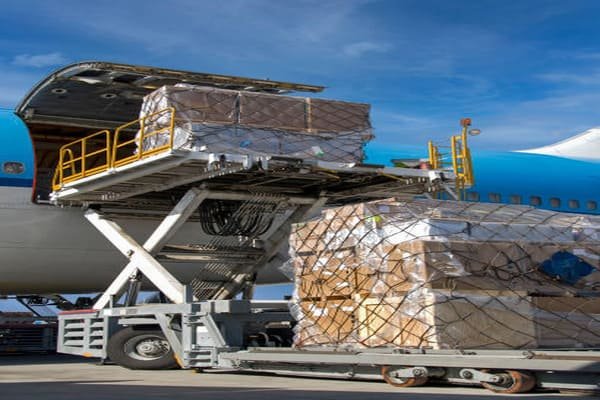
I recall a project involving a multi-million dollar satellite component. The packaging was state-of-the-art, but the client was still nervous. The real peace of mind came from the process we built around the shipment. We didn't just hand the crate over to the airline. We used air-ride suspension trucks for ground transport to dampen road vibrations. We had our own personnel supervise the palletization and loading onto the aircraft.
Making Handling Accountable with Monitoring
You can't be there for every step of the journey, but you can make sure everyone who handles your cargo knows it's being watched. This is where monitoring tools are essential.
- Shock and Tilt Indicators: These are simple, single-use devices we affix to the outside of the crate. A "ShockWatch" label, for example, has a vial that turns bright red if the package experiences an impact greater than a specified G-force. A "Tip-N-Tell" will show if the crate has been tilted or turned on its side. These devices do two things: they provide clear evidence if mishandling occurred, and more importantly, their visible presence makes handlers far more careful9.
- Data Loggers: For the most critical shipments, we place a data logger inside the crate. This device records the entire history of the journey—impacts, vibration, temperature, humidity, and pressure.10 When the shipment arrives, we can download the data and see exactly what it went through, helping us refine the process for the future.
The Importance of Process and Partnership
A successful shipment is the result of a clear, well-communicated plan. It's not enough to just label a crate "Fragile." You need to define every step of the process and work with a partner who can execute it flawlessly.
We do this by:
- Choosing Direct Flights11: This is one of the simplest and most effective ways to reduce risk. Every time a shipment is transferred from one plane to another, it's handled again. Fewer transfers mean fewer opportunities for drops, impacts, or delays.
- Creating a Standard Operating Procedure (SOP): We create a detailed document that outlines every handling requirement. This includes instructions on which equipment to use for moving the crate, how it should be secured, and strict "Do Not Stack" or "Keep Upright" protocols.
- Clear Labeling and Communication: We use clear, internationally recognized symbols for handling instructions. We also communicate directly with the airline's special cargo team to ensure they are aware of the shipment's sensitive nature before it even arrives at the airport.
Working with a logistics partner who specializes in high-value goods means you are not just buying space on a plane; you are buying a managed, end-to-end process designed for zero defects.
Conclusion
Protecting precision instruments isn't about one single thing. It’s the combination of engineered packaging, a deep understanding of transit risks, and active, professional management of the entire shipping process.
"Contract NAS-8-11451 Final Report SHOCK AND ...", https://ntrs.nasa.gov/api/citations/19660025391/downloads/19660025391.pdf. Studies measuring the transportation environment have documented the various shock and vibration events that occur during air freight, including ground handling, take-off, and in-flight turbulence, which can pose a risk to sensitive cargo. Evidence role: statistic; source type: research. Supports: The claim that air freight transit involves significant shock and vibration risks.. Scope note: The source may not provide a direct comparison of damage rates between shipping modes but can confirm the presence and magnitude of shock events inherent to air transit. ↩
"The role of human factors in aviation ground operation ...", https://www.sciencedirect.com/science/article/pii/S2666691X23000246. Analysis of freight insurance claims and logistics incidents often indicates that a significant percentage of damage occurs during ground handling operations—including loading, unloading, and warehouse movements—rather than during the flight itself. Evidence role: statistic; source type: institution. Supports: The claim that a majority of cargo damage occurs during ground operations.. Scope note: Specific percentages can vary by year, region, and type of cargo, but the general trend highlights the high risk of ground operations. ↩
"Environmental Policy & Guidance", https://www.faa.gov/regulations_policies/policy_guidance/envir_policy. Aviation industry sources confirm that while most cargo holds on modern passenger aircraft are pressurized, they may not be temperature-controlled or may be maintained within a wider temperature range (e.g., 4°C to 29°C) than the passenger cabin. Some holds on dedicated freighter aircraft may have more limited environmental controls. Evidence role: general_support; source type: institution. Supports: The claim that cargo hold environmental conditions differ from the passenger cabin.. ↩
"Fragility Assessment Theory and Test Procedure", https://calhoun.nps.edu/bitstream/handle/10945/27486/Newton.pdf;sequence=4. In packaging engineering, product fragility is quantified by the G-factor (or fragility factor), which represents the maximum deceleration (measured in Gs, a multiple of gravitational acceleration) that a product can withstand without damage. This value is critical for designing effective cushion packaging. Evidence role: definition; source type: research. Supports: The definition and use of "G-factor" to quantify product fragility.. ↩
"The Magnetic Interaction and the Lande' g-factor", http://hyperphysics.phy-astr.gsu.edu/hbase/quantum/Lande.html. Packaging design literature provides tables of typical product fragility levels, showing a wide range. For example, extremely delicate items like missile gyros may have G-factors of 15-25 Gs, while more robust mechanical items can withstand 85-115 Gs or more. Evidence role: general_support; source type: education. Supports: The example G-factor values for different types of equipment.. Scope note: These are general ranges; the specific G-factor for any given item must be determined through testing or from manufacturer specifications. ↩
"Analysis of the Dynamic Cushioning Property of Expanded ...", https://pmc.ncbi.nlm.nih.gov/articles/PMC10489951/. Packaging design principles utilize cushion curves to select appropriate foam. Higher-density polyethylene (PE) foam provides support for heavier loads without bottoming out, while lower-density polyurethane (PU) foam offers softer cushioning ideal for protecting lightweight, fragile items from shock and vibration. Evidence role: general_support; source type: education. Supports: The differing applications of PE and PU foam based on item weight and fragility.. ↩
"IPPC publishes new guide on wood packaging material", https://www.ippc.int/en/news/ippc-publishes-new-guide-on-wood-packaging-material/. ISPM 15 (International Standards for Phytosanitary Measures No. 15) is an international regulation developed by the International Plant Protection Convention (IPPC) that requires wood packaging material to be treated (e.g., heat treatment) to kill pests before it is used in international trade. Evidence role: definition; source type: government. Supports: The purpose and requirement of the ISPM 15 standard for wooden crates.. ↩
"Volatile corrosion inhibitor", https://en.wikipedia.org/wiki/Volatile_corrosion_inhibitor. Vapor Corrosion Inhibitors are compounds that sublimate from a carrier material, such as paper or film. The resulting vapor saturates the enclosed space and forms a thin, monomolecular protective layer on metal surfaces, which inhibits the electrochemical process of corrosion. Evidence role: mechanism; source type: research. Supports: The mechanism by which Vapor Corrosion Inhibitor (VCI) prevents rust.. ↩
"Workplace Surveillance and Worker Well-Being - PMC - NIH", https://pmc.ncbi.nlm.nih.gov/articles/PMC11300163/. The use of visible monitoring devices, such as shock indicators, is recognized in the logistics industry as a tool for creating an accountability mechanism. This is often referred to as the 'Hawthorne effect,' where individuals modify their behavior in response to their awareness of being observed, leading to more careful handling. Evidence role: general_support; source type: research. Supports: The claim that visible monitoring devices alter the behavior of cargo handlers.. Scope note: The source may describe this as a widely accepted industry benefit rather than citing a specific controlled psychological study on cargo handlers. ↩
"Data Logger for Monitoring Transport, Shipping and Logistics", https://www.msr.ch/en/applications/datalogger-transportation-logistics-shipping/. Modern electronic data loggers used in logistics are often multi-sensor devices capable of recording time-stamped data for a range of parameters, including tri-axial acceleration (shock and vibration), temperature, relative humidity, barometric pressure, and light exposure. Evidence role: general_support; source type: research. Supports: The capability of data loggers to record multiple environmental and physical parameters.. ↩
"Two routes may reach the same destination, but they can ...", https://www.facebook.com/delexaircargo/posts/two-routes-may-reach-the-same-destination-but-they-can-differ-significantly-in-c/1088333033549419/. Logistics and supply chain management best practices emphasize minimizing the number of handling points to reduce the risk of damage, loss, and delay. Selecting direct routes for freight is a primary strategy for achieving this, as it eliminates the risks associated with sorting, reloading, and storage at transshipment hubs. Evidence role: expert_consensus; source type: institution. Supports: The strategy of using direct flights to minimize risk in shipping.. ↩