
Shipping flammable liquids like paints or perfumes by air is complex and risky. A small mistake can lead to massive fines or delays, but understanding the core rules makes it manageable.
To ship Class 3 flammable liquids1 by air, you must correctly identify the flash point to determine the Packing Group (I, II, or III)2. This dictates packaging and labeling. Use cost-saving options like Limited Quantity (LQ) where possible, and always follow IATA DGR and airport security rules.
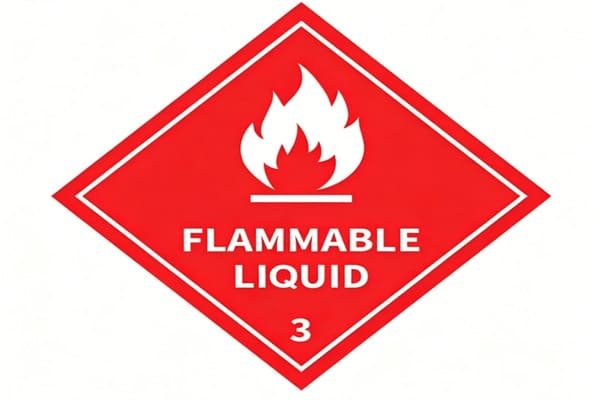
Navigating the world of dangerous goods can feel overwhelming. I've seen countless shippers get stuck, facing rejected cargo and mounting costs, all because of a simple misunderstanding of the regulations. The good news is that these rules are not meant to be a barrier; they are a roadmap to ensure safety for everyone. Once you understand the logic behind them, the process becomes much clearer. We're going to break down this roadmap piece by piece, starting with the single most important detail for any flammable liquid: its flash point.
Why is Flash Point the Core of Class 3 Dangerous Goods Classification?
You know your product is flammable, but do you know how flammable? Guessing its danger level can lead to incorrect packaging, carrier rejection, and serious safety hazards during transit.
The flash point is the scientific measure that tells you the exact level of danger. It assigns your liquid to a specific Packing Group (PG I, II, or III). This PG dictates the required packaging, labels, and documents, making it the foundation for a safe and compliant shipment.
The flash point is the lowest temperature at which a liquid gives off enough vapor to form an ignitable mixture with the air.3 It’s not the temperature at which it will self-ignite, but the point where a spark could cause a fire. This single number, which you can find in Section 9 of your product’s Material Safety Data Sheet (MSDS)4, determines everything. The International Air Transport Association (IATA) uses it to categorize flammable liquids into three Packing Groups, from most to least dangerous.
Understanding Packing Groups (PG)
| Packing Group | Flash Point & Boiling Point Criteria | Danger Level |
|---|---|---|
| PG I | and initial boiling point ≤ 35°C (95°F) | High Danger |
| PG II | < 23°C (73°F) and initial boiling point > 35°C (95°F) | Medium Danger |
| PG III | ≥ 23°C (73°F) and ≤ 60°C (140°F) | Low Danger |
I remember a client shipping a new type of industrial solvent. They assumed it was low-danger PG III, but its flash point was actually 20°C, placing it squarely in PG II. The airline rejected the shipment at the cargo terminal because the packaging wasn't strong enough for a PG II substance. That mistake cost them a week in delays and the expense of repacking everything. Getting the flash point and Packing Group right from the start is the most critical step.
How Can Limited and Excepted Quantities Save You Money on Air Freight?
Shipping small amounts of flammable liquids seems just as expensive as shipping a large drum. You might be overpaying for documentation and special packaging that you don't actually need.
Limited Quantity (LQ) and Excepted Quantity (EQ) provisions offer huge cost-saving exemptions. They are designed for small volumes and can dramatically simplify your shipping process and reduce expenses.
By following the strict volume limits, LQ and EQ let you ship certain dangerous goods with simpler rules. This often means you don't need expensive UN-specification packaging or a formal Shipper's Declaration for Dangerous Goods, which significantly cuts compliance costs and time.
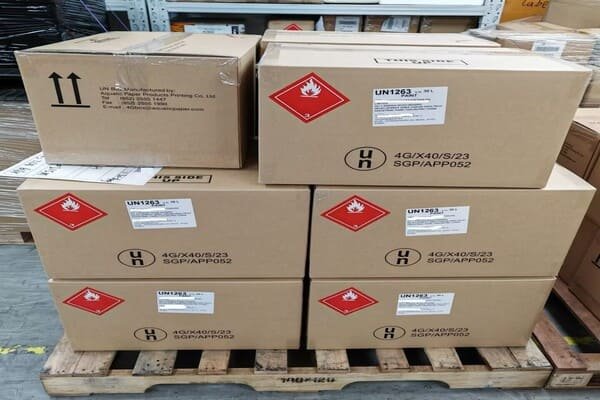
The core idea behind LQ and EQ is that a small amount of a hazardous substance, when packed securely in a strong outer box, poses a much lower risk. This allows for regulatory relief. For example, instead of a UN-certified fiberboard box, you can often use a sturdy, high-quality standard box. The biggest savings, however, come from documentation. Not needing to prepare a Shipper’s Declaration is a huge benefit, as these documents must be perfect and often require specialized training to complete.
Full DG vs. LQ vs. EQ: A Quick Comparison
| Feature | Full Dangerous Goods | Limited Quantity (LQ) | Excepted Quantity (EQ) |
|---|---|---|---|
| Shipper's Declaration | Required | Not Required | Not Required |
| UN Specification Package | Required | Not Required | Not Required |
| Hazard Labels | Required | LQ Mark Only | EQ Mark Only |
| Max Gross Weight per Package | Varies (Large) | 30 kg | 1 kg |
But be careful. These are not a free pass. You must check the IATA Dangerous Goods Regulations (DGR) for your specific UN number to see if it's even eligible for LQ or EQ, and what the maximum quantity per inner container (e.g., a bottle) and outer package (the box) is. A common mistake is just assuming any small shipment qualifies. The rules are very specific, and exceeding them by even a few milliliters will get your shipment reclassified as full dangerous goods.
What are the Airport Security Red Lines You Can Never Cross with Flammable Liquids?
Your shipment is packed, labeled, and ready to go. But one simple, avoidable mistake at the airport security check can get your cargo grounded indefinitely, leading to fines and investigations.
Knowing the non-negotiable red lines is the key to ensuring your cargo flies without a hitch. These are the absolute deal-breakers for any airline or airport authority, and there is zero tolerance for them.
Never misdeclare or hide dangerous goods. Always ensure your labels and marks are correct and perfectly match the documentation. The package itself must be clean, dry, and free of any leaks or damage. Violating these fundamental rules will result in immediate rejection and serious consequences.
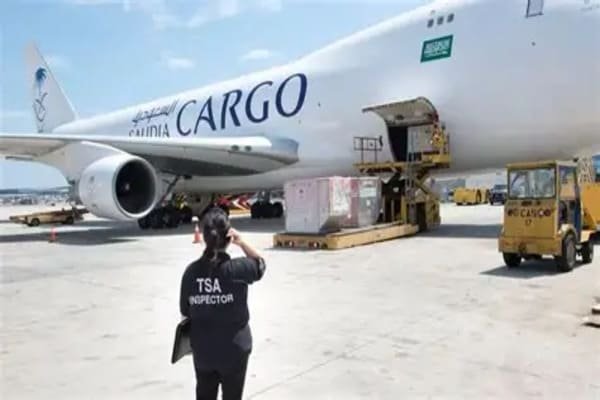
Airport cargo acceptance staff are trained to be meticulous. They are the last line of defense before a package gets on a plane, and their job is to spot any sign of trouble. From my experience, they focus on a few key areas where shippers most often make critical errors. Think of these as the absolute red lines you can never cross.
The 5 Unbreakable Rules at Airport Security
- Undeclared or Hidden DG: This is the worst offense. Trying to ship flammable liquids as "machine parts" or "samples" is illegal and extremely dangerous.5 It will lead to blacklisting and potential prosecution.
- Incorrect or Missing Labels/Marks: If your paperwork says UN1263, but the box is missing the label or shows a different number, it's an instant rejection. All labels—hazard class, handling, and address marks—must be present, visible, and accurate.
- Damaged or Leaking Packages: I once saw a shipment stopped because of a tiny, oily stain on the bottom of a box. Any sign of a leak, no matter how small, or any crush damage to the box, means the cargo is considered unsafe and will not be loaded.6
- Improper Packaging: Using a regular cardboard box when a UN-certified one is required for your Packing Group is a non-starter. Similarly, exceeding the volume limits for Limited Quantity is a common failure.
- Documentation Discrepancies: The information on the Shipper's Declaration must match the physical package 100%. A typo in the Proper Shipping Name or an incorrect quantity is enough for rejection.
These rules aren't just bureaucracy; they prevent disasters. A small leak on the ground can become a major fire hazard at 30,000 feet.
What's the Final Checklist for a Smooth Class 3 Air Shipment?
You've done the hard work of classifying and packing your flammable liquids. But it's easy to get complacent and forget one final check, which can undo everything and cause costly delays.
Use this simple, final checklist to run through your shipment one last time. This is your go/no-go review to guarantee a smooth, compliant shipment and give you peace of mind.
Your Pre-Flight Go/No-Go Checklist
- [ ] 1. MSDS Verification: Do you have the latest Material Safety Data Sheet (less than 2 years old)? Is the flash point clearly stated in Section 9?
- [ ] 2. Classification Confirmed: Have you assigned the correct UN number and Packing Group (I, II, or III) based on the flash point and boiling point?
- [ ] 3. Packaging Strategy: Have you checked the IATA DGR to confirm if your product qualifies for LQ/EQ? Are you respecting all inner and outer quantity limits? If not, is your UN-specification packaging correct for the Packing Group?
- [ ] 4. Labeling & Marking: Is the package correctly marked with the Proper Shipping Name, UN number, and full shipper/consignee details? Are the correct Class 3 hazard labels and any required handling labels properly applied and visible?
- [ ] 5. Documentation Ready: If required, is the Shipper's Declaration for Dangerous Goods filled out completely and without any errors or typos? Does it perfectly match the package markings?
- [ ] 6. Final Package Inspection: Is the outer box clean, dry, and completely free from any damage, dents, or stains?
Think of this checklist as the final handshake before your cargo goes out the door. It ensures that you've done everything in your power to prepare a safe and compliant shipment.
Conclusion
Properly classifying, packing, and declaring Class 3 liquids is essential. Follow the rules, use cost-saving options like LQ when possible, and partner with a DG-trained freight forwarder to ensure safe, compliant air shipments.
"49 CFR 173.120 -- Class 3—Definitions. - eCFR", https://www.ecfr.gov/current/title-49/subtitle-B/chapter-I/subchapter-C/part-173/subpart-D/section-173.120. The UN Model Regulations and ICAO dangerous goods framework identify flammable liquids as Class 3 dangerous goods, providing the regulatory basis for treating these substances as a distinct hazard class in transport. Evidence role: definition; source type: institution. Supports: Flammable liquids are regulated as Class 3 dangerous goods for air transport.. ↩
"49 CFR § 173.121 - Assignment of packing group.", https://www.law.cornell.edu/cfr/text/49/173.121. Transport regulations classify Class 3 flammable liquids into packing groups using flash point and initial boiling point criteria, supporting the statement that these physical properties determine the assigned Packing Group. Evidence role: definition; source type: government. Supports: Flash point, together with initial boiling point, is used to determine the Packing Group for Class 3 flammable liquids.. ↩
"Flash point - Wikipedia", https://en.wikipedia.org/wiki/Flash_point. Standard chemistry and safety references define flash point as the lowest temperature at which vapors above a liquid can ignite in air when exposed to an ignition source, supporting the article’s technical definition. Evidence role: definition; source type: education. Supports: Flash point is the lowest temperature at which a liquid produces enough vapor to form an ignitable mixture with air.. ↩
"[PDF] Hazard Communication Standard: Safety Data Sheets - OSHA", https://www.osha.gov/Publications/OSHA3514.html. OSHA’s Hazard Communication Standard specifies that Section 9 of a Safety Data Sheet contains physical and chemical properties, including flash point, supporting the claim that flash point is normally found there. Evidence role: definition; source type: government. Supports: Flash point information is normally listed in Section 9 of the SDS/MSDS.. Scope note: The article uses the older term MSDS; OSHA’s current terminology is Safety Data Sheet, or SDS. ↩
"Undeclared Dangerous Goods | Federal Aviation Administration", https://www.faa.gov/hazmat/what_is_hazmat/undeclared_hazmat. Civil aviation and hazardous-materials enforcement materials treat undeclared dangerous goods as violations because they prevent carriers from applying required handling, segregation, and emergency procedures, supporting the claim that misdescription is both unlawful and safety-relevant. Evidence role: general_support; source type: government. Supports: Misdeclaring flammable liquids as non-dangerous items is illegal and creates aviation safety risks.. Scope note: Specific penalties and enforcement outcomes vary by jurisdiction and by the facts of the shipment. ↩
"[PDF] DANGEROUS GOODS PANEL (DGP) - ICAO", https://www.icao.int/sites/default/files/DangerousGoods/DGP%20Meeting%20Documentation/DGP-30/3_Information%20papers/IP-08.pdf. Air dangerous-goods acceptance requirements call for packages to be inspected for leakage, damage, and correct condition before acceptance, supporting the statement that leaking or damaged packages are grounds for rejection. Evidence role: general_support; source type: institution. Supports: Damaged or leaking dangerous-goods packages are not acceptable for loading on aircraft.. Scope note: Carrier acceptance procedures may differ in wording, but damaged or leaking dangerous-goods packages are consistently treated as non-acceptable for carriage. ↩