
Worried about shipping to South America? Complex rules and hidden pitfalls can cause major delays and fines. Getting it wrong is a very costly mistake.
You must understand mandatory transit rules, prepare for port congestion and long dwell times, and get all paperwork perfect. For dangerous goods, extra regulations apply. Following these rules is key to avoiding costly problems.
Shipping to South America can feel like navigating a maze. I've seen many businesses struggle with the specific rules for each port. Let's break down exactly what you need to know to make your shipments go smoothly.
What are the mandatory container transit rules at major South America ports?
Unsure about the specific rules for each South American port? A small mistake in your transit documents can stop your entire shipment dead in its tracks.
Major ports require precise customs declarations, advance cargo manifests1, and often a transit bond. Each country, like Brazil or Chile, has unique variations on these rules. You must check the specific requirements for your destination port before you ship.
When we talk about transit rules, we are talking about the core requirements that keep your cargo moving. These are not optional. In my years of experience, I've seen that getting these basics right from the start prevents 90% of potential problems. Each country has its own system, but they all focus on control and security.
Documentation and Manifests
The foundation of any smooth transit is accurate paperwork. Before your vessel even arrives, your carrier must electronically submit a detailed cargo manifest to the local customs authority.2 In Brazil, for example, this is done through the SISCARGA/SISCOMEX system. This manifest includes everything about your shipment: shipper, consignee, cargo description, and weight. Any mismatch between the manifest and your Bill of Lading or commercial invoice will raise a red flag and trigger an inspection.3
Transit Bonds
For cargo that is just passing through a country, many South American nations require a customs bond.4 This is a financial guarantee you provide to customs. It proves you intend to re-export the goods and not illegally sell them within the country. The bond amount is usually based on the value of the duties and taxes on the goods.
Here is a simple breakdown for some major ports:
| Port/Country | Key Transit Rule | Common Pitfall |
|---|---|---|
| Santos, Brazil | Mandatory pre-arrival manifest submission via SISCARGA/SISCOMEX system 5 days before vessel arrival. | Delays in providing manifest data to the carrier. |
| Valparaiso, Chile | Strict customs valuation. Requires a detailed commercial invoice. | Undervaluing goods to save on duties, leading to fines. |
| Buenos Aires, Argentina | Requires a Unique Code of Goods Identification (C.U.I.T.). | Incorrect or missing C.U.I.T. on documentation. |
| Callao, Peru | Mandatory advance manifest submission via SADA system 48 hours before vessel arrival. | Mismatched information between pre-arrival manifest and final shipping documents, leading to customs holds. |
What real-world challenges to watch for – congestion, dwell time, and paperwork pitfalls?
Your shipment has arrived, but it's stuck. Port congestion and paperwork errors create unexpected delays and fees, eating into your profits and frustrating your customers.
Be prepared for port congestion, especially at major hubs like Santos. Understand the concept of "dwell time" and the high costs of demurrage. Double-check all paperwork for accuracy to avoid customs holds, which are a common and expensive pitfall.
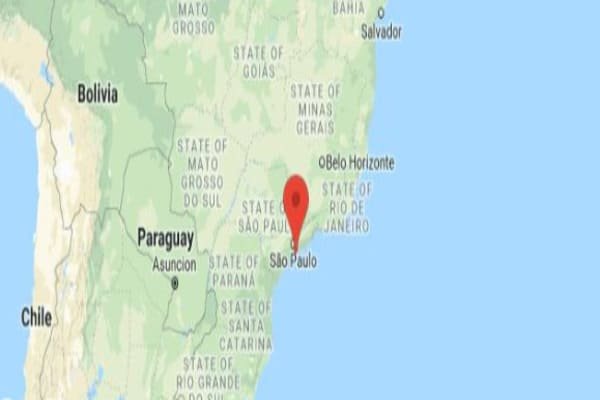
The official rules are one thing, but the reality on the ground is another. I once had a client shipping high-value electronics to Brazil. A simple typo in the HS code on the commercial invoice caused a two-week customs delay. The client faced thousands of dollars in demurrage fees and nearly missed their retail launch date. These are the real-world challenges you need to anticipate.
Port Congestion and Dwell Time
Major South American ports like Santos in Brazil or San Antonio in Chile frequently suffer from congestion.5 This can be due to limited infrastructure, labor strikes, or seasonal rushes. When a port is congested, your container might sit for days or even weeks before it can be moved. This waiting period is called "dwell time." Ports offer a few "free days" of storage, but once that time is up, you start paying expensive daily fees called demurrage.6 These fees can quickly add up and destroy your profit margins.
Paperwork Pitfalls
This is the most common and avoidable challenge. Customs authorities in South America are extremely strict. A small error can lead to big problems.
Here are the most frequent paperwork mistakes I see:
| Paperwork Pitfall | Consequence | How to Avoid It |
|---|---|---|
| Incorrect HS Code | Wrong duty calculation, customs inspection, heavy fines. | Verify codes with your customs broker or a professional like us. |
| Value Discrepancy | Accusations of tax evasion, cargo seizure, blacklisting. | Ensure the value on the invoice matches the real transaction value. |
| Missing Signatures/Stamps | Document rejection, shipment hold until corrected papers arrive. | Create a checklist and double-verify every document before dispatch. |
| Vague Cargo Description | Suspicion from customs, leading to a full container inspection. | Be specific. Instead of "Electronics," write "1,000 units of Model X Headphones." |
What extra rules apply to DG Cargo when shipping to South America?
Shipping dangerous goods is already complex. In South America, the rules are even stricter. A single mistake can lead to massive fines or even shipment rejection.
For DG cargo, you need an accurate Material Safety Data Sheet (MSDS) and a Dangerous Goods Declaration (DGD). All packaging and labeling must meet IMDG Code standards7. Many ports require pre-approval and have strict segregation rules, so you must declare everything correctly upfront.
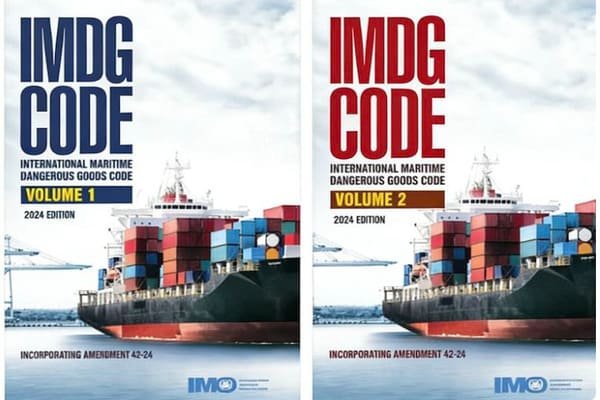
Handling Dangerous Goods (DG) is our specialty, and I can tell you that South America is one of the most demanding regions. The authorities have zero tolerance for errors because the risks are so high. It's not just about following the global International Maritime Dangerous Goods (IMDG) Code.8 You also have to comply with specific national and port-level regulations.
Declaration and Pre-Approval
You cannot simply book a DG shipment. The process starts with a full declaration. You must provide the carrier with a complete Material Safety Data Sheet (MSDS). Based on this, we prepare the Dangerous Goods Declaration (DGD). This information is then submitted to the port authorities and the shipping line for approval before the container is even loaded. Some ports, like those in Brazil, require this approval weeks in advance. If you miss this step, your container will be rejected at the port of origin.
Packaging, Labeling, and Segregation
Safety is paramount. All DG cargo must be in UN-approved packaging. The container itself must be correctly placarded with the right hazard labels. These labels tell port workers what is inside and how to handle it safely. At the terminal, DG containers are stored in special, segregated areas away from general cargo and other incompatible goods9. Any error in labeling can cause your container to be handled improperly, creating a massive safety risk and legal liability for you as the shipper.
Here are the essential documents you'll need:
| Document | Purpose | Why It's Critical |
|---|---|---|
| MSDS | Provides detailed information about the chemical/product. | The source of truth for classification, handling, and emergency procedures. |
| DGD | Declares the cargo as dangerous to the carrier and authorities. | A legal document stating you have complied with all regulations. |
| UN Packaging Certificate | Proves the packaging is tested and approved for the substance. | A requirement to ensure the cargo is safely contained during transit. |
Conclusion
Navigating South America's transit rules, delays, and DG regulations is tough. One mistake can be very costly. Let us handle the complexity for you.
Advance Cargo Information (ACI) Implementation Guidance — international standards for pre-arrival cargo manifest submission under the SAFE Framework — *World Customs Organization (WCO)*: https://www.wcoomd.org/-/media/wco/public/global/pdf/topics/facilitation/instruments-and-tools/tools/safe-package/advance-cargo-information-aci-implementation-guidanceen-web.pdf?la=en ↩
Manifest (transportation) — a document listing the cargo, passengers, and crew of a vessel for customs and authorities — *Wikipedia*: https://en.wikipedia.org/wiki/Manifest_(transportation) ↩
Customs administration and document consistency in trade facilitation — analysis of how manifest/invoice mismatches trigger inspections — *International Monetary Fund (IMF) eLibrary*: https://www.elibrary.imf.org/display/book/9798400200120/CH005.xml ↩
Customs bond — a financial guarantee ensuring payment of duties and compliance with customs regulations — *Wikipedia*: https://en.wikipedia.org/wiki/Customs_bond ↩
Port performance and congestion in Latin America — World Bank study on infrastructure and dwell-time challenges at regional ports — *World Bank*: https://documents1.worldbank.org/curated/en/099060324114539683/pdf/P17583313892300871be641a5ea7b90e0e6.pdf ↩
Demurrage — charges levied for retaining a container or vessel beyond the allowed free time — *Wikipedia*: https://en.wikipedia.org/wiki/Demurrage ↩
International Maritime Organization (IMO) Program — U.S. regulatory overview of the IMDG Code for maritime dangerous goods transport — *PHMSA (U.S. Department of Transportation)*: https://www.phmsa.dot.gov/international-program/international-maritime-organization ↩
IMDG Code — the International Maritime Dangerous Goods Code, the IMO standard for transporting hazardous materials by sea — *Wikipedia*: https://en.wikipedia.org/wiki/IMDG_Code ↩
Segregating Dangerous Goods Under the IMDG Code — guidance on segregation rules for incompatible hazardous cargo — *The Compliance Center*: https://www.thecompliancecenter.com/help-center/articles/segregating-dangerous-goods-under-the-imdg-code/ ↩