
Shipping toxic substances is a high-stakes game. A small oversight can lead to health hazards, environmental damage, and massive fines. Are you truly prepared for what could go wrong?
To ship Class 6.1 DG cargo safely, you must meticulously verify your packaging against the Safety Data Sheet (SDS), follow strict IMDG stowage rules, and have a clear, actionable emergency response plan. These three pillars are non-negotiable for preventing leaks, accidents, and severe penalties.
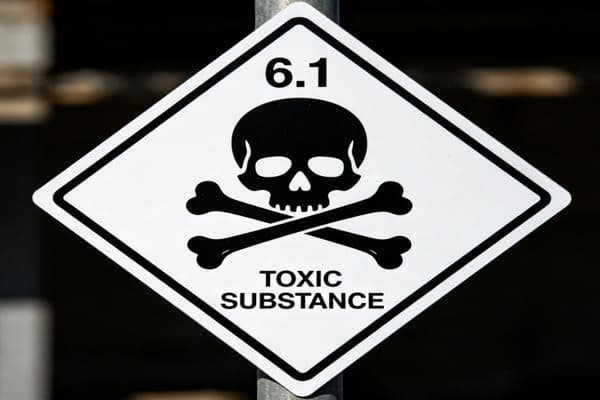
I’ve been in this business for over 20 years, and I can tell you that a safe dangerous goods shipment is never an accident. It is always the result of careful planning and strict adherence to rules. I remember one case where a client nearly faced a huge loss because of a simple mistake in their paperwork. It taught me that with toxic materials, you must get every detail right. If you can't confidently say "yes" to every question about your packaging, stowage, and emergency plan, then your shipment is not ready. Let's break down how to ensure it is.
How to verify packaging and SDS for Class 6.1 before shipping – stop leaks at the source?
A tiny leak from improper packaging can contaminate an entire container. This leads to rejected shipments, expensive cleanups, and a damaged reputation. How do you stop this at the source?
Verify your packaging by checking its UN specification marking against the packing group (PG) listed in Section 14 of the Safety Data Sheet (SDS). Ensure the packaging is certified for your specific toxic substance and is in perfect physical condition before you load it.
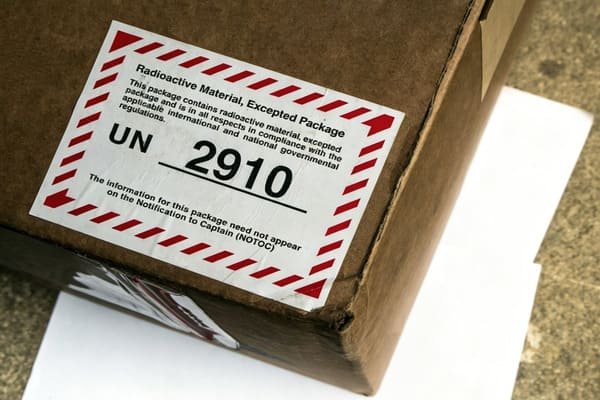
The foundation of a safe Class 6.1 shipment is the packaging. It’s your first and best line of defense against a leak. I once worked with a new client who bought what they thought was certified packaging, but it wasn't rated for the high toxicity of their product (Packing Group I). We caught it during our pre-shipment check, saving them from a potential disaster at sea. The key is to connect the information on the Safety Data Sheet (SDS) directly to the physical packaging you are using.
Understanding the Safety Data Sheet (SDS)
Your most important document is the SDS1. Specifically, Section 14, "Transport Information," tells you everything you need to know for shipping. It lists the UN number, the proper shipping name, the hazard class (6.1), and, most importantly, the Packing Group (PG).2 The PG indicates the level of danger: PG I is for high danger, PG II for medium danger, and PG III for low danger. Your packaging must be rated to handle this level of risk.
Decoding UN Packaging Marks
Every certified DG package has a UN marking3 stamped on it, like "UN 4G/X25/S/23/USA/M1234". This code tells a story. The "X" in this example means the package is certified for Packing Groups I, II, and III. If it had a "Y," it would only be for PG II and III. A "Z" is only for PG III.4 You must match this letter to the PG on your SDS.
| Packing Group (PG) | Danger Level | Required Packaging Mark |
|---|---|---|
| PG I | High Danger | X |
| PG II | Medium Danger | Y or X |
| PG III | Low Danger | Z, Y, or X |
Always perform a final physical check. Look for dents, rust, or any sign of weakness. A certified but damaged drum is no longer a certified drum.
Why IMDG stowage and segregation rules matter during transit – prevent accidents?
You've packed your toxic cargo perfectly. But on the ship, it's loaded next to something it reacts with violently. A small incident could now become a major catastrophe.
IMDG stowage and segregation rules are vital for preventing dangerous reactions between incompatible goods. Properly separating Class 6.1 substances from things like foodstuffs and acids prevents cross-contamination and chemical accidents, ensuring the safety of the crew, vessel, and all cargo.
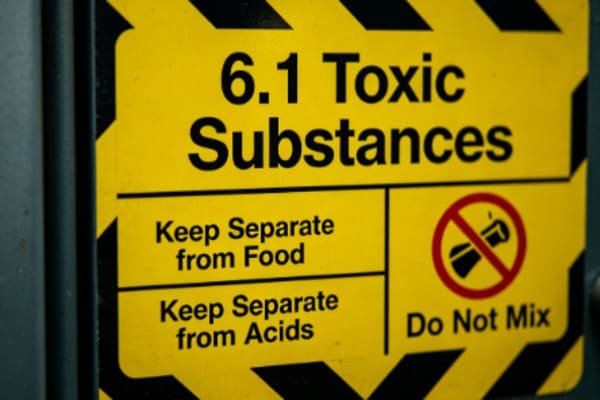
Stowage and segregation are not just about finding a space for your container on the ship. It's a complex puzzle governed by the International Maritime Dangerous Goods (IMDG) Code5. These rules are written based on lessons learned from past accidents. A few years ago, we handled a shipment of pesticides (Class 6.1). The initial loading plan from another party had them stowed too close to a container of organic peroxides (Class 5.2). Our team immediately flagged it. If there had been a leak, the two could have reacted and caused a fire. This is why we don't just trust a plan on paper; we verify it against the IMDG Code.
The Role of the IMDG Code
The IMDG Code is the global rulebook for shipping dangerous goods by sea.6 Its segregation table is the heart of safe stowage. This table tells you exactly how far apart different classes of dangerous goods must be. For Class 6.1, the rules are very strict.
Practical Segregation Examples
Class 6.1 toxic substances must be kept away from many other types of cargo.7 The most critical one is foodstuffs and animal feed. Cross-contamination is a huge risk. They also need to be separated from other dangerous goods that could cause a dangerous reaction. For example, mixing some toxic substances with acids (Class 8) can release deadly toxic gas.8
| Segregation From | Reason | IMDG Requirement |
|---|---|---|
| Class 1 (Explosives) | Prevent toxic release in an explosion. | "Separated from" |
| Class 4.3 (Dangerous when wet) | Prevent toxic gas release if water is present. | "Separated from" |
| Class 5.1 (Oxidizers) | Prevent intensifying a fire. | "Separated from" |
| Class 8 (Corrosives) | Prevent violent reaction, release of toxic gas. | "Separated from" |
| Foodstuffs | Prevent poisoning/contamination. | "Separated away from" |
"Separated from" means in different compartments or holds. "Separated away from" means separated by at least 3 meters horizontally. Ignoring these rules puts lives at risk.
What to do after a Class 6.1 leak – emergency response and documentation to avoid penalties?
A leak has been reported from your container. Panic sets in. Every wrong move could make the situation worse, leading to greater health risks and much higher fines. What is the right response?
After a leak, immediately isolate the area and ensure anyone responding wears the correct Personal Protective Equipment (PPE).9 Notify the carrier and authorities, and contain the spill using materials specified in the SDS. Meticulous documentation of the incident is critical for reporting and avoiding penalties.

No matter how well you prepare, accidents can still happen. What defines a professional shipper or forwarder is how they respond when things go wrong. An effective emergency plan is not a document you file away; it's a script you must be ready to follow instantly. We provide 24/7 emergency support because we know that the first hour after an incident is the most critical. Your response during this time determines whether it's a manageable problem or a full-blown crisis. The key is to have a clear plan before the shipment even leaves your warehouse.
Your Emergency Response Checklist
Your response must be quick, safe, and systematic. The SDS, specifically Section 6, "Accidental Release Measures," is your guide. It details the necessary PPE10, containment methods, and cleanup procedures for your specific product. Your plan should be built around this information.
The Importance of Documentation
As soon as the immediate danger is managed, documentation begins. You need to record everything: the time of the incident, the actions taken, the personnel involved, and the communications made. This information is vital for reporting to port authorities, environmental agencies, and the carrier. Failure to report, or reporting with inaccurate information, can lead to severe penalties that are often far greater than the cost of the cleanup itself.
| Action Step | Description | Key Person |
|---|---|---|
| 1. Isolate | Cordon off the area to prevent unauthorized access and exposure. | On-site Personnel / Carrier |
| 2. Protect | Ensure responders wear correct PPE (gloves, goggles, respirator) as per the SDS. | On-site Personnel / Hazmat Team |
| 3. Notify | Immediately inform the ship's captain, your logistics partner, and relevant authorities. | Shipper / Forwarder |
| 4. Contain | Use spill kits with absorbent materials (e.g., vermiculite, sand) to stop the spread. | Trained Responders |
| 5. Document | Record every detail of the incident and the response actions taken. | Shipper / Forwarder |
Having a reliable partner who can guide you through this process is invaluable.
Conclusion
Many exporters overlook hidden hazards of Class 6.1 shipments. Unqualified packaging and improper stowage often lead to detention and extra fees, so strict IMDG compliance is indispensable. As an experienced forwarder, we focus on standardized Class 6.1 transportation. We offer packaging verification, dangerous goods declaration and customs clearance, with flexible terms including reliable DDP delivery to reduce your shipping risks.
Safety data sheet (SDS/MSDS) — the standardized 16-section document detailing a substance's hazards, transport data, and accidental release measures — *Wikipedia*: https://en.wikipedia.org/wiki/Safety_data_sheet ↩
Hazard Communication Standard, Appendix D — Safety Data Sheets (29 CFR 1910.1200) — official regulation defining SDS content, including Section 14 Transport Information — *U.S. Occupational Safety and Health Administration (OSHA)*: http://www.osha.gov/laws-regs/regulations/standardnumber/1910/1910.1200AppD ↩
UN Recommendations on the Transport of Dangerous Goods — the "Orange Book" establishing UN specification packaging marks and model regulations — *Wikipedia*: https://en.wikipedia.org/wiki/UN_recommendations_on_the_Transport_of_Dangerous_Goods ↩
Package Selection, Marking and Labeling — official guidance on decoding UN specification marks (X, Y, Z) and matching them to packing groups — *U.S. Pipeline and Hazardous Materials Safety Administration (PHMSA)*: https://www.phmsa.dot.gov/sites/phmsa.dot.gov/files/docs/Package_Selection_Marking_Labeling.pdf ↩
IMDG Code (International Maritime Dangerous Goods Code) — the international standard governing the safe sea transport of dangerous goods, including stowage and segregation — *Wikipedia*: https://en.wikipedia.org/wiki/IMDG_Code ↩
International Maritime Organization (IMO) Program — official overview of the IMDG Code and U.S. participation in international maritime dangerous goods regulation — *U.S. Pipeline and Hazardous Materials Safety Administration (PHMSA)*: https://www.phmsa.dot.gov/international-program/international-maritime-organization ↩
Hazard Class 6.1 (Toxic / Poison) — university EHS guidance on shipping requirements and segregation for toxic substances — *Cornell University Environmental Health & Safety*: https://ehs.cornell.edu/shipping-and-transportation/hazardous-materials-shipping/hazard-class-61-toxic-also-poison ↩
Medical Management Guidelines — official toxicological guidance illustrating how toxic substances can react with acids to release deadly gases — *U.S. Centers for Disease Control and Prevention (CDC / ATSDR)*: https://wwwn.cdc.gov/TSP/MMG/MMGDetails.aspx?mmgid=1141&toxid=249 ↩
Emergency Response Guidebook — Protective Action Distances (Background Info) — official guidance on isolation zones and PPE for hazardous material spills — *NOAA CAMEO Chemicals*: https://cameochemicals.noaa.gov/erg_guides/erg_distances_background_info.pdf ↩
Personal protective equipment (PPE) — overview of protective gear (gloves, goggles, respirators) used to guard against hazardous exposure — *Wikipedia*: https://en.wikipedia.org/wiki/Personal_protective_equipment ↩