
2026 Canton Fair Customs Guide: New Clearance Rules, Tax Benefits & Tips for Overseas Exhibitors
Updated: October 14, 2026
International companies attending the 2026 Autumn Canton Fair have new opportunities to simplify customs clearance, reduce exhibition logistics delays, and benefit from improved import tax arrangements.
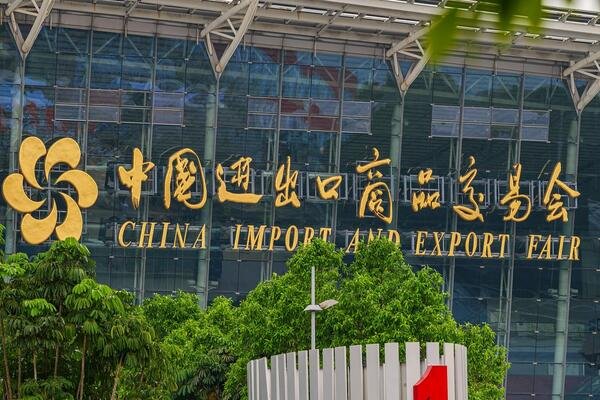
On October 9, Guangzhou Customs announced 12 facilitation measures for the 140th China Import and Export Fair, including a new option for customs inspection at the exhibition venue and streamlined procedures for certain imported exhibits.
For overseas exhibitors, understanding these measures before shipping is essential. The right customs arrangement can help avoid unnecessary handling, unexpected duties, and complications when exhibits are sold or returned after the event.
This guide explains what has changed in 2026, how to import exhibition goods into China, and what foreign companies should prepare.
1. 2026 Canton Fair: Key Dates and New Customs Measures
The 140th Canton Fair takes place in Guangzhou from October 15 to November 4, 2026, across three phases:
| Phase | Dates | Main Focus |
|---|---|---|
| Phase 1 | October 15–19 | Advanced manufacturing, electronics, machinery and related products |
| Phase 2 | October 23–27 | Home products, household goods, gifts and decorations |
| Phase 3 | October 31–November 4 | Textiles, fashion, food, healthcare and consumer products |
The International Pavilion for overseas exhibitors operates during Phases 2 and 3, according to the Canton Fair International Pavilion's official schedule.1
For companies shipping exhibition cargo from abroad, the most relevant customs measures include:
- A new option for inspecting eligible imported exhibits directly at the exhibition venue.
- Priority customs processing for Canton Fair shipments at major Guangzhou entry points.
- Digital declaration and clearance appointment services.
- Simplified procedures for qualifying food, cosmetics and medical devices.
- Tax exemptions for eligible imported exhibits sold during the fair.
Importantly, not all 12 measures are newly introduced. The venue-based inspection arrangement is one of the specific additions for the 140th Canton Fair.
2. New for 2026: On-Site Customs Inspection at the Exhibition Venue
One of the most practical changes concerns where imported exhibition goods can be inspected.
Under the traditional process, shipments selected for inspection may need to undergo customs examination before release and delivery to the exhibition venue.
For the 140th Canton Fair, Guangzhou Customs has introduced an option allowing qualifying shipments to undergo inspection at the fairgrounds.
How does it work?
Where special circumstances justify venue inspection, the China Foreign Trade Centre or its entrusted official exhibition freight service provider can submit a request to Customs.
If the request is approved, the exhibits may be transported to the exhibition venue for inspection and released after satisfactory examination.
This allows customs procedures to be better coordinated with booth setup.
Why it matters for overseas exhibitors:
- Less potential for repeated unpacking and handling of delicate exhibits.
- Better coordination between customs inspection and exhibition installation.
- More flexibility when moving large or difficult-to-handle display equipment.
However, venue-based inspection is not automatic. Customs approval remains necessary, and eligible goods continue to be subject to applicable inspections and quarantine requirements.
Guangzhou Customs also maintains expedited processing arrangements at major entry points, including Guangzhou Baiyun International Airport and Nansha Port.
Companies should confirm the available inspection and clearance arrangements with their appointed exhibition logistics provider before shipment, rather than assuming cargo can be delivered directly to the booth.2
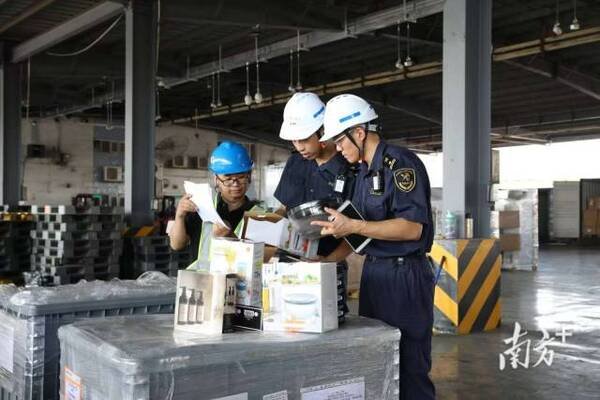 Guangzhou Customs supervising imported exhibits for the 140th Canton Fair at Nansha Port, September 2026.
3. Import Tax Benefits: What Overseas Exhibitors Can Save in 2026
Another important development is China's updated policy for imported exhibits sold at the Canton Fair.
Under the Ministry of Finance, General Administration of Customs and State Taxation Administration's 2026 policy, eligible exhibits sold during the fair may be exempt from:
- Import customs duties
- Import value-added tax (VAT)
- Import consumption tax
The most significant change is that tax-exempt sales limits are now calculated separately for each Canton Fair session, rather than cumulatively across an entire year.
The arrangement applies to Canton Fair events held from 2026 through 2030.3
2026 tax-exempt sales limits
| Exhibit Category | Maximum Tax-Exempt Sales per Exhibitor, per Fair |
|---|---|
| Machinery, electrical equipment and instruments, excluding medical or surgical equipment | 12 units |
| Medical or surgical instruments and equipment | 5 units |
| Pearls, precious stones, precious metals and related products | 5 units, each valued at no more than USD 10,000 |
| Other eligible exhibits | Total sales value of up to USD 20,000 |
Example: An eligible overseas machinery exhibitor could potentially benefit from tax-exempt sales of up to 12 qualifying pieces at one fair and receive a separate allowance at another Canton Fair session in the same year, provided all policy conditions are met.
What is not covered?
The exemption does not apply to prohibited imports, endangered species and related products, tobacco, alcohol, automobiles, or products excluded under China's relevant major technical equipment rules.
Goods sold beyond the applicable limits, and unsold goods retained in China without qualifying for an exemption, remain subject to normal import and tax procedures.
The organizer submits eligible exhibitor and sales information to Guangzhou Customs. Exhibitors should coordinate the required declarations with the organizer or its authorized service provider.
A tax exemption is not permission to sell imported goods without customs formalities. Product-specific licenses and other regulatory requirements may still apply.
4. Temporary Import vs. Permanent Import: Which Should You Choose?
Not every exhibition shipment is intended for sale.
A foreign manufacturer might ship demonstration equipment to Guangzhou, display it for five days, and return it to its home country immediately afterward.
Another exhibitor may wish to sell its display products to a Chinese distributor.
These situations require different customs arrangements.
| Situation | Recommended Customs Approach |
|---|---|
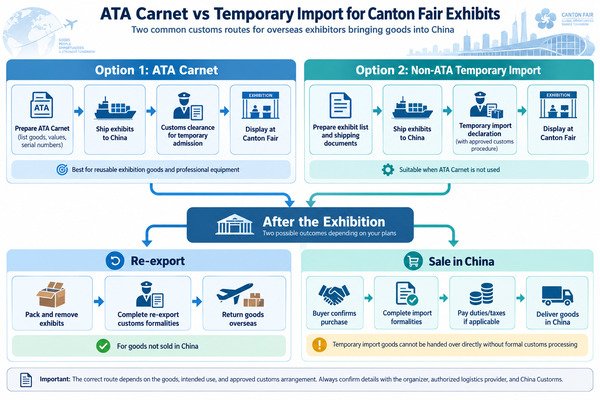
| Exhibits will return overseas after the fair | Temporary admission or an eligible ATA Carnet arrangement |
| Exhibits will be sold or retained in China | Appropriate import formalities, including applicable tax treatment |
| Samples will be consumed or distributed | Check sample-specific requirements and allowances in advance |
| Some exhibits will be sold and others returned | Plan separate post-show disposal procedures for each item |
Using an ATA Carnet
An ATA Carnet is an international customs document that simplifies temporary admission for eligible exhibition goods, commercial samples and professional equipment.4
For the 2026 Canton Fair, Guangzhou Customs confirms that goods admitted under an ATA Carnet must be re-exported within the validity period of the Carnet.
For qualifying non-ATA temporary exhibition goods, the fair's official exhibit-list confirmation can also support relief from submitting a separate customs tax guarantee.
An ATA Carnet is not mandatory for every exhibitor, and the available procedures depend on the goods, intended use and customs arrangements.
Example: Bringing demonstration equipment to Guangzhou
Consider an overseas company shipping two reusable demonstration units to its exhibition booth.
If both units are intended to return home:
- Prepare an accurate exhibit list with descriptions, quantities, values and serial numbers.
- Confirm the suitable temporary admission procedure with the exhibition freight provider.
- Maintain the required customs records during the exhibition.
- Arrange re-export before the applicable customs deadline.
If the company later decides to sell one unit to a Chinese buyer, it must arrange the necessary change in customs treatment and import formalities before the goods are handed over.
Selling or giving away temporarily imported goods without completing the required procedures may create additional duties and compliance risks.
5. Special Rules for Food, Cosmetics and Medical Devices
The 2026 Canton Fair arrangements also provide facilitation for certain regulated product categories.
Food and cosmetics
Prepackaged food and cosmetics imported solely for exhibition display can benefit from simplified inspection arrangements, including exemptions from specified sampling inspections and consignee/consignor registration-document checks.
The relevant exhibition products may also be exempt from applying Chinese-language labels.
For small quantities intended for tasting, trials or trial sales, exhibitors must provide acceptable compliance documentation and undergo Customs' risk assessment.
Food of animal or plant origin that does not ordinarily meet China's market-access requirements may be considered for exhibition under special conditions and approval procedures.
Medical devices
Medical devices intended solely for exhibition display may be exempt from providing Chinese registration or filing certificates under the announced exhibition arrangements.
This does not mean that such devices can automatically be marketed or sold in China.
The key distinction is intended use: displaying a product, distributing free samples, allowing consumption and conducting commercial sales can trigger different customs and regulatory requirements.
Overseas exhibitors in regulated industries should finalize product classification, supporting certificates and any required quarantine approvals before shipping.
6. Customs Clearance Checklist: Before Shipping to Guangzhou
Even with faster clearance measures, missing documents or unclear post-show arrangements can delay a shipment.
Use the following checklist when coordinating with your international freight forwarder and the fair's authorized logistics provider.
| Stage | What to Prepare or Confirm |
|---|---|
| Before booking | Confirm exhibition phase, delivery deadlines, official consignee instructions and cargo acceptance requirements |
| Product review | Verify HS classification, item descriptions and any restricted-goods approvals |
| Documentation | Prepare commercial or pro forma invoice, packing list, transport documents, exhibit list and required certificates |
| Customs procedure | Confirm temporary admission, ATA Carnet or normal import arrangements |
| Transport planning | Select sea or air freight based on cargo size, urgency, cost and customs lead time |
| Before booth delivery | Check whether venue-based inspection is available and approved |
| After the exhibition | Arrange re-export, approved sales clearance, or other authorized disposal of the goods |
For sensitive equipment, include identifying photographs and serial numbers in the shipping records. These details can help match the returning goods to the original customs declaration.
For food, cosmetics, medical devices and other controlled products, build additional time into the shipping schedule for regulatory review.
Exhibitors should also distinguish port arrival from booth-ready delivery. Import clearance, terminal handling, local transport and installation can each affect the final schedule.
For time-sensitive cargo, review available international air freight options only after confirming documentation, cargo acceptance and customs requirements.
7. Entry Tips for Overseas Business Visitors
Cargo clearance is only one part of attending the Canton Fair. Overseas buyers and exhibitors also need to prepare for immigration checks and exhibition registration.
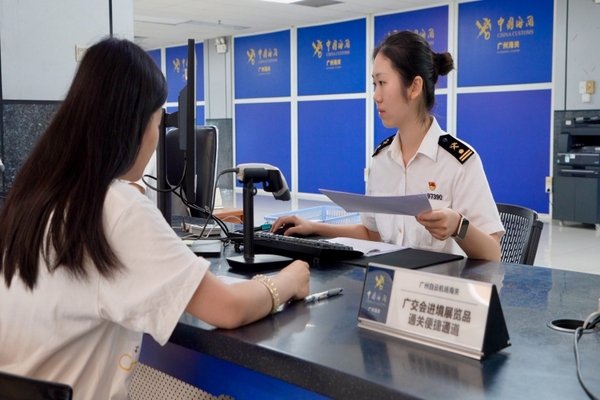
Guangzhou Customs has announced dedicated Canton Fair guest channels at designated passenger entry points for visitors holding valid event credentials or invitation letters.
Separately, China's National Immigration Administration maintains a 240-hour visa-free transit policy for eligible travelers.5
As of October 2026, the policy covers nationals of 57 countries, subject to conditions including an eligible entry port and confirmed onward travel to a third country or region.
Travelers should check the applicable immigration rules for their nationality and itinerary. A Canton Fair invitation letter does not automatically grant visa-free entry.
Visitors should also arrange their exhibition badges in advance. The Canton Fair recommends overseas buyers use pre-registration and available off-site badge services to reduce waiting time at the venue.6
8. Frequently Asked Questions
Q1. Can overseas exhibitors import products into China duty-free for the 2026 Canton Fair?
Eligible temporary exhibition goods may be admitted under applicable temporary import procedures without immediate payment of normal import duties and taxes, subject to the relevant rules. Separately, qualifying exhibits sold during the fair may benefit from the 2026 tax-exempt sales allowances. These are different arrangements and should not be confused.
Q2. Can I sell my exhibition samples to Chinese customers?
Yes, if the products satisfy applicable import requirements and the required customs procedures are completed. Qualifying sales may receive a tax exemption within the prescribed limits. Exhibits under temporary admission must not simply be handed over to buyers without appropriate customs processing.
Q3. Do I need an ATA Carnet for every shipment?
No. An ATA Carnet is one option for eligible temporary exhibition goods. Non-ATA temporary admission and other import arrangements may also be available. The most suitable choice depends on whether the goods will be returned, sold, consumed or otherwise disposed of.
Q4. Can I bring commercial samples in my checked luggage?
Not all commercial samples qualify as ordinary personal belongings. China applies personal-use and reasonable-quantity rules to travelers' baggage. Commercial quantities, high-value demonstration goods or regulated products may require customs declaration and cargo-specific procedures. Confirm the requirements before traveling.
Q5. What if my exhibits cannot be returned immediately after the fair?
Temporarily admitted goods must be re-exported within their applicable customs deadline. If more time is needed, request an extension through the relevant customs procedures before the deadline. Depending on eligibility, certain non-ATA exhibition goods may also be transferred to an approved customs-supervised or bonded facility after the exhibition.
Conclusion: Faster Customs Clearance Still Requires Early Planning
The 2026 Canton Fair customs measures make Guangzhou more accessible to international exhibitors, particularly through venue-based inspection, expedited processing and improved tax arrangements.
However, successful exhibition logistics depend on more than the arrival of a shipment.
Companies should decide how their goods will enter China, what will happen to them after the exhibition, and which documents or approvals are needed before dispatch.
For overseas exhibitors, the best approach is to plan customs clearance and post-show logistics together—not as separate tasks.
Need Help Shipping Exhibition Goods to China?
Whether you are importing display products, moving demonstration equipment or arranging international return freight, advance coordination can reduce unnecessary handling and customs delays.
Deeplinker provides international sea and air freight solutions and supports businesses with shipping documentation and customs coordination.
References
Note: Customs treatment depends on the goods and the approved declaration procedure. Exhibitors should confirm shipment-specific requirements with the organizer, the authorized freight service provider and China Customs before dispatch.
Canton Fair — [International Pavilion: Exhibition Schedule and Categories](https://cief.cantonfair.org.cn/). ↩
Guangzhou Customs — [Official Notice on Customs Clearance Guidelines and Facilitation Measures for the 140th Canton Fair](https://guangzhou.customs.gov.cn/guangzhou_customs/2026-10/10/article_2026101008485696029.html), October 9, 2026. See also [General Administration of Customs: 12 Facilitation Measures](https://www.customs.gov.cn/customs/2026-10/10/article_2026101015044019645.html). ↩
Ministry of Finance of China — [Notice on Tax Incentives for Imported Exhibits Sold During the Canton Fair, 2026–2030](https://gss.mof.gov.cn/gzdt/zhengcefabu/202602/t20260203_3983200.htm), Cai Guan Shui [2026] No. 24. ↩
International Chamber of Commerce — [ATA Carnet: Temporary Admission of Goods](https://iccwbo.org/world-chambers-federation/chamber-services/ata-carnet/). ↩
National Immigration Administration of China — [Visa-Free Transit Policies](https://en.nia.gov.cn/n147418/n147463/c183412/content.html), updated August 20, 2026. ↩
Canton Fair — [Official Overseas Buyer Badge and Attendance Guide](https://www.cantonfair.org.cn/en-US/buyerguide). ↩