
The European Union has a common customs system, but does that mean importing goods through Germany, Spain or Poland follows exactly the same process?
Not necessarily. While EU member states share the same customs legislation and common tariff framework, customs inspections, national declaration systems, VAT arrangements and practical clearance procedures can differ.
For companies importing goods from China, these differences can affect documentation, clearance costs, delivery schedules and overall supply chain planning.
Understanding how EU customs clearance works across different member states can help importers avoid unnecessary delays and make better logistics decisions.
1. What Customs Rules Are the Same Across the EU?
All 27 EU member states operate under a common customs framework established by the Union Customs Code (UCC).
This framework provides shared rules for importing, exporting and moving goods through the EU customs territory.
The main harmonized elements include:
- Common Customs Tariff: EU countries apply common customs duty rules to imports from outside the EU.
- HS/CN Classification: Goods are classified using the Harmonized System and the EU's Combined Nomenclature.
- EORI Registration: Economic operators use an EORI number for identification in EU customs activities.
- Customs Procedures: Import clearance, customs transit, warehousing and other procedures follow EU-wide legislation.
- Customs Valuation and Origin Rules: Common legal principles determine customs value and origin treatment.
For example, an industrial machine imported from China should not face a different standard EU customs duty rate simply because it enters through Germany rather than Spain, assuming the classification, origin, customs value and applicable measures are the same.
However, a common legal framework does not mean that every customs declaration receives identical treatment.
The EU's customs legislation is implemented through national customs administrations, and individual shipments may be subject to different checks.
Source: European Commission – Union Customs Code

2. Why Can Customs Checks Differ Between EU Member States?
Two shipments containing identical products may experience different clearance procedures depending on the declaration, importer, risk profile and customs office involved.
There are three important reasons.
Different Risk Assessments
EU customs authorities operate within a common risk management framework, but national authorities are responsible for conducting checks and enforcing customs requirements.
Customs may examine factors such as:
- Product classification and description
- Declared customs value
- Country of origin
- Importer's compliance history
- Product safety and regulatory requirements
- Supporting commercial documents
For example, a shipment of electrical equipment may be released after a documentary review, while another shipment of similar goods may be selected for physical inspection.
This does not automatically mean one country's customs authority is stricter. The underlying risk indicators and declaration circumstances may be different.
Additional Document Requests
Customs authorities may request supporting information when they need to verify a declaration.
Depending on the goods, this may include:
- Technical product specifications
- Proof of origin
- Purchase contracts or payment records
- Product conformity documentation
- Evidence supporting the declared customs value
Incomplete or inconsistent information can delay release regardless of the country of import.
National Customs Systems
The EU has made substantial progress toward digital customs harmonization.
According to the European Commission's 2026 UCC Work Programme progress update, 96% of national systems and 100% of central systems had been deployed by the end of 2025.
However, some country- and project-specific implementation gaps remained.
This means importers and customs brokers must still understand the relevant national electronic systems and procedures.
Source: European Commission – Union Customs Code Work Programme
Key takeaway: Different customs checks do not necessarily indicate different customs laws. They may reflect risk assessment, supporting documentation or operational procedures.
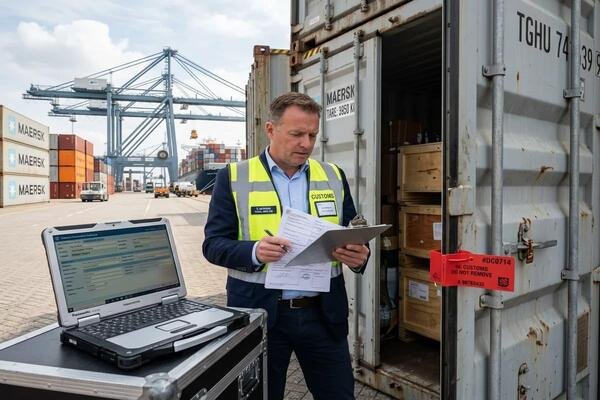
3. Germany vs. Spain vs. Poland: What Should Importers Compare?
Germany, Spain and Poland are important gateways for goods entering the European market.
For companies importing from China, choosing between these destinations involves more than comparing ocean freight rates.
Each country operates under EU customs legislation, but importers should confirm the relevant national declaration procedures, VAT arrangements and inland logistics requirements.
Customs Clearance Comparison
| Comparison | Germany | Spain | Poland |
|---|---|---|---|
| Major container gateway | Hamburg | Valencia | Gdańsk |
| Customs authority | German Customs (Zoll) | Spanish Tax Agency (AEAT) | National Revenue Administration (KAS) |
| Customs framework | EU Union Customs Code | EU Union Customs Code | EU Union Customs Code |
| National electronic procedures | German customs systems, including ATLAS | Spanish electronic customs declaration services | Polish customs services, including PUESC |
| Standard VAT rate | 19% | 21% | 23% |
| Customs guarantees | Depends on customs procedure and applicable authorization | Depends on customs procedure and applicable authorization | Depends on customs procedure and applicable authorization |
| Logistics considerations | Germany and Central Europe distribution | Spain and Southern Europe distribution | Poland and Central/Eastern Europe distribution |
Note: VAT figures show standard national rates, not necessarily the rate applicable to every product. Reduced rates, exemptions, import VAT accounting arrangements and other conditions may apply.

Import VAT Can Affect Cash Flow
Although EU customs duty rules are harmonized, VAT is a separate consideration.
For example, the standard VAT rates in Germany, Spain and Poland differ.
However, the actual VAT treatment depends on the goods, importer, place of importation and applicable national arrangements.
Importers should therefore check whether VAT must be paid at importation or whether an eligible accounting or deferment arrangement is available.
Customs Guarantees Are Not Simply Country-Based Fees
Some customs procedures, including certain transit and special procedures, may require a guarantee.
The requirement depends on the procedure, customs debt, applicable authorization and available simplifications.
Importers should not assume that one EU country always requires a higher customs guarantee than another.
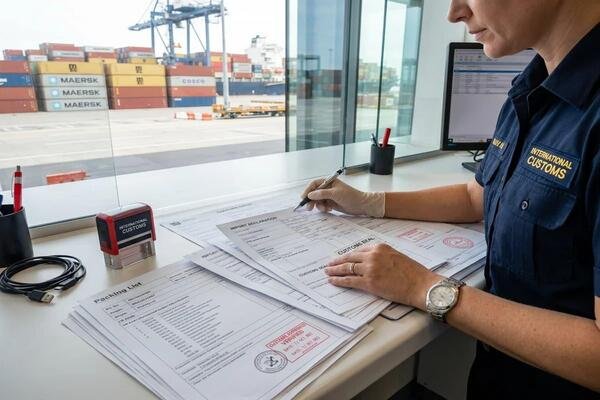
Can Goods Enter Through One Country and Clear Customs in Another?
Yes, where the relevant customs procedures and conditions are satisfied.
For example:
China → Hamburg → Customs Transit → Poland → Import Clearance
Goods may enter the EU through Hamburg and move under an appropriate customs transit procedure to Poland, where import clearance takes place.
This can allow import formalities to be completed at a destination other than the first EU entry point.
However, the importer must arrange the correct transit declaration, guarantee where required and customs documentation.
Source: European Commission – Customs Transit
For country-specific procedures, importers can consult:
4. How Do Different Clearance Arrangements Affect Shipping Costs and Delivery Times?
The cheapest ocean freight rate does not always result in the lowest total import cost.
Consider a hypothetical example.
A US-based trading company purchases USD 80,000 worth of industrial equipment from China, with final delivery required at a warehouse in southern Germany.
The importer considers three routing options:
| Option | Shipping Route | Main Considerations |
|---|---|---|
| A | China → Hamburg → Southern Germany | Ocean freight, German import arrangements and inland trucking |
| B | China → Valencia → Southern Germany | Ocean freight, Spanish import or transit arrangements and longer inland delivery |
| C | China → Gdańsk → Southern Germany | Ocean freight, Polish import or transit arrangements and cross-border inland transport |
All three options may be feasible, but their total costs and operational requirements can differ.
Customs Inspections and Storage
A documentary check or physical inspection may delay cargo release.
Depending on the circumstances, this can result in:
- Terminal storage charges
- Container demurrage or detention
- Additional handling costs
- Trucking rescheduling
- Delayed warehouse delivery
These costs depend on the shipment and service providers, not simply the country.
VAT and Financial Planning
Different import VAT arrangements can affect working capital.
A business that must pay VAT immediately at importation may face a different cash-flow requirement from an eligible importer using a deferred or postponed accounting arrangement.
The appropriate treatment should be confirmed with a customs broker or tax adviser.
Inland Transportation
A lower ocean freight quotation may be offset by higher inland transportation costs.
For example, shipping to Valencia may offer a competitive sea freight rate, but the final warehouse in southern Germany could require a longer road or intermodal movement.
Importers should compare the complete transportation chain rather than the port-to-port quotation alone.
Compare the Total Landed Logistics Cost
A useful comparison should include:
Ocean Freight + Applicable Surcharges + Customs Brokerage + Duties + VAT Cash-Flow Considerations + Storage + Inland Transportation
For goods that are time-sensitive, the reliability of customs clearance and final delivery should also be considered.
The best EU entry route is not necessarily the port with the lowest ocean freight rate. It is the route that provides the most suitable combination of cost, compliance and delivery reliability.
5. Pre-Shipment EU Customs Checklist for China Exporters and Importers
Before goods leave China, exporters and importers should confirm the customs arrangements for their intended EU destination.
Cargo and Classification
- [ ] Confirm the correct HS/CN classification and applicable TARIC measures.
- [ ] Verify the country of origin.
- [ ] Check applicable customs duties and trade measures.
- [ ] Prepare accurate commercial invoices and packing lists.
- [ ] Confirm whether product-specific compliance documents are required.
Importer and Customs Procedures
- [ ] Confirm the importer of record and relevant EORI registration.
- [ ] Identify the country where import clearance will take place.
- [ ] Check whether a customs transit procedure is needed.
- [ ] Confirm the applicable import VAT arrangements.
- [ ] Review customs guarantee requirements where applicable.
- [ ] Coordinate declaration requirements with the local customs broker.
Freight and Delivery Planning
- [ ] Confirm the arrival port and final delivery address.
- [ ] Compare ocean freight and inland transportation costs.
- [ ] Check terminal storage and container free-time conditions.
- [ ] Allow sufficient time for possible customs checks.
- [ ] Confirm warehouse receiving arrangements.
Completing these checks before departure can help reduce document discrepancies, avoidable delays and unexpected logistics costs.
FAQ
Do all EU countries follow the same customs rules?
Yes. EU member states operate under a common customs framework established by the Union Customs Code.
However, national customs authorities manage day-to-day enforcement, and practical clearance procedures may differ depending on risk assessment, electronic systems, documentation and the individual shipment.
Can the same goods face different customs checks in Germany, Spain and Poland?
Yes. Similar goods may be subject to different documentary checks, physical inspections or requests for supporting information.
However, this does not mean that one country is automatically stricter than another. Customs decisions depend on the shipment's risk profile, declaration details and applicable requirements.
Can I import goods through one EU country and clear customs in another?
Yes, under the appropriate customs procedure.
For example, non-EU goods may enter through Germany and move under customs transit to Poland for import clearance.
The importer must meet the relevant transit, documentation and guarantee requirements.
Conclusion
The European Union operates under a common customs framework, but customs clearance experiences are not necessarily identical across all member states.
For companies importing goods from China, the practical differences often involve customs checks, national declaration procedures, VAT arrangements, guarantees and inland logistics.
When comparing Germany, Spain and Poland as potential entry points, importers should look beyond the ocean freight rate and evaluate the full import process.
The most effective strategy is to confirm the customs procedure, prepare accurate documents and coordinate with the relevant customs broker before the shipment leaves China.
Careful planning can help reduce avoidable delays, improve cost visibility and support more reliable delivery across the European market.