
Shipping to Poland is getting tricky. New customs rules are causing confusion. Understanding these changes is the only way to avoid costly delays and fines for your cargo.
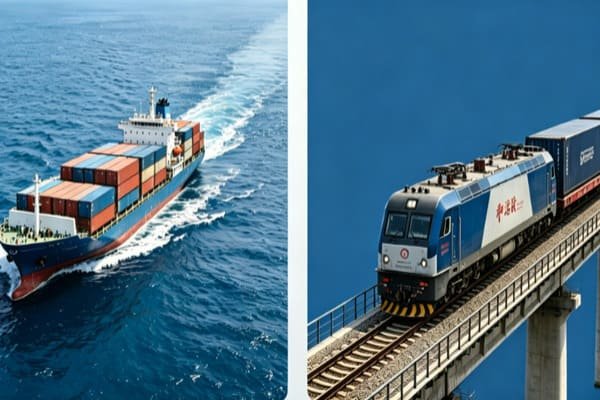
The EU's NCTS6 system has been delayed, so Poland now requires a dual declaration using both NCTS5 and the new ICS2 system1. This applies to all goods entering or transiting through Poland by sea and rail, making compliance more complex for shippers.
Navigating these new regulations feels overwhelming, I know. A small mistake in your paperwork can now cause major headaches, stopping your shipment in its tracks. But don't worry, you don't have to become a customs expert overnight.2 We can break down exactly what you need to do to keep your goods moving smoothly. Let's look at why these changes happened and what they mean for your business.
Why was NCTS6 delayed and what are Poland’s new transitional rules?
Wondering why the new NCTS6 system was suddenly postponed? This delay creates uncertainty and introduces new, temporary rules that you must follow to avoid issues at the border.
The delay is due to technical challenges in rolling out the new IT system across the entire EU. As a temporary solution, Poland's customs authority now mandates a transitional process. Shippers must use the older NCTS5 system alongside the new ICS2 security filing system.

The plan was for all EU member states to switch to the New Computerised Transit System Phase 6 (NCTS6)3 to streamline transit declarations. However, developing and implementing such a huge IT project across 27 countries is a massive task.4 Several countries, including Poland, faced technical hurdles and were not ready by the deadline. Instead of risking a chaotic launch, the EU allowed for a delay.
Poland’s response was to create a bridge solution. They couldn't just stick with the old system because new EU security rules, known as the Import Control System 2 (ICS2), were already active. This new system requires more detailed data about your cargo before it even arrives5. So, Poland now requires you to do two things: file a security declaration in ICS2 and a separate transit declaration in NCTS5. This "dual declaration" is the new normal until NCTS6 is finally ready.
Here's how the systems compare:
| Feature | Old System (NCTS5 only) | Planned System (NCTS6) | Current Transitional System |
|---|---|---|---|
| Primary Goal | Monitor transit of goods | Streamline transit & enhance data | Fulfill security & transit rules |
| Security Filing | Basic data included | Integrated with ICS2 data | Separate ICS2 filing required |
| Data Required | Standard cargo details | More detailed HS codes, parties | Detailed data split across two systems |
| Complexity | Low | Medium | High |
How do you comply with the NCTS5+ICS2 dual declaration for rail and sea cargo?
Are you confused about what "dual declaration" actually means for your shipments? A single error in this new two-part process is enough to get your cargo detained by customs.
You must now submit two separate electronic declarations. First, an Entry Summary Declaration (ENS) is filed in the ICS2 system for security screening6. Second, a standard transit declaration is filed in the NCTS5 system. Both must be accurate and consistent to ensure clearance.

This new process adds a layer of work, but it's manageable once you understand the steps. I've seen clients get tripped up by this, so let's make it clear. The key is to treat them as two connected but separate tasks.
First, you have the ICS2 Entry Summary Declaration (ENS). This is all about security. You must submit detailed information about your goods to the EU customs authorities before they are loaded onto the vessel or train heading to Poland. This includes precise HS codes, detailed descriptions of the goods (not just general terms), and information on the seller and buyer.7 The carrier is often responsible for this filing, but as the shipper, you must provide them with perfect data.
Second, you have the NCTS5 Transit Declaration. This is the document that allows your goods to move under customs control through Poland and to their final destination in the EU. It uses much of the same information as the ICS2 filing. The biggest risk here is inconsistency. If the HS code, cargo weight, or consignee details on your NCTS5 declaration don't match your ICS2 filing exactly, it will raise a red flag and likely lead to an inspection and delay.
Here's a breakdown of the required data for each system:
| Data Point | ICS2 (Security) | NCTS5 (Transit) |
|---|---|---|
| Submission Time | Pre-loading (Sea) or Pre-arrival (Rail) | Upon arrival at EU border |
| Who Files | Carrier or Freight Forwarder | Freight Forwarder or Customs Agent |
| Goods Description | Highly detailed and specific | Standard commercial description |
| HS Code | Minimum 6-digit code required | Required |
| Parties Involved | Consignor, Consignee, Notifying Party | Consignor, Consignee |
What are some cost-saving tips to avoid detention at the Poland border?
Are you worried about unexpected penalties and storage fees at the border? These extra costs can quickly eat into your profits and damage your delivery timeline, frustrating your customers.
The best way to save money is to focus on perfect data accuracy and timely submissions for both declarations. Partnering with a logistics expert who manages this process is the most effective way to prevent costly mistakes, detentions, and fines at the Polish border.
Over my 20 years in logistics, I've learned that almost every costly customs problem starts with a small data error. With this new dual declaration system in Poland, the risk is even higher. But you can protect your business.
I remember a client, a brand owner from Poland, who was shipping a container of new outdoor equipment from China. A simple typo in the consignee's address between the ICS2 and NCTS5 filings caused a mismatch. The system flagged it automatically. His container was held for two weeks while we worked with Polish customs to correct the paperwork. The detention fees and delivery delay were frustrating for him. This experience taught us just how critical 100% accuracy is now.
Here are some practical tips to keep your cargo moving and avoid costs:
- Double-Check All Data: Before you send any documents to us or your carrier, verify everything. Check the HS codes, product descriptions, quantities, and consignee information on your commercial invoice against your packing list.8 Consistency is everything.
- Understand Deadlines: The ICS2 declaration must be filed before your cargo is loaded. Don't leave document preparation to the last minute. Give us the information early so we have time to review it and file correctly.
- Prepare Your Documents: Have clean, digital copies of your commercial invoice, packing list, and any required certificates (like CE marking or Certificate of Origin) ready.9 If customs does select your shipment for inspection, having these ready will speed up the process significantly.
- Work With an Expert Partner: This is the most important tip. Instead of trying to master these complex rules yourself, let a team that handles this every day manage it for you. At Deeplinker, we've already integrated the dual declaration process into our workflow. We stabilize your shipping schedule by ensuring your customs paperwork is flawless from the start.
Conclusion
Navigating Poland's new customs rules is a challenge. By partnering with an expert like Deeplinker, you can ensure full compliance, avoid costly delays, and focus on growing your business.
New Computerised Transit System (NCTS) — official overview of the EU transit declaration system and its phases — *European Commission, Taxation and Customs Union*: https://taxation-customs.ec.europa.eu/online-services/online-services-and-databases-customs/new-computerised-transit-system-ncts_en ↩
Customs — the government authority responsible for controlling the flow of goods across borders and collecting duties — *Wikipedia*: https://en.wikipedia.org/wiki/Customs ↩
New Computerised Transit System Phase 6 (NCTS6) — the planned upgrade to streamline EU transit declarations — *European Commission, Taxation and Customs Union*: https://taxation-customs.ec.europa.eu/online-services/online-services-and-databases-customs/new-computerised-transit-system-ncts_en ↩
Member state of the European Union — the 27 sovereign countries party to the EU treaties — *Wikipedia*: https://en.wikipedia.org/wiki/Member_state_of_the_European_Union ↩
Import Control System 2 (ICS2) — the EU's advanced cargo security and safety pre-arrival declaration program — *European Commission, Taxation and Customs Union*: https://taxation-customs.ec.europa.eu/customs/customs-security/import-control-system-2_en ↩
Transition to ICS2 Release 3 — official notice on Entry Summary Declaration (ENS) filing and temporary derogations for some member states — *European Commission, Taxation and Customs Union*: https://taxation-customs.ec.europa.eu/news/transition-ics2-release-3-complete-limited-temporary-derogations-some-member-states-2025-08-29_en ↩
Harmonized System (HS Code) — the international standardized numerical classification system for traded products — *Wikipedia*: https://en.wikipedia.org/wiki/Harmonized_System ↩
Commercial invoice — a key customs document declaring the value, description, and parties of a shipment — *Wikipedia*: https://en.wikipedia.org/wiki/Commercial_invoice ↩
CE marking — a certification mark indicating conformity with EU health, safety, and environmental standards — *Wikipedia*: https://en.wikipedia.org/wiki/CE_marking ↩