
Shipping oversized cargo feels like a minefield of rules. One misstep can lead to costly delays and damage. Understanding these complex regulations is your first step toward a smooth shipment.
The safest way to ship oversized or Out-of-Gauge (OOG) cargo is by following specific loading and transport rules. This involves using special containers like Flat Racks1, securing the cargo with certified lashing, ensuring proper weight distribution, and obtaining all necessary permits for road and sea transit.
Navigating the world of oversized cargo can be a real headache. I've seen countless businesses try to handle it themselves, only to get tangled in a web of port regulations, carrier requirements, and transport laws. It's a specialized field for a reason. But don't worry, you don't have to become an expert overnight. I'm here to break down the essentials for you. With over 15 years in this industry, I've learned that a little knowledge goes a long way in preventing big problems. Let’s walk through what you absolutely need to know.
Common OOG shipping mistakes and container transit rules you must know?
You think you've planned your oversized shipment perfectly. But a small, overlooked mistake can bring everything to a halt, costing you time and money. Knowing these common errors is crucial.
The biggest mistakes are poor weight distribution, using the wrong securing materials, and incomplete paperwork. Key transit rules you must follow include port-specific handling regulations, road weight and height limits for inland transport, and carrier requirements for lashing and securing your cargo before it's accepted.
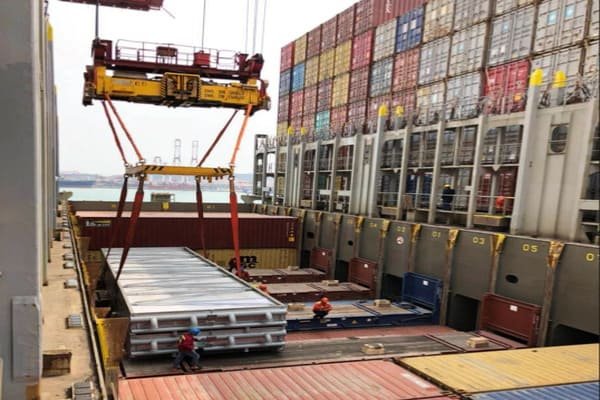
Let's dive deeper into these pitfalls. I once had a client who tried to ship a large, custom-built generator. They assumed securing it was simple and used standard ropes. When the container arrived at the port, it was immediately rejected. The port authorities required certified lashing chains and a professional lashing certificate2, which the client didn't have.3 This single mistake resulted in a two-week delay, storage fees, and the cost of hiring a team to re-secure the cargo properly. It was a stressful and expensive lesson in the importance of getting things right the first time. You can avoid this by understanding the rules before you start.
Critical Mistakes to Avoid
When shipping OOG cargo, small errors can have huge consequences. Paying attention to these details is not just about following rules; it's about protecting your valuable goods.
- Improper Lashing: Using materials that are not strong enough or certified for the cargo's weight.
- Uneven Weight Distribution: Placing the cargo off-center, which can make the container unstable and dangerous to lift and transport.
- Incorrect Documentation: Missing paperwork like a lashing certificate or special transport permits can stop your shipment at the port or border.
Key Transit Rules You Can't Ignore
Every part of the journey has its own set of rules. Ignoring them is not an option.
| Rule Category | What You Need to Know | Why It's Important |
|---|---|---|
| Port Regulations | Each port has unique rules for accepting and handling OOG cargo. Some may require 48-hour pre-notification. | Non-compliance leads to rejection at the gate, causing delays and extra storage charges. |
| Carrier Requirements | Shipping lines have strict standards for how cargo must be secured on their vessels. | They will refuse to load any container they deem unsafe, protecting their vessel and other cargo. |
| Inland Transport Laws | Every country and state has different laws for truck weight, height, and width on public roads. Special permits are often needed. | Fines for violations are steep, and your cargo could be impounded until it complies with local laws. |
How to load oversized cargo properly?
You have a large, heavy piece of machinery to ship. Loading it wrong could lead to it shifting, breaking, or even falling during transit. Following a proven process is essential.
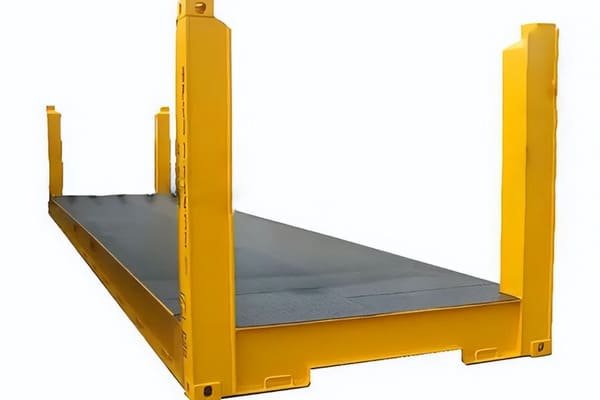
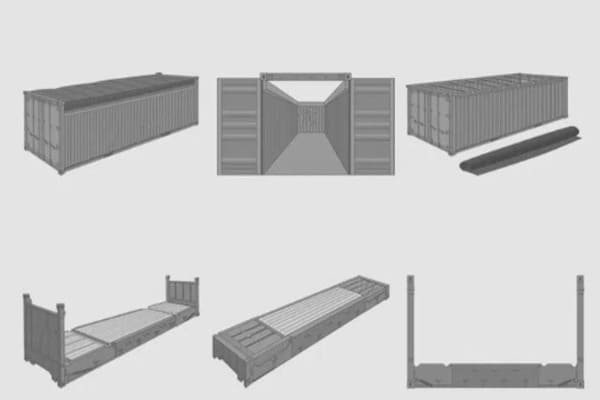
Properly loading oversized cargo starts with choosing the right container, like a Flat Rack or Open Top. You must then carefully position the cargo to distribute its weight evenly. Finally, use certified blocking, bracing, and lashing methods to completely immobilize the cargo for its journey.
Getting the loading process right is both a science and an art. It's about more than just tying things down. It's about understanding the physics of your cargo. Think about the Center of Gravity (COG). A tall, narrow item has a high COG, making it more likely to tip over.4 We once shipped a tall processing vessel for a chemical plant. Its COG was dangerously high. To solve this, my team designed and built a custom steel cradle. This cradle widened the base and lowered the overall COG, making the entire package stable and safe for ocean transit. It’s this kind of detailed planning that separates a successful shipment from a disaster.
Step 1: Choosing the Right Equipment
The container you choose is the foundation of a safe shipment. The wrong choice will cause problems before you even start.
- Flat Rack (FR) Container: Best for cargo that is too wide or too tall. It has no side walls and either no end walls or collapsible end walls.
- Open Top (OT) Container5: Similar to a standard container but with a removable tarpaulin roof. It's perfect for cargo that is over-height and needs to be loaded by a crane from the top.
- Platform Container: A simple, flat base with no walls or roof, designed for the heaviest and most awkward-shaped cargo.
Step 2: The Art of Lashing and Securing
This is where expertise really matters. The goal is to make the cargo and the container one solid unit.
- Blocking & Bracing: Using lumber and other materials to build a frame around the cargo, preventing any sliding or shifting.
- Lashing: Using heavy-duty, certified materials to tie the cargo down to the container's strong points. The type of lashing depends on the cargo's weight and shape.
| Securing Method | Material Used | Best For |
|---|---|---|
| Top-Over Lashing | Polyester Straps | Securing stable, boxy items by pressing them down. |
| Direct Lashing | Chains, Wire Ropes | Holding heavy, irregular items with strong anchor points in place. |
| Loop Lashing | Straps or Wires | Preventing items from sliding sideways. |
Step 3: Verifying with a Cargo Survey
For high-value or complex OOG shipments, a professional marine survey is a must.6 A certified surveyor will inspect the loaded container to ensure all securing methods meet international standards. They will issue a lashing certificate, which is often required by ports and shipping lines as proof of safety. Don't skip this step; it's your ultimate quality check.
How to ship oversized cargo smoothly?
Your cargo is finally loaded and secured. But the journey from your factory to the final destination is filled with potential hurdles. A smooth shipment depends on excellent coordination and planning.
For a smooth shipment, you need a comprehensive plan. This includes pre-booking special equipment, coordinating with all parties like the port and carrier, preparing all documents perfectly, and having a backup plan. The easiest way to ensure this is to work with an experienced freight forwarder.

Think of shipping oversized cargo like conducting an orchestra. You have the trucker, the port, the customs office, the shipping line, and the receiver. If one of them plays out of tune, the whole performance is ruined. You could try to be the conductor yourself, calling each one and managing every detail. But what happens when the port suddenly changes its schedule, or customs requests an unexpected document? This is where a partner like Deeplinker comes in. We have been conducting this orchestra for over 15 years. We have established relationships and direct lines of communication. We anticipate problems and solve them before they affect your shipment. Instead of you making five different phone calls to figure out a problem, you just make one call to us. We handle the rest. This simplifies a very complex process and gives you peace of mind.
The Importance of a Detailed Route Plan
A smooth journey doesn't happen by accident. It starts with a solid plan that considers every step.
- Inland Transport: Before the container even gets to the port, you need to plan the trucking route. This involves checking for low bridges, narrow roads, and weight-restricted areas. You'll likely need special permits, which can take time to get7.
- Port Coordination: We communicate with the port terminal well in advance to book a time slot for your OOG container. Special equipment like a heavy-lift crane might be needed, and that has to be scheduled.
- Carrier Selection: Not all shipping lines accept all types of OOG cargo on all routes. We select the right carrier that has the experience and equipment to handle your specific shipment safely.
Documentation: Your Passport to a Smooth Journey
Paperwork is probably the most common cause of shipping delays. For OOG cargo, the requirements are even stricter.
| Document | Purpose | Who Requires It |
|---|---|---|
| Bill of Lading (B/L) | The main transport contract. | Carrier, Customs, Receiver |
| Lashing Certificate | Proof that the cargo is secured safely. | Port, Carrier |
| Cargo Survey Report | Detailed report on the cargo and how it was loaded. | Insurance Company, Carrier |
| Route Survey / Transport Permit | Permission to move oversized cargo on public roads. | Local Transport Authorities |
| Customs Declaration | Details of the goods for import/export clearance. | Customs Authorities |
Having all these documents prepared accurately and submitted on time is non-negotiable. An expert forwarder manages this entire process, ensuring every 'i' is dotted and every 't' is crossed so your cargo keeps moving.
Conclusion
Oversized cargo shipping involves many complex rules. But you don't need to be the expert. Partner with a professional to handle the complexity, so you can focus on your business.
Intermodal container — including specialized types such as flat racks used for oversized cargo — *Wikipedia*: https://en.wikipedia.org/wiki/Intermodal_container ↩
CTU Code (Code of Practice for Packing of Cargo Transport Units) — international guidelines on cargo securing and lashing certificates — *International Plant Protection Convention (IPPC) / IMO-ILO-UNECE*: https://www.ippc.int/sites/default/files/documents/1362665459_CTU_Code_Draft_CoP_2013_v1.pdf ↩
Lashing (ropework) — the technique of securing cargo with ropes, chains, or straps to prevent movement — *Wikipedia*: https://en.wikipedia.org/wiki/Lashing_(ropework) ↩
Understanding Cargo Center of Gravity and Stability — demonstration of how a high center of gravity affects tipping — *YouTube*: https://www.youtube.com/watch?v=g8DdBCevC1s ↩
Intermodal container (Open Top type) — a container with a removable tarpaulin roof for crane loading of over-height cargo — *Wikipedia*: https://en.wikipedia.org/wiki/Intermodal_container ↩
Marine surveyor — a professional who inspects cargo, loading, and securing to certify compliance with safety standards — *Wikipedia*: https://en.wikipedia.org/wiki/Marine_surveyor ↩
Transportation Permit Application Process (TPAP) — official process for obtaining oversized-load road transport permits — *Los Angeles County Department of Public Works*: https://dpw.lacounty.gov/spats/public/tpap.cfm ↩