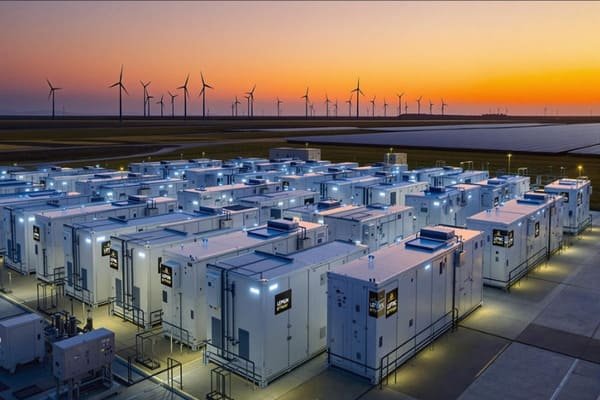

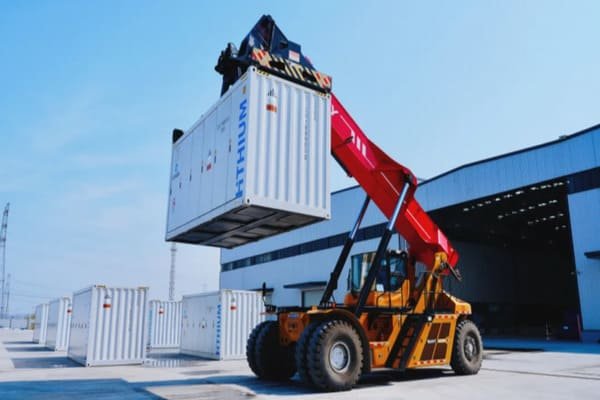
Shipping energy storage cabinets feels complex. Relying on their built-in fire systems seems logical, but this common mistake leads to rejected shipments and huge safety risks during transit.
No, they cannot. A cabinet's built-in fire system is a reactive measure for thermal runaway1. Proper transit protection, including packaging, lashing, and SOC control, is a proactive strategy to prevent the physical shocks and temperature changes that could cause a fire2 in the first place.
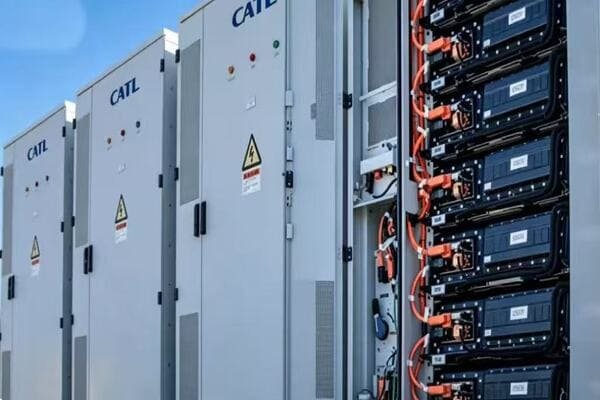
This distinction between reacting to a fire and preventing one is crucial. Many shippers don't fully grasp this difference, leading to costly errors. Let's break down why these two systems serve completely different, yet equally vital, roles in ensuring your valuable cargo arrives safely. It's time to look closer at what each system actually does.
What is the core function difference between a cabinet's built-in fire system and transit protective measures?
It's easy to think a fire system covers all safety. But this thinking overlooks the real dangers during shipping. Let's clearly define the different jobs of these two safety systems.
A built-in fire system is the last line of defense3. It activates after a fire has started to try and contain it. Transit protection is the first line of defense, designed to prevent the conditions—like impacts or overheating—that could ignite a fire during the journey.
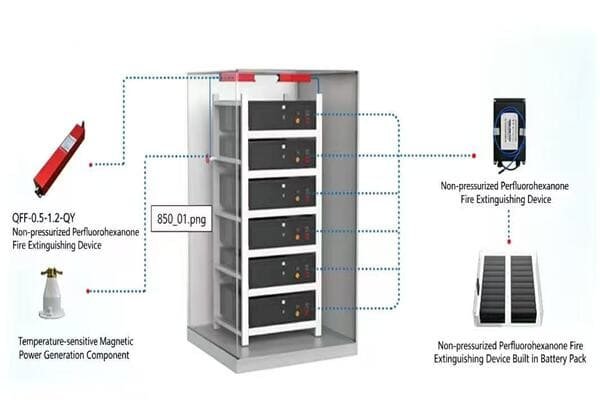
Based on my 20 years in logistics, preventing the initial problem is always better than managing the disaster that follows. The difference is about being proactive versus reactive. Think of it like a seatbelt versus an airbag. The seatbelt (transit protection) holds you in place to prevent injury during a sudden stop. The airbag (built-in fire system) only deploys after a crash has already happened to lessen the damage. One is for prevention, the other for damage control. A built-in fire system is designed to detect heat or smoke inside the cabinet and release a suppressant. It does nothing to stop the cabinet from falling over or experiencing a short circuit from heavy vibration. Transit protection addresses the journey itself: the bumps, the tilts, and the temperature swings4 that a stationary cabinet never experiences.
Proactive Prevention vs. Reactive Control
Here is a simple breakdown of their roles:
| Feature | Transit Protective Measures | Cabinet Built-In Fire System |
|---|---|---|
| Purpose | Prevent fire ignition | Suppress fire after ignition |
| Timing | Before & during transit (Proactive) | During a fire event (Reactive) |
| Focus | External forces, environment | Internal thermal runaway |
| Examples | Shock-absorbing crates, lashing, SOC management, temp control | Heat sensors, gas suppressants |
Your energy storage cabinet is secure in your factory, right? But the journey from your facility to the customer is full of unseen risks. These dangers can trigger a disaster your built-in system can't stop.
A built-in fire system cannot prevent physical damage from improper lashing, vibrations causing loose connections, external temperature fluctuations, or incorrect State of Charge (SOC) management. These are primary triggers for thermal runaway, and only external protection can address them.
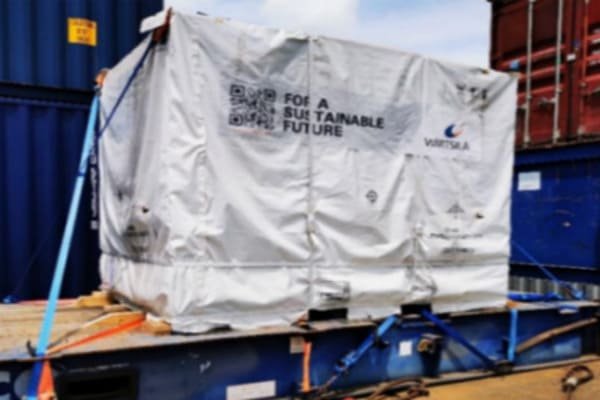
A fire suppression system is completely blind to the external conditions that cause a fire. It only knows what is happening inside the cabinet. During global shipping, the real threats come from the outside. As specialists in UN3536 cargo, we focus on neutralizing these external threats before they can cause an internal problem.
Unseen Threats During Global Shipping
Here are four major dangers that proper transit protection solves:
- Vibration and Impact: Ships roll, trains rattle, and trucks hit bumps. Without professional lashing and shock-proof packaging, these constant vibrations can loosen internal connections, creating short circuits5. The fire system only activates after that short circuit starts a fire.
- Improper Lashing: If the cabinet itself is not secured inside the container, it can tip over or slam into the container walls during transit. This severe physical shock can easily breach battery cells and cause an immediate thermal event6. We always use customized internal and external lashing to eliminate this risk.
- Extreme Temperatures: A container sitting on a sunny dock in Dubai or a frigid port in Canada can experience extreme temperatures. These can push batteries outside their safe operating range, drastically increasing fire risk. A refrigerated (reefer) container is often needed, something a built-in system cannot provide.
- Incorrect SOC Management: International regulations (IMDG Code) mandate a specific State of Charge (usually around 30%)7 for shipping. A higher charge level means more stored energy and a higher risk of a severe fire. We verify the SOC before every shipment to ensure full compliance.
Why do carriers and customs reject shipments without complete transit protection?
Your shipment is ready to go, but the carrier suddenly refuses to load it. This is a frustrating and expensive delay. Let's look at why they reject shipments that seem perfectly fine to you.
Carriers and customs reject these shipments because they are legally liable for safety. They enforce strict international regulations like the IMDG Code. Incomplete protection on a UN3536 dangerous good8 is a clear violation, posing a risk to the vessel, crew, and other cargo9.
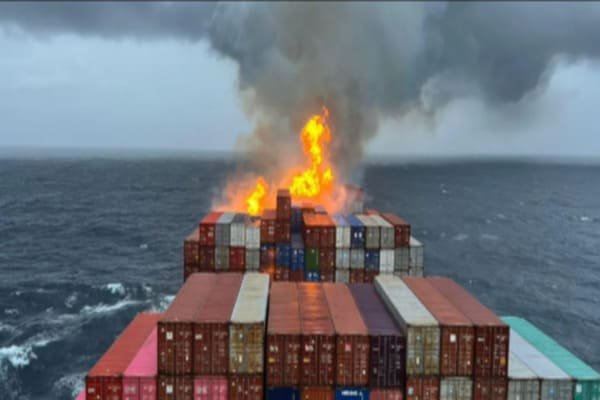
Shipping lines are responsible for everything on their vessels. A single poorly packaged dangerous goods container can cause a fire that destroys millions of dollars in cargo and endangers lives. I have seen cases where a fire from one container spread and destroyed dozens of others. Because of this massive liability, their inspection process is incredibly strict. Customs has a similar role, ensuring that hazardous materials entering or leaving their country meet all safety laws. A shipment without obvious, complete transit protection is an immediate red flag. They see it not as a product, but as a potential bomb that hasn't been properly secured.
The Logic Behind Rejection
Carriers and inspectors look for specific proof of compliance:
- Correct DG Declaration: Is the UN number (UN3536 for energy storage systems) declared correctly on all paperwork?
- Compliant Packaging: Does the crate meet strength standards? Is there evidence of shock-absorbing material?
- Proper Lashing Photos: Are there clear photos proving the cargo is professionally secured inside the container?
- SOC Verification: Is there documentation from the factory or a third party proving the State of Charge is within the legal limit?
Without this evidence, they will not take the risk.
What is a complete standard transit protection scheme for all types of energy storage cabinets?
Knowing you need protection is one thing; knowing exactly what to do is another. Shipping without a clear, repeatable plan is risky. Here is the step-by-step professional process we follow for every energy storage cabinet.
A complete scheme includes a pre-shipment safety check, custom shockproof packaging, and professional lashing inside the container. It also requires strict SOC control, full dangerous goods (DG) documentation, and selecting the right container type, ensuring door-to-door compliance.
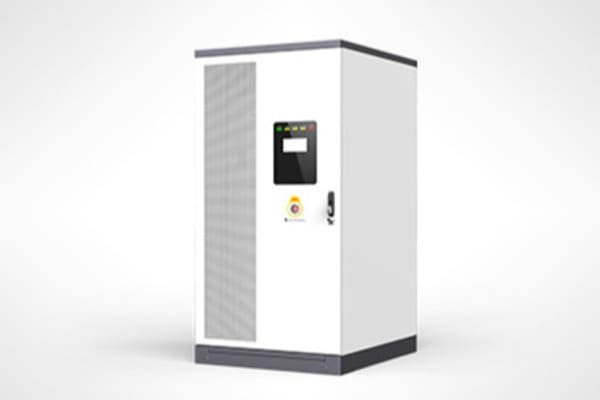
Over the years, we've perfected a system for shipping everything from small household ESS to massive 2MWh containerized BESS. The principles are the same, just scaled to fit the product. This isn't just a suggestion; it's a necessary process to guarantee safety and avoid problems at the port. Any professional logistics partner focused on dangerous goods should follow a similar protocol. It's the only way to ensure the cargo is safe and compliant from the factory door to the final destination.
Our 5-Step Compliance Protocol
- Pre-Shipment Inspection & SOC Control: First, we verify the unit's physical condition and get documentation for the State of Charge (SOC) to ensure it's below the 30% mandate. This is the most fundamental safety step.
- Customized Packaging: We do not use one-size-fits-all solutions. Based on the cabinet's size, weight, and sensitivity, we design and build a custom wooden crate with internal shock-absorbing foam10 to protect it from vibration and impacts.
- Professional Lashing Plan: Our team creates a detailed lashing plan. We use high-strength straps and wooden dunnage to firmly secure the crate inside the ocean container, preventing any movement even in rough seas.
- Container Selection & Preparation: We choose the right container for the job. This might be a standard dry container, or a refrigerated (reefer) container if the shipping route involves extreme temperatures that could affect the batteries.
- Full DG Declaration & Documentation: We handle all the complex paperwork. We make sure the shipment is correctly declared as UN353611 and provide all necessary documents and photos to the carrier and customs.
What are the top 3 common misconceptions shippers need to abandon immediately?
Certain beliefs about shipping energy storage are common, but dangerously wrong. Sticking to these myths puts your cargo, your money, and even people's lives at risk. Let's clear them up now.
Shippers must abandon three key misconceptions: 1) Believing a built-in fire system is sufficient for transit safety. 2) Thinking small household ESS units are not regulated as dangerous goods. 3) Assuming any freight forwarder can handle these specialized products.
If I could get every exporter to understand these three points, the industry would be much safer. After two decades in this business, these are the myths I hear most often from new clients. Abandoning these false assumptions is the first step toward shipping your products safely and professionally. They are simple misunderstandings, but they have serious consequences in the world of global logistics.
Debunking Dangerous Myths
- Misconception 1: "My product is high-quality, it won't catch fire." Your product quality is important, but even the best-made battery can fail under the extreme physical stress of international transit. Quality control in a factory does not account for the journey. Transit protection is about managing the unpredictable shipping environment.
- Misconception 2: "It's a small household unit, so the rules don't apply." This is completely false. Under the IMDG Code, almost any lithium battery system is classified as a Class 9 Dangerous Good (UN3536). The rules for packaging, labeling, and documentation apply whether it's a 10kWh home unit or a 2MWh utility-scale system. The risk is determined by the battery, not its final use.
- Misconception 3: "My regular freight forwarder can handle it." Most freight forwarders are experts in general cargo, not dangerous goods. Shipping UN3536 requires deep knowledge of specific regulations, carrier requirements, and physical handling procedures. Choosing a specialized partner is not a luxury; it is a necessity.
Conclusion
In summary, a built-in fire system reacts to fire, while transit protection prevents it. For safe, compliant shipping, proactive measures like proper packaging, lashing, and documentation are absolutely essential.
"Comparative study on the thermal runaway characteristics of ...", https://pmc.ncbi.nlm.nih.gov/articles/PMC11128925/. A peer-reviewed battery-safety review explains thermal runaway as a self-heating failure process in lithium-ion cells that can lead to fire or explosion, supporting the article’s use of the term as the relevant battery-fire mechanism. Evidence role: definition; source type: paper. Supports: A cabinet's built-in fire system is a reactive measure for thermal runaway.. ↩
"Lithium-Ion Battery Safety Study Using Multi-Physics ...", https://docs.nlr.gov/docs/fy09osti/45856.pdf. Battery-safety literature identifies mechanical abuse and thermal abuse as recognized initiating conditions for lithium-ion cell failure and thermal runaway, supporting the article’s claim that shocks and temperature excursions can contribute to fire risk. Evidence role: mechanism; source type: paper. Supports: Physical shocks and temperature changes during transit can create conditions that could cause a fire.. Scope note: The source supports these as known abuse conditions, but it may not evaluate the specific cabinet model or route described in the article. ↩
"Fire | NIST", https://www.nist.gov/fire. Fire-protection references describe detection and suppression systems as measures intended to detect, control, or suppress fires after ignition, supporting the characterization of built-in suppression as a reactive layer rather than a preventive transport control. Evidence role: definition; source type: institution. Supports: A built-in fire system is the last line of defense because it operates after a fire has started.. Scope note: The evidence is general to fire detection and suppression systems and does not assess every proprietary cabinet fire system. ↩
"[PDF] IMO/ILO/UNECE CTU Code", https://www.unece.org/fileadmin/DAM/trans/doc/2014/wp24/CTU_Code_January_2014.pdf. Transport packaging and freight-container guidance recognizes shock, vibration, inclination, and climatic exposure as hazards that cargo may experience in distribution, supporting the article’s description of transit conditions distinct from stationary operation. Evidence role: general_support; source type: institution. Supports: Transit exposes energy storage cabinets to bumps, tilts, and temperature swings that a stationary cabinet does not normally experience.. Scope note: The source is contextual for transport hazards generally and may not be specific to lithium battery cabinets. ↩
"A Critical Review on Diagnosis and Prognosis of Battery Short Circuit", https://pmc.ncbi.nlm.nih.gov/articles/PMC7150528/. Engineering studies of lithium-ion batteries under vibration report that mechanical vibration can degrade electrical connections or cell components and may contribute to electrical faults, supporting the mechanism described in the article. Evidence role: mechanism; source type: paper. Supports: Constant transit vibration can loosen internal connections and contribute to short circuits.. Scope note: Findings are typically based on specific cell or pack designs and test profiles, so they should be treated as mechanistic support rather than proof for all cabinets. ↩
"Experimental analysis and safety assessment of thermal runaway ...", https://pmc.ncbi.nlm.nih.gov/articles/PMC11018818/. Battery-abuse testing literature shows that mechanical deformation, crush, or penetration of lithium-ion cells can trigger internal short circuiting and thermal runaway, supporting the article’s warning about severe physical damage. Evidence role: mechanism; source type: paper. Supports: Severe physical shock that breaches battery cells can cause an immediate thermal event.. Scope note: The evidence concerns cell-level or module-level abuse tests; cabinet-level outcomes depend on enclosure design and battery chemistry. ↩
"[PDF] Lithium Battery Guide for Shippers - PHMSA", https://www.phmsa.dot.gov/sites/phmsa.dot.gov/files/2024-11/Lithium-Battery-Guide-2024.pdf. International air-transport rules limit lithium-ion cells and batteries shipped by air to 30% state of charge, and lithium-battery safety research indicates that higher state of charge can increase heat release and severity during failure, supporting the safety rationale for SOC control. Evidence role: statistic; source type: institution. Supports: International regulations mandate or commonly require a low State of Charge, usually around 30%, for shipping some lithium battery products.. Scope note: The 30% limit is most clearly codified for air shipments of lithium-ion cells and batteries; maritime requirements for equipment classified as UN3536 should be checked against the current IMDG Code and any special provisions applicable to the product. ↩
"[PDF] Lithium Battery Guide for Shippers - PHMSA", https://www.phmsa.dot.gov/sites/phmsa.dot.gov/files/2024-11/Lithium-Battery-Guide-2024.pdf. The UN Model Regulations list UN 3536 for lithium batteries installed in cargo transport units and classify it within the dangerous-goods framework, supporting the article’s identification of such shipments as regulated dangerous goods. Evidence role: definition; source type: institution. Supports: An energy storage system shipped as UN3536 is a dangerous good subject to dangerous-goods transport requirements.. Scope note: Classification depends on the product configuration and current modal regulations, so the citation supports the category rather than every shipment scenario. ↩
"International Maritime Organization - PHMSA", https://www.phmsa.dot.gov/international-program/international-maritime-organization. Maritime dangerous-goods guidance states that the IMDG Code is intended to protect crew, ships, and the marine environment by regulating dangerous goods at sea, supporting the article’s explanation that noncompliant cargo presents safety risks beyond the individual shipment. Evidence role: historical_context; source type: institution. Supports: Incomplete protection for dangerous goods can pose risks to the vessel, crew, and other cargo.. Scope note: This supports the regulatory safety rationale, not a specific carrier’s decision in any individual rejection case. ↩
"Comparison of Package Cushioning Materials to Protect ...", https://digitalcommons.calpoly.edu/cgi/viewcontent.cgi?article=1047&context=it_fac. Packaging engineering guidance explains that cushioning materials are used to attenuate shock and vibration transmitted to products during distribution, supporting the article’s inclusion of shock-absorbing materials in a transit-protection scheme. Evidence role: mechanism; source type: education. Supports: Custom packaging with shock-absorbing foam can protect energy storage cabinets from vibration and impacts during transit.. Scope note: The source supports the general function of cushioning; suitable material selection requires product-specific testing and design. ↩
"49 CFR 172.101 -- Purpose and use of the hazardous ...", https://www.ecfr.gov/current/title-49/subtitle-B/chapter-I/subchapter-C/part-172/subpart-B/section-172.101. Dangerous-goods transport regulations require shipments to be described by the proper UN number and proper shipping name in transport documentation, supporting the article’s emphasis on correct declaration for UN3536 shipments. Evidence role: definition; source type: institution. Supports: Energy storage cabinet shipments that meet the UN3536 description must be correctly declared with that UN number in dangerous-goods documentation.. Scope note: The source supports the documentation principle; the exact documents and wording depend on the applicable edition of the IMDG Code and national implementation. ↩