
Shipping high-value Energy Storage Systems (ESS) is full of risk. A simple mistake in packaging or loading can lead to a fire, destroying your cargo and causing massive losses.
Thermal runaway in Energy Storage Systems during shipping is mainly caused by physical squeezing, constant vibration, and excessive heat.1 These factors, often from improper loading, poor packaging, and high container temperatures, damage battery cells and can trigger an unstoppable, fiery chain reaction.
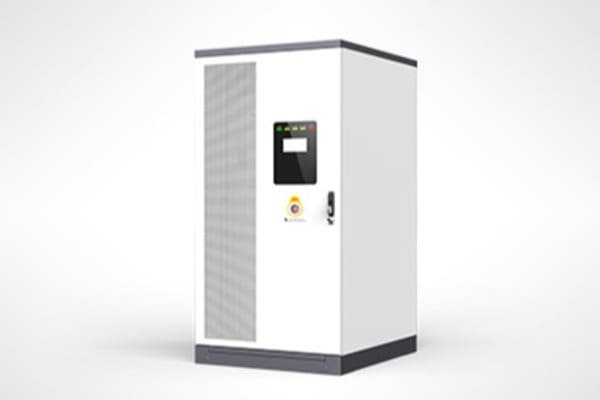
These shipping dangers are very real, but they are not unavoidable. In my 20 years in logistics, I've seen how easily these issues can be overlooked, sometimes with catastrophic results. The good news is that most of these incidents are not caused by product quality issues but by failures in the shipping process. Understanding the triggers is the first step to protecting your investment. Let's break down exactly what happens inside a battery and how normal transit conditions can become so dangerous.
What Is Battery Thermal Runaway of Energy Storage Cabinets?
You always hear the term "thermal runaway," but what does it actually mean for your ESS cabinets? It's a technical term that describes a rapid, unstoppable fire.
Battery thermal runaway is a chain reaction where a damaged or overheated battery cell releases its energy as intense heat.2 This heat triggers neighboring cells to do the same3, causing an uncontrollable fire or explosion that spreads through the entire energy storage cabinet.
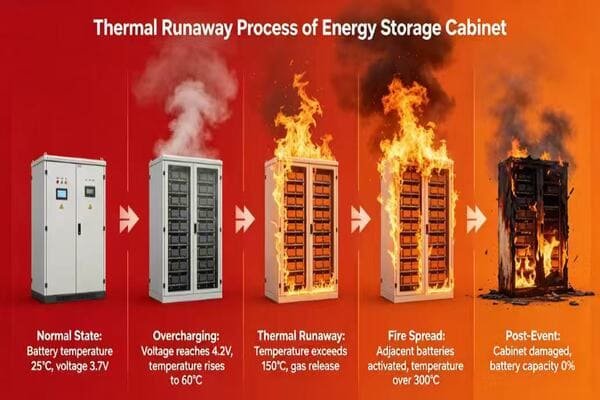
Let's dive deeper into this process. It doesn’t matter if it’s a small household ESS or a massive 2MWh containerized energy storage unit; the physics are the same. Thermal runaway is a domino effect happening at a microscopic level, and it unfolds in distinct stages. I’ve worked with countless clients shipping these Class 9 Dangerous Goods, and explaining this process helps them understand why our strict protocols are so vital.
The Three Stages of Thermal Runaway
- Initiation: This is the starting point. A single battery cell becomes unstable. The cause is usually an internal short circuit, which can be triggered by external physical damage (a dent or puncture), or from operating in extremely high temperatures. The cell's internal temperature starts to climb uncontrollably.
- Propagation: Once the first cell fails, it releases a huge amount of heat and flammable gases. This intense heat is transferred to the adjacent cells. These neighboring cells, which were perfectly fine moments before, now absorb this heat, exceed their own safety limits, and begin their own runaway process.
- Catastrophic Failure: This propagation continues from cell to cell, creating a fire that is almost impossible to extinguish with conventional methods. The result is a full-blown fire, potential explosions, and the release of toxic fumes, destroying the entire ESS cabinet.
| Stage | What Happens | Result |
|---|---|---|
| Initiation | A single cell overheats due to damage or external heat. | The cell's internal structure breaks down. |
| Propagation | Heat spreads to neighboring cells, causing them to fail. | A chain reaction of cell failures begins. |
| Failure | The entire battery module or cabinet is engulfed in fire. | Fire, explosion, and release of toxic gas. |
3 Core Inducements Causing ESS Fire & Explosion In Transit?
ESS fires during transport can seem random and unpredictable. But most are caused by very specific, preventable factors. Ignoring them is like gambling with your most valuable cargo.
The three core causes of ESS fires in transit are physical damage from squeezing or impact, constant vibration that loosens connections and damages cells, and high temperatures inside the container that accelerate chemical degradation and trigger thermal runaway.
I’ve inspected containers post-journey and seen the subtle damage that leads to big problems. It’s rarely one single dramatic event. Instead, it’s the combination of these three factors over a long journey that creates the perfect storm for a thermal event. Your expensive, high-tech ESS units are vulnerable to the surprisingly harsh environment inside a standard shipping container. Understanding these three core inducements is key to implementing the right protections.
Breaking Down the Transit Threats
-
Physical Squeeze and Impact: This happens more often than you’d think. If cabinets are not loaded correctly or lashed down professionally, they can shift during transit. I once saw a container where a 1-ton ESS unit had slid and crushed the corner of another, causing hidden damage that could have easily led to a fire. This physical pressure deforms the battery casing and can cause immediate internal short circuits4.
-
Constant Vibration: A ship at sea or a train on the tracks is in constant motion. This low-frequency vibration is relentless. Over thousands of miles, it can fatigue battery components, loosen critical electrical terminals, and even cause micro-fractures within the cells themselves5. This unseen damage slowly degrades the battery's integrity.
-
High Temperature: A sealed metal container sitting in the sun on a port tarmac or on the deck of a ship becomes an oven. I've seen temperature logs showing the inside of a container reaching over 60°C (140°F)6. These high temperatures dramatically accelerate the chemical reactions inside the battery7, increasing internal pressure and pushing the cells dangerously close to their thermal runaway threshold.
| Inducement | How It Happens in Transit | Resulting Damage |
|---|---|---|
| Physical Squeeze | Improper loading, cargo shifting due to poor lashing. | Casing deformation, internal short circuits. |
| Constant Vibration | Normal motion of a ship or train over thousands of miles. | Loosened terminals, cracked cell components. |
| High Temperature | Container exposed to direct sunlight for hours or days. | Accelerated chemical breakdown, increased pressure. |
High-Risk Shipping Scenarios Prone To Thermal Runaway?
You know the causes, but when are they most likely to happen? Certain shipping situations create a perfect storm for disaster, turning a routine shipment into a high-risk gamble.
High-risk scenarios include using standard dry containers instead of temperature-controlled ones, incorrect lashing that allows movement, mixing ESS with other cargo, and choosing long-haul routes through hot climates. These situations greatly increase the chances of thermal runaway.

From my experience managing complex DG cargo, I can tell you that risk is all about the details of the shipping plan. A client once tried to save money by shipping a 1MWh ESS in a standard container through the Suez Canal in July. We strongly advised against it, explaining that the combination of extreme heat and vibration was too high a risk. Recognizing these dangerous scenarios beforehand is not just good practice; it's essential for protecting your cargo, your investment, and the safety of everyone involved in the supply chain. Let’s look at the most common mistakes I see.
Common Scenarios That Invite Disaster
-
The "Standard Container" Gamble: Using a standard dry container is the most common mistake. These containers have no ventilation or temperature control. On a sunny day, the internal temperature can soar far beyond the safe operating range for batteries, creating a high-risk environment from the very start.
-
The "Poor Lashing" Domino Effect: Many shippers underestimate the forces at sea.8 If an ESS cabinet is not professionally lashed and blocked, it will move. Even a few inches of movement can lead to repeated impacts against other cargo or the container wall. This turns a simple vibration issue into a physical impact problem.
-
The "Mixed Cargo" Mistake: Loading ESS units in the same container as other, unsecured goods is a recipe for disaster. I've seen cases where heavy machinery or other cargo has broken loose and crashed into the ESS cabinets, causing severe physical damage that directly triggered a fire.
-
The "Long-Haul" Challenge: The longer the transit time, the greater the cumulative exposure to vibration and potential temperature swings. Routes that cross the equator or involve long waits at sunny transshipment ports are particularly risky, as they combine both prolonged vibration and a high probability of extreme heat exposure.
Standard Pre-Shipping Measures To Avoid Thermal Runaway?
The risks are clear, but the most important question is how do you actively prevent them? Simply hoping for the best is not a strategy. A single missed step can fail.
Key pre-shipping measures include a thorough battery state inspection, using anti-collision packaging, professional lashing inside the container, choosing a temperature-controlled (Reefer) container, and proper UN3536 dangerous goods customs declaration. These steps minimize transit risks.
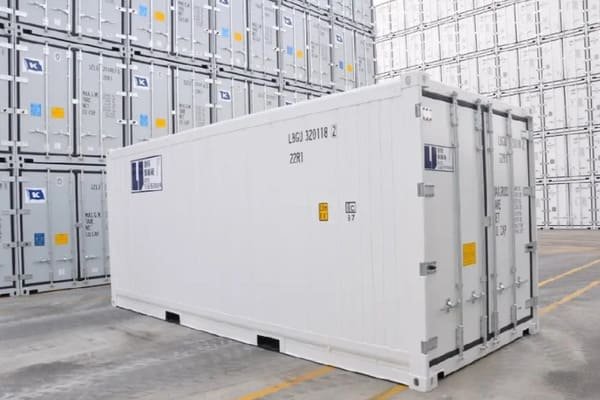
This is where our expertise comes into play. As a freight forwarder specializing in new energy and Class 9 DG cargo, we've built our entire process around mitigating these specific risks. It's not just about moving a box from A to B; it's about providing a full thermal runaway prevention shipping service. This involves a standardized, non-negotiable set of procedures we follow for every single ESS shipment, whether it’s for a large corporate client or a smaller e-commerce seller. These measures are not optional—they are the foundation of safe and compliant transport.
Our Professional Safety Protocol
-
Pre-Shipment Battery Inspection: Before anything is loaded, we verify the battery's state of health and, most importantly, its state of charge (SoC). Shipping batteries at a lower SoC (typically 30% or less) significantly reduces risk.9 We also conduct a physical inspection for any signs of damage.
-
Protective Packaging & Temperature Control: We advise on and use specialized anti-collision packaging. Critically, we use temperature-controlled reefer containers set to a stable, cool temperature (e.g., 15°C)10 to completely eliminate the risk of overheating.
-
Professional Lashing and Securing: Our teams are trained to professionally lash and block heavy ESS cabinets inside the container, ensuring they cannot shift, slide, or vibrate excessively, no matter how rough the journey.
-
Compliant DG Declaration: We handle the complete and accurate dangerous goods declaration under the correct classification, UN3536, for "LITHIUM BATTERIES INSTALLED IN CARGO TRANSPORT UNIT". This ensures carriers and port authorities handle the cargo with the required special precautions.
| Measure | Purpose | Why It's Critical |
|---|---|---|
| Battery Inspection | Verify battery health and State of Charge (SoC). | Prevents shipping already compromised or high-energy units. |
| Protective Packaging | Absorb shocks and prevent physical contact. | Protects against impact damage during loading and transit. |
| Professional Lashing | Securely fasten cabinets to prevent any movement. | Stops shifting, vibration damage, and crushing. |
| Temperature Control | Maintain a stable, cool environment in a reefer. | Prevents overheating, a primary trigger for thermal runaway. |
| DG Declaration (UN3536) | Inform all parties of the hazardous nature of the cargo. | Ensures proper handling and emergency response protocols. |
Conclusion
Thermal runaway is a serious but preventable shipping risk. Following standardized checks, using proper packaging, professional lashing, and managing temperature ensures your valuable ESS cargo arrives safely and compliantly.
"A comprehensive review on thermal runaway model of a lithium-ion battery", https://ui.adsabs.harvard.edu/abs/2024REne..22920762E/abstract. A peer-reviewed battery-safety review can support that lithium-ion battery thermal runaway is commonly initiated by mechanical abuse, electrical/internal short circuits, and thermal abuse; this provides a technical basis for the listed transit hazards rather than direct incident-frequency proof for ESS shipments. Evidence role: expert_consensus; source type: paper. Supports: Thermal runaway in Energy Storage Systems during shipping is mainly caused by physical squeezing, constant vibration, and excessive heat.. Scope note: Contextual support: most reviews discuss lithium-ion batteries generally, not only containerized ESS during shipping. ↩
"Thermal Runaway of Li-Ion Cells: How Internal Dynamics, ...", https://www.nrel.gov/docs/fy22osti/82410.pdf. A battery-safety reference or review can define thermal runaway as a self-heating exothermic process in which heat generation exceeds heat dissipation and can propagate to adjacent cells; this supports the mechanism described, although wording and thresholds vary by chemistry and cell design. Evidence role: definition; source type: paper. Supports: Battery thermal runaway is a chain reaction where a damaged or overheated battery cell releases its energy as intense heat.. Scope note: Definitions differ slightly across standards and chemistries. ↩
"Failure propagation in multi cell lithium ion batteries", https://www.osti.gov/servlets/purl/1235277. Experimental and review literature on thermal-runaway propagation can support that heat and ejecta from a failed lithium-ion cell may raise neighboring cells above their stability limits, causing cell-to-cell propagation; this supports the general mechanism, not the probability in a specific ESS model. Evidence role: mechanism; source type: paper. Supports: Heat released by one failed battery cell can trigger thermal runaway in neighboring cells.. Scope note: Propagation behavior depends on module spacing, barriers, cooling, chemistry, and enclosure design. ↩
"Experimental study on the internal short circuit and failure mechanism ...", https://ui.adsabs.harvard.edu/abs/2024JEnSt..8911819A/abstract. Battery-failure literature can support that mechanical deformation, puncture, or separator damage may create internal short circuits in lithium-ion cells, which are a recognized initiator of thermal runaway; this is mechanism-level support rather than evidence about a particular shipment. Evidence role: mechanism; source type: paper. Supports: External physical damage can cause internal short circuits that initiate thermal runaway.. Scope note: The exact failure pathway depends on cell format, impact severity, separator properties, and battery-management protections. ↩
"temperature, vibration, and charging/discharging cycles - PMC", https://pmc.ncbi.nlm.nih.gov/articles/PMC12022756/. Transport-vibration and battery-reliability studies can support that sustained vibration can alter lithium-ion battery mechanical integrity, connection resistance, or component condition; this supports vibration as a plausible degradation mechanism, though direct evidence for terminal loosening and micro-fractures may be study-specific. Evidence role: mechanism; source type: paper. Supports: Constant transport vibration can damage battery components, loosen terminals, and create micro-fractures.. Scope note: Evidence may vary by battery pack design, mounting, test profile, and vibration severity. ↩
"[PDF] thermal design of shipping containers - USDA ARS", https://www.ars.usda.gov/ARSUserFiles/30200525/396thermaldesignofshippingcontainersforbeneficialinsects.pdf. Studies or transport-safety reports measuring container microclimates can support that closed freight containers exposed to solar radiation can reach internal temperatures near or above 60°C; this supports the plausibility of the temperature example, not the author’s specific logged shipment. Evidence role: statistic; source type: paper. Supports: The inside of a sealed shipping container can reach over 60°C under sun exposure.. Scope note: Container temperature depends on location, season, color, cargo loading, ventilation, and sun exposure. ↩
"Thermal runaway process in lithium-ion batteries: A review", https://www.sciencedirect.com/science/article/pii/S2949821X24000917. Electrochemical aging literature can support that elevated temperature accelerates parasitic reactions, degradation, gas generation, and safety risks in lithium-ion batteries; this supports the temperature-degradation mechanism but does not define a universal thermal-runaway threshold. Evidence role: mechanism; source type: paper. Supports: High temperatures accelerate chemical reactions and degradation inside batteries.. Scope note: Reaction rates and safety margins vary by chemistry, cell design, state of charge, and exposure duration. ↩
"33 CFR Part 97 Subpart A -- Cargo Securing Manuals", https://www.ecfr.gov/current/title-33/chapter-I/subchapter-F/part-97/subpart-A. Cargo-securing standards and maritime transport guidance can support that sea transport exposes cargo to significant accelerations from roll, pitch, heave, and other vessel motions, requiring proper securing; this supports the need for lashing but not the behavioral claim that shippers underestimate it. Evidence role: expert_consensus; source type: institution. Supports: Sea transport can impose significant forces on cargo, requiring professional securing and lashing.. Scope note: Standards support the physical forces and securing requirement, not the frequency of shipper underestimation. ↩
"[PDF] A State of Charge Analysis of Lithium-ion Cells Shipped via Air", https://rosap.ntl.bts.gov/view/dot/66985/dot_66985_DS1.pdf. Battery-safety research and transport regulations can support that lithium-ion batteries generally release less energy and show reduced thermal-runaway severity at lower state of charge, and that some air-transport rules limit cells to 30% SoC; this supports the safety rationale but may not impose the same percentage for all ESS sea shipments. Evidence role: expert_consensus; source type: government. Supports: Lower state of charge, commonly around 30% in some transport contexts, reduces lithium-battery transport risk.. Scope note: The 30% threshold is prominent in some transport rules for standalone cells and batteries, while requirements for installed ESS cargo can differ by mode and regulation. ↩
"[PDF] Lithium Battery Guide for Shippers - PHMSA", https://www.phmsa.dot.gov/sites/phmsa.dot.gov/files/2024-11/Lithium-Battery-Guide-2024.pdf. Refrigerated-container technical references and lithium-battery storage guidance can support that reefer containers provide active temperature control and that cool, stable storage temperatures reduce battery degradation and heat-related risk; this supports the general measure, not a universal requirement for 15°C. Evidence role: general_support; source type: institution. Supports: Temperature-controlled reefer containers can maintain a cool, stable environment that helps reduce overheating risk for ESS shipments.. Scope note: The optimal setpoint depends on battery chemistry, manufacturer instructions, state of charge, and route conditions; 15°C may be an operational example rather than a standard. ↩