
Are you worried that sudden tariff changes will blow up your shipping budget? These unexpected government policies can cause chaos for your profits, making it hard to price your products.
Delivered Duty Paid (DDP) shipping costs are directly affected by tariff changes because the seller is responsible for paying all import duties.1 If the U.S. government raises a tariff on your goods, that increased cost is added to the final DDP price you pay.
Understanding how tariffs work is the first step to gaining control over your shipping costs. When you know what to expect, you can plan your finances better and avoid nasty surprises. In my years of experience, I've seen that the most successful importers are the ones who prepare for these changes. Let's break down how tariffs impact your DDP shipments and what you can do about it.
What Is Included in a DDP Shipping Cost?
Are you confused by all the different fees listed on your shipping invoice? Hidden costs can quickly eat away at your profits, but knowing what DDP covers brings clarity.
A DDP shipping quote includes everything needed to get goods from the seller's door to your door. This covers the cost of transportation, insurance, customs clearance, and, most importantly, all import duties and taxes.2 The seller handles the entire process for you.
When you choose DDP, you are choosing a hassle-free option. But it's important to know what you're paying for. We handle many DDP shipments, and the goal is always to provide a single, all-inclusive price. This price isn't just one number; it's a bundle of different services and fees. Let me break it down for you.
Key Components of a DDP Quote
A typical DDP cost includes several stages of the shipping journey. Each stage has its own costs that we, as your forwarder, manage and bundle for you.
| Cost Component | Description | Who Pays |
|---|---|---|
| Origin Charges | Includes picking up the cargo from the factory, trucking to the port, and handling export customs clearance. | The Seller (covered in DDP price) |
| Main Freight | The cost of shipping the container by sea or air from the origin country to the destination country. | The Seller (covered in DDP price) |
| Destination Charges | Includes port fees, handling at the destination, and trucking from the port to the final warehouse or address. | The Seller (covered in DDP price) |
| Duties and Taxes | The import tariffs and taxes levied by the U.S. government based on the product's value and classification.3 | The Seller (covered in DDP price) |
I once worked with a new e-commerce seller who was shocked that the duties alone were almost 20% of his product's value. By understanding this breakdown beforehand, he was able to adjust his retail price to protect his margins.
Why Do Tariff Changes Have a Direct Impact on DDP Pricing?
Did your final DDP invoice come in higher than the original quote? Sudden price hikes can derail your budget, so it's crucial to understand the direct link between tariffs and DDP.
Under DDP terms, the seller is contractually obligated to pay the import duties. When the U.S. government changes a tariff, the seller's cost to clear the goods changes. This new cost is then passed on to you, the importer, in the final DDP price.
Think of it this way: when we provide a DDP quote, we calculate the duties based on the tariff rates that are active on that day. However, these rates are not set in stone. Governments can and do change them, sometimes with very little warning.4 If a new tariff is introduced or an existing one is increased while your goods are still on the water, the amount of duty owed at the time of import will be higher than what we originally quoted.
The Chain of Events
Here’s how a tariff change affects your final bill:
- Initial Quote: We provide a DDP quote based on a 5% tariff for your product.
- Policy Change: While your shipment is in transit, the U.S. government imposes a new 15% punitive tariff on your product category.
- Customs Arrival: When the goods arrive at the U.S. port, customs officials assess duties based on the new, total tariff rate of 20% (5% + 15%).
- Final Invoice: As the DDP seller, we are responsible for paying this higher duty. We then have to adjust your final invoice to reflect this unexpected government-mandated cost.
This isn't a forwarder adding a hidden fee; it's a direct pass-through of a new government tax. At Deeplinker, we always aim for transparency. We alert our clients as soon as we learn of a potential change that could affect their shipment, so they can prepare for the financial impact.
What Are the Key Types of US Tariffs That Affect DDP Shipments?
Does the world of tariffs seem like a confusing maze of rules and regulations? Not knowing the different types can lead to very expensive mistakes, so let's simplify them.
The main U.S. tariffs impacting DDP shipments are Ad Valorem (a percentage of value), Specific (a fixed fee per unit), and Compound (a mix of both). Punitive tariffs, like Section 301 duties on Chinese goods, are also a major factor to watch.
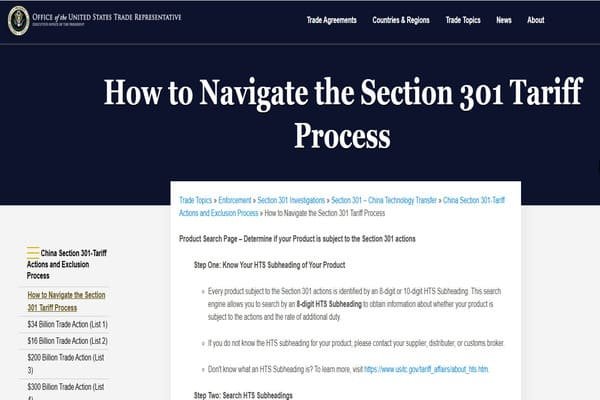
To manage your DDP costs, you first need to know what kind of tariff your product faces. The U.S. uses several types, and each is calculated differently. It all starts with your product's Harmonized Tariff Schedule (HTS) code, which is a unique number that tells customs what your product is. This code determines which type of tariff applies.5
The Most Common Tariff Structures
Let's look at the primary types you'll encounter.
-
Ad Valorem Tariffs This is the most common type. "Ad valorem" is Latin for "according to value." The duty is a simple percentage of your product's declared value.6 For example, if your goods are worth $20,000 and the ad valorem tariff is 10%, the duty owed is $2,000.
-
Specific Tariffs This tariff is a fixed amount of money per unit of the product, regardless of its value. For instance, a specific tariff might be $0.50 per kilogram of cheese or $1 per pair of shoes. This type is more common for agricultural products or basic commodities.
-
Compound Tariffs As the name suggests, this is a combination of an ad valorem and a specific tariff. A product might face a duty of 5% of its value plus an additional $0.25 per unit.
-
Punitive Tariffs (Section 232 & 301) These are extra tariffs imposed by the U.S. for trade policy reasons. Section 301 tariffs, for example, have added duties of up to 25% on thousands of products from China.7 These are applied on top of any regular tariffs, which is why they have such a huge impact on DDP costs.
How Do Tariff Increases Affect Different Product Categories?
Are your specific products being targeted by new U.S. tariffs? Some goods are hit much harder than others, which can hurt your competitiveness if you're not prepared.
Tariff increases are not applied equally across all goods. Categories like electronics, furniture, and machinery from China have faced significant hikes from Section 301 tariffs.8 In contrast, other goods like certain medical supplies might see tariffs reduced or waived.

The impact of a tariff change depends entirely on your product's HTS code and its country of origin. This is why two importers shipping from the same country can have wildly different DDP costs. One might be importing t-shirts with a standard tariff, while another is importing smartwatches that fall under a high punitive tariff. I've seen this firsthand with clients shipping from China; one client's costs for outdoor gear remained stable, while another's costs for home electronics skyrocketed by 25% overnight due to Section 301.
Examples of Affected Product Categories
Let's look at how recent U.S. trade policies have impacted some common import categories, especially from China.
| Product Category | Example Goods | Typical Tariff Impact |
|---|---|---|
| Consumer Electronics | Drones, smart home devices, circuit boards | High. Many items are on Section 301 lists, facing an extra 25% tariff. |
| Furniture | Wooden tables, office chairs, cabinets | High. A wide range of furniture products are subject to Section 301 tariffs. |
| Industrial Machinery | Pumps, motors, manufacturing equipment | High. These are frequently targeted by punitive tariffs to protect domestic industry. |
| Apparel & Textiles | Handbags, backpacks, certain fabrics | Moderate to High. While some items have standard tariffs, many are on tariff lists. |
| Automotive Parts | Replacement parts, tires | Moderate. Some parts fall under Section 232 or 301 tariffs. |
This shows why precise product classification is so critical. A simple mistake in your HTS code could move your product from a low-tariff category to a high-tariff one, completely changing your landed cost.9
Why Might a DDP Quote Change After a Shipment Is Booked?
Did you lock in a DDP price only to find the final bill was much higher? This can feel unfair and unpredictable, but let's uncover the legitimate reasons why quotes can change.
A DDP quote can change after booking for two main reasons: an external government action, like a sudden tariff increase, or an internal error, such as incorrect cargo details (weight, dimensions, or HTS code) provided by the shipper.
No one likes price changes, especially after a deal is made. At Deeplinker, we are committed to transparent pricing. However, some factors are outside of our control. The DDP price is built on information and regulations that exist at the moment of quoting. If that foundation changes, the price has to change with it.
Reason 1: Government Policy Changes
This is the most common reason for a price change on a DDP shipment to the U.S. Freight forwarders are not responsible for creating tariffs; we are responsible for paying them on your behalf. If the U.S. government announces a new 25% tariff on your product while it's on the ocean, that 25% must be paid at customs. This is a non-negotiable government fee. Our initial quote couldn't have included it because it didn't exist yet. Honest forwarders will always explain this and provide official documentation to prove the change.
Reason 2: Incorrect Shipment Information
The second major reason is a mismatch between the information you provide and the actual shipment. I remember a client who declared a shipment of "plastic phone cases." Our quote was based on the low tariff for simple plastic goods. However, during a customs inspection, officials found that many of the cases had built-in batteries to recharge the phone. This changed the HTS code to an electronics category, which had a 25% Section 301 tariff. The final duty was thousands of dollars higher than quoted, all because of that small detail. That's why providing accurate and complete product details is essential for a stable DDP quote.
How Can Importers Reduce Their Tariff Risks?
Is the constant uncertainty around tariffs making it difficult to budget and plan? This ongoing risk can damage your bottom line, but you can take practical steps to manage it.
To reduce tariff risks, you should verify your product's HTS code before shipping, stay informed on trade policy, and explore sourcing from countries not targeted by punitive tariffs. Partnering with an expert forwarder is key to ensuring compliance and cost transparency.

While you can't control U.S. trade policy, you can control how you prepare for it. Taking a proactive approach is the best way to protect your business from sudden cost increases. Over the years, I've helped hundreds of clients build more resilient supply chains by focusing on a few key areas. These strategies don't eliminate risk entirely, but they give you more control and predictability.
1. Verify Your HTS Code
This is the most critical step. Your product's HTS code determines the duty rate. Don't just guess or use the code your supplier gave you. We can help you or you can work with a customs broker to get a definitive classification. A correct code prevents surprises at customs.
2. Diversify Your Sourcing
Relying on a single country, especially one heavily targeted by tariffs like China, is risky. Explore manufacturing options in other countries like Vietnam, Mexico, India, or Thailand. This can give you a "Plan B" if tariffs on your primary sourcing country become too high.
3. Calculate Your True Landed Cost
Don't just look at the factory price. Before you even place an order, work with us to estimate the total landed cost, including all potential duties and taxes. This helps you determine if a product is still profitable after accounting for tariffs.
4. Partner with a Knowledgeable Forwarder
A good logistics partner does more than just move boxes. At Deeplinker, we act as your advisors. We stay on top of trade policy changes, help verify your HTS codes, and provide transparent quotes that clearly explain what is and isn't included. We help you build a strategy to navigate the complex world of tariffs, giving you the confidence to grow your business.
Conclusion
Tariffs are a critical part of DDP costs, but they don't have to be a mystery. Understand the tariff structure, classify goods correctly, and partner with an expert to keep costs manageable.
[U.S. Department of Commerce (trade.gov) – Know Your Incoterms](https://www.trade.gov/know-your-incoterms) ↩
[U.S. Department of Commerce (trade.gov) – Know Your Incoterms](https://www.trade.gov/know-your-incoterms) ↩
[U.S. Customs and Border Protection – Informed Compliance Publication](https://www.cbp.gov/sites/default/files/documents/icp017r2_3.pdf) ↩
[Federal Register – Implementing Certain Tariff-Related Elements of a Trade and Security Agreement](https://www.federalregister.gov/documents/2026/05/28/2026-10571/implementing-certain-tariff-related-elements-of-a-trade-and-security-agreement-between-the-american) ↩
[U.S. International Trade Commission – Harmonized Tariff Schedule (HTS)](https://hts.usitc.gov/) ↩
[World Bank (WITS) – Forms of Import Tariffs](https://wits.worldbank.org/wits/wits/witshelp/content/data_retrieval/p/intro/C2.Forms_of_Import_Tariffs.htm) ↩
[Office of the U.S. Trade Representative – Section 301 Tariff Actions](https://ustr.gov/issue-areas/enforcement/section-301-investigations/tariff-actions) ↩
[U.S. International Trade Commission – Publication 5405](https://www.usitc.gov/publications/332/pub5405.pdf) ↩
[U.S. Customs and Border Protection – eRuling Requirements](https://www.cbp.gov/trade/rulings/eruling-requirements) ↩