

Is Your Cargo Ready for US F865 Auto Screening in 2026?
Worried about the new US F865 auto screening? A tiny filing error can halt your shipment, costing you time and money. Here's how to avoid immediate rejection.
The top three filing mistakes causing immediate F865 rejection are mismatched data, wrong HTS codes, and late submissions. Prevent these by ensuring all your documents are accurate, consistent, and verified with your freight forwarder before shipping. This simple check keeps your cargo moving.
These mistakes might seem small, but the consequences are huge. I remember a client, a growing e-commerce brand, who faced a two-week delay just because of a single digit mismatch in the declared value between their invoice and the entry summary. That delay cost them a major sales event. To make sure this doesn't happen to you, let's break down exactly what this new screening process is and why it's so important for your business.
What is US F865 Auto Screening, and Why Should Importers Care?
Heard the term "F865 auto screening" but unsure what it means for you? Ignoring this change could get your shipments stuck at customs, disrupting your entire supply chain.
US F865 auto screening is a new automated system by U.S. Customs launching in June 20261. It electronically checks your import filings for errors2. It matters because it automatically rejects shipments with even minor data mismatches3, causing significant delays and costs for importers.

This new system is a major shift in how U.S. Customs and Border Protection (CBP) handles import data. For years, minor discrepancies might have been flagged for manual review by a customs officer who could use their judgment. With the F865 auto screening, the first line of defense is a machine. This system is part of the larger Automated Commercial Environment (ACE)4, designed to streamline trade5, but its automated nature means it is rigid. It follows rules without exception. If the data from your Bill of Lading doesn't perfectly match the data in your Entry Summary, the system can issue an immediate rejection6. There is no human to call and explain the situation to in the initial phase. This makes data accuracy more critical than ever before.
Why This Change Is a Big Deal
The primary impact is speed—the speed of rejection. An automated system can flag and reject a non-compliant filing in seconds7.
| Aspect | Manual Review | F865 Auto Screening |
|---|---|---|
| Initial Check | Human Officer | Automated System |
| Flexibility | Some room for context | Zero tolerance for mismatch |
| Rejection Speed | Hours or Days | Seconds or Minutes |
| Consequence | Request for Info, Delays | Immediate Rejection, Delays |
This means that by the time you learn of a rejection, your container might already be at the port, racking up demurrage fees8 while you scramble to correct the paperwork. For businesses like yours, this isn't just an inconvenience; it's a direct hit to your bottom line and supply chain reliability.
What Are the 3 Common Filing Mistakes That Cause Immediate Rejection?
You know accuracy is key for F865 filings, but which errors are the most critical? One small typo can stall your container, leading to frustrating and expensive delays.
The three most common mistakes are9: 1) Data Mismatches between documents like the commercial invoice and bill of lading. 2) Incorrect HTS Codes for your products. 3) Late or Incomplete Filings submitted after deadlines. These errors trigger instant automated rejections.
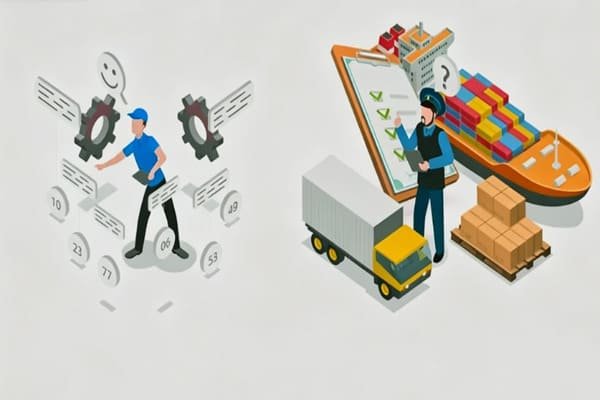
Let's dive into these three critical errors. They are simple to understand but can cause major headaches if overlooked. The automated system is designed to find these specific problems, so getting them right is your first priority.
Mistake 1: Data That Doesn't Match
This is the most frequent cause of rejection. The system cross-references data across multiple documents10. Your Commercial Invoice, Packing List, and Bill of Lading must all tell the exact same story. Even a small difference in the quantity of goods, the declared value, or the description of the product can trigger an automatic flag. For example, if your invoice lists "1000 units of outdoor camping lanterns" but your Bill of Lading just says "1000 units of lighting equipment," the system may see this as a mismatch and reject the filing. Consistency is everything.
Mistake 2: The Wrong Product Code
Using an incorrect Harmonized Tariff Schedule (HTS) code is another red flag. These codes determine the duties you pay and ensure your product complies with regulations11. An incorrect code can be seen as an attempt to pay lower duties, leading to immediate rejection, fines, and intense scrutiny on your future shipments12. This is especially true for complex products like chemicals or specialized equipment, where classification can be tricky.
Mistake 3: Missing the Deadline
Automated systems run on strict timelines. The required import security filing (ISF) and entry summary must be submitted within the legally mandated timeframes. With F865 auto screening, there's no grace period. If your filing is even a minute late, the system will reject it. This can cause a chain reaction of delays, as your cargo cannot be released until a correct and timely filing is accepted.
How Can You Proactively Avoid F865 Filing Rejections?
Feeling the pressure to get your F865 filings perfect? The fear of a rejection can be stressful, but you don't have to navigate it alone.
To avoid rejections, create a pre-shipment data verification checklist. Double-check that your commercial invoice, packing list, and bill of lading all match perfectly. Most importantly, partner with an experienced freight forwarder who can audit your documents before submission.

Avoiding these rejections comes down to a simple principle: get your data right before your cargo ever leaves the factory. A proactive approach is far less expensive than a reactive one. Here are three concrete steps you can take to prepare your business for the F865 auto screening mandate.
Create a Single Source of Truth
Before you even think about shipping, create a master data sheet for each shipment. This document should contain all the final, confirmed details: shipper and consignee information, precise product descriptions, correct HTS codes, quantities, values, and weights. All other documents—the commercial invoice, packing list, and instructions to your forwarder—should be generated from this single source. This eliminates the risk of typos and inconsistencies that happen when data is re-entered multiple times.
Implement a Pre-Shipment Checklist
Don't leave verification to chance. A simple checklist can save you.
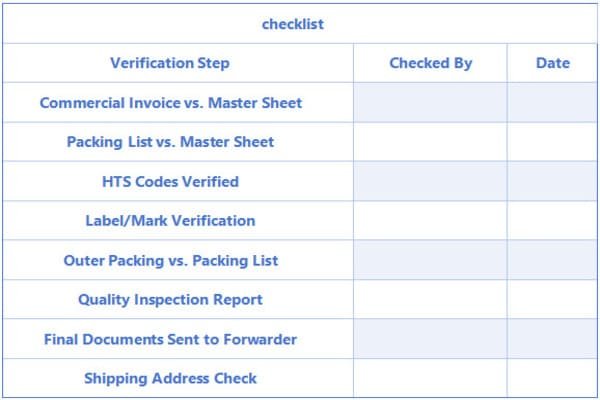
This process ensures a second pair of eyes reviews everything before it's submitted.
Choose the Right Partner
Finally, you don't have to be a customs expert. Your freight forwarder should be. At Deeplinker, we act as a crucial line of defense for our clients. We review all documentation for consistency and accuracy before submitting it to customs. With our experience in handling complex cargo like dangerous goods and oversized projects, we understand the heightened importance of flawless paperwork. A good partner doesn't just move your boxes; they protect your supply chain from risks like F865 rejections.
Conclusion
With F865 auto screening, proactive data verification and a reliable logistics partner are your best defense against costly rejections. Prepare now to ensure your shipments keep moving smoothly.
"Cargo Systems Messaging Service", https://www.cbp.gov/trade/automated/cargo-systems-messaging-service. An official CBP implementation notice or Federal Register publication would establish the existence, sponsoring agency, and effective date of the F865 automated screening program. Evidence role: historical_context; source type: government. Supports: US F865 auto screening is a new automated system by U.S. Customs launching in June 2026.. Scope note: This requires direct official confirmation; contextual ACE sources alone would not verify the specific F865 name or June 2026 launch date. ↩
"ACE Entry Summary Instructions", https://www.cbp.gov/document/guides/ace-entry-summary-instructions. CBP documentation on ACE entry processing supports that import data are submitted and validated electronically within CBP’s trade-processing environment. Evidence role: mechanism; source type: government. Supports: The system electronically checks import filings for errors.. Scope note: ACE documentation may support electronic validation generally, but may not identify F865 unless the source specifically discusses that module. ↩
"ACE Entry Summary Business Process", https://www.cbp.gov/document/guides/ace-entry-summary-business-process. CBP ACE business-rule documentation can support that electronically filed entries may be rejected when submitted data fail specified validation rules. Evidence role: mechanism; source type: government. Supports: Automated customs validation can reject filings because of data mismatches.. Scope note: Such documentation may show rejection for validation failures generally; it may not prove that every minor mismatch causes shipment-level rejection. ↩
"ACE: The Import and Export Processing System", https://www.cbp.gov/trade/automated. CBP describes the Automated Commercial Environment as the primary electronic system through which the trade community reports imports and exports and government agencies determine admissibility. Evidence role: definition; source type: government. Supports: F865 auto screening is presented as part of CBP’s Automated Commercial Environment.. Scope note: This supports the ACE context, but it does not independently verify that F865 is a named ACE component unless the cited source says so. ↩
"CBP Reaches Historic Milestone with Final Core Trade Processing ...", https://www.cbp.gov/newsroom/national-media-release/cbp-reaches-historic-milestone-final-core-trade-processing. CBP materials on ACE state that the system is intended to modernize and streamline import and export processing for the trade community and partner government agencies. Evidence role: general_support; source type: government. Supports: ACE is designed to streamline trade processing.. Scope note: This supports ACE’s stated purpose, not the effectiveness of any specific F865 screening process. ↩
"ACE CATAIR Error Dictionary | U.S. Customs and Border Protection", https://www.cbp.gov/document/guidance/ace-catair-error-dictionary. CBP ACE filing guidance and error-message documentation can support that entries failing automated edits or business rules are returned or rejected electronically. Evidence role: mechanism; source type: government. Supports: Automated customs processing can issue a rejection when filed data fail required checks.. Scope note: The source may document immediate electronic rejection of filings rather than physical rejection of cargo. ↩
"Entry Summary Acceptance and Reject Process", https://www.cbp.gov/document/technical-documentation/entry-summary-acceptance-and-reject-process. Technical documentation on electronic customs filing can support that automated validation occurs at machine-processing speed and can return electronic error or rejection messages shortly after submission. Evidence role: mechanism; source type: government. Supports: Automated filing systems can rapidly flag and reject non-compliant submissions.. Scope note: The exact “in seconds” timing would need a source measuring ACE response times; otherwise the support is contextual for rapid automated processing. ↩
"FMC Publishes Final Rule on Detention and Demurrage Billing ...", https://www.fmc.gov/articles/fmc-publishes-final-rule-on-detention-and-demurrage-billing-practices/. Federal Maritime Commission materials describe demurrage as charges associated with cargo remaining at a marine terminal beyond allowed free time, supporting the connection between release delays and additional costs. Evidence role: definition; source type: government. Supports: Cargo delayed at port can incur demurrage fees.. Scope note: This supports the nature of demurrage charges generally, not the amount incurred in any particular F865 rejection scenario. ↩
"Informed Compliance Publications | U.S. Customs and Border Protection", https://www.cbp.gov/trade/rulings/informed-compliance-publications. CBP compliance guidance or trade-enforcement summaries identifying frequent entry or ISF filing errors would support the claim that these error categories are common causes of filing problems. Evidence role: expert_consensus; source type: government. Supports: Data mismatches, incorrect HTS codes, and late or incomplete filings are common import filing mistakes.. Scope note: A source may document common import filing errors generally, but may not rank them as the top three causes of F865 rejection unless it is specific to that program. ↩
"ACE Frequently Asked Questions - U.S. Customs and Border Protection", https://www.cbp.gov/trade/automated/ace-faq. CBP entry and cargo-release documentation can support that import processing relies on multiple data elements, including shipment, entry, party, and commodity information, which are validated against filing requirements. Evidence role: mechanism; source type: government. Supports: Automated import processing validates shipment data across required filing information.. Scope note: The source may describe data-element validation rather than literal comparison of commercial invoices, packing lists, and bills of lading by name. ↩
"Harmonized Tariff Schedule - International Trade Commission", https://hts.usitc.gov/. The U.S. International Trade Commission explains that the Harmonized Tariff Schedule classifies imported goods and sets applicable tariff rates, while CBP guidance links proper classification to import compliance obligations. Evidence role: definition; source type: government. Supports: HTS codes determine applicable duties and are part of import compliance.. Scope note: HTS classification directly determines tariff treatment; regulatory compliance may also depend on other agency requirements beyond the HTS code itself. ↩
"Appendix B to Part 171, Title 19 -- Customs Regulations ... - eCFR", https://www.ecfr.gov/current/title-19/chapter-I/part-171/appendix-Appendix%20B%20to%20Part%20171. CBP informed-compliance materials and U.S. customs penalty law support that inaccurate classification can result in underpayment of duties and potential penalties when importers fail to exercise reasonable care. Evidence role: general_support; source type: government. Supports: Incorrect HTS classification can create duty underpayment and penalty exposure.. Scope note: The source may support penalties for misclassification generally; “immediate rejection” and “future scrutiny” would require separate CBP operational guidance or enforcement examples. ↩