

Importing to the EU? The new CBAM carbon tax starts in 2026. Unexpected costs could hurt your profit margins, but understanding them now is key to staying ahead.
The cost of the Carbon Border Adjustment Mechanism (CBAM) tax depends on your product's specific carbon footprint and the weekly EU carbon price1. You will buy CBAM certificates to cover the embedded emissions of goods like steel and aluminum, making accurate supplier data essential for your budget.
The reporting-only transition period is almost over. Starting in 2026, real money is on the table. This isn't just another piece of paperwork; it's a fundamental shift in how the EU manages imports, and it will directly impact your bottom line. For importers like us, treating CBAM as a new standard of compliance is the only way forward. The most successful businesses will be those who plan for it now, not those who react to it later. So, let’s dig into the details to get you prepared.
What Is the EU's Carbon Border Adjustment Mechanism (CBAM)2?
You've heard the term "CBAM," but the details can be confusing. This confusion can easily lead to compliance errors, delays, and unexpected fines that eat into your profits.
CBAM is a tariff on the carbon emissions embedded in specific goods imported into the EU. Its purpose is to prevent "carbon leakage3" by ensuring imported products face the same carbon cost as those produced within the EU, promoting fairer competition and greener production worldwide.
The core idea behind CBAM is to create a level playing field. Inside the European Union, companies already pay for their carbon emissions through a system called the Emissions Trading System (ETS)4. If a factory in Germany produces steel, it has to buy allowances for the CO2 it emits. But what about a factory outside the EU? Without CBAM, that factory could produce the same steel without that carbon cost, giving it an unfair price advantage. This can lead to "carbon leakage," where EU companies move their production to countries with weaker environmental laws just to save money. CBAM is designed to close this loophole. It initially applies to imports in six key sectors known for their high carbon footprint.
Initially Covered Product Categories
| Sector | Examples of Covered Goods |
|---|---|
| Iron & Steel | Screws, bolts, nuts, tubes, pipes, structures |
| Aluminum | Bars, rods, foil, tubes, pipes, structures |
| Cement | Portland cement, aluminous cement |
| Fertilizers | Ammonia, nitric acid, urea |
| Electricity | Electrical energy |
| Hydrogen | Hydrogen |
How Much Will You Actually Pay in CBAM Taxes?
The big question on everyone's mind is the final cost on the invoice. Guessing wrong could mean losing deals because your pricing is too high, or facing unexpected bills that wipe out your margin.
Your total CBAM cost is the "embedded emissions" of your goods (in tonnes of CO2) multiplied by the average weekly price of EU ETS allowances. If you have already paid a carbon price in the country of origin, you can deduct that amount from your total.
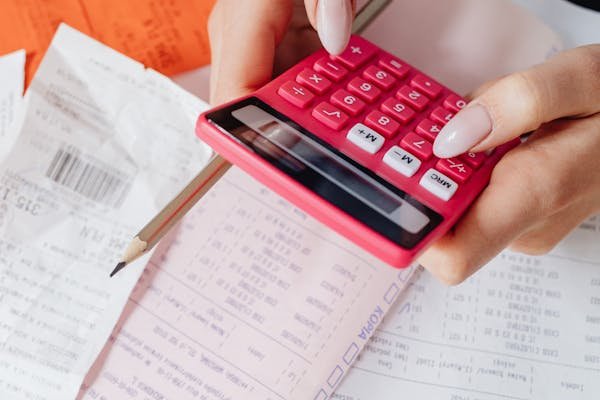
Let's look at the formula so you can see how the final number is reached. It’s important to understand each part of this equation because it shows you where you have control.
Breaking Down the CBAM Formula
The calculation itself is straightforward:
Total CBAM Cost = (Total Embedded Emissions) x (EU ETS Price) - (Carbon Price Paid in Origin Country)
-
Total Embedded Emissions: This is the most critical piece of data you need. It represents the total greenhouse gases released during the production of your goods, measured in tonnes of CO2 equivalent (tCO2e). This data must come directly from your manufacturer and needs to be verified. It includes direct emissions from the production process and, for some goods, indirect emissions from the electricity used.
-
EU ETS Price: This is the price of one CBAM certificate, which covers one tonne of CO2. The price is not fixed. It’s based on the weekly average auction price of allowances under the EU's Emissions Trading System. Recently, this has hovered around €70-€90 per tonne, but you must check the current price for accurate budgeting.
-
Carbon Price Paid: If your supplier's country has its own carbon tax or emissions trading system, and a price was paid for the emissions there, you can claim a reduction. You will need official proof of this payment to lower your CBAM bill.
What's the Estimated CBAM Cost Per Tonne for Key Products?
You need some quick numbers for your budget planning. Without solid estimates, your financial forecasts and product pricing are just guesswork, leaving you exposed to risk.
Based on an average EU ETS price of €85 per tonne, one tonne of common Chinese steel might incur a CBAM cost of around €170, while a tonne of aluminum could cost over €1,400. These are only estimates; your actual cost depends on your supplier's specific production methods.
To make this more concrete, I've put together a table with some industry-average estimates. I spoke with a client, David in Germany, who imports industrial components. He needed these ballpark figures to start conversations with his suppliers about how they will manage these new costs together. This table helped him see the huge difference between materials like steel and aluminum.
Disclaimer: These Are Industry Averages
The numbers below are for illustration only. They are based on general production data and an assumed EU ETS price of €85 per tonne of CO2. Your actual cost will depend entirely on the verified emissions data from your specific supplier's factory.
| Product (from China) | Average Embedded Emissions (tCO2e / tonne of product) | Estimated CBAM Cost (at €85/tCO2e) |
|---|---|---|
| Crude Steel | ~2.0 | ~€170 per tonne |
| Unwrought Aluminum | ~17.0 | ~€1,445 per tonne |
| Cement | ~0.8 | ~€68 per tonne |
| Ammonia (Fertilizer) | ~2.5 | ~€212 per tonne |
Why is the cost for aluminum so much higher? It's because producing aluminum is incredibly energy-intensive, and if that energy comes from coal-fired power plants, the embedded emissions are massive. A supplier using hydropower would have a much lower carbon footprint and therefore a lower CBAM cost. This is why getting specific data is not just a formality—it's a critical cost-saving strategy.
What is the Step-by-Step Process for CBAM Compliance?
The official process can seem complex and bureaucratic. One missed step or deadline could halt your shipments at the border, causing major disruptions to your supply chain and relationships with customers.
First, you or your representative must become an "authorized CBAM declarant." Then, for each shipment, you must collect verified emissions data5 from your supplier. Annually, you will declare your total imports and surrender the corresponding number of CBAM certificates you've purchased.
Navigating new regulations can be daunting, but when you break it down, the process is manageable. I've guided several clients through the reporting phase, and the key is to be systematic. Here is the path you'll need to follow once the definitive period begins in 2026.
Your Annual CBAM Workflow
-
Become an Authorized Declarant: Before you can import CBAM goods in 2026, you (or your indirect representative, like a customs broker or logistics partner) must apply for and receive "authorized CBAM declarant" status from the national authority in an EU member state6.
-
Collect Verified Data (Ongoing): This is a continuous process. For every single shipment of CBAM-covered goods you import, you must obtain data from your manufacturer on the embedded emissions. This data must be verified by an accredited third party.
-
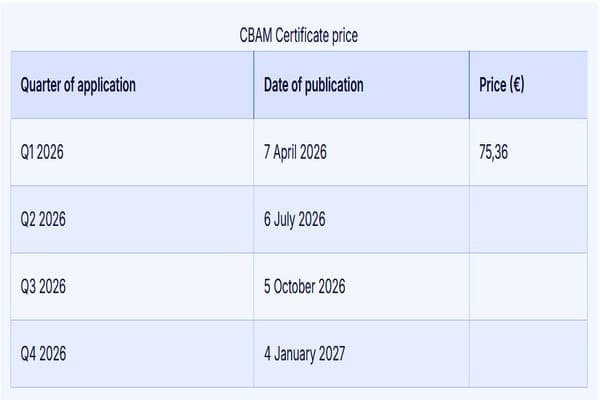
Purchase CBAM Certificates: You will need to purchase CBAM certificates through a common central platform managed by the European Commission. Each certificate corresponds to one tonne of CO2 emissions. The price will be tied to the weekly EU ETS carbon price.
-
Submit Annual Declaration: By May 31st of each year (starting in 2027 for the 2026 import year), you must submit a CBAM declaration. This report will detail the total quantity of goods you imported in the previous calendar year and their total verified embedded emissions.
-
Surrender Certificates: At the same time you submit your declaration, you must "surrender" the number of CBAM certificates that matches your total declared emissions for the year.
What are the Biggest CBAM Mistakes Importers Make?
With any new regulation, it's easy to make a costly mistake. Simple errors in your CBAM process can lead to significant fines, customs delays, and lost profits you didn't budget for.
The biggest mistakes are relying on the EU's high default emissions values instead of getting real data, and having poor communication with suppliers. Failing to get accurate, verified data from your manufacturer will directly cost you more money in taxes and can lead to penalties.
I've already seen some common patterns during the transitional reporting phase. These small oversights can become huge financial problems when real payments begin. Learning from them now will save you a lot of trouble down the road. Here are the main pitfalls to watch out for.
Mistake 1: Using Default Values
If you cannot provide verified emissions data for your products, you won't be blocked from importing. Instead, the EU will apply a "default value" to calculate your tax. This value is based on the average emissions of the worst-performing 10% of producers in the EU. This is intentionally set high to act as a penalty and incentivize you to get accurate data. Relying on this is like volunteering to pay the highest possible tax.
Mistake 2: Poor Supplier Communication
You cannot achieve CBAM compliance alone in an office in Europe or the US. It requires deep collaboration with your manufacturers. You must start talking to them now about their ability to track, report, and verify their carbon emissions. If they are not prepared, you need to help them get ready or find suppliers who are.
Mistake 3: Forgetting Indirect Emissions
For certain goods, especially aluminum and steel, CBAM covers not only the direct emissions from the factory but also the "indirect" emissions from the electricity consumed during production. Make sure the data you receive from your supplier includes this, or you could be filing an incorrect declaration.
How Can You Actively Reduce Your CBAM Costs?
CBAM can feel like just another unavoidable cost of doing business. But simply accepting high costs puts you at a competitive disadvantage against importers who are actively managing them.
You can reduce your CBAM costs by choosing suppliers who use renewable energy or low-carbon production methods. Sourcing from countries with their own carbon pricing systems7 can also provide a credit against your tax. Accurate data collection is the foundation for ensuring you never overpay.

The smartest importers I work with are already treating CBAM not as a penalty, but as an opportunity. It's a chance to build a more resilient, transparent, and ultimately more cost-effective supply chain. Instead of just paying the tax, you can take proactive steps to lower it.
1. Make Carbon a Sourcing Metric
Your most powerful tool is your supplier selection. When you evaluate new manufacturers, their carbon footprint should be as important as their price, quality, and lead time. Ask them directly:
- What is your energy source? (e.g., grid, solar, hydropower)
- Can you provide verified emissions data per unit?
- What are your plans for decarbonization8? Choosing a supplier with a lower carbon footprint will directly reduce your CBAM bill.
2. Double Down on Data Accuracy
I can't stress this enough: do not settle for default values. Work with your suppliers and logistics partners like us at Deeplinker to ensure you get accurate, verified data for every shipment. This is the only way to ensure you pay what you truly owe and not a penny more.
3. Leverage Origin Country Carbon Prices
If your supplier is in a country that already has a carbon tax or an Emissions Trading System (like in parts of China), make sure you get the official documentation proving that a carbon price has been paid. This will generate a credit that directly reduces the number of CBAM certificates you have to buy.
Conclusion
CBAM is a permanent change to EU trade. The importers who succeed will treat it not as a tax, but as a standard for building cleaner, more transparent, and more competitive supply chains.
Learn about the EU carbon price to better estimate your CBAM costs and budget effectively. ↩
Understanding CBAM is crucial for importers to navigate new regulations and avoid unexpected costs. ↩
Learn about carbon leakage to understand the importance of CBAM in promoting fair competition. ↩
Gain insights into the ETS to understand how it impacts your carbon costs and compliance. ↩
Explore the significance of verified emissions data to avoid costly mistakes in your CBAM process. ↩
Learn about the role of EU member states in implementing CBAM regulations and compliance. ↩
Understanding carbon pricing systems can help you leverage credits to reduce your CBAM tax. ↩
Explore the concept of decarbonization to understand its relevance in reducing CBAM costs. ↩