
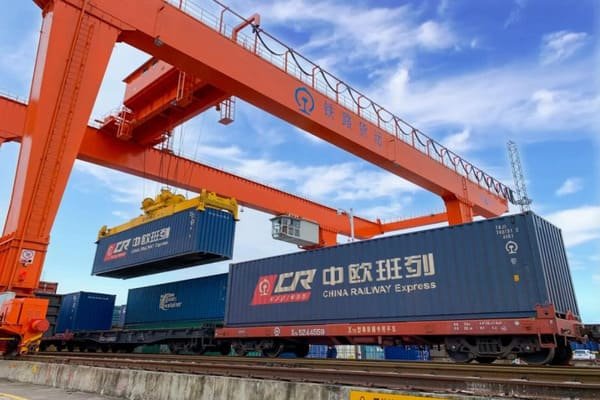
Are your profits sinking due to chaotic sea shipping? Delays and surprise costs are crippling your supply chain. The China-Europe Railway Express offers a stable path forward.
The China-Europe Railway Express (CERE) is a network of freight rail lines that provides a reliable and efficient middle ground between sea and air freight. It offers much faster transit than ocean shipping and is far more cost-effective than air, making it an optimal alternative.
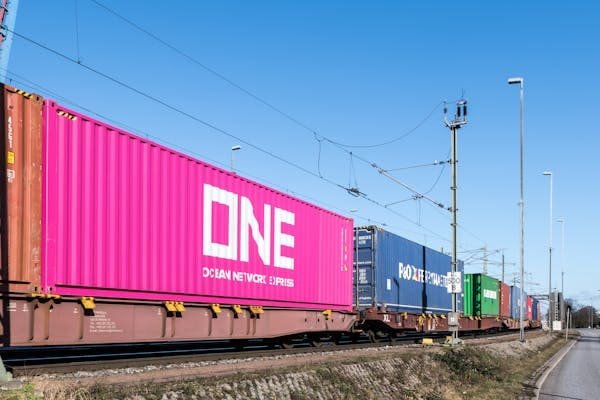
I've been in logistics for over 20 years, and I've seen firsthand how disruptions can bring a business to its knees. Right now, with sea routes more congested and unpredictable than ever, many of my clients are asking about alternatives. They need a solution that isn't just a backup plan, but a core part of a stronger, more resilient supply chain. That's why we need to talk about the railway. It’s time to look at how this "New Silk Road" can stabilize your deliveries and protect your business. Let's explore what it is and how it can work for you.
What Exactly is the China-Europe Railway Express1?
You hear about the "New Silk Road," but what does it really mean for your business? It sounds complex, but the idea is simple and powerful for your shipments.
The China-Europe Railway Express, or CERE, is a system of freight train routes connecting major industrial hubs in China with key commercial centers across Europe. It acts as a land bridge, offering a balance between the slow pace of sea freight and the high cost of air freight.
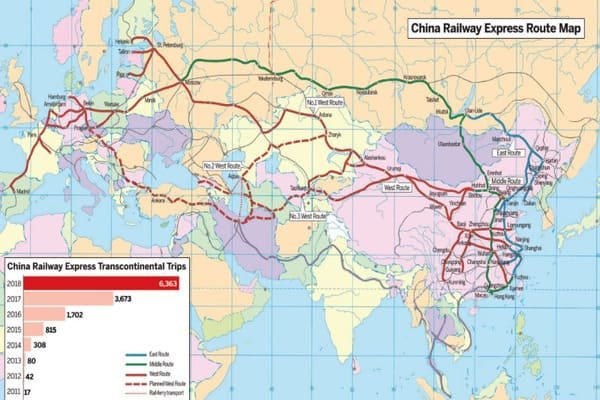
Think of CERE not as one single track, but as a web of interconnected railways. The journey typically starts from cities like Xi'an, Chongqing, or Zhengzhou in China. From there, containers travel overland through countries like Kazakhstan and Russia, entering the European Union through hubs in Poland (like Małaszewicze) or Germany (like Duisburg and Hamburg). This isn't a new idea, but it has grown massively in the last decade, becoming a mature and reliable shipping option. For many of my clients, it has become a game-changer. It’s about having a solid third option. To make it clearer, here is how CERE stacks up against traditional air and sea freight:
| Feature | Sea Freight | Air Freight | Rail Freight (CERE) |
|---|---|---|---|
| Transit Time | 35-45 Days | 3-5 Days | 15-20 Days |
| Cost | Low | Very High | Medium |
| Reliability | Low (Weather, Congestion) | High | Very High (Fixed Schedules) |
| Best For | Bulk, Low-Value Goods | Urgent, High-Value Goods | Time-Sensitive, Medium-High Value Goods |
Why is CERE a Better Choice Than Congested Sea Routes?
Are you tired of your cargo getting stuck at sea for weeks? Port congestion and unpredictable schedules are costing you money and customers. There is a much more reliable way.
CERE offers superior speed and schedule reliability compared to sea freight. It completely bypasses ocean-related risks like port congestion2, canal blockages, and bad weather, providing a predictable transit time of around 15-20 days from terminal to terminal.
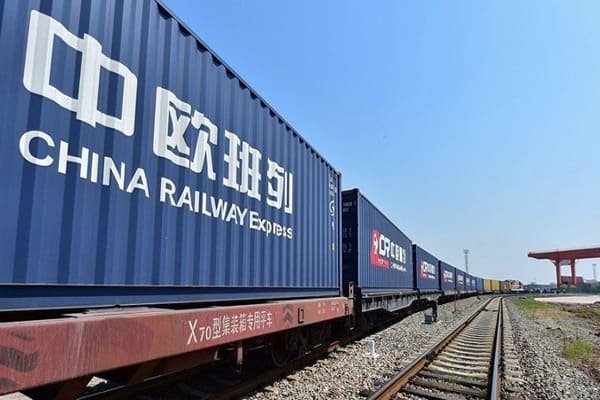
When the Suez Canal was blocked, the world saw how fragile sea shipping can be. Right now, issues in the Red Sea are causing massive delays and cost spikes again. CERE avoids all of that. Trains run on fixed schedules3, and I can tell my clients with high confidence when their goods will arrive. This stability is its greatest strength.
I had a client in the electronics business who was about to miss a major product launch because their shipment was stuck on a vessel delayed by port strikes. We rerouted their next batch via CERE. The goods arrived in Germany from China in just 18 days. They were able to stock their shelves while competitors were still waiting for their ships. This isn't just about being faster; it's about control. You gain predictability in an unpredictable world. While the cost is higher than sea, it's a fraction of air freight. For many businesses, the price of reliability is well worth it, as it prevents lost sales and protects their brand reputation.
Are Your Goods a Good Fit for the China-Europe Railway?
Choosing the wrong shipping mode can destroy your profit margins. Are you shipping products that need to arrive quickly but can't justify the cost of air freight?
CERE is perfect for high-value and time-sensitive goods. This includes categories like consumer electronics, automotive parts, fast fashion, and many e-commerce products where speed to market and inventory turnover are critical for profitability.
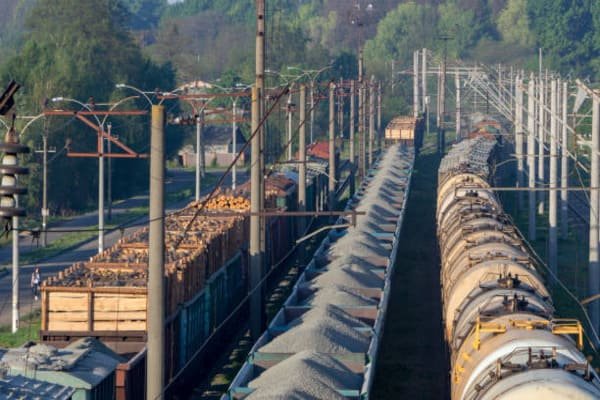
The key is to weigh transit time against cost. If your product's value depreciates quickly or if it's tied to a specific season, CERE is often the smartest choice. For example, a container of low-value raw materials like plastic pellets should probably go by sea because the shipping cost is a large part of the total value. But for a container of new-model laptops or seasonal clothing, a 20-day delay at sea could mean missing the entire sales window. The slightly higher cost of rail becomes an investment in securing your revenue.
Here’s a breakdown of products I regularly see my clients ship successfully via CERE:
- Automotive Parts: Car manufacturers often use just-in-time production. They can't afford a shipment of critical parts to be delayed for weeks at sea. Rail provides the reliability they need.
- High-Value Electronics: For products like smartphones and laptops, getting them to market weeks earlier than competitors is a massive advantage.
- Fast Fashion: Seasonal clothing lines have a short shelf life. CERE ensures they arrive in stores for the correct season.
- E-commerce Bestsellers: For Amazon or Shopify sellers, a stockout on a popular item means lost sales and a lower ranking. Rail allows for faster restocking than sea freight.
How Can You Start Using CERE for Your Business?
Adopting a new shipping method feels daunting. You picture mountains of paperwork and confusing cross-border rules. But it doesn't have to be a headache at all.
The simplest way to use CERE is to work with an experienced freight forwarder4. A good partner, like our team at Deeplinker, will manage the entire process for you, from booking and documentation to customs clearance at every border.

You don't need to become an expert in transcontinental rail logistics. Your job is to run your business. Our job is to get your goods where they need to go, smoothly and efficiently. The process is actually very straightforward from your perspective. First, you provide us with the details of your cargo—what it is, its weight and volume, and where it needs to go. We then provide a comprehensive quote and handle the booking on a train.
We guide you on preparing the necessary documents, like the commercial invoice and packing list. Then, we arrange for your goods to be picked up and loaded into a container at the rail terminal in China. Throughout the journey, you get real-time tracking updates, so you're never in the dark. Once the train arrives in Europe, for instance in Poland, our partners there handle the import customs clearance. The container is then transferred to a truck for the final delivery to your warehouse. It's a door-to-door service designed to be as simple as possible for you.
How Do Western Businesses Really Benefit from CERE?
Your supply chain feels weak, and one shipping delay can throw your whole business into chaos. You need a system that is strong and flexible, not fragile.
CERE gives Western businesses vital supply chain resilience. It acts as a reliable third pillar alongside sea and air, diversifying risk and enabling better inventory control5, improved cash flow, and a faster response to market changes.
The biggest benefit I see for my clients, especially those like David, the German e-commerce owner, is risk diversification. They no longer have all their eggs in the sea freight basket. When a crisis hits ocean shipping, their business doesn't grind to a halt. They have a stable, functioning alternative. This is no longer a "nice-to-have"; it's essential for survival.
Beyond risk, the benefits are financial. With transit times cut in half compared to sea, your capital isn't tied up in inventory floating on an ocean for over a month. I worked with a UK-based company selling home goods. By switching a portion of their shipping to CERE, they reduced their inventory holding costs by 15% and improved their cash flow6 significantly because they could sell their products and get paid faster. This predictability also allows for leaner inventory management. You don't need to order massive amounts of safety stock "just in case," which frees up warehouse space and even more capital. It gives you a competitive edge to be more agile and responsive to your customers.
What Are the Common Myths About the China-Europe Railway?
You may have heard things about the railway that make you hesitant. It’s unsafe, too complex, or politically risky. These misconceptions could be costing you a major opportunity.
Many common fears about CERE are unfounded. In reality, it's a highly secure and streamlined mode of transport. Experienced logistics partners manage all complexities, including border crossings and geopolitical factors7, ensuring a smooth and safe journey for your cargo.
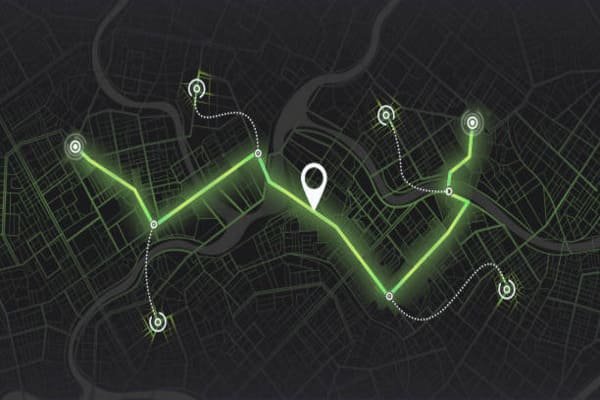
Let's clear up a few of the most common myths I hear from new clients.
Myth 1: "My cargo will get stolen or damaged." The reality is that security is extremely tight. Containers are sealed at the origin and are not opened until they reach the destination customs point. They are monitored by GPS the entire way. In my experience, the rate of cargo theft or damage is actually lower than on many ocean routes.
Myth 2: "The paperwork for all those borders must be a nightmare." This is a valid concern, but it's not your problem to solve. This is precisely why you hire a freight forwarder. We have established processes and local partners to handle all customs formalities electronically at each border, such as between China and Kazakhstan or Belarus and Poland. For you, the process is seamless.
Myth 3: "It's too risky because it all goes through Russia." While the primary Northern Corridor does transit through Russia, it's not the only option. The "Middle Corridor8," which goes through the Caspian Sea and bypasses Russia, has become a viable alternative. We help our clients assess the routes and choose the one that best fits their risk tolerance and needs.
Myth 4: "It's only for big companies shipping full containers." This is completely false. LCL (Less than Container Load)9 services on the railway are very common. We consolidate freight from multiple smaller businesses into one container. This means even if you only need to ship a few pallets, you can still access the speed and reliability of CERE.
Conclusion
CERE is more than a backup plan; it's a strategic tool for building a resilient, modern supply chain. It perfectly balances speed, cost, and reliability for today’s businesses.
Explore this resource to understand how CERE can transform your shipping strategy. ↩
Learn about the factors contributing to port congestion and solutions to mitigate it. ↩
Explore the benefits of fixed schedules in logistics and shipping. ↩
Understand the critical role of freight forwarders in simplifying shipping. ↩
Find effective inventory control practices to enhance your operations. ↩
Understand the relationship between shipping methods and cash flow management. ↩
Gain insights into how geopolitical issues impact shipping routes. ↩
Discover the importance of the Middle Corridor in global logistics. ↩
Learn about LCL shipping and its benefits for smaller shipments. ↩