
Huaqiangbei Sourcing Guide: How to Consolidate Multiple Suppliers & Export from China
Introduction
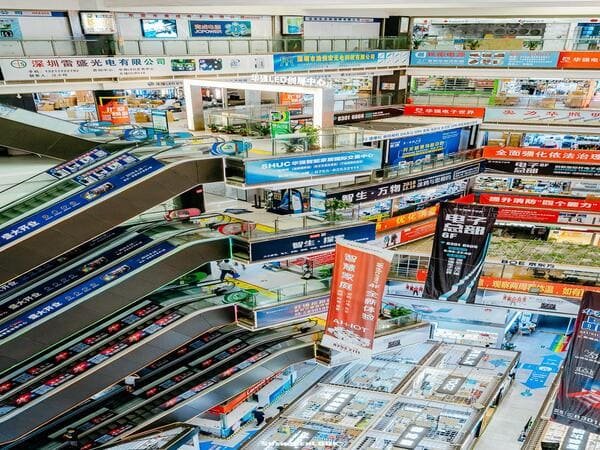
If you've ever sourced electronics from Huaqiangbei in Shenzhen, you already know the drill — unbeatable prices, an endless variety of products, and new gadgets hitting the market every week. It's no wonder buyers from around the world fly in just to walk those famous electronic markets1.
But here's the part nobody talks about enough: what happens after you buy?
You've placed orders with 15 different suppliers. You've got phone cases from one vendor, wireless earbuds from another, power banks from a third, and smart watches from a fourth. Each supplier has their own packaging, their own shipping method, and their own timeline.
Now you're staring at a pile of questions:
- Do I ship each supplier's order separately? (Spoiler: that'll cost you a fortune.)
- Can I combine everything into one shipment? (Yes — but how?)
- What about Chinese export customs? Who handles that?
-
How do I make sure the products are actually what I ordered before they leave China?
Why Consolidation Is Non-Negotiable for Multi-Supplier Sourcing
Let's start with the basics: what exactly is consolidation?
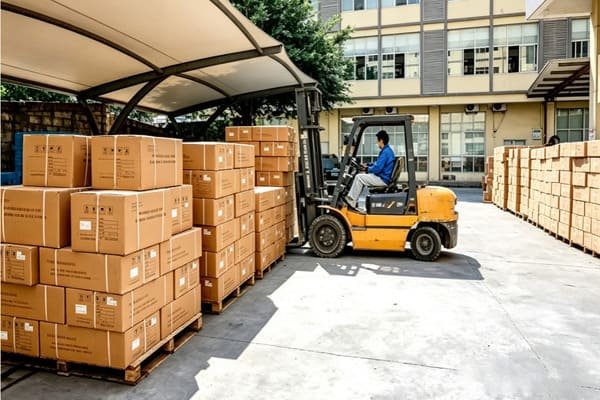
In simple terms, consolidation means collecting goods from multiple suppliers into one single shipment before they leave China. Instead of 20 separate packages going through 20 separate customs clearances and paying 20 separate shipping fees, you combine everything into one efficient shipment.
What Happens If You Don't Consolidate?
You might be thinking, "Is it really that big of a deal? Can't I just let each supplier ship directly?"
Here's what happens when you skip consolidation:
💸 Shipping costs skyrocket. Every supplier ships their own small package? You pay the minimum charge 20 times over. The first kilogram of air freight is always the most expensive2, and small parcels get hit with handling fees, documentation fees, and minimum charges that add up fast.
📋 Customs becomes a nightmare. Twenty separate shipments mean twenty separate customs declarations3 — both on the China export side and your country's import side. More declarations = more chances of errors, delays, and extra brokerage fees.
🔍 Quality control is impossible. Your goods arrive at your warehouse in dribs and drabs over two weeks. You open box #7 and find half the products are defective. By then, it's too late — the supplier is already paid, and returning goods from overseas costs more than the products are worth.
📦 Packaging is all over the place.
Each supplier uses their own box size, their own (usually minimal) padding, and their own labeling. When everything arrives separately, you have to repack it yourself anyway.
The 5 Big Benefits of Proper Consolidation
Done right, consolidation solves all of these problems and more:
-
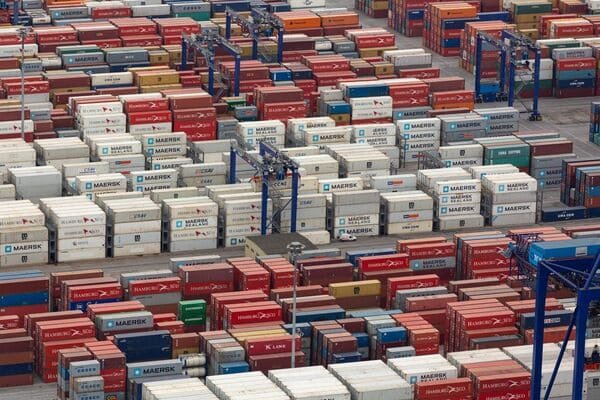
Lower shipping costs — One consolidated shipment means one set of freight charges. Whether you go LCL (less than container load) or FCL (full container load)4, you get much better per-unit rates.
-
Single customs declaration — One export declaration from China, one import declaration at destination. Fewer documents, fewer fees, fewer chances of something going wrong.
-
Pre-shipment quality control — Everything gets checked before it leaves China. If something's wrong, you can return it to the supplier while it's still cheap and easy to do so.
-
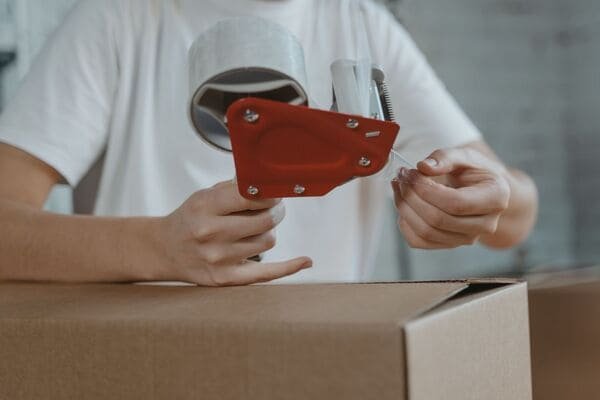
Professional repackaging — Uniform box sizes, proper cushioning, reinforced corners, and moisture protection. Your goods arrive in better condition, and you fit more into each shipment.
-
One point of contact — Instead of chasing 20 different suppliers and 5 different logistics companies, you have one warehouse team handling everything. One person to call if something goes wrong.
Step 1: Choosing the Right Consolidation Warehouse
The first real decision you'll make is where to consolidate your goods. Not all warehouses are created equal, and picking the wrong one can cost you time, money, and even your inventory.
Location
Where your warehouse is located matters more than you might think:
- Near the port/airport — If you're shipping by sea, a warehouse near Yantian or Shekou port saves on trucking costs. If you're flying goods out, being near Bao'an airport is the way to go.
- Near Huaqiangbei — Your suppliers are in the Huaqiangbei area. A warehouse that's close means faster, cheaper deliveries from your suppliers, and easier for you to visit in person if needed.
Pro tip: The ideal warehouse is within 30-60 minutes of both Huaqiangbei and your departure port/airport. This gives you the best of both worlds.
Warehouse Type Matters
Not every warehouse can handle electronics. Here's what to look for:
- General warehouse vs. bonded warehouse5 — For most Huaqiangbei sourcing, a standard general warehouse is fine. You'd only need a bonded warehouse if you're doing something specific like re-exporting without Chinese import clearance, or if you're working with goods that need to stay in a bonded zone for tax reasons.
- Electronics & battery storage capability — This is a big one. Many warehouses won't accept lithium batteries due to fire risk6. If you're sourcing anything with a built-in battery (and let's be honest, in Huaqiangbei, that's almost everything), you need a warehouse that's set up to store battery-powered products safely.
- Security measures — Electronics are small, valuable, and easy to walk out with. Look for 24/7 CCTV, access control, and inventory management systems.
7 Questions You Must Ask Before Booking a Warehouse
Don't just go with the cheapest quote. Ask these questions first:
- Do you provide photos of received goods? — You want visual confirmation of what arrived and in what condition.
- Can you do inspection and quality checks? How much does it cost? — Per-box, per-item, or flat rate? Make sure you understand the pricing.
- Do you offer repackaging, palletizing, and stretch wrapping? — Essential for protecting electronics during transit.
- Do you have an inventory system where I can check stock levels? — A simple web portal or even regular Excel updates work.
- Can you prepare customs documentation? — Commercial invoice, packing list, declaration documents — the more they can handle, the less you have to coordinate.
- What's your fire safety setup? — Especially important for battery storage.
- What are all your fees? — Get a full breakdown: storage, unloading, palletizing, inspection, labeling, documentation. Hidden fees are the #1 complaint about cheap warehouses.
⚠️ Warning: The cheapest warehouse is almost never the best deal. A warehouse that charges a little more but provides proper photos, careful handling, and accurate inventory will save you far more in the long run.
Step 2: Receiving & Quality Inspection
This is where the real work happens — and where most problems are caught (or missed).
The Receiving Checklist
Every time a supplier delivers goods to the warehouse, someone should be checking off this list:
- ✅ Quantity matches the delivery note — Count every box, every unit.
- ✅ Product model, size, and color are correct — It's surprisingly common for suppliers to send the wrong model.
- ✅ Outer packaging is intact — No crushing, water damage, or tears.
- ✅ Accessories and documentation are included — Cables, chargers, manuals, warranty cards — whatever was supposed to be there.
- ✅ Batch numbers or production dates are recorded — Useful for tracking issues later.
To Open or Not to Open: Inspection Strategy
You don't need to open every single box (that would get expensive fast), but you should have a strategy:
Standard orders from trusted suppliers → 10% random inspection Open one out of every ten boxes, check the contents, and make sure everything looks right.
First-time suppliers → 30-50% inspection You don't know this supplier yet. Better to check more thoroughly on the first order.
High-value items → 100% inspection If you're buying expensive electronics like smartphones, laptops, or high-end audio equipment, open every box. The cost of inspection is nothing compared to the cost of receiving counterfeit or defective goods.
Battery-powered products → 100% visual + functional spot check At minimum, verify that batteries are properly packaged and labeled. For critical orders, do a quick functional test on a sample.
Why Photos Are Non-Negotiable
Every inspection should come with photos. Not just one photo of a box — photos of:
- The outer packaging before opening
- The contents of the box
- Any defects or damage (close-up shots)
- The repackaged box after inspection
Why? Because if there's a dispute with a supplier, you need evidence. "The warehouse said there were only 95 units" doesn't carry much weight. A photo of the open box with 95 units clearly visible? That's hard to argue with.
Common Problems & How to Handle Them
| Problem | What to Do |
|---|---|
| Short shipment (fewer units than ordered) | Notify the supplier immediately. Ask them to send the missing units or issue a refund. |
| Wrong product/model | Photograph the wrong items. Ask the supplier to send the correct ones and arrange return of the wrong items. |
| Quality defects | Sort defective units from good ones. Negotiate with the supplier — refund, replacement, or discount on your next order. |
| Damaged packaging | If the product inside is fine, repackage it. If the product is damaged, treat it as a quality defect. |
Step 3: Packaging & Labeling
Once everything has been received and inspected, it's time to make sure it's ready for the journey ahead.
Why Repackaging Is Worth It
You might be tempted to just ship everything in the suppliers' original boxes. Here's why that's usually a bad idea:
- Inconsistent box sizes waste space. Twenty different box sizes from twenty different suppliers means you're paying to ship a lot of air.
- Minimal protection. Most Huaqiangbei suppliers pack their goods for local delivery — a short truck ride across Shenzhen. They're not designed to survive 30 days on a container ship across the ocean.
- No moisture protection. Sea freight means humidity. Electronics + humidity = corrosion, rust, and dead batteries.7
Professional Packaging Standards
Your consolidated shipment should include:
- Adequate cushioning — Bubble wrap, foam inserts, or air pillows for fragile items.
- Moisture protection — Silica gel packets inside each box, and ideally waterproof inner bags for high-value items.
- Reinforced corners — Cardboard edge protectors prevent crushing when boxes are stacked.
- Strapping or tape — Heavy-duty packing tape, and strapping for heavier cartons.
- Weight control — Try to keep individual cartons under 25 kg (55 lbs)8. Heavier boxes are more likely to be dropped, damaged, or cause injuries during handling.
Shipping Marks (Marks & Numbers)
Every box needs proper labeling. This isn't just a nice-to-have — it's how your shipment gets to the right place, and how you sort it when it arrives.
Your shipping marks should include:
- Main mark: Destination port, consignee name or initials
- Carton numbers: "Box 1 of 50", "Box 2 of 50", etc.
- Gross weight / net weight
- Dimensions (optional but helpful)
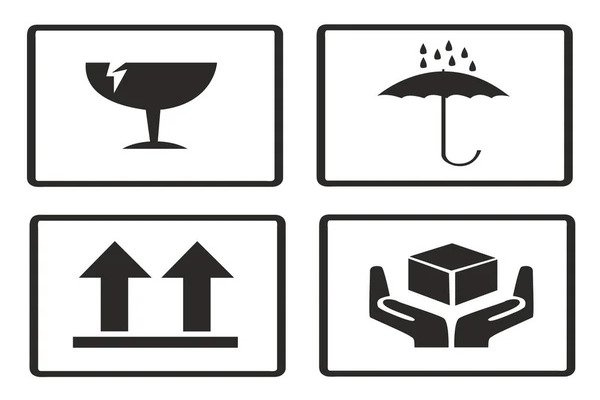
- Handling symbols: "Fragile", "This Side Up", "Keep Dry" — use standard international symbols
Pro tip for multi-supplier orders: Add a supplier code or color code to each box. For example, all products from Supplier A get a red sticker, Supplier B gets blue, etc. When the shipment arrives at destination, you can quickly sort everything without opening boxes.
What NOT to Put on the Box
- ❌ Brand names or logos (unless it's a genuine branded product with proper authorization)
- ❌ Descriptions like "cheap electronics" or "wholesale phones" — these can attract unwanted attention from customs
- ❌ Used/second-hand markings unless you're actually declaring them as used goods
- ❌ Anything that could be considered misleading or false
Step 4: Categorization & Customs Preparation
Here's where consolidation meets customs — and where good preparation saves you from delays, fines, and seized shipments.
Why You Need to Categorize Your Goods
When you have 50 different product types from 20 different suppliers, you can't just list all 50 on one customs declaration and call it a day. Well, you can, but it'll be messy, slow, and more likely to trigger an inspection.
Categorization means grouping similar products together for customs purposes. Here's how to do it:
By product category / HS code — All phone cases together, all chargers together, all audio accessories together. This reduces the number of line items on your declaration and makes the customs officer's job easier. (Hint: happy customs officers = faster clearance.)
By risk level — Separate products into different risk categories, because they have different requirements:
| Category | Examples | Special Requirements |
|---|---|---|
| Standard electronics (no battery) | Phone cases, cables, stands, screen protectors | Normal customs declaration |
| Built-in battery products | Power banks, wireless earbuds, smart watches | MSDS + UN38.3 test report; may need dangerous goods9 handling |
| Magnetic products | Speakers, headphones, motors | May require magnetic inspection (demagnetization check) for air freight |
| Branded products | Any product with a recognized brand name | Must have brand authorization letter; no letter = risk of seizure |
By value — High-value items should be tracked separately, insured separately, and sometimes even stored separately in the warehouse for security.
The Big One: Battery-Powered Electronics
Let's give this its own subsection because it's the #1 source of problems for Huaqiangbei shippers.
Almost everything you buy in Huaqiangbei has a battery. Phones, earbuds, watches, power banks, Bluetooth speakers — the list goes on. And lithium batteries are classified as dangerous goods for transportation.
Here's what you need:
- MSDS (Material Safety Data Sheet) — A document that describes the chemical composition and safety properties of the battery. Your supplier should provide this.
- UN38.3 Test Report10 — Proves the battery has passed UN safety testing. Required for both air and sea freight.
- Proper packaging — Batteries must be packaged to prevent short circuits and damage.
- Correct labeling — Battery handling labels, UN number, etc.
⚠️ Never lie about batteries. Declaring a battery-powered product as "no battery" to save time or money is one of the worst mistakes you can make. If customs or the airline discovers undeclared batteries, your shipment gets seized, you get fined, and you might even get blacklisted. It's not worth it.
Customs Documentation Checklist
Before your shipment can leave China, you'll need:
- 📄 Commercial Invoice — Lists every product, quantity, unit price, and total value. Must be in English.
- 📄 Packing List — Details of how the goods are packed: how many boxes, what's in each box, weights, and dimensions.
- 📄 Customs Power of Attorney — Authorizes your agent to handle customs declaration on your behalf.
- 📄 Declaration Elements11 — Detailed product information required by Chinese customs: material, function, brand, model, etc.
- 📄 Brand Authorization Letter — Only if you're shipping branded products.
- 📄 MSDS / UN38.3 — Only if you're shipping battery-powered products.
If you're working with a good freight forwarder or consolidation warehouse, they'll prepare most of these for you. You just need to provide the product information.
Step 5: Timeline & Cost Management
Consolidation isn't free, and it doesn't happen overnight. Let's talk about how to plan for both.
How Long Does Consolidation Take?
It depends on how many suppliers you have and how fast they deliver, but here's a realistic timeline:
| Phase | Typical Duration |
|---|---|
| Suppliers deliver to warehouse | 3-10 days (depends on supplier speed) |
| Receiving & inspection | 1-3 days |
| Repackaging & categorization | 1-2 days |
| Customs documentation | 1-2 days |
| Total consolidation time | 5-15 days |
Our advice: Set a firm cut-off date for all suppliers. Tell everyone: "All goods must arrive at the warehouse by [date]. Anything arriving after that date goes on the next shipment."
Why? Because if you wait for the slowest supplier, you could be waiting weeks — and every extra day of storage costs you money.
Pro tip: Build a 3-7 day buffer into your schedule. Something always goes wrong — a supplier is late, a product fails inspection and needs replacement, paperwork gets delayed. The buffer keeps your overall timeline on track.
The Hidden Costs of Consolidation
Consolidation saves you money overall, but you need to budget for these fees:
| Fee | What It Covers | Typical Cost Range |
|---|---|---|
| Storage fee | Daily/weekly warehouse storage | ¥1-5 per CBM per day |
| Unloading fee | Unloading delivery trucks | ¥50-200 per truck |
| Palletizing fee | Building pallets, stretch wrapping | ¥30-80 per pallet |
| Inspection fee | Opening and checking boxes | ¥5-20 per box |
| Repackaging fee | New boxes, cushioning, labor | ¥10-50 per box |
| Documentation fee | Customs paperwork preparation | ¥200-500 per shipment |
| Labeling / marking fee | Applying shipping marks, labels | ¥1-5 per box |
Prices are approximate and vary by warehouse and service level.
Money-Saving Tips
- Consolidate quickly. The longer your goods sit in the warehouse, the more storage fees you pay. Set a tight timeline and stick to it.
- Standardize packaging. Uniform box sizes mean more boxes per pallet, more pallets per container — and lower shipping costs per unit.
- Combine similar products for customs. Fewer line items on your declaration = lower customs fees and faster clearance.
- Negotiate package deals. Many warehouses offer all-in-one consolidation packages (receiving + inspection + repackaging + documentation) that cost less than buying each service separately.
-
Ship in volume. The more you consolidate, the lower your per-unit cost. If you source regularly, plan your orders to ship in batches.
Frequently Asked Questions
Q: How long does consolidation usually take?
It depends on how quickly your suppliers deliver, but plan for 5 to 15 days total. The biggest variable is supplier delivery time — some suppliers can deliver in 1-2 days, others might take a week or more.
Our recommendation: Set a firm cut-off date for all suppliers (e.g., "all goods must arrive at the warehouse by August 15th"), and give yourself a 3-7 day buffer for unexpected delays. Anything that arrives after the cut-off goes on your next shipment — don't let one slow supplier hold up your entire order.
Q: Can you consolidate products with batteries?
Yes, but with important conditions. Lithium batteries are classified as dangerous goods, so:
- The warehouse must be qualified to store battery-powered products (not all are).
- You'll need MSDS (Material Safety Data Sheet) and UN38.3 test reports from your suppliers.
- Battery products must be properly packaged to prevent short circuits.
- There may be additional fees for battery handling and dangerous goods documentation.
The key is to tell your warehouse upfront that you're shipping battery-powered products. Don't surprise them later — it could delay your shipment or result in your goods being refused.
Q: Do I need to be physically present at the warehouse?
No, you don't. A professional consolidation warehouse will handle everything for you — receiving, inspection, repackaging, documentation — and send you photos and updates along the way.
That said, if you're already in Shenzhen and you're shipping high-value goods, it's worth visiting the warehouse in person for a final check before the shipment leaves. For standard orders with lower value, remote monitoring with photo updates is perfectly sufficient.
Q: Do I have to ship a full container? Can I do LCL (less than container load)?
You can do either — consolidation works for both.
- LCL (Less than Container Load): If your consolidated goods only fill a few cubic meters, you share container space with other people's cargo. You pay for the space you use. Good for smaller shipments.
- FCL (Full Container Load): If you have enough goods to fill an entire container (20ft or 40ft), you get the whole container to yourself. Lower per-unit cost, faster transit, and less handling.
A good consolidation warehouse can handle both — they'll consolidate your goods and then either load them into your own container or send them to an LCL consolidation hub.
Q: Can I mix branded and unbranded products in the same shipment?
You can, but only if the branded products are genuine and you have proper authorization.
If you're shipping genuine branded products (e.g., you're an authorized reseller), you'll need a brand authorization letter from the brand owner. Without it, customs may suspect counterfeit goods and seize the entire shipment12 — not just the branded items, but everything in the container.
Counterfeit or replica products should never be included in any shipment. The risk isn't just losing those products — you could lose your entire shipment, face fines, and even legal consequences. When in doubt, leave it out.
Conclusion
Let's be honest: consolidation isn't the glamorous part of sourcing from Huaqiangbei. Walking through the markets, discovering new products, negotiating with suppliers — that's the fun stuff.
But here's the truth: your sourcing success depends just as much on what happens after you buy as it does on what you buy.
A great deal on paper becomes a terrible deal if:
- Your goods arrive damaged because of bad packaging
- You pay twice as much in shipping because you didn't consolidate
- Customs seizes your shipment because of improper documentation
- You discover quality problems too late to do anything about it
Proper consolidation solves all of these problems. It's the difference between "I can't believe how smoothly that went" and "never again."
The key takeaways:
- Choose your warehouse carefully — price matters, but service and reliability matter more.
- Inspect before you ship — catching problems in China is cheap; catching them at destination is expensive.
- Package for the journey — Huaqiangbei suppliers pack for local delivery, not ocean freight.
- Categorize for customs — A well-organized declaration clears faster and costs less.
- Be honest about batteries — Undeclared batteries are the #1 reason shipments get seized.
- Plan your timeline — Set cut-off dates, build in buffers, don't wait for the slowest supplier.
If you're sourcing from Huaqiangbei and you're not consolidating, you're leaving money on the table and taking unnecessary risks. It's that simple.
Disclaimer: This article is for general informational purposes only and does not constitute legal or customs advice. Regulations vary by product type and destination country. Always consult with a qualified freight forwarder or customs broker for your specific situation.
"SEG Plaza", https://en.wikipedia.org/wiki/SEG_Plaza. A source can describe the history and scale of the Huaqiangbei electronics markets in Shenzhen, China, noting their reputation as one of the largest and most important electronics ecosystems in the world. Evidence role: historical_context; source type: encyclopedia. Supports: The claim that Huaqiangbei is a world-renowned center for electronics manufacturing and trade.. ↩
"Air Freight Costs Explained (2026): Full Breakdown, Fees ...", https://www.bsifreight.com/knowledge/guides-resources/air-freight-costs. A source can explain the pricing model for air freight, which often includes a high base rate for the first kilogram or a minimum chargeable weight, making the initial part of the shipment disproportionately expensive compared to the per-kilogram rate for heavier shipments. Evidence role: mechanism; source type: institution. Supports: The claim that the first kilogram of air freight is the most expensive.. ↩
"Basic Importing and Exporting", https://www.cbp.gov/trade/basic-import-export. A source from a customs agency or international trade body can confirm that each individual international shipment must be accompanied by its own customs declaration for both export and import clearance. Evidence role: definition; source type: government. Supports: The claim that each shipment requires a separate customs declaration.. ↩
"Economics of Scale in the US Truckload Industry", https://scholarworks.uark.edu/cgi/viewcontent.cgi?article=1168&context=inquiry. A source can define Less than Container Load (LCL) and Full Container Load (FCL) shipping, explaining how consolidating goods to utilize these methods leverages economies of scale, resulting in lower per-unit transportation costs compared to shipping many small, individual parcels. Evidence role: definition; source type: education. Supports: The claim that LCL and FCL offer better per-unit rates for consolidated shipments.. ↩
"What is a Customs Bonded Warehouse? - help.CBP.gov", https://www.help.cbp.gov/s/article/Article1853?language=en_US. A source from a customs authority or the World Customs Organization can define a bonded warehouse as a secure area in which goods may be stored, manipulated, or undergo manufacturing operations without payment of duty, typically for a set period, facilitating activities like re-export. Evidence role: definition; source type: government. Supports: The claim about the specific functions of a bonded warehouse.. ↩
"Battery Fire Safety - USFA.FEMA.gov", https://www.usfa.fema.gov/prevention/home-fires/prevent-fires/batteries/. A source from a fire protection or safety science organization can detail the fire risks associated with storing lithium-ion batteries, including the potential for thermal runaway, which can lead to intense, difficult-to-extinguish fires, explaining why many warehouses have strict policies against storing them. Evidence role: mechanism; source type: research. Supports: The claim that lithium batteries pose a significant fire risk in warehouse settings.. ↩
"Environmental impact of shipping", https://en.wikipedia.org/wiki/Environmental_impact_of_shipping. Research can show that the high relative humidity and temperature fluctuations inside shipping containers during sea transit can lead to condensation, which accelerates electrochemical corrosion on printed circuit boards and other metallic components of electronic devices. Evidence role: mechanism; source type: paper. Supports: The claim that humidity during sea freight damages electronics.. ↩
"Materials Handling - Heavy Lifting", http://www.osha.gov/etools/electrical-contractors/materials-handling/heavy. A source from an occupational safety and health administration (such as OSHA in the U.S. or HSE in the UK) can provide guidelines on safe manual lifting. While exact limits vary, a range around 23-25 kg is a common recommendation to minimize the risk of musculoskeletal injuries for workers. Evidence role: expert_consensus; source type: government. Supports: The claim that cartons should be kept under a certain weight for safety.. ↩
"Transporting Lithium Batteries - PHMSA", https://www.phmsa.dot.gov/lithiumbatteries. A source from an international transportation authority like the International Air Transport Association (IATA) can confirm that lithium batteries are classified as Class 9 Dangerous Goods due to their potential to overheat and cause fires during transport. Evidence role: definition; source type: institution. Supports: The claim that lithium batteries are classified as dangerous goods.. ↩
"LITHIUM BATTERY GUIDE FOR SHIPPERS", https://www.phmsa.dot.gov/sites/phmsa.dot.gov/files/2024-11/Lithium-Battery-Guide-2024.pdf. A source from the United Nations or a transportation regulatory body can explain that the UN Manual of Tests and Criteria, Section 38.3, specifies a series of eight safety and abuse tests that lithium cells and batteries must pass before they are permitted to be transported. The test report serves as proof of compliance. Evidence role: definition; source type: institution. Supports: The claim that a UN38.3 test report is a required document for shipping lithium batteries.. ↩
"Customs Clearance Guide for International Passengers", http://english.customs.gov.cn/statics/88707c1e-aa4e-40ca-a968-bdbdbb565e4f.html. A source from China's customs authority (GACC) or a trade compliance organization can detail the 'declaration elements' (申报要素) required for accurate HS code classification and customs clearance. These elements mandate specific details about a product's composition, purpose, and specifications. Evidence role: general_support; source type: government. Supports: The claim that Chinese customs requires specific 'Declaration Elements' for exports.. ↩
"Pittsburgh CBP officers seize over $300000 in counterfeit ...", https://www.cbp.gov/newsroom/national-media-release/pittsburgh-cbp-officers-seize-over-300000-counterfeit-designer. A source from a national customs authority (like U.S. Customs and Border Protection) or the World Customs Organization (WCO) can explain the legal framework for intellectual property rights (IPR) enforcement at the border. This framework often grants officials the authority to detain or seize entire shipments containing counterfeit goods, pending investigation. Evidence role: general_support; source type: government. Supports: The claim that customs can seize an entire shipment over counterfeit goods.. Scope note: The specific authority and procedure can vary by jurisdiction, but the general principle of seizing a commingled shipment is common. ↩