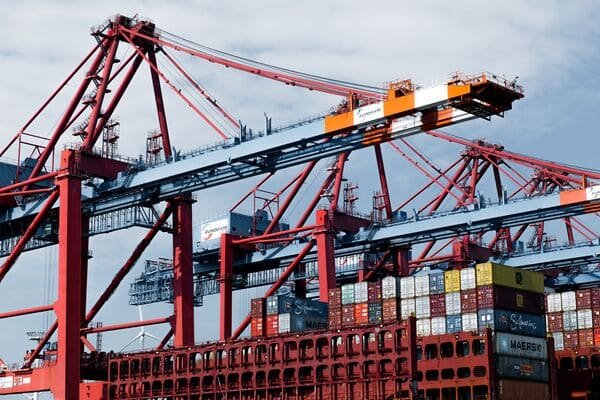

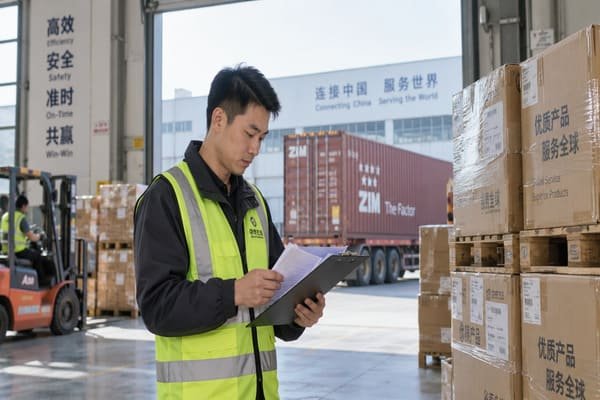
Consolidating cargo from multiple Chinese suppliers into one shipment is one of the smartest ways to cut freight costs. Instead of paying for three or four separate LCL shipments, you combine everything into a single container or master consignment — saving on freight rates, customs clearance fees, and destination charges.
But here's what many importers learn the hard way: consolidation multiplies your document risk.
With one supplier, you manage one set of documents. With five suppliers, you're coordinating five commercial invoices, five packing lists, potentially five different HS code interpretations — and a single error from any one of them can hold your entire shipment at customs.
At DeepLinker, we handle multi-supplier consolidations out of China every week — by sea, air, rail, and road, including dangerous goods. Below is the risk checklist we use internally to catch document problems before cargo leaves the warehouse. Use it to audit your next consolidated shipment.
Why Document Errors Hit Consolidated Shipments Harder
Before the checklist, understand the stakes. When a document error triggers a customs inspection or hold on a consolidated shipment:
- All cargo in the consolidation is delayed — not just the problematic supplier's goods
- Demurrage and detention charges accumulate daily at destination (often $75–$300/day per container)
- Storage fees at the port or CFS warehouse add up quickly
- In serious cases (undervaluation, misdeclared dangerous goods), you face fines, cargo seizure, or blacklisting by customs
One supplier's sloppy invoice can cost you thousands of dollars and weeks of delay across your entire order. That's why document control is the single most important part of managing a consolidation.
The Consolidated Shipment Document Checklist
1. Commercial Invoice Errors
✅ Inconsistent currency across suppliers Supplier A quotes in USD, Supplier B in RMB. If invoices aren't standardized before consolidation, customs valuation becomes messy and clearance slows down. Standardize all invoices to one currency (usually USD) before submission.
✅ Missing or mismatched Incoterms Each supplier's invoice should state the same, correct Incoterm (typically FOB or EXW for consolidations). Mixed or missing Incoterms confuse customs valuation — freight and insurance costs may be incorrectly included or excluded from the dutiable value.
✅ Undervaluation "to help you save on duties" Some suppliers voluntarily lower invoice values as a "favor." This is customs fraud in your destination country. If customs cross-checks the declared value against payment records or market prices, you face penalties — and your importer record is flagged for future inspections.
✅ Vague product descriptions "Gift items," "accessories," or "spare parts" are red flags for customs. Every line item needs a specific description: material, function, and intended use (e.g., "stainless steel kitchen tongs, household use").
2. Packing List Discrepancies
✅ Packing list doesn't match physical cargo This is the #1 cause of inspection failures in our experience. Suppliers change carton counts or dimensions at the last minute without updating documents. Always require final packing lists based on actual packed cargo, not the pro forma estimate.
✅ No consolidated master packing list Individual supplier packing lists aren't enough. You need one master packing list mapping each supplier's cargo to its carton numbers, weights, and dimensions within the consolidation. Without it, a partial customs inspection can't identify which cartons belong to which invoice — so they open everything.
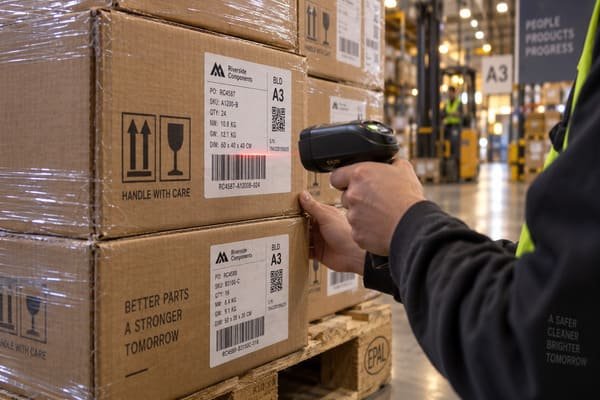
✅ Missing carton markings
Each supplier's cartons should carry clear shipping marks (consignee, carton numbers, origin). Unmarked cartons in a mixed container are nearly impossible to sort at destination.
3. HS Code Conflicts
✅ Different suppliers declaring different HS codes for similar products Supplier A classifies LED lamps under one code; Supplier B uses another for a nearly identical product. Customs notices these inconsistencies. Have your freight forwarder or customs broker review and harmonize all HS codes before export declaration.
✅ HS codes copied from the supplier without verification Chinese export HS codes don't always map correctly to your destination country's import tariff codes. The first 6 digits are international, but digits 7–10 vary by country — and so do the duty rates. Verify classifications against your own country's tariff schedule.
4. Certificate of Origin Issues
✅ Missing CO / Form E / RCEP certificates for preferential duty rates If your destination country has a free trade agreement with China (ASEAN, RCEP members, etc.), a correctly issued Certificate of Origin can reduce duties significantly. But the certificate details must exactly match the invoice and B/L — one typo and customs rejects the preferential rate.
✅ One CO covering goods it shouldn't In multi-supplier consolidations, not all goods may qualify for the same origin criteria. Verify each product's eligibility separately.
5. Bill of Lading / Air Waybill Errors
✅ Wrong shipper listed In consolidations, the shipper on the master B/L is usually the consolidator/forwarder, with house B/Ls issued per supplier or per your instruction. Confusion here causes release problems at destination. Confirm the B/L structure with your forwarder before cargo ships.
✅ Consignee/notify party mistakes A misspelled company name or wrong address on the B/L can require a formal amendment — costing time and amendment fees ($50–$150+), and potentially delaying release.
✅ Cargo description mismatch between B/L, invoice, and packing list All three documents must tell the same story. Discrepancies trigger holds.
6. Product Compliance Documents
✅ Missing certifications for regulated products CE marking documents (EU), FCC (US electronics), FDA registration (food-contact items, cosmetics), children's product certificates — the requirements depend on your destination. In a consolidation, one non-compliant product category can hold the whole shipment. Audit each supplier's product compliance separately.
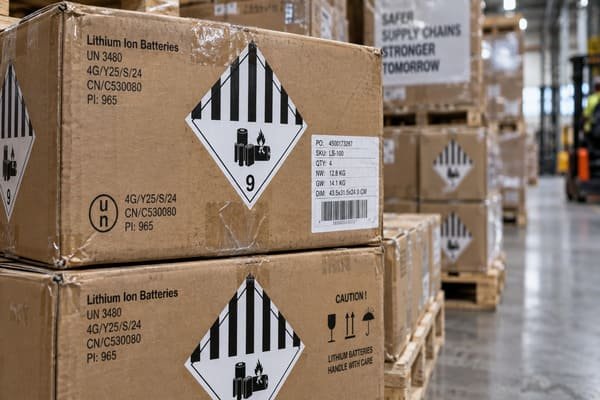
✅ Missing MSDS/SDS for anything remotely "chemical" Batteries, magnets, liquids, powders, aerosols, cosmetics — carriers and customs may demand a Safety Data Sheet even for goods you don't consider dangerous. Lithium batteries additionally require UN38.3 test reports. If any supplier's goods are classified as dangerous goods, the entire consolidation must be handled under DG procedures — this is where working with a forwarder licensed for dangerous goods becomes essential.
7. Wooden Packaging (ISPM 15)
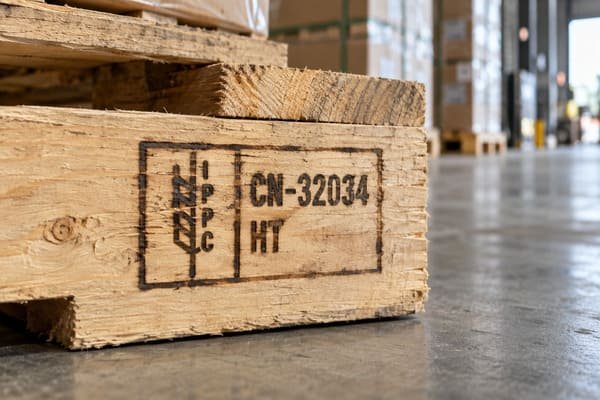
✅ No IPPC fumigation stamp on wooden pallets or crates
One supplier uses untreated wooden pallets, and your entire container can be refused entry, fumigated at your cost, or returned. Require all suppliers to use IPPC-stamped wood or plastic pallets — and verify with photos before loading.
How to Prevent These Mistakes: 3 Practical Rules
1. Standardize documents before cargo arrives at the consolidation warehouse. Send every supplier a document template (invoice + packing list format) and require completed documents before their cargo ships to the warehouse — not after.
2. Appoint one party to own the master document set. Usually your freight forwarder. Someone must cross-check all supplier documents against each other and against the physical cargo. Errors caught at the warehouse cost nothing; errors caught at destination customs cost thousands.
3. Photograph everything at consolidation. Carton markings, pallet stamps, labels, load plan. Photos resolve destination disputes in minutes instead of weeks.
Frequently Asked Questions
Can I consolidate shipments from different suppliers in China?
Yes. Multi-supplier consolidation is a standard freight forwarding service in China. Your suppliers ship their goods to a consolidation warehouse (typically in Shenzhen, Guangzhou, Ningbo, or Shanghai), where the forwarder inspects, repacks if needed, and combines everything into one shipment under a single master bill of lading. This typically saves 20–40% compared to shipping each supplier's cargo separately as LCL.
What documents do I need for a consolidated shipment from China?
At minimum: a commercial invoice and packing list from each supplier, a consolidated master packing list, the bill of lading or air waybill, and an export customs declaration. Depending on your products and destination, you may also need a Certificate of Origin (Form E, RCEP), product compliance certificates (CE, FCC, FDA), MSDS/SDS and UN38.3 reports for battery products, and ISPM 15 treatment for wooden packaging.
Who is listed as the shipper on a consolidated bill of lading?
On the master bill of lading, the shipper is usually the freight forwarder or consolidator, and the consignee is their agent at destination. Your forwarder then issues a house bill of lading naming you as consignee. This two-tier structure is normal for consolidations — but confirm the arrangement in writing before cargo ships to avoid release problems at destination.
What happens if one supplier's documents are wrong in a consolidated shipment?
Because all cargo travels under one master bill of lading and one customs entry, a document error from a single supplier can delay the entire consolidation. Customs may hold or physically inspect the whole container, and demurrage, detention, and storage charges apply to all cargo — not just the problematic goods. This is why document review before loading is critical.
Can dangerous goods be included in a consolidated shipment?
Yes, but only under proper DG procedures. Dangerous goods (including many battery products) must be declared, classified with the correct UN number, packed and labeled to IMDG/IATA standards, and handled by a forwarder licensed for dangerous goods. Never allow a supplier to "slip in" undeclared DG cargo — misdeclaration can result in the entire shipment being seized and heavy fines for the shipper and importer.
Final Thoughts
Consolidation saves money — but only when the paperwork is airtight. The checklist above reflects the most common failure points we see when importers manage multi-supplier shipments out of China without a coordinated document process.
Planning a consolidated shipment from China? DeepLinker provides freight forwarding across sea, air, rail, and road — including dangerous goods handling — with document review built into every consolidation. Contact us for a free document audit on your next multi-supplier shipment.