
When evaluating China–Europe rail transport for energy storage cabinets, shippers often focus first on freight rates and transit times. For equipment containing batteries, heavy units, or oversized cargo, delivery also depends on how well overseas transshipment, terminal acceptance, and final collection are coordinated.
Overseas transshipment and terminal bookings are established logistics operations. However, the locations, handling methods, and booking requirements depend on the cargo, route, and terminal.
Before dispatch, shippers need to understand whether the shipment can be accepted along the planned route, how each handling stage will work, and who will manage delays and related costs.
1. Identify Your Shipment’s Transport Requirements
“Energy storage cabinet” is a product description. It does not provide enough information to determine a transport plan.
First, clarify whether the shipment consists of empty cabinets, separately shipped battery modules, or complete equipment with batteries installed. The shipping configuration affects the carrier’s assessment of cargo classification, documentation, and acceptance requirements.
Dimensions and weight should also be assessed separately. An energy storage cabinet is not automatically out-of-gauge (OOG), and cargo within standard dimensions may still exceed weight or lifting limits. Acceptance depends on the final packed dimensions, loading arrangement, transport equipment, and route.
Prepare the following information when requesting a quotation:
- Product name, model, quantity, and whether batteries are included;
- Final packed length, width, height, and gross weight per unit;
- Photographs of the cabinet, base, packaging, and lifting points;
- Proposed loading arrangement;
- Origin, destination, and required delivery date.
Use measurements for the final shipping configuration. Dimensions in a product brochure may exclude the transport base, protective packaging, or protruding components.
2. What Happens During Overseas Transshipment?
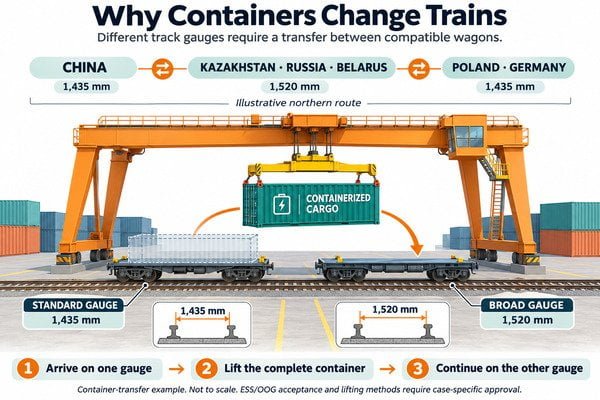
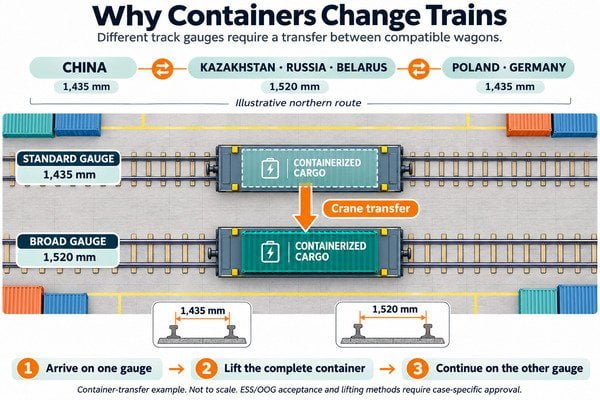
Transshipment involves transferring cargo to the next transport unit or mode along the route. It may be required at a railway gauge change or when moving from rail to road.
For example, Kazakhstan-based ANTS Logistics lists reloading and securing services at Dostyk and Altynkol stations. It also provides oversized and heavy cargo transport and develops rail loading and securing plans. Source: ANTS Logistics
Similar operations take place in Europe. GLOMB’s China Rail service information explains that transshipment occurs at Małaszewicze in Poland because of different track gauges, with onward truck collection also available. Source: GLOMB
A simplified transport chain looks like this:
Factory preparation → Origin terminal acceptance → Border or overseas transshipment → European arrival terminal → Truck collection → Project site
The actual transshipment locations, number of transfers, and transport modes depend on the agreed route.
Transshipment does not automatically mean opening or dismantling the energy storage cabinet. Ask the transport provider to specify whether the operation involves transferring the complete container or reloading the cargo itself. Confirm whether any transport packaging must be removed, bases adjusted, or securing arrangements replaced.
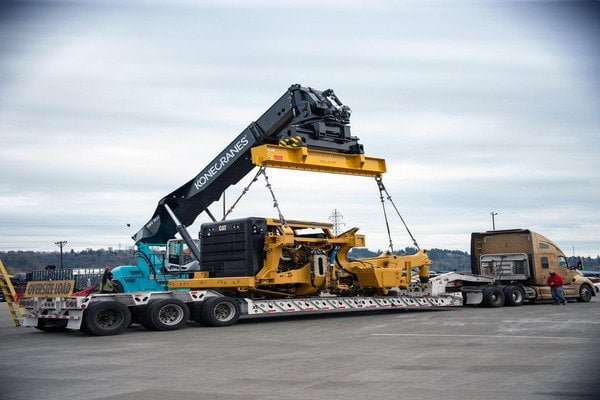
For large equipment, provide manufacturer-approved lifting points, centre-of-gravity information, and handling restrictions in advance. The handling operator should assess the lifting method before the shipment reaches the transshipment terminal.
3. What Does a “Terminal Booking” Cover?
In logistics discussions, “terminal booking” can refer to several different arrangements. Shippers should confirm them separately.
| Arrangement | What it addresses |
|---|---|
| Truck gate or collection appointment | When the vehicle can enter and whether delivery or collection conditions have been met |
| Lifting and handling schedule | When the terminal will allocate equipment, personnel, and a working area |
| Temporary storage acceptance | Whether the cargo may remain at the terminal, for how long, and at what cost |
These arrangements are connected, but one does not replace another. A confirmed truck appointment does not automatically confirm acceptance for special lifting operations or temporary storage.
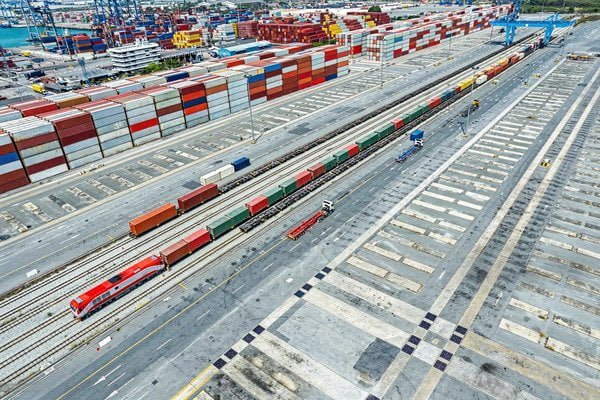
GLOMB states that its China Rail truck services are planned around terminal reservations and time slots, with adjustments when rail arrival times change. ADAMPOL’s Małaszewicze terminal also lists a container pre-notification function. Sources: GLOMB, ADAMPOL
For energy storage equipment transported as dangerous goods, storage conditions require separate attention. METRANS’ 2026 transport conditions require prior verification and approval for dangerous goods at certain terminals and individual assessment for some storage arrangements. Transport acceptance, handling arrangements, and temporary storage therefore need to be checked separately. Source: METRANS, pages 8–9
A booking deadline used by one terminal should not be presented as a universal requirement for all China–Europe rail services.
4. What Information Should Shippers Prepare?
The purpose of documentation is to let carriers and terminals assess the shipment before it leaves the factory. Understanding what each item supports is more useful than collecting a list of document acronyms.
| Information or document | Main purpose |
|---|---|
| Final packed dimensions, unit weight, quantity, and photographs | Assess loading space, transport options, and handling conditions |
| Centre of gravity, lifting-point drawings, and handling restrictions | Assess lifting methods and any special equipment requirements |
| Battery type, configuration, and product description | Support cargo classification and acceptance assessment |
| Applicable safety data, test documentation, and transport assessment reports | Support the carrier’s review; exact requirements must be confirmed |
| Packaging, transport base, and loading and securing details | Assess stability during transport, lifting, and transshipment |
| Destination unloading conditions, contact details, and receiving hours | Coordinate final delivery, unloading equipment, and site access |
Final document requirements depend on the product, route, and carrier’s assessment. If the model, battery configuration, weight, or packaging changes, inform the transport provider and confirm whether the approved plan remains applicable.
The shipper, factory, and forwarder should work from the same version of the transport data. This helps prevent discrepancies between the quotation, booking, loading instructions, and overseas handling arrangements.

5. What Can Affect Delivery Times and Costs?
Practical examples show why these arrangements matter.
Scenario 1: The Actual Dimensions Differ from the Booking Data
The quotation is based on the cabinet’s unpacked dimensions, but the shipment leaves the factory with an additional base and protective packaging.
The terminal may need to reassess the loading space and lifting method, potentially changing the handling schedule.
Measure, weigh, and photograph the final shipping configuration before the transport plan is confirmed.
Scenario 2: The Train Arrives Before Collection Is Ready
Train arrival does not necessarily mean the cargo is immediately available for collection. Cargo release, terminal handling slots, truck availability, and site unloading arrangements still need to align.
Gaps between these stages may result in waiting time and additional storage.
When planning delivery, distinguish between train arrival, cargo availability for collection, and delivery to the project site.
Scenario 3: Transshipment Is Arranged, but Temporary Storage Is Not
If onward transport is delayed, the parties need to know whether the terminal can hold the cargo, how long it may remain there, and whether relocation to another facility is necessary.
For special equipment or dangerous goods, these conditions should be clarified before dispatch.
When reviewing a quotation, check whether the following items are included and what triggers additional charges:
- Transshipment, lifting, and special handling equipment;
- Securing materials, securing inspections, or re-securing;
- Storage, vehicle waiting time, and additional cargo movements;
- Rebooking, rescheduled handling, and final delivery.
Not every shipment will incur these charges. Defining the charging conditions makes it easier to compare quotations on an equivalent service basis.
6. Five Questions to Ask Before Dispatch
Before confirming shipment, ask the forwarder or transport provider for clear answers to these questions:
- Cargo acceptance: Have the relevant carriers and terminals confirmed acceptance based on the cabinet’s actual configuration, dimensions, and weight?
- Transshipment plan: Where will transfers take place, how will they be performed, and will repackaging or re-securing be required?
- Booking responsibility: Which operations require appointments, who will arrange them, and how will confirmation be provided?
- Delay arrangements: If onward transport or collection is delayed, where can the cargo remain, and how will charges be calculated?
- Quotation and delivery scope: Which overseas operations are included, and does the quoted transit time end at train arrival, availability for collection, or delivery to the project site?
For energy storage cabinet exports, overseas transshipment and terminal bookings should form part of the transport plan before dispatch. Confirming cargo data, handling methods, responsibilities, and delay arrangements gives shippers a firmer basis for coordinating factory release and project delivery.
Conclusion
Shipping energy storage cabinets by China–Europe rail requires coordination across cargo acceptance, overseas transshipment, terminal bookings, and final delivery. Each stage needs to match the shipment’s actual dimensions, weight, battery configuration, and handling requirements.
Before dispatch, confirm the route, transfer methods, booking responsibilities, temporary storage conditions, and quotation scope with your transport provider. Keeping the factory, forwarder, and receiving team aligned on the same shipment data helps reduce avoidable delays, unexpected handling costs, and disruption to the project schedule.
For route planning and cargo review, see our rail transportation services.
References
The sources below describe particular operators and terminals. Confirm cargo acceptance, booking deadlines and storage conditions for the chosen route before dispatch.