
Shipping to the EU? New packaging rules start in 20261. A simple mistake could lead to huge fines and rejected shipments, costing you thousands. Let's get you prepared.
Non-compliant packaging under the EU's PPWR can cost you dearly. Expect fines up to thousands of euros per violation, plus costs for shipment return or destruction. The total loss from a single rejected container can easily exceed the product's value, wiping out your profit.2
The financial hit is just the beginning. The real challenge is understanding the specific details that customs officials will check. I've seen clients get into trouble over things they never even considered. As a freight forwarder, my job is to stay ahead of these changes so your business doesn't suffer. Let's break down exactly what you need to watch out for. We will go through the most common pitfalls one by one, so you can see how complex this is and why a simple self-check might not be enough.
PPWR Effective Date & Covered Packaging: 3 Most Overlooked Violations for Exporters?
You know the PPWR starts in August 2026. But some of the most common violations are easily overlooked, leading to surprising delays. Let’s pinpoint these hidden risks now.
The three most overlooked violations are: using non-recyclable materials for packaging that should be recyclable3, incorrect labeling of material composition, and failing to meet minimum recycled content requirements for plastic packaging. These mistakes are easy to make and can halt your entire shipment at the border.

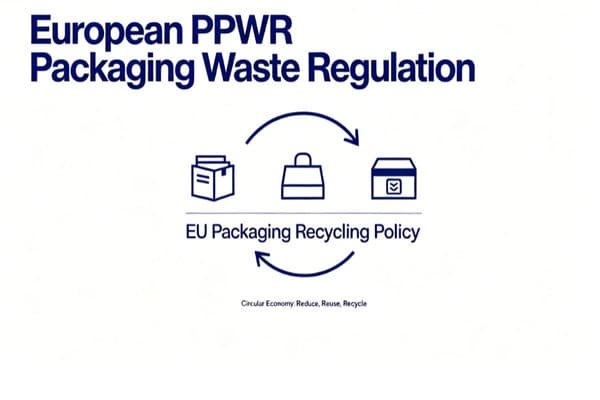
The PPWR applies to all packaging placed on the EU market4, from tiny retail boxes to large industrial pallets. The rules are strict and aim to create a circular economy.5 Starting in August 2026, every piece of packaging must be designed for recycling. This is a big change from the past. You can't just use any material that looks good anymore. The EU wants to ensure that what you send can be processed in their recycling facilities.
Recyclability by Design
Your packaging must be easy to take apart and recycle. This means avoiding mixed materials that are hard to separate, like plastic-coated paper boxes or bottles with full-body shrink sleeves that are glued on. We advise clients to use single-material solutions whenever possible or components that can be easily separated by the consumer without tools.
Recycled Content Mandates
For plastic packaging, there are new rules about using recycled materials.6 The exact percentage depends on the type of plastic and its use. For example, PET beverage bottles have different targets than other types of plastic containers.7 This is a common point of failure because it requires a certified supply chain for your packaging. You must have proof of the recycled content.
Labeling and Information
Your labels must be clear and accurate8. They need to show the material composition and how to dispose of the packaging correctly. This isn't just about a recycling symbol; it involves specific codes and information that must be harmonized across the EU.
Here is a simple table to help you understand:
| Violation Area | Common Mistake | Consequence |
|---|---|---|
| Recyclability | Using glued multi-material layers | Fails inspection, packaging rejected |
| Recycled Content | Not meeting plastic % targets | Fines and market access denial |
| Labeling | Missing or incorrect material symbols | Shipment held at customs for re-labeling |
Packaging Materials, Labeling, EPR Registration… Which Mistakes Will Get Your Entire Shipment Rejected?
You think your packaging is perfect. But a simple paperwork error, like with your EPR registration, can get your whole shipment rejected. Let's cover which mistakes are absolute deal-breakers.
A shipment can be rejected for several key mistakes. The most severe are: failing to register for Extended Producer Responsibility (EPR) in the destination country, using restricted substances in your packaging materials, or having completely incorrect or missing labels. These are considered major compliance failures.9
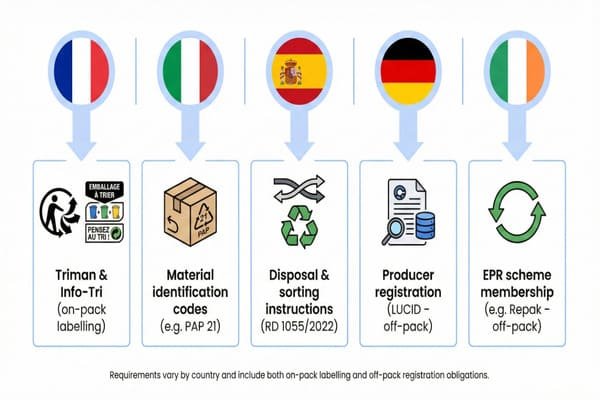
Getting your shipment rejected is a nightmare scenario. It's not just a fine; it means your goods are sent back at your expense or destroyed. We work hard to prevent this for our clients because the financial and reputational damage can be huge. This extreme measure is reserved for serious violations that show a lack of due diligence.
Failure of EPR Registration
Extended Producer Responsibility (EPR) is non-negotiable10. It means you are financially responsible for the collection, sorting, and recycling of your packaging in the EU country you're selling to. To comply, you must register with a Producer Responsibility Organisation (PRO) in each country and get an EPR number. This number must be on your documentation. Customs officials will check this registration. No number means no entry, simple as that.
Restricted Substances
The PPWR, in line with other EU regulations like REACH, limits the use of certain heavy metals and chemicals in packaging.11 This includes lead, cadmium, mercury, and hexavalent chromium. Your packaging supplier must provide a Declaration of Conformity (DoC) proving that your materials are safe and compliant.12 If a random test finds these substances above the legal limit, your entire shipment will be classified as hazardous and rejected.
Gross Labeling Errors
A small typo on a label might get a warning. But completely missing mandatory labels or using symbols that are intentionally misleading will lead to rejection. For example, putting a "recyclable" symbol on a non-recyclable item is a serious offense. It's seen as an attempt to deceive the system and consumers. Accuracy and honesty in labeling are critical for passing customs.
The Final Pre-Shipment Check: How to Guarantee Your Packaging Passes EU Customs Every Time?
Your container is almost ready to ship. Are you certain your packaging is 100% compliant? A final check is your last chance to prevent a costly problem at the EU border.
To guarantee your packaging passes, create a detailed pre-shipment checklist. This must include: verifying your EPR registration numbers, confirming material composition reports from your supplier, and double-checking that all labels are correct for the specific EU country. Working with an expert freight forwarder is the safest way.13
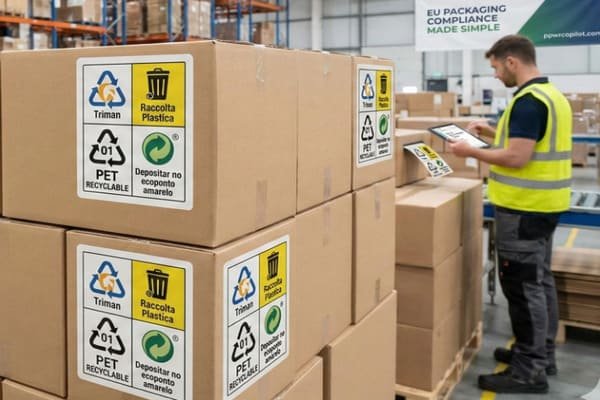
A smooth customs clearance doesn't happen by accident. It happens by design and careful preparation. I always tell my clients to use a simple but effective final checklist before any container leaves the factory. This isn't just about looking at the box; it's about checking the paperwork that backs it up. Relying on your own team can be risky if they aren't dedicated experts in the ever-changing landscape of EU regulations. At Deeplinker, we stay on top of these rules every day. We use a comprehensive checklist to protect our clients.
Your Final PPWR Compliance Checklist
This table helps you cover the most critical points before you ship. It's a simplified version of what we do, but it covers the essentials.
| Check Item | Action Required | Why It's Critical |
|---|---|---|
| EPR Number | Confirm active registration for each destination EU country. | No EPR number means illegal market entry. Customs will block the shipment immediately. |
| Material Specs | Get a signed Declaration of Conformity from your packaging supplier. | This is your proof that the materials are safe and don't contain restricted substances. |
| Recycled Content | Verify the % meets requirements for your plastic packaging and get certification. | You must be able to prove your claims. Without proof, you are non-compliant. |
| Labeling | Check symbols, language, and placement on a final production sample. | Incorrect labels are one of the most visible red flags for customs inspectors. |
| Documentation | Gather all compliance documents into a single digital folder for the shipment. | Having everything ready creates a "digital passport" that speeds up customs clearance. |
Completing this checklist significantly reduces your risk of customs issues. However, the best guarantee is working with a partner who handles these details for you, so you can focus on your business.
Conclusion
The EU PPWR is complex, and non-compliance is expensive. We help you navigate the rules to ensure your shipments arrive safely and on time. Contact us to beat the rush.
Regulation (EU) 2025/40 on Packaging and Packaging Waste (EEA-Lex) — *European Free Trade Association (EFTA)*: https://www.efta.int/eea-lex/32025r0040 ↩
Packaging and Packaging Waste Regulation (PPWR) — the EU legislation setting sustainability and recyclability requirements for all packaging — *Wikipedia*: https://en.wikipedia.org/wiki/Packaging_and_Packaging_Waste_Regulation ↩
Packaging and Packaging Waste Regulation — official overview — *European Commission, Directorate-General for Environment*: https://environment.ec.europa.eu/topics/waste-and-recycling/packaging-waste/packaging-packaging-waste-regulation_en ↩
European Union Finalizes New Rules for Packaging and Packaging Waste Reduction — *USDA Foreign Agricultural Service (GAIN Report)*: https://apps.fas.usda.gov/newgainapi/api/Report/DownloadReportByFileName?fileName=European%20Union%20Finalizes%20New%20Rules%20for%20Packaging%20and%20Packaging%20Waste%20Reduction_Brussels%20USEU_European%20Union_E42024-0012.pdf ↩
Circular economy — a model of production and consumption aimed at eliminating waste through reuse, repair, and recycling — *Wikipedia*: https://en.wikipedia.org/wiki/Circular_economy ↩
Recycling — the process of converting waste materials into reusable objects and materials — *Wikipedia*: https://en.wikipedia.org/wiki/Recycling ↩
Polyethylene terephthalate (PET) — the most common thermoplastic polymer used for beverage bottles and food packaging — *Wikipedia*: https://en.wikipedia.org/wiki/Polyethylene_terephthalate ↩
PPWR Labeling Requirements explained — *Deutsche Recycling*: https://deutsche-recycling.com/blog/ppwr-labeling-requirement/ ↩
Extended producer responsibility (EPR) — a policy approach making producers responsible for the entire lifecycle of their products, including disposal — *Wikipedia*: https://en.wikipedia.org/wiki/Extended_producer_responsibility ↩
Extended Producer Responsibility — policy report and guidance — *Organisation for Economic Co-operation and Development (OECD)*: https://www.oecd.org/content/dam/oecd/en/publications/reports/2024/04/extended-producer-responsibility_4274765d/67587b0b-en.pdf ↩
REACH — the EU regulation on the Registration, Evaluation, Authorisation and Restriction of Chemicals, governing restricted substances — *Wikipedia*: https://en.wikipedia.org/wiki/Registration,_Evaluation,_Authorisation_and_Restriction_of_Chemicals ↩
Declaration of conformity — a document in which a manufacturer certifies that a product meets applicable regulatory requirements — *Wikipedia*: https://en.wikipedia.org/wiki/Declaration_of_conformity ↩
Freight forwarder — an agent that organizes shipments and manages customs compliance on behalf of shippers — *Wikipedia*: https://en.wikipedia.org/wiki/Freight_forwarder ↩