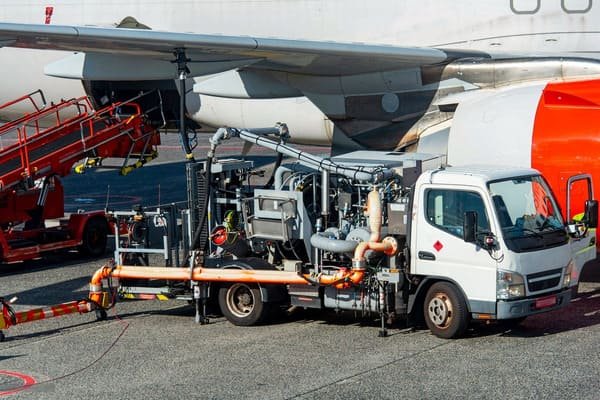


A tiny spark can ignite your entire battery shipment. This hidden danger threatens lives, your business, and your reputation. But you can easily prevent these catastrophic accidents.
Yes, static electricity is a major explosion risk for battery trucks1. It builds up from friction during transit and can ignite flammable vapors. Proper grounding, anti-static equipment, and specific handling procedures are essential to neutralize this threat and ensure a safe journey for your dangerous goods.
I've seen firsthand how a simple oversight can lead to disaster. It's a scary thought, but understanding the "how" and "why" is the first step toward complete safety. Let's break down where this invisible danger comes from, so you can stop it before it even starts.
What Causes Static Electricity Buildup During Road Transport?
Your truck is moving, and so are the atoms inside. This movement creates an invisible charge, a silent threat that builds with every mile, waiting for a discharge point.
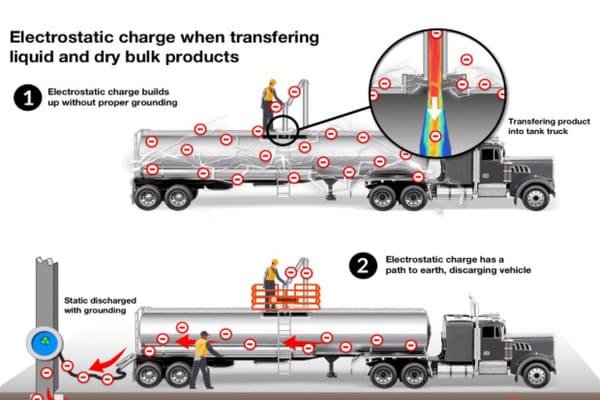
Static electricity in road transport is mainly caused by friction. This happens between the tires and the road, the cargo and its packaging, and even fuel sloshing in the tank. This process, called tribocharging, separates electric charges2, creating a dangerous voltage potential that needs to be safely discharged.
The Science of Tribocharging
When two different materials rub against each other, electrons can transfer from one to the other. One material becomes positively charged, and the other becomes negatively charged. If these materials are insulators, like rubber tires or plastic packaging, the charge can't easily flow away. It just builds up, and builds up, and builds up. This accumulated charge is what we call static electricity. It is just waiting for a path to ground itself, and that path often comes in the form of a spark. The energy in that spark can be more than enough to ignite flammable materials.
Common Sources on a Truck
Many everyday actions on a truck create static. People often think it's just one thing, but it's a combination of factors. The constant rubbing of tires on the road is a major source. Inside the trailer, cargo can shift and rub against packaging or the container walls. Even the simple act of fuel sloshing inside the tank generates a significant charge. Weather plays a big role too. Dry, cold air is an insulator, which allows static charges to build to much higher levels than on a humid day.3
| Source of Friction | Risk Level | Why it's a Risk |
|---|---|---|
| Tires on Pavement | High | Constant friction, especially with dry road conditions. |
| Cargo Shifting | Medium-High | Packaging materials rubbing against each other or truck. |
| Fuel Sloshing | High | Liquid movement in a non-conductive tank creates charge. |
| Loading/Unloading | Medium | Personnel movement and equipment can generate sparks. |
Are Lithium-Ion Batteries a Static Explosion Time Bomb?
You see a pallet of batteries, neatly packaged and secured. But inside each battery is a flammable electrolyte, and a tiny static spark is all it takes for a catastrophe.
Yes, they can be. Lithium-ion batteries contain a flammable liquid electrolyte.[^4] If a battery is damaged or faulty, it can release flammable vapors. A static discharge provides the perfect ignition source for these vapors, leading to a fire or explosion, which can then trigger a chain reaction called thermal runaway[^5].
The Danger Inside the Battery
The real danger isn't the battery itself when it's working perfectly. The problem is the flammable liquid electrolyte sealed inside. This chemical is essential for the battery to work, but it's also highly volatile. If a battery casing is punctured, crushed, or has a manufacturing defect, this electrolyte can leak out as a liquid or a vapor. Now you have fuel in the air. All you need is a source of ignition. A static spark, which can be thousands of volts, is more than enough to set it off. This is a risk we take very seriously, as the consequences of a mistake are enormous.
The Chain Reaction of Thermal Runaway
This is where things get really bad. An initial fire from one battery creates intense heat. This heat can damage the batteries next to it, causing them to fail and release their own flammable vapors. This creates a domino effect.
- Initial Failure: A battery is damaged, leaking flammable electrolyte vapor.
- Ignition: A static spark ignites the vapor, causing a fire.
- Heat Transfer: The fire heats up adjacent batteries.
- Cascading Failure: The heated batteries also fail, releasing more fuel.
- Explosion: The process accelerates, leading to a powerful chain reaction and potential explosion of the entire shipment.
This is why one small spark isn't just a small fire; it's the trigger for a full-blown disaster that can destroy the entire cargo and vehicle.
What Are the Key Static Electricity Risks for Battery Trucks?
The danger isn't just one thing, it's a series of risks. Ignoring any single one during loading, transit, or unloading can undo all your other safety efforts.
Key risks include improper grounding of the truck during loading/unloading, using non-conductive equipment like plastic tarps, and drivers wearing insulating footwear. The cargo itself, if not properly secured, can also generate a charge through friction. Each is a potential ignition source waiting for a fuel.

To manage the risk, we have to look at every part of the operation. I always break it down into three areas: the equipment we use, the people involved, and the processes we follow. A weakness in any one of these can cause a major incident. It's about creating layers of safety.
Equipment Risks
The truck and everything on it can be a source of static.
- Tires: Non-conductive tires can build up massive charges.[^6]
- Hoses & Pallets: Using plastic hoses or plastic pallets can accumulate static.
- Tarps: A plastic tarp flapping in the wind is a huge static generator.
- Lack of Grounding Straps: Without a way for the charge to safely dissipate to the ground, the truck becomes a giant capacitor, storing dangerous energy.
Personnel Risks
The driver and ground crew are part of the electrical circuit.
- Clothing: Synthetic fabrics like polyester generate a lot of static electricity.
- Footwear: Shoes with insulating rubber soles prevent a person's static charge from dissipating into the ground.[^7]
- Movement: A person simply walking across the trailer floor can build up enough charge to create a spark when they touch something metal.
Procedural Risks
How you do the job matters more than anything.
- Improper Grounding: Failing to connect the grounding clamp before any other operation is the most common and dangerous mistake.
- Incorrect Loading/Securing: Allowing packages to move and rub creates friction and static.
- Refueling: Refueling procedures must be strictly followed to prevent static sparks near flammable fuel vapors.
What Are 10 Actionable Measures to Prevent Static Explosions?
You understand the danger, but how do you fight an invisible enemy? A vague plan isn't enough. You need a clear, actionable checklist to ensure every single trip is safe.
Key measures include mandatory truck grounding, using conductive tires and anti-static equipment, and ensuring personnel wear appropriate anti-static clothing and footwear. Also, proper cargo securing, regular equipment inspection, comprehensive driver training, and strict adherence to loading and unloading protocols are all critical for prevention.

At our company, we don't leave safety to chance. We have a non-negotiable checklist that our professional DG transport teams follow for every single battery shipment. These aren't just suggestions; they are standard operating procedure. Here are the 10 most important actions you can implement right now to protect your cargo, your people, and your business.
Our 10-Point Anti-Static Safety Protocol
- Always Ground the Vehicle: Before any loading or unloading starts, the first step is to connect a grounding cable from the truck's frame to a verified grounding point. This is the single most important step.
- Use Conductive Tires: Install tires made with a conductive rubber compound that continuously dissipates static charge to the road surface.
- Install Grounding Straps: A grounding strap dragging on the road provides an extra path for static to dissipate during transit.
- Mandate Anti-Static PPE: All personnel must wear anti-static footwear and clothing made from natural fibers like cotton. No polyester or nylon.
- Inspect All Equipment: Regularly check grounding cables, bonding clamps, and other anti-static gear for wear and tear. A damaged cable is useless.
- Secure Cargo Properly: Use anti-static dunnage and secure pallets tightly to prevent any movement, rubbing, and friction during the journey.
- Control the Environment: When possible, increase humidity in loading areas, as moist air helps dissipate static charges naturally.[^8]
- Train, Train, and Retrain: Every driver and handler must understand the risks of static electricity and be trained on the prevention protocols. We run regular refresher courses.
- Follow Strict Protocols: Have a documented, step-by-step procedure for loading and unloading batteries and other DG goods, and enforce it without exception.
- Choose the Right Partner: Work with a logistics provider like us who has a proven track record in DG transport. We have the right equipment and trained experts to manage these risks for you.
Conclusion
Static electricity is a serious but preventable risk. Following these safety protocols protects your cargo and your business. Contact us for safe, compliant, and reliable battery transport solutions.
"1926.152 - Flammable liquids. | Occupational Safety and ... - OSHA", http://www.osha.gov/laws-regs/regulations/standardnumber/1926/1926.152. A hazardous-materials or electrostatics safety source can support that static discharge is a recognized ignition hazard where flammable vapors are present during transport or handling operations. Evidence role: general_support; source type: government. Supports: Static electricity is a major explosion risk for battery trucks when flammable vapors are present.. Scope note: Such sources may establish the general ignition hazard rather than quantify the specific frequency of explosions in battery trucks. ↩
"Triboelectrification - UCLA Putterman Research Group", https://acoustics-research.physics.ucla.edu/triboelectrification/. A physics or materials-science reference can support that triboelectric charging, also called contact electrification, involves charge transfer or separation when materials contact and separate. Evidence role: definition; source type: encyclopedia. Supports: Tribocharging is the process by which contact or friction between materials separates electric charge.. Scope note: Definitions vary in how much they emphasize rubbing versus contact and separation. ↩
"Accident Report Detail | Occupational Safety and Health ... - OSHA", https://www.osha.gov/ords/imis/accidentsearch.accident_detail?id=200881274. An occupational-safety or electrostatics source can support that low relative humidity increases static charge accumulation, while higher humidity promotes charge leakage from surfaces. Evidence role: mechanism; source type: government. Supports: Dry air allows static charges to accumulate more readily than humid air.. Scope note: The source may discuss humidity rather than cold temperature directly; cold weather is relevant mainly because it is often associated with lower indoor or ambient humidity. ↩