
Shipping costs to Vietnam are eating into your profits. This makes your business less competitive. But you can cut these expenses by understanding a few key strategies.
To reduce shipping costs to Vietnam, you must optimize your packaging to lower dimensional weight, choose the right shipping mode like FCL or LCL, and partner with an experienced freight forwarder who can navigate local regulations and secure better rates for you.
Before we jump into the solutions, it's important to understand why shipping to Vietnam has become so expensive. Knowing the root causes is the first step toward building a smarter, more cost-effective supply chain. Let's break down the real reasons behind the high price tags you're seeing.
Why is shipping to Vietnam so expensive in 2026?
You look at your final invoice and can't believe the cost. Hidden fees and surcharges create budget uncertainty. Let's uncover the real reasons behind these high prices.
Shipping to Vietnam is expensive due to volatile fuel prices, major port congestion at hubs like Cat Lai, complex customs procedures, and high demand during peak seasons.1 These factors combine to drive up overall logistics costs for importers and exporters.

To really get a handle on your budget, you need to look closer at where these costs come from. It's a mix of global issues and local challenges right within Vietnam. I've seen many clients surprised by how a fuel price change in another part of the world can directly impact their shipment to Hai Phong.
Global and Local Cost Drivers
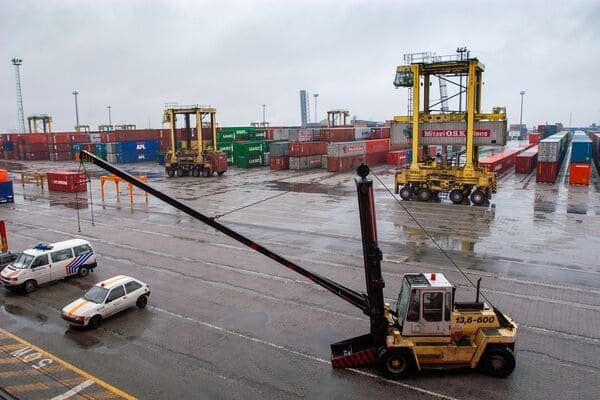
Global factors like oil prices have a direct effect on your bill. Carriers pass these costs on as a Bunker Adjustment Factor (BAF), which can change from month to month.2 At the same time, local infrastructure in Vietnam plays a huge role. For example, Cat Lai Port in Ho Chi Minh City is the country's busiest port3, but it often struggles with congestion4. This can lead to delays and extra fees for storage, known as demurrage and detention charges.5
Customs and Surcharges
Vietnamese customs can be complex.6 If your paperwork isn't perfect, you risk inspections, fines, and serious delays7. This is not just an inconvenience; it's a direct hit to your wallet. You need to be prepared with a correct Bill of Lading, Commercial Invoice, and any required import licenses. Understanding these moving parts is key to forecasting your costs accurately.
Here is a simple breakdown of the main cost components:
| Cost Component | Description | Impact on Final Price |
|---|---|---|
| Ocean/Air Freight | The base rate to transport your goods from origin to destination. | High (Volatile) |
| Fuel Surcharges (BAF) | A variable fee that changes with global oil prices. | Medium to High |
| Port & Terminal Fees | Charges for using the port facilities and handling your cargo. | Medium |
| Customs Duties & Taxes | Government fees based on the type and value of your goods. | High (Variable) |
| Last-Mile Delivery | The cost of trucking your cargo from the port to its final destination. | Medium |
What are the common shipping cost mistakes most importers make?
You thought you got a great shipping quote, but the final bill is much higher. These unexpected costs ruin your budget. Let’s identify common mistakes so you can avoid them.
The most common mistakes are using inefficient packaging that increases volumetric weight, choosing the wrong shipping mode (like LCL for a nearly full container), and providing inaccurate customs documents, which leads to costly delays, storage fees, and fines.
I've been in this industry for over 20 years, and I see the same costly errors happen again and again. These aren't complex problems. They are simple oversights that add up quickly. A little bit of planning can save you thousands of dollars on a single shipment.
Inefficient Packaging and Loading
Many importers pay for empty space without realizing it. Air freight costs, in particular, are based on dimensional weight (or volumetric weight).8 This means the size of your box can matter more than its actual weight9. If your products are poorly packaged with a lot of empty space, you are literally paying to ship air. Similarly, if you book a Full Container Load (FCL) but only fill it 70%, you are wasting money on that unused 30% of space.
Documentation and Incoterms Errors
Paperwork is not exciting, but it's critical. A small mistake on the Commercial Invoice or Bill of Lading can get your shipment flagged by Vietnamese customs. This leads to inspections, delays, and fees that you did not budget for. Another common trap is choosing the wrong Incoterm. I once worked with a new importer who chose EXW (Ex Works) thinking it was the cheapest option. They didn't realize it made them responsible for all export logistics in China, from trucking to customs. It turned into a coordination nightmare and ended up costing more than if they had chosen FOB (Free On Board) from the start.
Here’s a look at some frequent mistakes and what they cost you:
| Mistake | Consequence | How to Avoid |
|---|---|---|
| Ignoring Volumetric Weight | Paying for unused space, resulting in higher freight costs. | Use compact packaging and consult your forwarder on how to pack efficiently. |
| Incorrect Customs Paperwork | Delays at the port, fines, and unexpected storage fees. | Double-check all documents and work with a forwarder who knows Vietnamese regulations. |
| Choosing the Wrong Incoterm | Taking on unexpected costs and logistical responsibilities. | Discuss Incoterms with your supplier and forwarder to choose the best one. |
| Not Planning for Peak Season | Paying premium rates and facing a shortage of available space. | Ship during the off-season or book your shipments well in advance of the holidays. |
What are 3 practical ways to reduce your shipping cost to Vietnam?
You need to lower your shipping expenses without sacrificing reliability. Finding real strategies can feel impossible. Here are three proven methods you can use right away.
To effectively reduce shipping costs, you should optimize your cargo by consolidating shipments, plan your shipping schedule to avoid peak seasons, and partner with a knowledgeable freight forwarder who has strong local connections and negotiating power.
Saving money on logistics isn't about finding the cheapest quote online. It's about making smart, strategic decisions. The following three methods are what we at Deeplinker focus on with our clients every day to deliver real, measurable savings.
1. Optimize Your Shipment Mode and Timing
The choice between Less than Container Load (LCL) and Full Container Load (FCL) is fundamental. If you have a small shipment, LCL is great because you only pay for the space you use. But if your cargo is getting close to filling a container, FCL often provides a much better cost per cubic meter.10 Timing is also crucial. Shipping to Vietnam gets very expensive before major holidays like Tet (Vietnamese New Year). If you can plan ahead and ship during the off-season, you will find lower rates and more available capacity.
2. Consolidate Shipments and Improve Packaging
If you are sourcing products from multiple suppliers in China, don't ship them all separately. A good freight forwarder can offer consolidation services. We can collect all your orders at our warehouse and combine them into a single FCL shipment. This one change can cut your costs dramatically compared to shipping multiple LCLs. At the same time, revisit your packaging. Work with your supplier to use boxes that fit your products snugly, reducing dimensional weight and making your cargo more efficient to transport.
3. Strengthen Supplier Coordination Before Shipping
A significant portion of shipping costs doesn’t come from freight rates alone—but from issues that happen before the cargo is even shipped. Miscommunication with suppliers, inconsistent packaging, missing export documents, or last-minute changes can all lead to delays, rework, or unexpected charges. To reduce these risks, many importers choose to work with a local partner who can assist with supplier coordination, order follow-up, and pre-shipment checks. By improving visibility and control at origin, you can avoid costly mistakes and ensure your shipment moves in the most efficient and cost-effective way from the start. If you’re currently facing these challenges when shipping to Vietnam, feel free to reach out—our team can help you streamline supplier coordination and reduce unnecessary costs before your cargo even ships.
Conclusion
Reducing your shipping costs to Vietnam is entirely possible. By avoiding common mistakes, optimizing your cargo, and choosing a strategic logistics partner, you can turn a major expense into a competitive advantage.
"Review of Maritime Transport 2025: Staying the course in ...", https://unctad.org/publication/review-maritime-transport-2025. Evidence from international shipping-cost analyses and Vietnam logistics reports supports these as major cost drivers, including fuel-linked surcharges, congestion, customs frictions, and seasonal demand pressures; it provides contextual support rather than a single quantified estimate for all Vietnam-bound shipments in 2026. Evidence role: general_support; source type: institution. Supports: Shipping to Vietnam is expensive because fuel volatility, port congestion, customs complexity, and seasonal demand increase logistics costs.. Scope note: Support is likely to be distributed across multiple sources and may not directly prove every shipment to Vietnam is expensive in 2026. ↩
"Fuel Surcharge in Ocean Freight: Guide for Shippers", https://www.icontainers.com/help/what-is-fuel-surcharge/. Maritime freight references define the bunker adjustment factor as a fuel-related surcharge used by carriers to recover changes in bunker fuel costs, supporting the mechanism by which fuel-price volatility affects freight invoices. Evidence role: definition; source type: institution. Supports: BAF is a fuel-related surcharge that carriers adjust as bunker fuel costs change.. Scope note: The source may explain the surcharge generally rather than documenting a specific carrier’s monthly BAF changes on Vietnam routes. ↩
"USAID Supports Efforts to Reduce Congestion at Cat Lai", https://vn.usembassy.gov/usaid-supports-efforts-to-reduce-congestion-at-cat-lai-vietnams-busiest-container-port/. Vietnam port authority or logistics data identifying Cat Lai as Vietnam’s leading container gateway would support the statement that Cat Lai is the country’s busiest port by container throughput. Evidence role: statistic; source type: government. Supports: Cat Lai Port is Vietnam’s busiest port, particularly in container handling.. Scope note: Rankings may vary by year and by whether total cargo tonnage or container throughput is measured. ↩
"USAID Supports Efforts to Reduce Congestion at Cat Lai", https://vn.usembassy.gov/usaid-supports-efforts-to-reduce-congestion-at-cat-lai-vietnams-busiest-container-port/. Reports from transport authorities, logistics institutions, or development banks documenting congestion or capacity pressure at Cat Lai would support the claim that the port commonly experiences congestion. Evidence role: case_reference; source type: institution. Supports: Cat Lai Port has experienced recurring congestion or capacity-pressure problems.. Scope note: Congestion levels fluctuate over time and may depend on season, infrastructure works, customs processes, and inland transport conditions. ↩
"Demurrage and detention: from operational challenges towards ...", https://pmc.ncbi.nlm.nih.gov/articles/PMC10026217/. Shipping-industry definitions of demurrage and detention explain that these charges arise when cargo or containers remain beyond the allowed free time, supporting the link between delays and additional storage or equipment-use fees. Evidence role: definition; source type: institution. Supports: Port or container delays can create demurrage and detention charges.. Scope note: Definitions establish the mechanism but do not quantify the amount charged on any particular Vietnam shipment. ↩
"Documents to import (number) - Glossary | DataBank", https://databank.worldbank.org/metadataglossary/world-development-indicators/series/IC.IMP.DOCS. Trade-facilitation and customs-procedure sources describing Vietnam’s import documentation, licensing, classification, and clearance requirements would support the characterization of Vietnamese customs as procedurally complex. Evidence role: general_support; source type: government. Supports: Vietnamese customs procedures involve multiple documentation and regulatory requirements that can be complex for importers.. Scope note: Complexity is partly comparative and subjective; neutral sources can document procedural requirements but may not label the system uniformly as complex. ↩
"Vietnam Issues Penalties for Customs Violations: Decree 128", https://www.vietnam-briefing.com/news/vietnam-issues-administrative-penalties-customs-violations-decree-128.html/. Official customs guidance and trade-compliance materials indicate that inaccurate or incomplete import documentation can trigger inspection, administrative penalties, or clearance delays, supporting the risk described here. Evidence role: mechanism; source type: government. Supports: Incorrect customs paperwork can lead to inspections, fines, and clearance delays in Vietnam.. Scope note: The exact consequence depends on the type of error, commodity, customs classification, and enforcement decision. ↩
"Air cargo chargeable weight calculation explained - Maersk", https://www.maersk.com/logistics-explained/transportation-and-freight/2025/03/10/air-cargo-chargeable-weight. Air-cargo standards and carrier guidance define chargeable weight as the greater of actual weight and volumetric weight, supporting the statement that air freight pricing can be based on dimensional weight. Evidence role: definition; source type: institution. Supports: Air freight charges commonly use dimensional or volumetric weight when it exceeds actual weight.. Scope note: Specific dimensional-weight formulas and divisors can vary by carrier, route, and service type. ↩
"Air Cargo Tariffs and Rules: What You Need to Know - IATA", https://www.iata.org/en/publications/newsletters/iata-knowledge-hub/air-cargo-tariffs-and-rules-what-you-need-to-know/. Air-cargo chargeable-weight rules show that a shipment may be billed by volumetric weight when its calculated volume weight exceeds actual weight, supporting the claim that package dimensions can determine cost more than mass. Evidence role: mechanism; source type: institution. Supports: For low-density shipments, package dimensions can affect freight cost more than actual weight.. Scope note: This applies mainly to low-density cargo and may not apply when actual weight exceeds volumetric weight. ↩
"FCL vs LCL Shipping Cost: The 15 CBM Break-Even Decision Guide", https://seafreightgo.com/fcl-vs-lcl-shipping-cost-break-even-point/. Freight-forwarding and logistics education sources commonly explain that FCL can reduce unit cost when cargo volume approaches container capacity because the shipper pays for the whole container rather than shared LCL handling and consolidation charges. Evidence role: mechanism; source type: education. Supports: When shipment volume is high enough, FCL often has a lower cost per cubic meter than LCL.. Scope note: The break-even point depends on route, container size, freight rates, origin and destination charges, and current market conditions. ↩