
Shipping massive construction machinery across oceans feels like a huge challenge. One mistake can cause costly delays or damage, turning a smooth project into a logistical nightmare. This guide simplifies it.
To ship construction machinery overseas, you must prepare the equipment thoroughly by cleaning and measuring it, choose the right shipping method like Ro-Ro or a flat rack, gather all essential documents, and work with an experienced freight forwarder to navigate customs and manage the logistics smoothly.
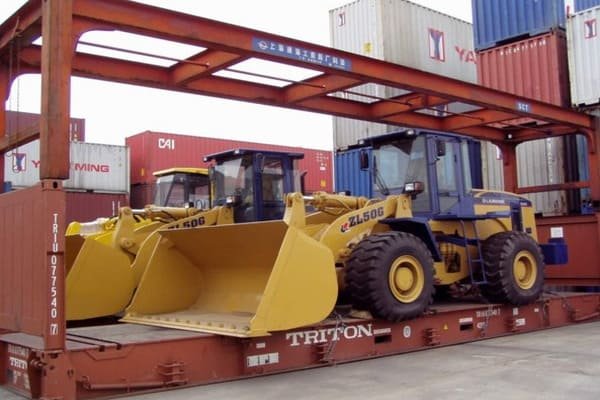
I've been in the logistics business for over 20 years, and I've seen firsthand how complex shipping heavy equipment can be. It's not like sending a standard pallet. The sheer size, weight, and value of something like an excavator or a crane demand a different level of expertise. A small oversight in paperwork or preparation can get a multi-ton piece of machinery stuck at a port for weeks, racking up fees every single day. The goal of this guide is to walk you through the exact steps we at DeepLinker use to ensure our clients' valuable assets arrive safely, on time, and without any surprise costs. Let's break it down.
How Do You Prepare for Shipment to Avoid Costly Delays?
Your machinery is ready to go, but is it ready for shipping? A small oversight during preparation can lead to major hold-ups at the port, costing you serious time and money.
Proper pre-shipment preparation involves thoroughly cleaning the machinery to meet quarantine standards, accurately measuring its dimensions and weight for quoting, draining all fluids to comply with safety regulations, and securing or dismantling any loose parts to prevent damage during transit. This step is non-negotiable for a smooth process.

First, you must clean the equipment meticulously. This isn't just for looks; it's a quarantine requirement for many countries like Australia and New Zealand1. All soil, plant matter, and debris must be removed to prevent the transfer of foreign pests and diseases2.
Next, you need exact measurements.
Key Preparation Steps
| Step | Why It's Critical | Details |
|---|---|---|
| Cleaning | Quarantine Compliance | Pressure wash to remove all dirt, mud, and organic matter. Pay close attention to undercarriages and tracks. |
| Measurements | Accurate Quoting & Stowage | Provide your forwarder with the precise Length x Width x Height and total weight3. Inaccurate data leads to incorrect quotes. |
| Fluid Draining | Safety & DG Regulations | Drain fuel, oil, coolants, and hydraulic fluids4. This is often required to avoid being classified as Dangerous Goods (DG). |
| Securing Parts | Damage Prevention | Secure or remove any loose or fragile components like mirrors, antennas, or buckets. This reduces the risk of damage. |
Getting these details right from the start ensures the rest of the process, from booking the vessel to clearing customs, goes as planned.
What's the Right Shipping Method for Your Machinery?
You have several shipping options, but which one is the best fit? Choosing the wrong method can either blow your budget or put your expensive equipment at unnecessary risk.
The best shipping method depends on your machinery's size, whether it's operational, and your budget. Roll-on/Roll-off (Ro-Ro) is ideal for movable equipment5, while Flat Rack containers are for oversized items6. Dismantling and shipping in a standard container can be a secure, cost-effective option for smaller machines.
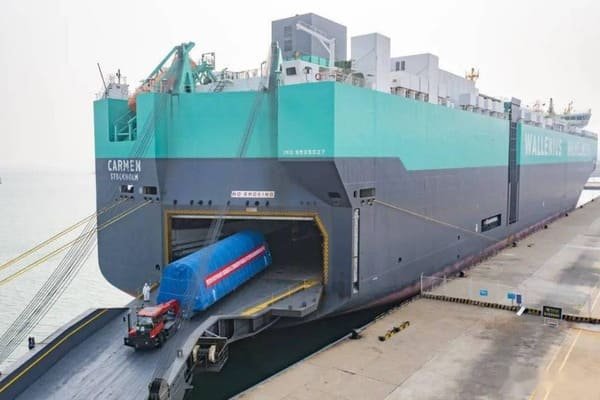
Choosing the right transport mode is a strategic decision. It's a balance between cost, safety, and convenience. As a logistics provider, my job is to present the options clearly so you can make an informed choice. For example, a brand-new, drivable excavator is a perfect candidate for Ro-Ro. It’s driven onto the ship and secured below deck, protected from the worst of the sea spray. It's efficient and usually the most affordable option. However, if you're shipping a non-operational machine or a collection of static parts, Ro-Ro isn't possible. That's when we look at other methods.
Comparing Your Shipping Options
| Method | Best For | Pros | Cons |
|---|---|---|---|
| Ro-Ro | Wheeled or tracked, operational machinery. | Cost-effective, minimal handling. | Exposed to elements, limited routes. |
| Flat Rack | Oversized or oddly shaped equipment. | Highly versatile for non-containerized cargo. | Higher cost, more exposure than a container. |
| Lo-Lo | Static, non-operational heavy equipment. | Can handle extremely heavy and large items. | Requires specialized cranes, more handling. |
| Containerization | Smaller machinery that can be dismantled. | Maximum security and protection. | Requires labor for disassembly and reassembly. |
What Essential Documents Do You Need for Customs & Compliance?
The thought of all the required paperwork can feel overwhelming. But a single missing or incorrect document can get your high-value shipment stuck in customs for weeks, creating a logistical nightmare.
For a smooth customs process, you will need a Commercial Invoice detailing the value, a Bill of Lading as your contract of carriage, a detailed Packing List, and often a Certificate of Origin. Specific permits or licenses may also be required depending on the destination country.
Your Document Checklist
- Commercial Invoice7: This is the bill of sale. It must include the buyer and seller details, a clear description of the machinery (including serial numbers), and the correct value. This is what customs uses to calculate duties and taxes.
- Bill of Lading (B/L)8: This is the most important document. It's the contract between you (the shipper) and the carrier. It acts as a receipt for your cargo and is the title document needed to claim the machinery at the destination.
- Packing List: This document details everything in the shipment, including the net and gross weight and the dimensions of the machinery. It must match the commercial invoice.
- Certificate of Origin (COO)9: This verifies the country where the machinery was manufactured. It can be crucial for determining if any special trade agreements or tariffs apply.
- Export/Import Licenses: Some countries have specific regulations for importing heavy machinery. Your freight forwarder should advise if any special permits are needed for your specific destination.
Working with an experienced partner like DeepLinker ensures that all this paperwork is prepared correctly and submitted on time, preventing costly errors.
Customs clearance can feel like a mysterious black box. Unfamiliar rules, surprise inspections, and confusing jargon can lead to unexpected fees and major delays for your project.
The key to smooth customs clearance is to work with a licensed customs broker10 or a freight forwarder who provides this service. They ensure your documents are correct, calculate and pay duties and taxes on your behalf, and manage any inspections, making the process predictable and efficient.

Navigating customs is not a DIY job, especially with high-value cargo like construction machinery. The rules are different in every country and they change constantly. A professional customs broker is your expert guide. They know the local regulations, the right people to talk to, and how to classify your goods correctly to avoid overpaying on duties. Their entire job is to get your shipment cleared legally and quickly.
One of the most critical elements is the Harmonized System (HS) code11. Every product has a unique code, and this code determines the rate of duty you pay12. Using the wrong code for an excavator can mean the difference between paying 5% and 15% in import duties. A good broker ensures the correct code is used. They also manage the payment of duties and taxes, and if customs decides to physically inspect your machinery—which is common for large equipment—the broker is there to represent you and facilitate the process. This prevents your machinery from getting stuck in limbo while you try to figure things out from thousands of miles away.
The Customs Clearance Process
- Document Submission: Your broker submits the complete document package (Commercial Invoice, B/L, etc.) to the customs authority in the destination country.
- Duty & Tax Calculation: Customs assesses the duties and taxes based on the machinery's HS code, value, and origin.
- Payment: Your broker arranges for the payment of these charges.
- Release or Inspection: If all is in order, customs releases the cargo. If they select it for inspection, the broker coordinates this to ensure it happens quickly.
- Final Release: Once any inspection is complete and all duties are paid, the machinery is officially cleared for entry into the country.
What Factors Influence Your Shipping Costs?
You need a clear and accurate budget for your shipment. Hidden fees and surprise charges can quickly eat into your profit margins and turn a good deal into a financial headache.
Your total shipping cost is driven by the machinery's size and weight, the shipping method chosen (Ro-Ro vs. container), the ocean freight rate, and destination charges. Key cost components include inland transport, port fees, insurance, and customs duties, so get a detailed, all-inclusive quote.

When a client asks me for a quote, I always explain that the price is more than just the ocean freight. The final landed cost includes a whole chain of services. The biggest factors are always the volume (cubic meters) and weight of the machinery. A larger, heavier machine takes up more space on a vessel and costs more to handle at the ports. The shipping route also plays a huge role; a popular route from China to Germany will have different pricing than a less common route to South America.
Breakdown of Potential Costs
| Cost Component | Description |
|---|---|
| Ocean Freight | The base cost to transport the cargo from Port A to Port B. |
| Inland Transport | Cost to move the machinery from your location to the origin port, and from the destination port to the final site. |
| Port Charges (THC) | Terminal Handling Charges at both origin and destination for loading, unloading, and handling the cargo. |
| Customs Clearance Fees | Fees for the customs broker's service, plus any government duties and taxes. |
| Cargo Insurance | A percentage of the cargo's value to protect against loss or damage. Highly recommended for valuable machinery. |
| Forwarder/Agent Fees | The service fee for the company managing the entire logistics process for you. |
Understanding these components allows you to create a realistic budget and avoid any nasty surprises on the final invoice.
How Can You Mitigate Risks and Ensure a Successful Shipment?
Even with perfect planning, things can still go wrong. Damage during a storm, unexpected loss, or logistical logjams are real risks when shipping valuable heavy equipment across the globe.
To mitigate risks, you must secure comprehensive cargo insurance, not just carrier liability. Partner with an experienced freight forwarder specializing in heavy cargo, document the machinery's condition with photos before shipping, and maintain clear, constant communication with your logistics partner for real-time updates.
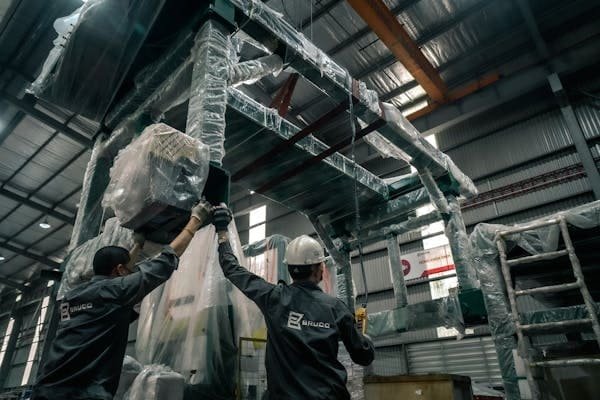
In my experience, the two most powerful tools for mitigating risk are insurance and expertise. First, let's talk about insurance. Never assume the shipping line's basic liability will cover you13. It won't. It's often pennies on the dollar. For a piece of machinery worth hundreds of thousands of dollars, you need a proper "All-Risk" cargo insurance policy. It's a small price to pay for complete peace of mind. I've seen it save clients from financial disaster after a container was damaged in rough seas.
Second, your choice of partner is your biggest risk-mitigation tool. Don't just pick the cheapest forwarder. You need a team that lives and breathes project cargo and oversized shipments, like we do at DeepLinker. An experienced forwarder anticipates problems before they happen. They know which ports are difficult, which carriers are most reliable for heavy cargo, and how to properly secure your machinery for a long ocean voyage. Taking detailed, date-stamped photos before the machine is loaded provides undeniable proof of its pre-shipment condition, which is invaluable for any insurance claim. A good partner will insist on this.
Final Tips for Success
- Get Full Insurance: Insist on an "All-Risk" policy that covers the full value of your machinery.
- Choose a Specialist: Work with a freight forwarder who has proven experience with heavy, oversized cargo. Ask for case studies or references.
- Document Everything: Take high-resolution photos and videos of your machine from all angles before it leaves your facility.
- Stay Informed: Demand regular updates from your logistics partner. Knowing where your cargo is and that it's on schedule is crucial for your own project planning.
Conclusion
Proper prep, the right shipping method, and an expert partner are key to moving construction machinery overseas safely and on budget. Contact our team for customized support.
"Machinery Cleaning Guides and Checklists - DAFF", https://www.agriculture.gov.au/biosecurity-trade/import/goods/vehicles-machinery/regulations/guides-checklists. Government biosecurity guidance from Australia and New Zealand describes mandatory cleanliness requirements for imported used machinery to reduce contamination risk, supporting the claim that cleaning is a quarantine-related requirement; the guidance is jurisdiction-specific rather than a universal rule. Evidence role: general_support; source type: government. Supports: Many countries, including Australia and New Zealand, require machinery to be cleaned before import as part of quarantine or biosecurity controls. Scope note: Applies directly to Australia and New Zealand; other countries may impose different or less specific requirements. ↩
"Pest alert - International Plant Protection Convention", https://www.ippc.int/en/core-activities/capacity-development/programmes/strenghtening-pest-outbreak-alert-and-response-systems/pest-alerts/1/. International plant protection and government biosecurity materials identify soil, plant matter, and contaminated equipment as pathways for introducing invasive pests and diseases, supporting the rationale for removing organic debris before shipment. Evidence role: mechanism; source type: institution. Supports: Removing soil, plant matter, and debris from machinery helps prevent the transfer of foreign pests and diseases. Scope note: Such sources support the biosecurity mechanism generally, not the risk level of any individual machine shipment. ↩
"Stowage plan for container ships - Wikipedia", https://en.wikipedia.org/wiki/Stowage_plan_for_container_ships. Carrier and freight-forwarding guidance for oversized or project cargo commonly requires accurate cargo dimensions and gross weight for booking, stowage planning, and equipment selection, supporting the operational need for precise measurements. Evidence role: general_support; source type: institution. Supports: Precise machinery dimensions and total weight are needed for freight quoting, vessel booking, and stowage planning. Scope note: The source would support standard logistics practice rather than prove that every inaccurate measurement causes a specific delay or cost. ↩
"[PDF] Interpretation Document - PHMSA - Department of Transportation", https://www.phmsa.dot.gov/sites/phmsa.dot.gov/files/docs/standards-rulemaking/hazmat/interpretations/65866/180041.pdf. Transport safety regulations and dangerous goods guidance describe restrictions on machinery containing fuels or hazardous liquids, supporting the need to manage or remove fluids before shipment; requirements vary by commodity, mode, and residual quantity. Evidence role: mechanism; source type: government. Supports: Fuel and other fluids in machinery may need to be drained or controlled to comply with transport safety and dangerous goods requirements. Scope note: Not all fluids must always be fully drained, and classification depends on the specific substance, quantity, packaging, and applicable transport rules. ↩
"American Roll-on Roll-off Carrier - Wikipedia", https://en.wikipedia.org/wiki/American_Roll-on_Roll-off_Carrier. Reference overview of Roll-on/Roll-off (Ro-Ro) ocean transport, in which wheeled or self-propelled cargo is driven directly on and off the vessel. Evidence role: definition; source type: reference. Supports: Ro-Ro shipping is well suited to operational, drivable, or tracked machinery that can be rolled onto the vessel. Scope note: Ro-Ro is only feasible for equipment that is movable under its own power or towable; static units require lift-on methods. ↩
"Flat rack container - Wikipedia", https://en.wikipedia.org/wiki/Flat_rack_container. Reference description of flat rack containers, open-sided units with collapsible ends designed to carry oversized, heavy, or irregularly shaped cargo. Evidence role: definition; source type: reference. Supports: Flat rack containers are used for oversized or oddly shaped machinery that does not fit in a standard container. Scope note: Flat racks expose cargo to the elements more than closed containers and generally cost more to handle. ↩
"Commercial invoice - Wikipedia", https://en.wikipedia.org/wiki/Commercial_invoice. Reference definition of the commercial invoice as the customs document stating the value, description, and parties of a shipment, used to assess duties and taxes. Evidence role: definition; source type: reference. Supports: The Commercial Invoice provides the declared value and description customs uses to calculate duties and taxes. ↩
"Bill of Lading (Summer Institute materials) - University of Michigan Law", https://repository.law.umich.edu/cgi/viewcontent.cgi?filename=6&article=1000&context=summer_institute&type=additional. Academic legal materials explain the bill of lading as a contract of carriage, a receipt for goods, and a document of title used to claim cargo at destination. Evidence role: definition; source type: academic. Supports: The Bill of Lading serves as the carriage contract, cargo receipt, and title document needed to claim the machinery at destination. ↩
"Certificate of Origin - Guide to Customs Procedures - CBP", https://www.cbp.gov/trade/nafta/guide-customs-procedures/cert-origin. Official U.S. Customs and Border Protection guidance describing the Certificate of Origin and its role in verifying where goods were produced for trade-agreement and tariff purposes. Evidence role: definition; source type: government. Supports: A Certificate of Origin verifies the country of manufacture and can determine eligibility for trade agreements or preferential tariffs. ↩
"Customs Brokers - Frequently Asked Questions - CBP", https://www.cbp.gov/trade/programs-administration/customs-brokers/frequently-asked-questions. Official CBP guidance on the role of licensed customs brokers in preparing documentation, calculating duties, and clearing imported goods on behalf of importers. Evidence role: requirement; source type: government. Supports: A licensed customs broker helps ensure documents are correct and manages duty payment and clearance for smooth customs processing. ↩
"Harmonized System - Wikipedia", https://en.wikipedia.org/wiki/Harmonized_System. Reference overview of the Harmonized System, the standardized international commodity classification used to identify goods and determine tariff treatment. Evidence role: definition; source type: reference. Supports: Every product has a unique HS code used to classify goods and determine applicable duty rates. ↩
"Determining Duty Rates - CBP", https://www.cbp.gov/trade/programs-administration/determining-duty-rates. Official CBP guidance explaining that the Harmonized System (HS) classification code assigned to a product determines its applicable import duty rate. Evidence role: mechanism; source type: government. Supports: The HS code assigned to machinery directly determines the import duty rate applied at customs. Scope note: Actual rates also depend on origin, trade agreements, and destination-country tariff schedules. ↩
"Does Package Limitation Under the Hague Rules Apply to Bulk Cargo?", https://lh-ag.com/wp-content/uploads/2022/11/3-Does-Package-Limitation-Under-the-Hague-Rules-Apply-to-Bulk-Cargo.pdf. Legal analysis of carrier liability under the Hague/Hague-Visby Rules, explaining that package limitation caps a carrier's compensation well below the actual value of high-value cargo. Evidence role: analysis; source type: industry/legal. Supports: A shipping line's basic liability is limited and often far below cargo value, so separate All-Risk cargo insurance is needed for valuable machinery. Scope note: Applicable limits depend on the specific liability regime incorporated into the contract of carriage. ↩