
Shipping valuable electronics can be stressful. Delays and damage can destroy your profits. The whole process feels risky, but it doesn't have to be if you have a solid plan.
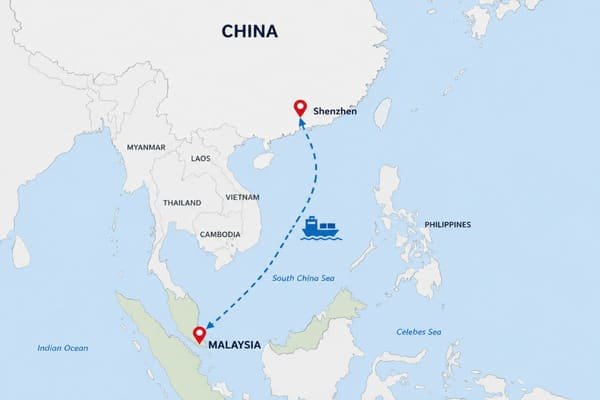
To ship electronics from China to Malaysia safely and fast, you must choose the right port in South China, use specific protective packaging, and work with a freight forwarder who understands electronics. These three steps are critical for protecting your high-value goods.
I've been in this business for over 20 years, and I've seen firsthand how a simple mistake in logistics can turn a profitable shipment into a huge loss. Many of my clients used to focus only on the freight cost. Now, they see the bigger picture. They need a partner who can handle everything from talking to their supplier in China to ensuring the goods are packed correctly before they even leave the factory. This end-to-end approach is what truly saves time and money. It's not just about moving a box; it's about managing the entire supply chain to protect your investment. Let's look at how you can do this effectively.
Why does Malaysia import large volumes of electronics from China?
Have you ever wondered why the flow of electronics from China to Malaysia is so strong? It's more than just about finding a cheap price. Understanding this relationship gives you an advantage.
Malaysia imports huge amounts of electronics from China1 due to China's unbeatable manufacturing scale and cost efficiency. This relationship supports Malaysia's own tech assembly industry2 and also satisfies the strong local consumer demand for the latest gadgets at affordable prices.
This trade partnership is a powerful engine for both countries. I've worked with many Malaysian companies that rely on this flow for their success. They aren't just buying finished products. Many import components from China for assembly in their own factories in places like Penang, which is known as the "Silicon Valley of the East."3 This creates a complex but very efficient supply chain. For your business, this means there is a very established and reliable path for your goods. The key is to tap into it correctly. Let's break down the main reasons for this strong trade link.
China's Manufacturing Dominance
China is often called the "world's factory," and this is especially true for electronics.4 The country has massive, highly developed manufacturing ecosystems, particularly in the Pearl River Delta5. Cities like Shenzhen are not just production centers; they are global hubs for innovation, design, and sourcing of every electronic component imaginable6. This concentration of resources means you can get everything from simple circuit boards to complex finished smartphones made quickly and cost-effectively.
Malaysia's Strategic Role
Malaysia is not just a consumer market. It has a very strong and sophisticated electronics and electrical (E&E) sector7. The country serves as a key hub in Southeast Asia for the assembly, testing, and packaging of high-tech components. Many global brands use Malaysia as a base to assemble products using parts sourced from China before re-exporting them to the rest of the world. This creates a two-way street that strengthens the logistics infrastructure between the two nations.
The Consumer Connection
Finally, there is strong demand from Malaysian consumers. They want the latest technology, from smartphones to smart home devices, and they are very price-sensitive. China's ability to produce a wide range of quality electronics at competitive prices directly meets this market need.
| Factor | China's Role | Malaysia's Role | Your Business Advantage |
|---|---|---|---|
| Production | Mass manufacturing of parts & finished goods | High-tech assembly & testing | Access to efficient production |
| Cost | Highly competitive pricing | Value-added assembly hub | Lower overall supply chain costs |
| Logistics | Mature export infrastructure | Strong regional distribution hub | Reliable and frequent shipping options |
Which are the best ports for electronics shipping in South China?
Choosing the wrong port in China is a simple mistake that can cause huge delays. This one decision can add weeks to your shipping time and drive up your costs unexpectedly.
For electronics, the best ports are in the Pearl River Delta, specifically Shenzhen and Guangzhou8. Shenzhen is the top choice because it's the heart of China's tech industry. Its ports are modern, efficient, and have extensive experience handling high-value electronics.
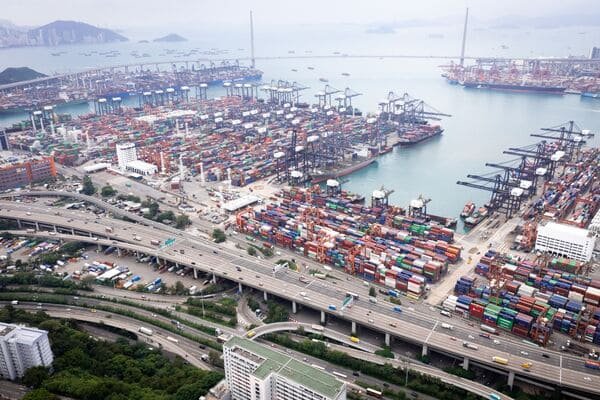
I always advise clients shipping electronics to start by looking at Shenzhen. A few years ago, a client of mine was sourcing from a factory just outside Dongguan. Their previous agent routed their cargo through a more distant port to save a tiny amount on local trucking. The shipment was delayed by a week just waiting for a vessel. We switched their shipments to go through Shenzhen's Yantian port. The trucking was slightly more, but we cut their total transit time by nine days. That's because Shenzhen has more frequent sailings to major Malaysian ports like Port Klang. It's a perfect example of how the "cheapest" option is not always the best or most cost-effective one in the long run.
Shenzhen: The Tech Hub Port
The Port of Shenzhen, which includes terminals like Yantian and Shekou, is the world's fourth-busiest container port9. Its biggest advantage is its location. It is right next door to the factories that make the world's electronics. This proximity means your goods can get from the factory floor to the port in just a few hours10. This reduces risks from extra handling and shortens your overall lead time. The port authorities here understand the value and sensitivity of electronics, so customs clearance is often faster and more efficient for this type of cargo.
Guangzhou: The Comprehensive Trade Gateway
Just a short distance away, the Port of Guangzhou, with its main terminal at Nansha, is another excellent option. It's a massive, comprehensive port that serves the wider manufacturing region of Guangdong province. If your supplier is located closer to cities like Foshan or Zhongshan, Guangzhou might be a more logical choice. While it has excellent global connections, for the specific route to Malaysia for electronics, Shenzhen often has a slight edge in terms of the number of direct sailings and speed.
| Port Feature | Port of Shenzhen (Yantian/Shekou) | Port of Guangzhou (Nansha) |
|---|---|---|
| Proximity to Tech Hub | Excellent (next to Shenzhen, Dongguan) | Good (serves wider Guangdong) |
| Sailing Frequency to Malaysia | Very High | High |
| Customs for Electronics | Highly specialized and efficient | Efficient, but less specialized |
| Best For | Time-sensitive, high-value electronics | General cargo, goods from western PRD |
Ultimately, the best port depends on your supplier's location. A good logistics partner will help you analyze the total cost and time for each option, not just the ocean freight rate.
What are the best packaging tips for sensitive electronic goods?
Your electronics survived the complex manufacturing process. But can they survive the long journey by sea? Improper packaging is the number one reason I see for cargo damage and financial loss.
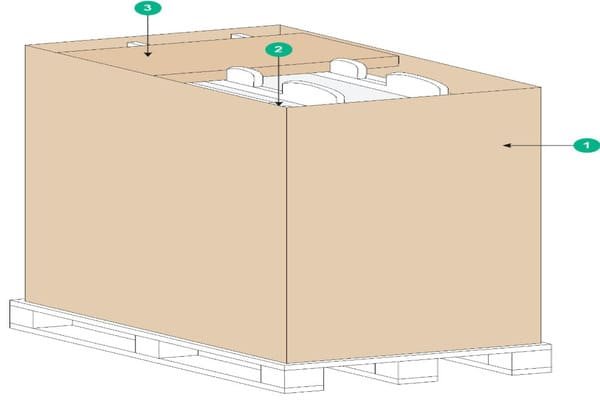
Always use anti-static bags for individual parts, surround them with custom-fit foam cushioning inside a sturdy, double-walled box, and seal it securely. Make sure nothing can move inside, and add clear "Fragile" and "This Side Up" labels.
I remember one of my first clients shipping sensitive medical devices. They had a shipment arrive with over 30% of the units damaged, even though there was no visible damage to the outside of the boxes. The problem was electrostatic discharge (ESD). Their supplier had skipped the anti-static bags to save a few cents per unit. It was a costly lesson. Now, we have a pre-shipment checklist that includes verifying the packaging with photos. It's a simple step that prevents disasters. Protecting your goods is about thinking in layers, from the inside out.
Step 1: Internal Protection
The first layer of defense happens at the component level. All electronic items, especially those with circuit boards, must be placed in an anti-static bag. This simple, silver-colored bag prevents electrostatic discharge (ESD), which can fry sensitive electronics without leaving any visible trace of damage11. This is a non-negotiable step. For items with screens or sensitive surfaces, you should also apply a protective film to prevent scratches.
Step 2: Cushioning and Immobilization
Movement is the enemy. Your product must be held firmly in place inside its box. The best way to do this is with custom-fit polyethylene or polyurethane foam inserts that are cut to the exact shape of your product. If that's not possible, use a combination of bubble wrap and air pillows to fill every single void in the box. The goal is to ensure that if you shake the box, you feel absolutely no movement from the contents inside.
Step 3: The Outer Shell and Labeling
The outer box is your product's armor. Always use a new, high-quality, double-walled corrugated cardboard box. A used box might look okay, but its structural integrity is already compromised. Seal all seams with strong, 2-3 inch wide packing tape. Finally, label the box clearly on multiple sides with universal handling symbols: "Fragile," "This Side Up" (with arrows), and "Keep Dry." For larger shipments, securing your boxes onto a pallet will provide the best stability and protection.
Conclusion
Shipping electronics from China to Malaysia safely and quickly comes down to three things: choosing the right export port, using proper protective packaging, and working with partners who understand both logistics and product sensitivity. In practice, many buyers are now looking beyond just freight—having one reliable partner who can also assist with supplier coordination, product checks, and shipment arrangements can significantly reduce risks and save time.
"Malaysia Parts of electrical machines & apparatus having imports by ...", https://wits.worldbank.org/trade/comtrade/en/country/MYS/year/2023/tradeflow/Imports/partner/ALL/product/854390. Trade statistics from UN Comtrade or Malaysia’s Department of Statistics can substantiate that China is a major source of Malaysia’s electrical and electronic imports by value in recent years. Evidence role: statistic; source type: government. Supports: Malaysia imports large volumes of electronics from China.. Scope note: Such data can confirm trade volume and product categories, but it does not by itself prove the business motives behind the imports. ↩
"Electrical & Electronics - MIDA | Malaysian Investment Development ...", https://www.mida.gov.my/industries/manufacturing/electrical-electronics/. Government and industry reports on Malaysia’s electrical and electronics sector can show that imported components and intermediate goods support domestic assembly, testing, and manufacturing activities. Evidence role: general_support; source type: government. Supports: Electronics imports from China support Malaysia’s domestic technology assembly industry.. Scope note: The source may support the structure of Malaysia’s electronics supply chain generally rather than linking every China-origin import directly to assembly activity. ↩
"[PDF] The Key Success Factors of Penang as the Silicon Valley of the East", https://jabr.sbs.edu/article/download/6/3/5. Academic or institutional sources describing Penang’s electronics cluster can document the common use of the phrase “Silicon Valley of the East” and its association with semiconductor and electronics manufacturing. Evidence role: historical_context; source type: education. Supports: Penang is commonly referred to as the “Silicon Valley of the East” because of its electronics and semiconductor cluster.. Scope note: The phrase is a descriptive nickname rather than an official administrative designation. ↩
"High-technology exports (current US$) - China - World Bank Open Data", https://data.worldbank.org/indicator/TX.VAL.TECH.CD?locations=CN. Encyclopedic and research sources on manufacturing in China can support the characterization of China as a global manufacturing hub and document its large role in electronics production and exports. Evidence role: historical_context; source type: encyclopedia. Supports: China is widely characterized as a major global manufacturing center, including in electronics.. Scope note: The phrase “world’s factory” is a shorthand characterization and should be supported as a contextual description, not as a formal title. ↩
"Pearl River Delta", https://en.wikipedia.org/wiki/Pearl_River_Delta. Research on the Pearl River Delta manufacturing region can document its concentration of electronics, component suppliers, export-oriented factories, and logistics infrastructure. Evidence role: general_support; source type: research. Supports: The Pearl River Delta contains a highly developed electronics manufacturing ecosystem.. Scope note: Regional evidence supports the existence of a major manufacturing ecosystem, but individual supplier capabilities still vary by city and factory. ↩
"[PDF] Global Innovation Hotspots - WIPO", https://www.wipo.int/edocs/pubdocs/en/wipo-pub-gih-shenzhen-en-global-innovation-hotspots-innovation-ecosystems-and-catching-up-in-developing-countries-evidence-from-shenzhen.pdf. Academic and institutional studies of Shenzhen’s electronics industry can support its role as a major center for hardware innovation, design, prototyping, and component sourcing. Evidence role: expert_consensus; source type: research. Supports: Shenzhen functions as a major global hub for electronics innovation, design, prototyping, and component sourcing.. Scope note: The wording “every electronic component imaginable” is hyperbolic; evidence can support Shenzhen’s breadth as a sourcing hub but not literal completeness. ↩
"Electrical & Electronics - MIDA | Malaysian Investment Development ...", https://www.mida.gov.my/industries/manufacturing/electrical-electronics/. Malaysia Investment Development Authority or Ministry of Investment, Trade and Industry publications can document the scale, export contribution, and industrial capabilities of Malaysia’s electrical and electronics sector. Evidence role: statistic; source type: government. Supports: Malaysia has a significant and developed electrical and electronics sector.. Scope note: Official sector summaries may emphasize investment promotion, so the citation should be used for factual sector size and export figures rather than qualitative praise. ↩
"Pearl River Delta - Wikipedia", https://en.wikipedia.org/wiki/Pearl_River_Delta. Port authority statistics and international port rankings can document that Shenzhen and Guangzhou are major South China container ports serving Guangdong’s export manufacturing region. Evidence role: general_support; source type: institution. Supports: Shenzhen and Guangzhou are major South China ports relevant to electronics exports from the Pearl River Delta.. Scope note: Port size and regional location support their relevance for electronics shipping, but they do not alone prove they are always the best choice for a specific shipment. ↩
"List of busiest container ports", https://en.wikipedia.org/wiki/List_of_busiest_container_ports. International container-port rankings by throughput can verify the Port of Shenzhen’s placement among the world’s busiest container ports for the relevant year. Evidence role: statistic; source type: institution. Supports: The Port of Shenzhen has ranked as the world’s fourth-busiest container port by container throughput.. Scope note: The exact ranking can change annually, so the citation should specify the year of the ranking. ↩
"Pearl River Delta - Wikipedia", https://en.wikipedia.org/wiki/Pearl_River_Delta. Maps, port information, and regional logistics sources can show the close distance between Shenzhen-area ports and electronics manufacturing centers such as Shenzhen and Dongguan. Evidence role: general_support; source type: institution. Supports: Shenzhen ports are geographically close to major electronics manufacturing centers in the Pearl River Delta.. Scope note: Actual travel time depends on factory location, traffic, customs procedures, and terminal conditions, so evidence can support proximity rather than guarantee a fixed transit time. ↩
"Antistatic bag", https://en.wikipedia.org/wiki/Antistatic_bag. Electrostatic-discharge standards and electronics reliability literature can support that ESD can damage semiconductor devices and that antistatic or shielding packaging is used to reduce ESD risk during handling and transport. Evidence role: mechanism; source type: research. Supports: Anti-static packaging helps prevent electrostatic discharge that can damage sensitive electronic components, sometimes without visible external damage.. Scope note: The source can explain the damage mechanism and protective purpose of ESD packaging, but it may not quantify risk for every product type. ↩