
Introduction to International Cargo Insurance: A Complete Guide for Global Trade
In international logistics, cargo travels across borders and goes through multiple transportation modes, warehouses, and handling checkpoints. During this journey, goods are exposed to various risks—damage, theft, loss, delays, and accidents. To protect businesses from financial loss, International Cargo Insurance plays a crucial role.
This guide explains how cargo insurance works, the different types of insurance coverage, common claim scenarios, and why exporters, importers, and freight forwarders should always include insurance in international shipping.
What Is International Cargo Insurance?
International cargo insurance (also called marine cargo insurance) provides financial protection for goods shipped by sea, air, road, or rail. It compensates businesses if cargo is lost or damaged during transit.
Unlike Incoterms®, which define who is responsible for insurance, cargo insurance is a separate contract purchased to safeguard the value of the goods.
Why Do You Need Cargo Insurance?
- Accidents are unpredictable — vessel fires, container collapse, severe weather, port strikes, and mishandling can occur anytime.
- Carriers have limited liability1 — shipping lines and airlines only compensate according to international conventions, often far below the cargo value.
- General Average (GA)2 — shippers must share vessel rescue costs even if their own cargo is not damaged.
- Risk transfer under Incoterms® — insurance obligations differ by EXW, FOB, CIF, CIP, etc.
Having insurance ensures you receive proper compensation regardless of responsibility disputes.
Types of Cargo Insurance Coverage
International cargo insurance is usually based on the Institute Cargo Clauses (ICC) issued by Lloyd's Market Association.
1. Institute Cargo Clauses A (ICC A) – All Risks
- Highest level of protection
- Covers most accidental losses and damages
- Required under CIP Incoterm (Incoterms® 2020)3
2. Institute Cargo Clauses B (ICC B)
- Intermediate coverage
- Covers major risks like fire, stranding, collision
- Does not cover theft, rough handling, rain damage, etc.
3. Institute Cargo Clauses C (ICC C)
- Basic coverage
- Covers major catastrophic events only
- Used under CIF Incoterm (minimum requirement)4
Additional Insurance Options
- Warehouse-to-warehouse coverage — full door-to-door protection
- War Risk Insurance — covers political instability, armed conflict, attacks
- Strike Insurance — covers labor strikes and port shutdowns
- Temperature-controlled cargo coverage — for cold chain shipments
- High-value cargo insurance — electronics, luxury goods, machinery
Common Cargo Risks in International Shipping
- Damage caused by rough handling during loading/unloading
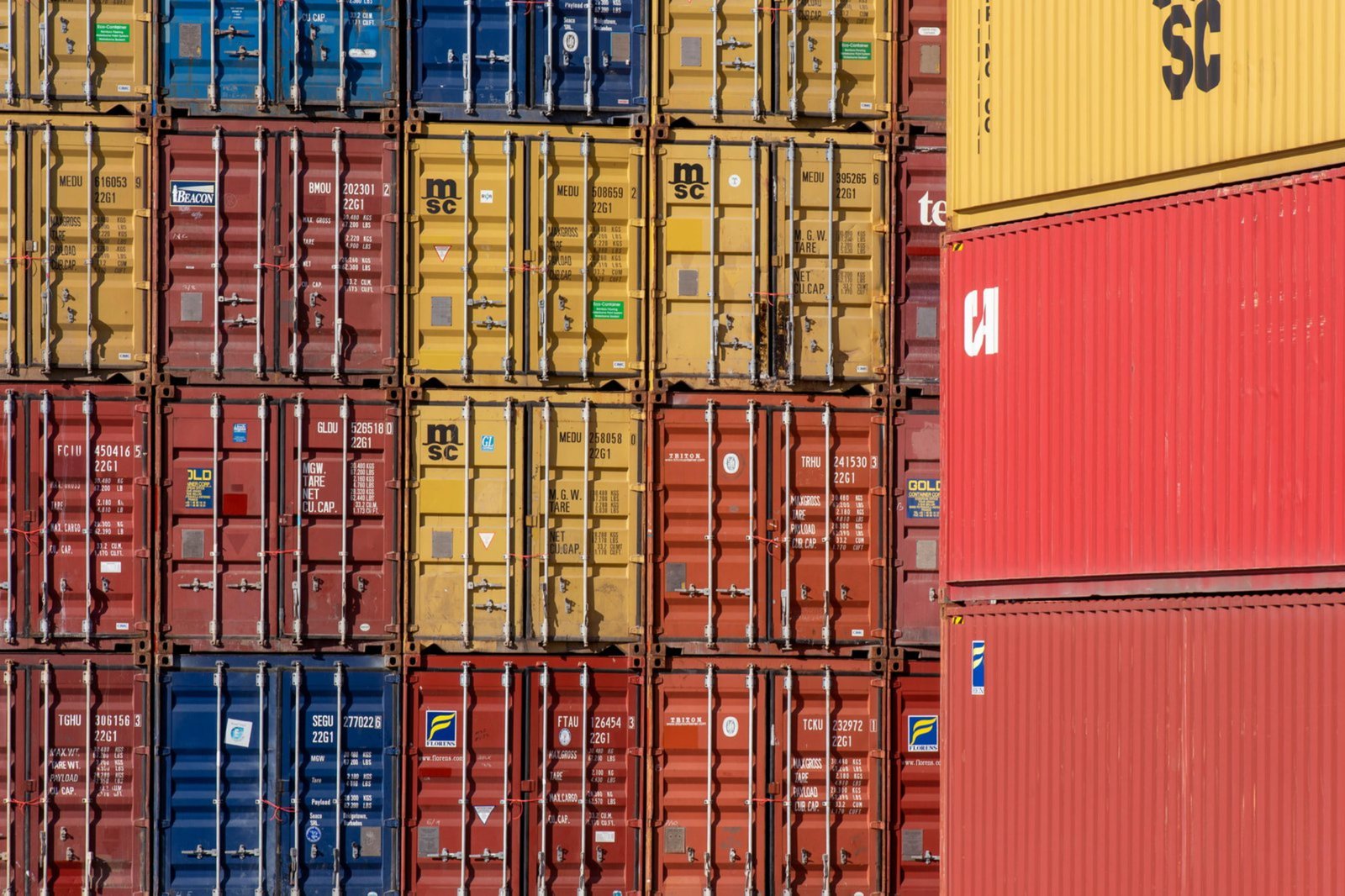
- Container collapse or shifting at sea
- Water damage from rain, seawater, or leakage
- Theft or pilferage
- Fire, explosion, vessel grounding
- Delay-related spoilage for perishable goods
What Is General Average (GA)?
General Average is a maritime law principle stating that all parties involved in a voyage must share losses and rescue costs if the vessel sacrifices cargo or incurs expenses to save the ship.
Without insurance, the consignee must pay a GA deposit before goods are released.
How Much Does Cargo Insurance Cost?
Premiums depend on:
- Cargo type
- Cargo value
- Transportation mode (sea, air, rail, road)
- Route and risk level
- Packaging and handling method
Typical rates range from 0.05%–0.5% of cargo value.5
How to File a Cargo Insurance Claim
To support a claim, the following documents are usually required:
- Insurance policy
- Commercial invoice
- Packing list
- Bill of Lading / Air Waybill
- Damage report / survey report
- Photos of damaged goods
- Claim statement
Claims must be filed promptly, usually within 3–7 days after receipt of goods.
Conclusion
International cargo insurance is essential for all exporters, importers, and logistics companies. It provides financial protection, minimizes business risks, and ensures smooth supply chain operations.
Whether shipping by sea, air, rail, or road, proper insurance coverage gives businesses peace of mind and prevents costly losses.
"Creating Uniform Worldwide Liability Standards for Sea ...", https://digitalcommons.du.edu/cgi/viewcontent.cgi?article=1366&context=tlj. International carriage regimes such as the Hague-Visby Rules and the Montreal Convention limit carrier liability by package, weight, or Special Drawing Rights, which can be lower than the commercial value of the cargo. Evidence role: general_support; source type: institution. Supports: Shipping lines and airlines often have limited liability under international conventions, which may not equal the cargo’s full value.. Scope note: The applicable limit depends on transport mode, contract terms, jurisdiction, and whether a higher value was declared. ↩
"General average - Wikipedia", https://en.wikipedia.org/wiki/General_average. General average is a maritime principle under which losses or expenses intentionally incurred for the common safety of a maritime venture are shared proportionally among the interested parties. Evidence role: definition; source type: encyclopedia. Supports: General Average requires parties in a maritime venture to share certain sacrifices or rescue expenses.. Scope note: The exact adjustment and contribution rules depend on the contract of carriage and the applicable York-Antwerp Rules or national law. ↩
"Know Your Incoterms - International Trade Administration", https://www.trade.gov/know-your-incoterms. Incoterms 2020 increased the seller’s insurance obligation under CIP to cover consistent with Institute Cargo Clauses A or equivalent, distinguishing it from the lower minimum cover under CIF. Evidence role: expert_consensus; source type: institution. Supports: Under Incoterms 2020, CIP requires a higher level of insurance coverage associated with Institute Cargo Clauses A.. Scope note: This supports the Incoterms 2020 default obligation; parties may contractually agree to different insurance arrangements. ↩
"Incoterms® 2020: CIP or CIF? - ICC Academy", https://academy.iccwbo.org/incoterms/article/incoterms-2020-cip-or-cif/. Incoterms 2020 treats CIF as requiring the seller to obtain only minimum cargo insurance cover, commonly associated with Institute Cargo Clauses C or equivalent. Evidence role: expert_consensus; source type: institution. Supports: CIF under Incoterms 2020 requires minimum cargo insurance coverage, commonly ICC C or equivalent.. Scope note: This describes the default CIF obligation; the sales contract may require broader coverage. ↩
"Marine Cargo Insurance Rates (2026)", https://www.logrock.com/uncategorized/marine-cargo-insurance-rates/. Cargo insurance pricing is generally calculated as a percentage of the insured value and varies with cargo type, route, mode, packaging, and loss history. Evidence role: statistic; source type: government. Supports: Cargo insurance premiums are commonly expressed as a small percentage of cargo value, with the article giving a typical range of 0.05%–0.5%.. Scope note: A neutral source may support the pricing mechanism and variability more readily than this exact rate range, because market premiums change by insurer, route, commodity, and risk period. ↩