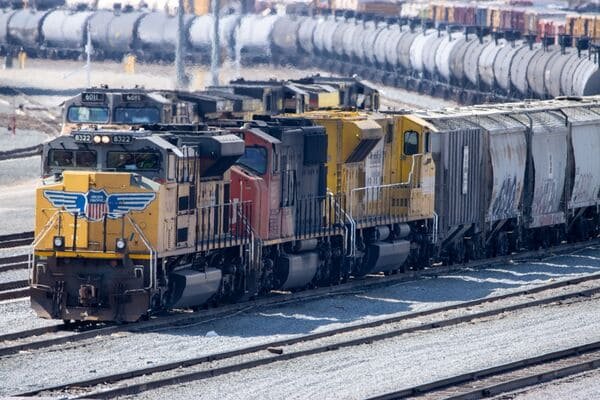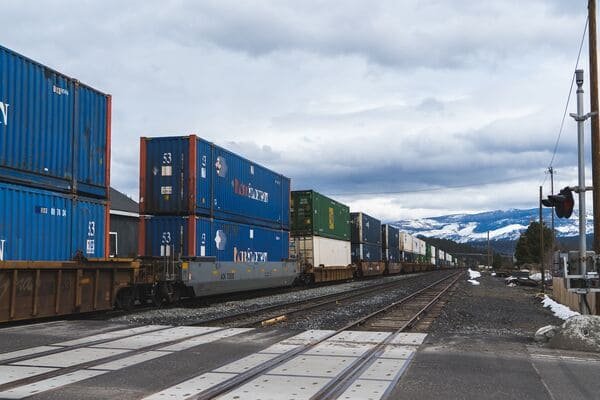

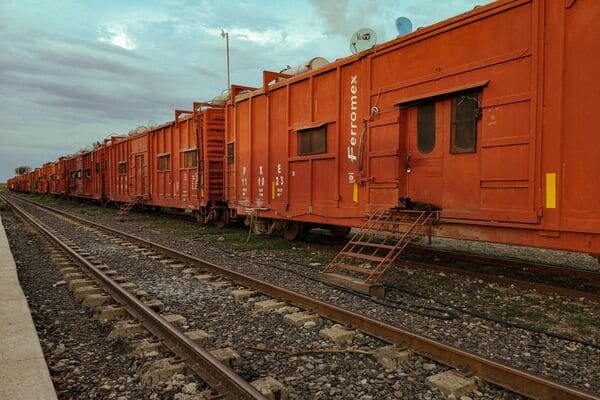
Shipping heavy machinery feels complex and expensive. You worry about costs spiraling out of control and potential damage. Rail freight offers a powerful, cost-effective solution you might be overlooking.1
Yes, rail freight is a very practical and cost-efficient option for transporting heavy machinery over long land distances. It excels when rail infrastructure is available near your origin and destination. It's best used as part of a multimodal logistics plan2, not a standalone door-to-door solution.
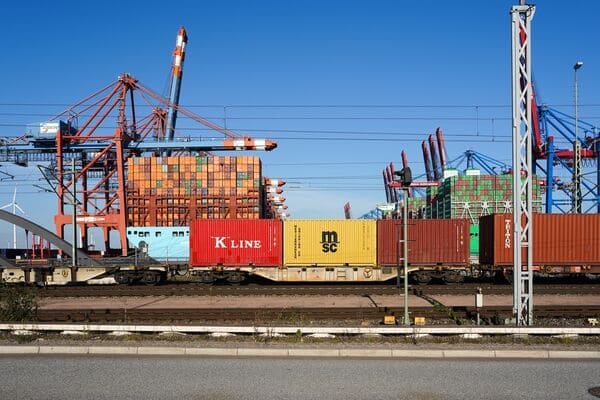
I've been in the logistics business for over 20 years, and I've seen firsthand how challenging moving large equipment can be. Clients often come to us after getting shocking quotes for road transport or realizing sea freight won't work for inland destinations. They need a solution that is both reliable and budget-friendly. This is where a well-planned rail strategy becomes a game-changer. It’s not just about putting cargo on a train; it's about building a smart, integrated transport chain.
What are the benefits of rail freight for heavy machinery?
You need to move massive equipment across the country without breaking the bank. Road transport is expensive with strict weight limits, and you need a more robust solution. Rail freight provides a powerful mix of high capacity and significant cost savings for the right routes.
The main benefits of using rail for heavy machinery are its cost-effectiveness over long distances, massive payload capacity for oversized and heavy items, enhanced safety with less handling, and a lower carbon footprint compared to trucking3. It is a reliable and efficient transport mode.
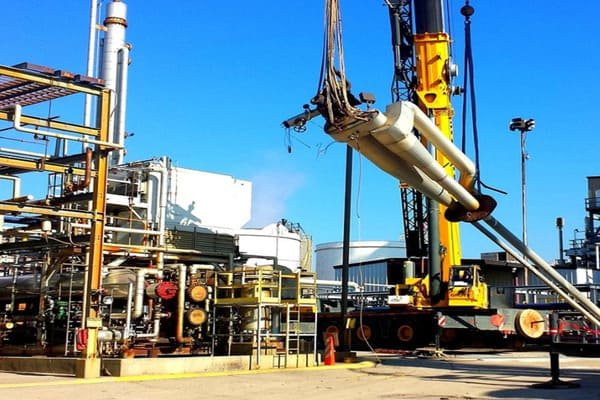
When we talk about moving something like a 100-ton generator or a giant earthmover, the advantages of rail become very clear. I remember a project for a client shipping mining equipment from a factory in the Midwest to a port in California. The road transport quotes were astronomical. We redesigned the logistics plan to use rail for the long-haul portion. The savings were over 30%, and the equipment arrived securely without incident. This is because rail's core strengths align perfectly with the demands of heavy cargo.
Cost-Effectiveness
For distances over 500 miles, rail is almost always cheaper than trucks. A single train can carry the load of hundreds of trucks, creating incredible economies of scale.4 This directly translates to lower freight costs for you, especially for heavy and bulky items that would require multiple specialized trucks.
High Payload Capacity
Railcars are built to handle extreme weight and size5. Standard flatcars, gondolas, and specialized heavy-duty railcars can transport cargo that is simply too big or too heavy for public highways.6 This makes rail the go-to choice for project cargo, industrial machinery, and construction equipment.
Safety and Reduced Risk
Rail transport involves less handling and transloading compared to a long-haul truck journey with multiple stops.7 The cargo is secured on a railcar at the origin terminal and often isn't touched again until the destination terminal. This significantly reduces the risk of damage during transit.
Here's a simple comparison:
| Feature | Rail Freight | Trucking (Road Freight) |
|---|---|---|
| Cost (Long Distance) | Lower | Higher |
| Cargo Capacity | Very High | Limited by road regulations |
| Fuel Efficiency | High | Low |
| Transit Speed | Moderate to Slow | Fast (for shorter distances) |
| Route Flexibility | Low (fixed tracks) | High (extensive road network) |
| Environmental Impact | Lower | Higher |
What are the limitations of rail transport to consider?
Rail freight sounds great, but you're worried about the potential downsides. What happens if your final destination is miles away from the nearest rail line? You need to understand the limitations to plan around them and avoid surprises.
The primary limitations of rail freight are its fixed network, which means it cannot provide door-to-door service8. This creates a need for first and last-mile transport. It can also be slower than trucking and may have less flexible scheduling, requiring careful coordination.
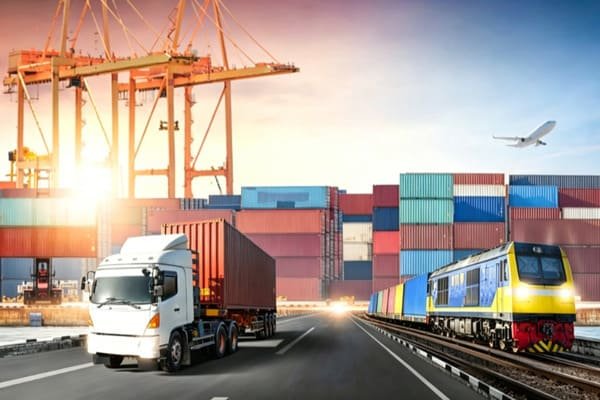
Rail transport is powerful, but it's not a magic bullet. It operates on a fixed infrastructure of tracks and terminals. I once worked on a project shipping large turbines to a new power plant in a remote area. The rail line got us 95% of the way there, but the final 50 miles were the most critical. We had to coordinate specialized multi-axle trucks and mobile cranes to handle the "last-mile" delivery from the rail yard to the job site. This is a perfect example of why you must see rail as one piece of a larger logistics puzzle. Ignoring its limitations can lead to major delays and unexpected costs.
The First-Mile and Last-Mile Challenge
This is the biggest hurdle for rail freight. Your machinery has to be transported from its origin (like your factory) to the rail terminal, and then from the destination terminal to its final location. This requires another mode of transport, usually a specialized truck. Effective last-mile delivery planning and coordination with a logistics partner like us are essential to make these transitions seamless.9
Route and Schedule Inflexibility
Unlike a truck that can take multiple routes, a train can only go where the tracks lead. This means if your destination is not near a rail line, it's not a viable option for the entire journey. Schedules can also be less frequent than truck departures, so you need to plan your production and shipping timelines accordingly. Delays at busy terminals can also occur, which can impact your overall project schedule.
Here are the common challenges and how we solve them:
| Challenge | Our Solution |
|---|---|
| No Door-to-Door Service | We arrange and manage first and last-mile trucking for a complete, integrated solution. |
| Fixed Schedules | We plan your shipment well in advance to align with rail schedules and build in buffer time. |
| Handling at Terminals | We coordinate with trusted partners for professional loading, unloading, and securing of your machinery. |
| Route Inflexibility | We analyze your entire route to determine the most efficient combination of transport modes (sea, rail, road). |
When is rail freight the right choice for my shipment?
You have a big piece of machinery to move and need to decide if rail is the right fit. Making the wrong choice could cost you time and money, so you need a clear way to evaluate your options. A simple checklist can help you decide with confidence.
Rail freight is the right choice when shipping heavy or oversized machinery over long land distances, especially over 500 miles. It is ideal for non-urgent shipments where cost-effectiveness is more important than speed, and when your origin and destination are reasonably close to rail terminals.

Deciding on the best transport mode is about matching the shipment's needs with the strengths of the mode. We helped a German engineering firm transport components for an assembly line to their new factory in Mexico. The journey involved sea freight to a US port, then rail across Texas, and finally trucking across the border. Rail was the perfect choice for that middle leg because the cargo was heavy, the distance was long, and we could save the client a huge amount on transport costs. To make the right decision for your project, you should evaluate three key factors.
Check Your Route
Is the total land journey over 500 miles (about 800 km)? If yes, rail becomes much more cost-competitive. Next, look at a map. Are there rail terminals near your starting point and final destination? If so, the first and last-mile trucking will be shorter and cheaper, making rail a very strong option. If the terminals are hundreds of miles away, the cost of the extra trucking might cancel out the savings.
Evaluate Your Cargo
Is your machinery exceptionally heavy, wide, or tall? Railcars have much higher weight and size limits than trucks10, making them ideal for out-of-gauge (OOG) and project cargo.11 If your shipment would require special permits, escort vehicles, and road closures for truck transport, rail is often a simpler and more affordable alternative.
Consider Your Timeline
Is your delivery urgent? If you need the machinery on-site tomorrow, trucking or even air freight is a better choice. Rail is generally slower than direct trucking. However, if your project has a flexible timeline and you can plan a week or two in advance, the cost savings from rail are usually worth the extra transit time.
This table summarizes when rail shines:
| Scenario | Ideal Use Case for Rail Freight |
|---|---|
| Distance | Long-haul (500+ miles / 800+ km) |
| Cargo Type | Heavy, oversized, bulk, or high-volume machinery |
| Urgency | Low to moderate; delivery date is flexible |
| Location | Origin and destination are near rail terminals |
Conclusion
Rail freight is a smart, cost-effective choice for heavy machinery on long routes. Success hinges on expert planning to integrate it seamlessly into your overall supply chain for maximum benefit.
Rail freight transport — the use of railways to move cargo, well suited to heavy and bulky loads over long distances — *Wikipedia*: https://en.wikipedia.org/wiki/Rail_freight_transport ↩
Intermodal Freight Transport — analysis of combining transport modes for efficient freight movement — *OECD*: https://www.oecd.org/content/dam/oecd/en/publications/reports/2001/02/intermodal-freight-transport_g1gh205c/9789264189126-en.pdf ↩
Carbon footprint comparison of freight transport modes — *U.S. Environmental Protection Agency (EPA)*: https://19january2021snapshot.epa.gov/sites/static/files/2020-07/documents/420b20042.pdf ↩
Economies of scale — the cost advantages gained when output increases, allowing per-unit costs to fall — *Wikipedia*: https://en.wikipedia.org/wiki/Economies_of_scale ↩
Railcar weight and dimension capacities — *Iowa Department of Transportation*: https://iowadot.gov/media/2095/download?inline ↩
Flatcar — an open railroad car with no sides, used to carry oversized or heavy cargo such as machinery — *Wikipedia*: https://en.wikipedia.org/wiki/Flatcar ↩
Transloading — the process of transferring a shipment from one mode of transport to another — *Wikipedia*: https://en.wikipedia.org/wiki/Transloading ↩
DOT transportation service regulations (Part 37) — *U.S. Department of Transportation*: https://www.transit.dot.gov/regulations-and-guidance/civil-rights-ada/part-37-transportation-services-individuals-disabilities ↩
Last mile (transportation) — the final leg of a delivery journey, moving goods from a transport hub to the final destination — *Wikipedia*: https://en.wikipedia.org/wiki/Last_mile_(transportation) ↩
Truck size and weight laws — Report to Congress — *Federal Highway Administration (FHWA)*: https://ops.fhwa.dot.gov/freight/policy/rpt_congress/truck_sw_laws/index.htm ↩
Loading gauge — the maximum height and width of cargo that can pass along a rail line; out-of-gauge cargo exceeds these limits — *Wikipedia*: https://en.wikipedia.org/wiki/Loading_gauge ↩