

Kenya ACD Requirements 2026: Documents, Deadlines, FAQs and a Shipping Checklist
Last updated: September 23, 2026
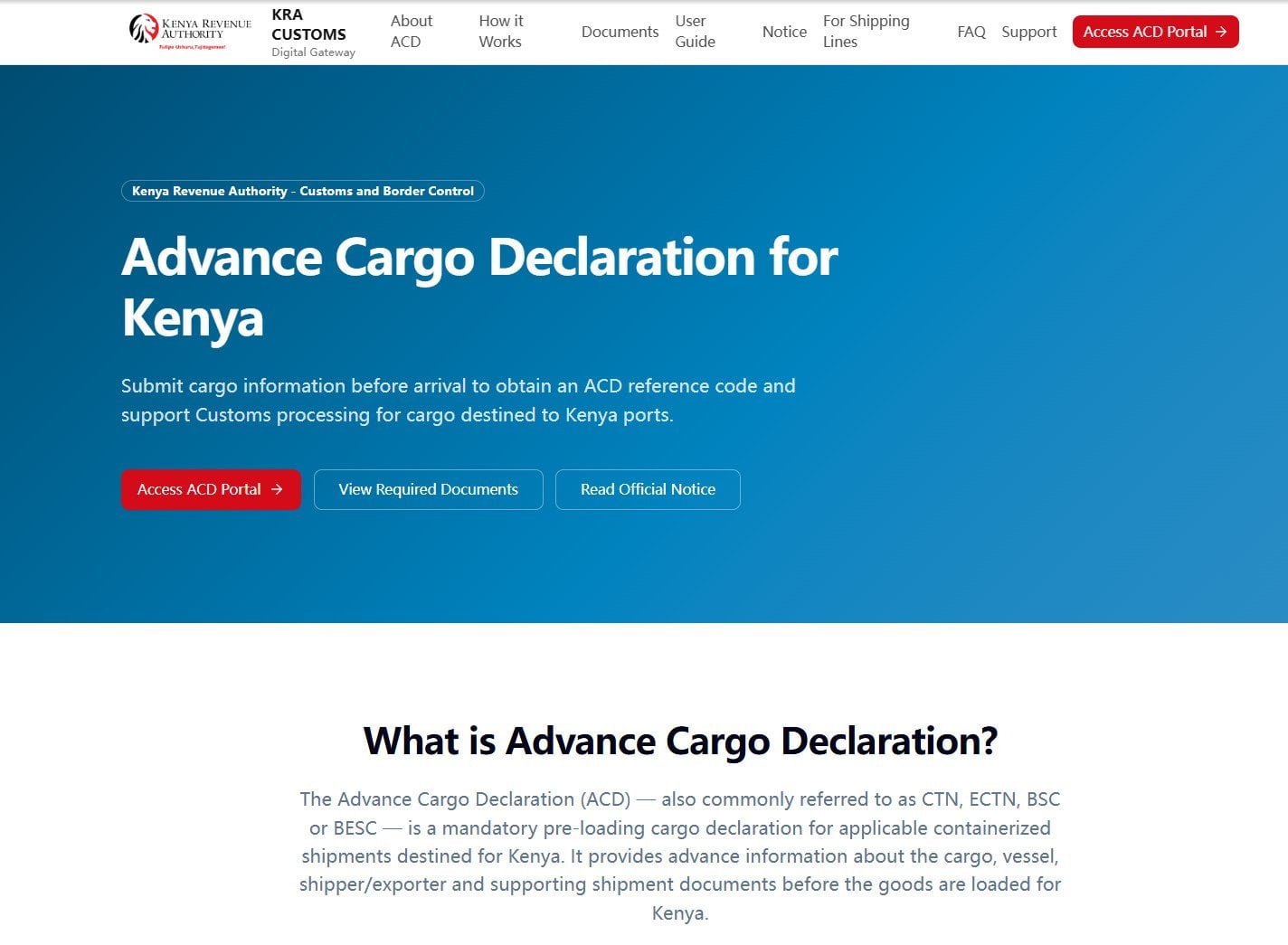
Shipping a container to Kenya now requires an additional step before loading: completing the Advance Cargo Declaration (ACD) process.
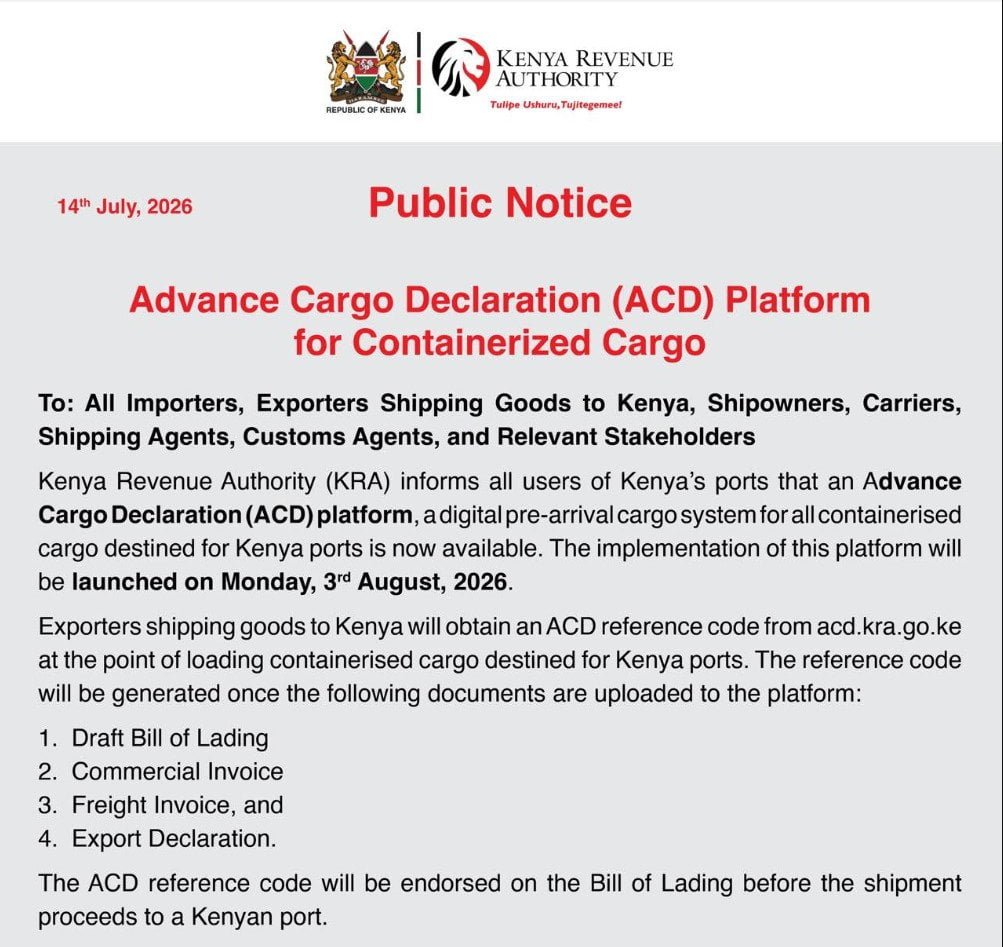
The Kenya Revenue Authority (KRA) launched its ACD platform on August 3, 2026. Applicable shipments must obtain an ACD reference code before loading, and the code must appear on the Bill of Lading (B/L). You can review the requirement in the KRA official ACD announcement.
For exporters, importers and freight forwarders, the practical priority is to prepare consistent documents, complete approval and coordinate the reference with the B/L issuer.
This guide explains the main requirements, common documentation issues and checks to complete before shipping.
1. Which Shipments Require Kenya ACD?
The published requirement covers containerized sea cargo imported into Kenya, including:
- Full Container Load (FCL) shipments.
- Less than Container Load (LCL) shipments.
Small shipment size does not automatically create an exemption. KRA specifically includes both FCL and LCL in its public shipment guidance.
What About Cargo Transiting Through Kenya?
Transit shipments require closer checking. Identify whether the cargo will:
- Clear customs for import into Kenya.
- Discharge in Kenya and continue overland to another country.
- Transfer to another vessel at a Kenyan port.
Carrier guidance is not fully consistent. CMA CGM’s September advisory excludes shipments transiting outside Kenya, while ONE’s published guidance distinguishes inland transit from sea transshipment and includes conditions involving the consignee and final destination.
Do not assume that every shipment moving through Kenya is exempt. Provide the carrier with your full route, B/L destination and consignee details, then obtain written confirmation for the booking.
2. When Must the ACD Be Completed?
A valid ACD reference must be obtained before cargo loading.
According to Maersk’s Kenya ACD advisory, carriers must validate the reference before loading from September 1, 2026. Containers without a valid reference may be rolled to a later vessel.
Start preparing the application when arranging your shipment. Confirm:
- Who will manage the application.
- Who will provide each supporting document.
- When the carrier needs the approved reference.
- How corrections will be handled.
Allow time for review and amendments. The departure date should not be treated as the date to begin filing.
3. What Documents Are Required?
KRA lists four core documents for an ACD application:
| Required Document | Recommended Checks |
|---|---|
| Draft Bill of Lading | Verify the shipper, consignee, ports and transport details. |
| Commercial Invoice | Check goods descriptions, values, currency and trading parties. |
| Freight Invoice | Confirm who will provide it and that it relates to the shipment. |
| Export Declaration | Check consistency with the other shipment records. |
Documents must be clear and readable. The official KRA ACD portal also states that ACD drafts should include container details and HS codes.
For buyer-arranged transportation, agree early on who will supply freight information. Where a manufacturer, trading company and forwarder are involved, clarify their respective roles before preparing the application.
4. How Does the Application Process Work?
The KRA system instructions describe a workflow involving registration, document upload, draft creation, submission and approval.
A practical sequence is:
- Register through the official KRA ACD platform.
- Prepare and upload the required documents.
- Complete the application details and review the draft.
- Submit the application for approval.
- Confirm approval and download the final ACD.
- Send the reference to the B/L issuer and check the final transport document.
Creating a draft or uploading files does not mean the application is approved.
Keep the final ACD with your shipment records and make sure the relevant parties can access it.
5. What Should You Check on the Bill of Lading?
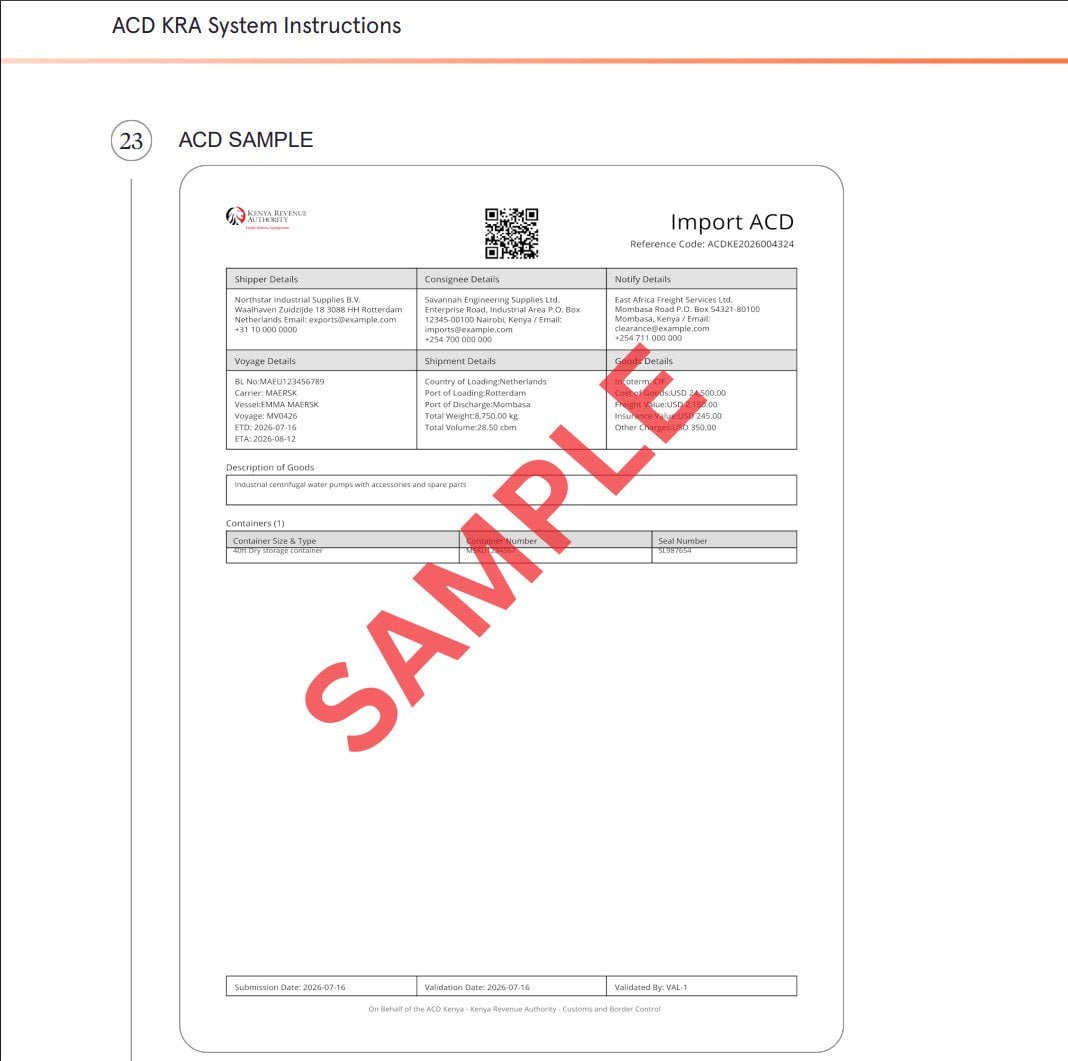
KRA requires the approved ACD reference to appear on the B/L. This requirement is stated in its official launch notice.
Before finalizing the document, check that:
- The reference has been sent to the correct issuing party.
- It has been copied accurately.
- It corresponds to the shipment being documented.
For LCL shipments involving a House Bill of Lading (HBL) and a Master Bill of Lading (MBL), confirm the filing arrangements with the consolidator. Do not assume that one container-level application covers every individual consignment.
6. What Can Cause Rejection or Rework?
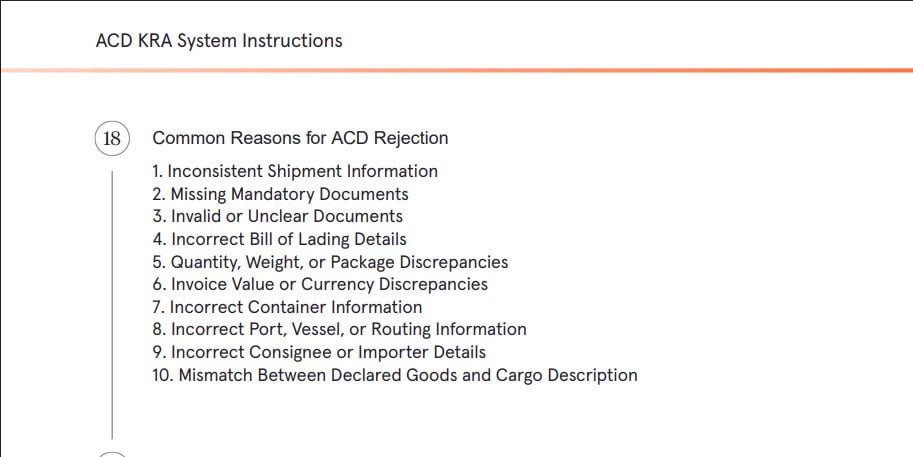
KRA identifies several common rejection reasons in its application guide:
- Missing, invalid or unreadable documents.
- Inconsistent quantities, weights or package counts.
- Invoice value or currency discrepancies.
- Incorrect container or B/L details.
- Incorrect consignee, port, vessel or routing information.
- Goods descriptions that do not match the declared cargo.
A document review before submission can help identify these problems early.
What If Shipment Details Change?
The official system supports amendment requests for approved applications.
If a container is replaced, a vessel changes or commercial documents are revised, inform the person managing the ACD. Ask them to assess whether an amendment is required and confirm completion before relying on the existing declaration.
7. What Should You Know About Fees?
CMA CGM’s application guidance refers to applicable fees during validation. However, the public materials reviewed for this article did not establish a verified, uniform official tariff suitable for quoting here.
If using an agent, request an itemized quotation showing:
- Any platform or declaration charges.
- Agency service fees.
- Potential amendment or additional handling charges.
Agree on who will monitor approval, submit the reference to the carrier and manage subsequent changes.
8. Pre-Shipment ACD Checklist
Before loading, confirm that:
- [ ] The requirement has been checked for the actual route and destination.
- [ ] The applicant and document providers have been identified.
- [ ] Required documents are complete and consistent.
- [ ] The application is approved and the final ACD has been saved.
- [ ] The reference has been provided to the B/L issuer.
- [ ] The reference appears correctly on the final B/L.
- [ ] Any shipment changes have been reviewed with the applicant.
Frequently Asked Questions
Is Kenya ACD Already Being Enforced?
Yes. Current carrier notices require compliance for applicable shipments. Maersk specifies pre-loading validation from September 1, 2026. Shippers should therefore prepare the ACD as part of their current loading requirements. See the Maersk enforcement notice.
Is Kenya ACD the Same as Egypt’s CargoX Process?
No. Kenya uses its own KRA ACD platform.
For Egypt, CargoX provides the document-transfer platform used with the ACI process and NAFEZA system. A CargoX account or an Egyptian ACID number does not replace a Kenya ACD application. See CargoX’s official Egypt ACI explanation.
Does LCL Cargo Require ACD?
Yes. KRA’s published scope includes LCL cargo. Coordinate with your consolidator to establish who handles the application and how it relates to your transport documents. See KRA’s FCL and LCL guidance.
Can I Wait Until the Cargo Arrives in Kenya?
For shipments subject to the requirement, the valid reference must be obtained before loading. Waiting until arrival does not meet that requirement. Review the timing in the Maersk customer advisory.
How Long Does Approval Take?
The official materials reviewed for this article do not establish a guaranteed processing time. Confirm current turnaround expectations through the KRA ACD support contacts and allow additional time for corrections.
Can an Approved ACD Be Amended?
Yes. The official guide shows an amendment-request function for approved applications. When shipment information changes, ask the applicant to confirm the required update and its status. See the KRA system instructions.
Is Cargo Bound for Uganda or Another Neighboring Country Automatically Exempt?
Do not assume so. Carrier guidance differs on transit arrangements. Confirm the route, consignee and final destination with your booked carrier, using its current requirements. Compare the published guidance from CMA CGM and ONE.
Conclusion
Kenya’s ACD requirement makes document preparation an essential part of the pre-loading process. The priorities are to establish whether the shipment is covered, prepare consistent supporting records, obtain approval and ensure the reference appears correctly on the B/L.
Assign responsibility early and communicate any shipment changes to the applicant. For transit cargo or complex HBL/MBL arrangements, obtain shipment-specific confirmation before loading.
Planning a shipment from China to Kenya? Share your origin port, final destination, cargo details, FCL or LCL requirements and expected shipping date with DeepLinker to discuss transportation and document preparation.
This article reflects publicly available KRA and carrier guidance reviewed as of September 23, 2026. Confirm shipment-specific requirements with KRA and your carrier, particularly for transit cargo and shipments involving multiple transport documents.