
1. Introduction: When Ocean Freight Is Too Slow and Air Freight Is Too Expensive
For international importers, choosing a shipping method is rarely just about finding the lowest freight rate. The real challenge is finding a solution that delivers goods within the required timeframe without putting unnecessary pressure on the purchasing budget.
Consider a company importing products from China for an upcoming sales season. Ocean freight offers an attractive rate, but the shipment may arrive too late to support the planned launch. Air freight could meet the deadline, but shipping the entire order by air might significantly reduce the profit margin.
This is where sea-air freight becomes worth considering.
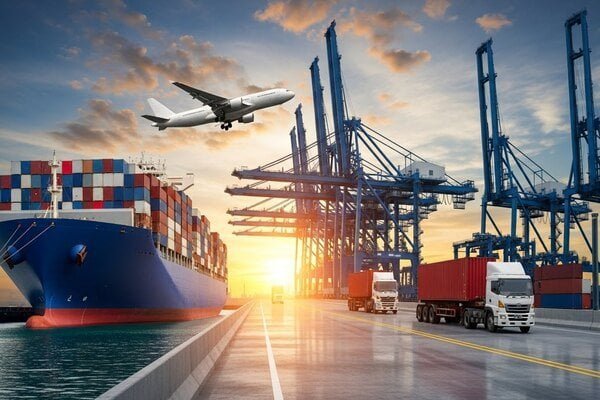
Sea-air freight combines ocean transportation with air transportation, using different modes for different stages of the journey. It can offer a middle ground between the longer transit time of ocean freight and the higher cost typically associated with air freight.
However, sea-air is not automatically the best solution. Its value depends on the origin, destination, available connections, cargo characteristics, delivery deadline and total logistics cost.
For businesses shipping from China, the key question is not simply whether sea-air is faster than ocean freight. It is whether the additional cost of a multimodal solution creates enough commercial value to justify the change.
2. What Is Sea-Air Freight and How Does It Work?
Sea-air freight is a multimodal transportation solution that combines ocean freight and air freight within one shipment plan.
A typical shipment may travel by sea from China to an intermediate logistics hub before transferring to an aircraft for the next stage of transportation. Depending on the service, the cargo may then require another handling or customs process before final delivery.
The exact route depends on the destination, service availability and operational requirements. Logistics hubs such as Singapore, Hong Kong and Dubai may be relevant to particular trade lanes, but not every hub offers a suitable connection for every shipment.
How the shipping process works
A typical sea-air shipment involves the following stages:
- Cargo collection in China: Goods are collected from the supplier or delivered to a designated warehouse.
- Export preparation: The cargo is checked, packed and prepared for export customs clearance.
- Ocean transportation: Goods travel by sea to the selected transfer hub.
- Transfer and handling: The shipment is received, processed and prepared for the onward air leg.
- Air transportation: Cargo is loaded onto an aircraft for transportation toward the destination market.
- Import clearance and delivery: The shipment completes the required import procedures before final delivery, where included in the agreed service.
The main advantage is the ability to use ocean freight for one part of the journey and air freight for another.
Nevertheless, the transfer stage matters. Unloading, cargo handling, documentation, customs procedures and waiting for an available flight can all affect the final delivery time.
Importers should therefore compare the estimated end-to-end transit time rather than looking only at the sailing time or flight duration.
For an overview of the individual transport modes, see Deeplinker’s ocean freight services and air freight services.
3. Sea-Air vs. Ocean Freight vs. Air Freight: Cost and Transit Time
Each transportation method serves a different business need. The right choice depends on how much time the shipment can take, how much the company can spend and what happens if the goods arrive late.
| Factor | Ocean Freight | Sea-Air Freight | Air Freight |
|---|---|---|---|
| Typical freight cost | Generally lowest | Often between ocean and air | Generally highest |
| Transit time | Usually longest | Usually faster than comparable ocean routes, but route-dependent | Usually shortest |
| Handling requirements | Depends on the route and service | Additional transfer coordination is required | Depends on the route and service |
| Schedule considerations | Sailing schedules and port operations | Ocean schedules, transfer time and flight availability | Flight schedules and cargo acceptance |
| Best suited for | Planned replenishment and less urgent cargo | Shipments requiring a balance between cost and speed | Urgent, time-sensitive or high-priority cargo |
These are general comparisons, not guaranteed results. A particular sea-air route may be less attractive than a direct ocean service if the transfer takes too long. Similarly, a competitive air freight rate or a limited sea-air connection may change the economics of the decision.
Transit time must also be measured consistently.
An airport-to-airport estimate cannot be compared directly with a door-to-door ocean freight estimate. For a fair comparison, use the same starting point, destination and scope of service, including collection, handling, customs clearance and final delivery where required.
When requesting quotations, ask the freight forwarder to specify:
- Estimated end-to-end transit time.
- Origin and destination points.
- Transfer hub and expected connection arrangements.
- Whether customs clearance and final delivery are included.
- Which fees are included in the quoted price.
- Any conditions that could affect the schedule.
For a broader explanation of how sea-air services fit into multimodal logistics, see Kuehne+Nagel’s sea-air freight overview.
4. When Is Sea-Air Freight Worth It? Four Practical Scenarios
Sea-air freight is most useful when a shipment has a meaningful time constraint, but the fastest available option is not necessarily the most economical choice.
Scenario 1: Seasonal Inventory Replenishment
Retailers and distributors often need to replenish inventory before a seasonal sales period. If the next ocean shipment is expected to arrive after the peak selling window begins, delayed inventory can mean missed sales opportunities.
Switching the entire shipment to air freight may solve the timing problem but create a substantial increase in transportation costs.
Sea-air may be worth evaluating when its estimated arrival date is early enough to support the sales plan and its total cost is lower than the commercial cost of the alternatives.
However, if the goods must arrive within only a few days, a sea-air solution may not provide sufficient speed.
The key question: Will the shipment arrive early enough to protect the planned sales window?
Scenario 2: New Product Launches
A manufacturer or distributor preparing to launch a new product may have several deadlines to coordinate, including marketing campaigns, retailer deliveries and product availability.
A delay can affect more than transportation. It may disrupt the entire launch schedule.
Sea-air can be considered when the shipment has some scheduling flexibility but cannot afford the longer lead time of the selected ocean route.
Before booking, importers should allow time for transfer handling, customs procedures and final delivery. A launch date should not be based solely on an estimated aircraft arrival date.
The key question: Does the proposed delivery schedule leave enough time for receiving, inspection and distribution?
Scenario 3: Urgent Stock Replenishment
Imagine that a distributor has several months of inventory planning behind a product line, but an unexpectedly strong sales period creates a shortage.
The company may not need to move every remaining unit by air. It may only need enough stock to cover immediate demand while a larger ocean shipment continues through the normal supply chain.
Sea-air may be an option for replenishment when the route and schedule are suitable. Another alternative is to split the order: send a small urgent quantity by air and the balance by ocean freight.
The latter approach can sometimes be more practical than moving the entire shipment through a sea-air route.
The key question: How much inventory must arrive early to avoid a shortage, and how much can follow later?
Scenario 4: Industrial Parts and Components
For industrial buyers, the cost of a delayed component can exceed the freight charge itself. A missing part may delay assembly, maintenance or the delivery of finished products.
However, not every industrial shipment requires the fastest possible transportation.
If the production schedule allows some flexibility, sea-air may provide a useful alternative to direct air freight. If a component is urgently needed to prevent an imminent production stoppage, direct air freight may remain the more appropriate option.
Cargo dimensions, weight, handling requirements and transport restrictions must also be checked before selecting a route.
The key question: What is the financial impact of waiting, and what is the latest acceptable arrival date?
5. How to Calculate Whether Sea-Air Saves Your Business Money
Comparing freight rates alone can lead to the wrong decision. Importers should compare the total cost of each viable shipping option and consider the financial consequences of the delivery schedule.
Step 1: Compare total logistics costs
For each option, calculate the expected cost from the same origin to the same destination.
Include the relevant items below:
- Pickup and origin handling.
- Export documentation and customs-related charges.
- Ocean freight or air freight charges.
- Transfer handling and intermediate storage.
- Destination handling and import clearance.
- Final delivery.
- Cargo insurance, where purchased.
- Other applicable surcharges or service fees.
Make sure the quotations use the same service scope. A lower headline rate may not represent a lower final bill if important charges are excluded.
Step 2: Estimate the cost of arriving late
The commercial impact of delay differs by business.
For a retailer, late delivery may reduce the time available to sell seasonal inventory. For a manufacturer, it may lead to production delays. For a distributor, it may result in stockouts or additional emergency shipments.
Estimate the potential financial impact using your own sales, inventory and operating data. Avoid treating the full sales value of delayed goods as a guaranteed loss, because some sales may simply occur later.
Step 3: Calculate the incremental cost
Use this formula:
Incremental cost of sea-air = Total sea-air cost − Total ocean freight cost
Then compare that additional expenditure with the expected cost of waiting for the ocean shipment.
Sea-air is commercially attractive when the value of the time saved is greater than the additional logistics cost, provided the shipment meets the required delivery deadline.
A simple example
Suppose an importer receives the following hypothetical quotations for the same shipment:
| Cost item | Ocean freight | Sea-air freight |
|---|---|---|
| Total logistics cost | $3,000 | $4,200 |
| Estimated incremental cost | — | $1,200 |
In this example, sea-air costs an additional $1,200.
The importer should then ask whether the earlier arrival is likely to prevent more than $1,200 in additional business costs, such as lost contribution margin, emergency replenishment expenses or avoidable production disruption.
These figures are illustrative only, not market quotations or guaranteed savings.
If the time saved has little commercial value, ocean freight may remain the better choice. If the delay would create a larger financial impact, paying more for sea-air may be justified.
Step 4: Compare the alternatives, not just two options
The most economical decision may involve three alternatives:
- Move the entire shipment by ocean freight.
- Move the entire shipment by sea-air.
- Split the shipment, sending urgent units by air and the remaining cargo by ocean.
Splitting the shipment can help protect immediate inventory needs without paying premium transportation costs for every unit. However, it may introduce additional handling, documentation and shipment management costs.
The best solution depends on the actual quotations and the commercial value of earlier delivery.
6. When Sea-Air Freight Is Not the Best Option
Sea-air freight is not automatically the right choice simply because it combines two transport modes.
When ocean freight already meets the deadline
If the shipment can arrive within the required timeframe by ocean freight, the additional expense and handling associated with sea-air may provide little benefit.
When the cargo is extremely urgent
If goods must arrive as quickly as possible, direct air freight may be more suitable. A sea-air shipment still requires an ocean leg and a transfer process, which may add time.
When the route has poor connections
A theoretically faster route can lose its advantage if the cargo waits too long at the transfer hub or misses a planned connection.
Ask for the expected transfer time and how schedule changes will be handled before booking.
When cargo restrictions make the route unsuitable
Batteries, dangerous goods, temperature-sensitive products and other regulated cargo may require special documentation, packaging or carrier approval. Acceptance for the ocean leg does not automatically guarantee acceptance for the air leg.
Confirm the requirements of each transport segment before committing to the service.
When additional handling outweighs the benefit
Extra transfers can increase handling costs and operational complexity. For certain heavy, oversized or difficult-to-handle shipments, a direct ocean service or another multimodal solution may be more practical.
The objective is not to use more transport modes. It is to choose the simplest solution that satisfies the delivery requirement at an acceptable total cost.
7. What to Check Before Booking a Sea-Air Shipment
Before requesting a quotation, prepare the following information. It will help the freight forwarder evaluate the available routes and provide a more meaningful comparison.
Cargo details
- Product name and intended use.
- Number of packages, pallets or cartons.
- Dimensions, gross weight and total volume.
- Packaging method and any special handling requirements.
- Dangerous goods classification or other transport restrictions, where applicable.
Shipping requirements
- Supplier location and cargo-ready date in China.
- Final destination and delivery address.
- Required arrival date or latest acceptable delivery date.
- Whether the shipment can be split.
- Customs clearance and final delivery requirements.
Quotation and schedule
- Total cost for comparable ocean, sea-air and air freight options.
- Origin and destination charges included in the quotation.
- Transfer hub and expected connection schedule.
- Estimated end-to-end transit time.
- Applicable surcharges and potential additional fees.
- Cargo insurance arrangements and relevant exclusions.
- Procedures for handling delays or missed connections.
A useful quotation should explain the proposed route, the estimated schedule and the scope of service, rather than simply presenting a freight rate.
For importers who regularly purchase from multiple Chinese suppliers, coordinating cargo readiness can also make a difference. Goods that become available on different dates may not be suitable for the same departure or transfer schedule.
The more accurately the shipment requirements are defined, the easier it is to compare solutions on a consistent basis.
Frequently Asked Questions
1. Is sea-air freight cheaper than air freight?
Sea-air freight can cost less than direct air freight because part of the journey is completed by sea. However, the actual saving depends on the route, cargo characteristics, transfer fees, available capacity and total service scope. Compare complete quotations for the same shipment before making a decision.
2. How long does sea-air freight from China take?
There is no single transit time that applies to every sea-air shipment from China. The schedule depends on the origin, destination, ocean leg, transfer hub, flight availability and destination handling. Ask for an estimated end-to-end schedule, including transfer time and final delivery where required, rather than relying on the sailing or flight time alone.
3. Is sea-air freight suitable for electronics and other sensitive cargo?
It can be suitable for certain electronics and other time-sensitive goods, provided the cargo meets the requirements of every transport segment. Batteries, dangerous goods, temperature-sensitive products and fragile items may require additional checks, compliant packaging and carrier approval. Confirm cargo acceptance and handling arrangements before booking.
Conclusion: Choose the Shipping Method That Protects Your Business
Sea-air freight can be a useful option for businesses shipping from China when ocean freight is too slow, but direct air freight is difficult to justify financially.
Its value depends on more than the difference between two freight rates. Importers need to consider the delivery deadline, the cost of waiting, transfer arrangements, total logistics charges and the consequences of a delayed shipment.
For some orders, sea-air will be the right compromise. For others, splitting the shipment between air and ocean freight may be more effective. And when the delivery deadline is flexible, traditional ocean freight may remain the most economical solution.
The best approach is to compare the available options against the same cargo details and business requirements before booking.
Planning a Shipment from China?
At Deeplinker, we help businesses evaluate international freight options based on their cargo, destination and delivery requirements.
Share your cargo details, destination and required delivery date with our team to discuss suitable transportation options and compare the available solutions.
Contact Deeplinker to discuss your shipment.
References
- Kuehne+Nagel — Sea-Air Logistics
- Deeplinker — Ocean Freight Services
- Deeplinker — Air Freight Services
- Deeplinker — Freight Forwarding Services
- DHL — Multimodal Transportation Overview
Editorial note: Transit times, rates and routing availability vary by origin, destination, service provider and operating conditions. Obtain a route-specific quotation before making a shipping decision.