
Shipping industrial machinery, heavy equipment, or large metal components from China requires more planning than a standard container shipment.
Imagine purchasing a 24-ton industrial machine from a Chinese manufacturer. Its dimensions appear to fit inside a 20-foot container. Does that mean it can be loaded and shipped without any problems?
Not necessarily.
Beyond cargo dimensions and total weight, shippers must consider container payload, floor strength, concentrated loads, center of gravity, lifting arrangements, and inland transport restrictions.
For heavy cargo, fitting inside a container does not automatically mean it can be transported safely.
This guide explains how to select suitable shipping equipment, prepare loading plans, and avoid common mistakes when exporting heavy cargo from China.
1. What Counts as Heavy Cargo in Container Shipping?
There is no single weight threshold that defines heavy cargo for every container shipment.
Whether a shipment requires special handling depends on its weight, dimensions, load distribution, container type, and transportation route.
For example, consider a German importer purchasing an industrial press from China.
The machine weighs 23 tonnes, while its total weight increases to 24 tonnes after packaging.
Before choosing a 20GP container, three important weight figures must be understood.
| Weight Term | Meaning |
|---|---|
| Cargo Gross Weight | Total weight of the goods, including packaging and supporting materials |
| Container Payload | Maximum permitted cargo weight for the specific container |
| Verified Gross Mass (VGM) | Verified total weight of the packed container, including cargo, packaging, securing materials, and container tare weight |
Example: Calculating Container Payload
Assume a particular 20GP container has the following specifications:
- Maximum gross mass: 30,480 kg
- Container tare weight: 2,300 kg
- Theoretical maximum payload: 28,180 kg
A 24-tonne machine may appear to fall within the container’s payload limit.
However, this calculation alone does not confirm that the shipment is acceptable.
If the machine rests on four small steel feet, its weight may create excessive pressure on limited areas of the container floor.
The shipment must also comply with applicable road transport limits, lifting requirements, and carrier acceptance conditions.
Heavy cargo planning requires more than checking the total weight.
It also requires evaluating concentrated loads, structural support, and the entire transportation route.
2. Choosing the Right Container for Heavy Cargo
Selecting a suitable container is one of the most important decisions when shipping heavy machinery from China.
A larger container does not necessarily provide a higher payload capacity.
The correct choice depends on the cargo’s dimensions, weight distribution, loading method, and handling requirements.
Container Options for Heavy Cargo
| Shipping Equipment | Suitable Cargo | Key Considerations |
|---|---|---|
| 20GP | Compact, heavy industrial machinery and metal products | Payload, floor strength, loading space |
| 40GP / 40HC | Longer or bulkier equipment requiring more space | Weight distribution, payload, handling method |
| Open Top | Machinery requiring overhead crane loading | Lifting arrangements, overheight dimensions, securing |
| Flat Rack | Overwidth, overheight, or irregularly shaped equipment | Concentrated loads, center of gravity, lashing, OOG approval |
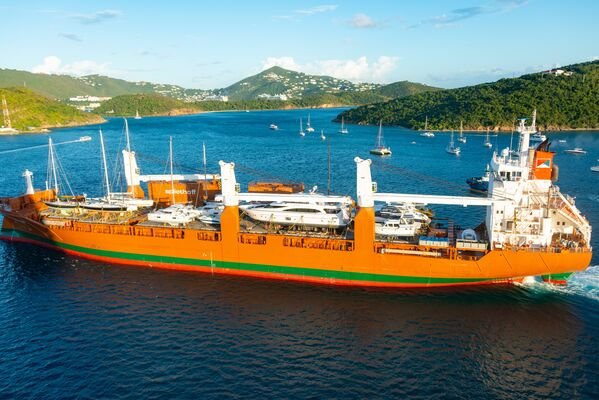
| Breakbulk | Large equipment unsuitable for conventional container transport | Port lifting capacity, vessel acceptance, special transport planning |
Why Isn’t a 40HC Always Better for Heavy Cargo?
A 40HC container offers more internal space, but its permitted payload is not necessarily higher than that of a 20GP.
For compact and dense industrial equipment, a 20GP may be more suitable if the cargo fits and all structural and transport requirements are satisfied.
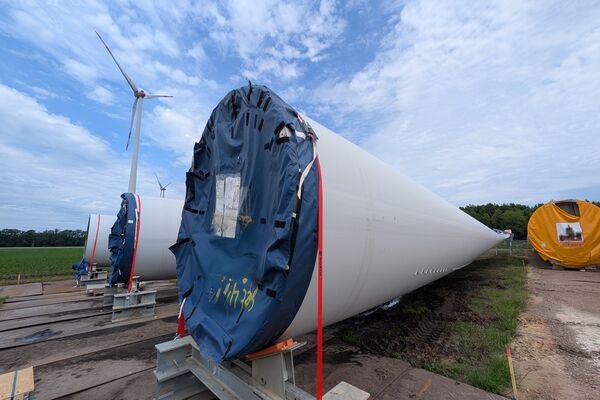
On the other hand, a machine weighing only 15 tonnes may still require an Open Top or Flat Rack if its dimensions exceed the limits of a standard container.
When Should You Choose a Flat Rack?
Consider a hypothetical shipment of an industrial generator from China:
| Cargo Detail | Specification |
|---|---|
| Length | 6.2 m |
| Width | 2.8 m |
| Height | 2.9 m |
| Gross Weight | 22 tonnes |
Because the generator exceeds standard container width and height limits, a Flat Rack may be a suitable option.
However, before booking, the freight forwarder should review:
- Cargo support points
- Center of gravity
- Lifting arrangements
- Lashing and securing requirements
- Actual Flat Rack payload and concentrated-load limits
- Carrier and port acceptance
A Flat Rack is not a universal solution for oversized cargo.
Final acceptance depends on the equipment specifications, loading plan, carrier requirements, and transportation route.
For equipment specifications and special cargo arrangements, shippers can consult carrier guidance such as Maersk’s special cargo services.
3. Heavy Cargo Loading Plans: Why Weight Distribution Matters
Even when cargo weight and dimensions meet container requirements, an unsuitable loading plan can cause equipment damage, structural problems, or safety risks.
Three factors deserve particular attention.
Concentrated Loads: Why 24 Tonnes Cannot Always Sit Directly on the Floor
Imagine a 24-tonne industrial machine supported by four metal feet.
If the machine is placed directly onto a container floor, most of its weight may be concentrated on a few small contact areas.
This is very different from distributing the same weight evenly across a larger surface.
Depending on the equipment, a loading plan may require:
- Engineered timber or steel supports
- Load-spreading platforms
- Suitable support structures
- Additional blocking and securing arrangements
These solutions must be designed according to the actual equipment and container structure.
The number and dimensions of supports should not be determined by guesswork.
Center of Gravity: Stable at Rest Does Not Mean Stable in Transit
Some industrial machines have a high or uneven center of gravity.
Examples include:
- Industrial presses
- Large electric motors
- Certain construction machines
- Heavy manufacturing equipment
During road transportation, terminal handling, and ocean voyages, cargo is exposed to forces in different directions.
An unsuitable center of gravity or insufficient securing can increase the risk of movement or overturning.
For complex equipment, shippers should provide center-of-gravity information whenever available.
Lashing and Securing
Heavy cargo securing may involve chains, blocking systems, structural supports, or other engineered arrangements.
The correct solution depends on cargo weight, center of gravity, friction conditions, securing-point capacity, and transport conditions.
A loading plan should be designed for the actual cargo, not copied from a standard container shipment.
The IMO/ILO/UNECE Code of Practice for Packing of Cargo Transport Units (CTU Code) provides internationally recognized guidance on cargo packing and securing.
For complex heavy cargo, qualified loading and securing specialists should assess the proposed arrangement.
4. Common Heavy Cargo Shipping Risks from China
Heavy cargo transportation problems do not always happen at sea.
Many issues begin during factory loading, inland trucking, or port handling.
| Common Risk | Possible Consequence | Recommended Action |
|---|---|---|
| Using net weight instead of packed gross weight | Actual shipment weight exceeds expectations | Confirm gross weight after packaging |
| Excessive concentrated loads | Container floor or structural damage | Review support and load distribution |
| Missing center-of-gravity information | Unsuitable lifting or securing arrangements | Obtain technical drawings and handling information |
| Booking oversized cargo as standard freight | Carrier rejection or revised quotation | Declare accurate dimensions before booking |
| Ignoring inland road restrictions | Delays between factory and port | Check trucking, route, and permit requirements |
| Inadequate securing | Cargo movement or damage | Use a properly assessed securing plan |
| Unconfirmed destination handling | Equipment cannot be unloaded as planned | Verify lifting and delivery arrangements |
Carrier Acceptance Does Not Guarantee Inland Transport Feasibility
Consider a large machine that has already received carrier approval for Flat Rack transportation.
The ocean shipping arrangement may be acceptable.
However, the factory could be located in an inland Chinese city where the planned truck route includes height-restricted bridges, weight-restricted roads, or other limitations.
The freight forwarder must therefore consider the complete journey:
Factory → China Port → Ocean Freight → Destination Port → Final Delivery Location
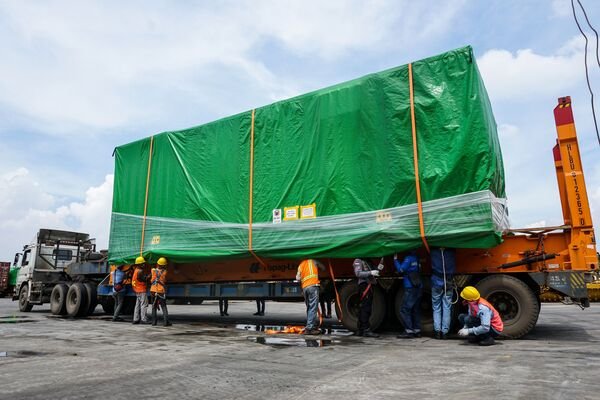
Oversized or overweight cargo may require specialized vehicles, route surveys, and transport permits.
This is why heavy cargo should be evaluated as a complete logistics project rather than simply an ocean freight booking.
5. Heavy Cargo Shipping Checklist: What to Send Your Freight Forwarder
A reliable heavy cargo quotation requires more information than a standard container freight inquiry.
For example, a request stating:
“Industrial machine, 24 tonnes, shipping from China to Germany.”
usually does not provide enough information to confirm the equipment type, loading method, or final transportation cost.
Before requesting a quotation, prepare the following details.
Heavy Cargo Freight RFQ Checklist
| Required Information | Why It Matters |
|---|---|
| Cargo name and description | Identifies cargo characteristics and handling requirements |
| Number of units | Determines loading quantities and transport planning |
| Gross weight per unit | Helps assess container and lifting capacity |
| Length × Width × Height | Determines whether the cargo is oversized |
| Packing method | Supports loading, securing, and cargo protection planning |
| Cargo photos or technical drawings | Helps evaluate shape and handling conditions |
| Center of gravity and lifting points | Supports lifting and securing assessments |
| Factory pickup address in China | Required for inland transportation planning |
| Destination port and delivery address | Helps calculate ocean and destination logistics costs |
| Incoterms | Clarifies responsibilities under EXW, FOB, or other agreed terms |
| Estimated cargo-ready date | Supports equipment availability and booking arrangements |
Additional technical information may be required for oversized, overweight, or unusually shaped equipment.
Providing accurate details early allows potential restrictions to be identified during the quotation stage rather than after the equipment has already been packed.
Planning Heavy Cargo Shipments with Deeplinker
For overseas buyers sourcing industrial machinery, heavy equipment, or large project cargo from China, Deeplinker can help evaluate suitable container options and transportation arrangements based on the shipment’s actual requirements.
Sharing cargo dimensions, gross weight, technical drawings, and pickup and delivery locations is a useful first step toward preparing a more reliable freight quotation.
Learn more about our logistics solutions at Deeplinker.
FAQ
Can a 25-tonne machine be shipped in a 20ft container?
Possibly, but weight alone is not enough to determine whether the shipment is acceptable.
The actual container payload, cargo dimensions, floor strength, concentrated loads, loading method, and inland transportation restrictions must all be checked.
Even if the machine weighs less than the container’s stated payload, it may still require additional structural support or a different transportation solution.
When should I choose a Flat Rack instead of a standard container?
A Flat Rack may be suitable when machinery is too wide or too tall for a standard container, cannot pass through the container doors, or requires special loading arrangements.
However, the cargo’s weight, concentrated loads, center of gravity, securing requirements, and carrier acceptance conditions must still be verified.
What documents are needed to ship heavy machinery from China?
Typical shipping documents include a commercial invoice, packing list, transport documents, and applicable export customs documentation.
For oversized or specialized equipment, carriers and handling operators may also request technical drawings, cargo dimensions and weight, lifting instructions, center-of-gravity information, and loading or securing plans.
The exact requirements depend on the cargo, transport method, destination, and applicable regulations.
Conclusion
Shipping heavy cargo from China is not simply a matter of choosing a container with sufficient payload capacity.
Cargo dimensions, weight distribution, center of gravity, lifting conditions, securing arrangements, and inland transportation restrictions can all influence the final shipping solution.
For overseas importers purchasing industrial machinery or heavy equipment, the most effective approach is to provide accurate cargo information and evaluate container selection, loading safety, and route feasibility before booking.
Successful heavy cargo shipping is not about finding the largest container. It is about selecting the right transportation solution for the cargo.